Asphalt Board for Flooring? The Hidden Danger Lurking in Your Home
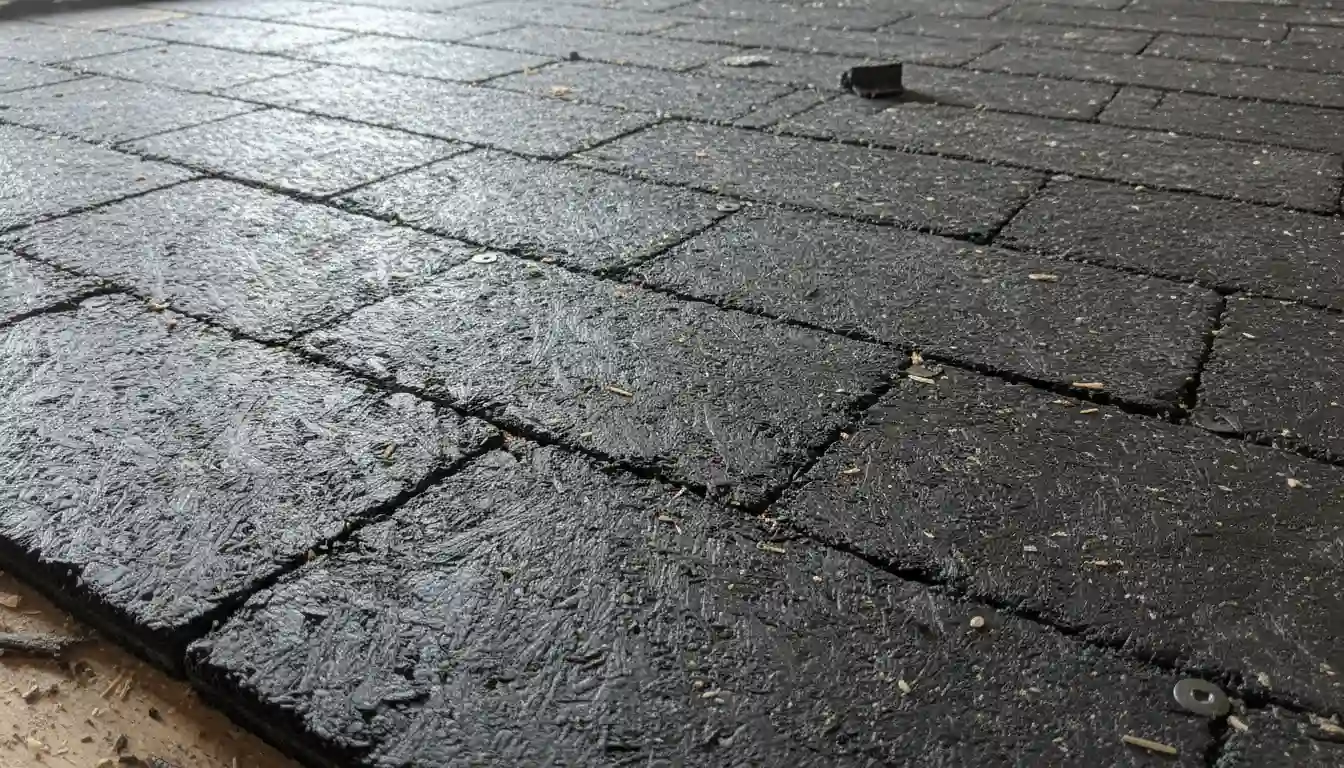
You’re pulling up old carpet or linoleum during a renovation, and you find it. A layer of black, fibrous board sitting on top of the subfloor. It has a distinct, slightly oily smell, and your first thought is, “What is this, and can I just install my new floor over it?”
This material is likely asphalt impregnated board, and its discovery can stop a home improvement project in its tracks. While it might seem like a simple, existing layer, understanding its purpose and potential risks is critical before you proceed.
You'll Learn About
The Black Board in Your Attic and Walls: What Is Asphalt Impregnated Board?
Asphalt impregnated board, sometimes known by old brand names like “Beaverboard” or simply called black sheathing, is a construction material made from wood or cellulose fibers that have been saturated with asphalt. This process was intended to make the board resistant to moisture.
Its primary and intended use was for exterior sheathing on walls and roofs. It was installed behind siding or under roofing materials to provide a degree of insulation, a barrier against wind, and protection from water during the construction process. It was never designed to be a structural component or an interior finish material.
Distinguishing From Its Cousins: Tar Paper and Modern Sheathing
It’s important not to confuse this rigid board with its flexible relative, tar paper. While both are impregnated with asphalt, their applications differ significantly. Learning about the role of tar paper between subfloor layers reveals its function as a vapor barrier, not a structural board.
Modern exterior sheathings, like ZIP System panels or rigid foam boards, have largely replaced asphalt board in new construction. These newer materials offer superior structural integrity, insulation, and moisture management without the health concerns associated with older asphalt products.
The Alluring “Shortcut”: Why Would Anyone Use It For Flooring?
Finding this material used as a flooring underlayment often points to past construction practices where cost and speed were prioritized over modern standards of health and durability. Builders might have used leftover exterior sheathing scraps to smooth over a rough subfloor before installing carpet or vinyl.
In some cases, it was mistakenly seen as an effective moisture barrier for floors, especially in ground-level rooms or basements. Homeowners might assume it’s a solid base, but this assumption can lead to significant problems down the line.
A Historical Perspective: When Cheap and Fast Was King
During the mid-20th century building boom, asphalt impregnated board was a common and inexpensive material. Its use inside the home, particularly under flooring, was an “off-label” application driven by a desire to use up available materials and get the job done quickly.
This approach did not account for the long-term consequences of enclosing a material designed for the outdoors within a home’s living space. The standards for indoor air quality and material safety were vastly different than they are today.
The Unspoken Risks: Health, Safety, and Structural Integrity
The biggest issue with using asphalt impregnated board for flooring is not its performance, but its potential impact on your health and your home’s structure. These risks are significant and should not be ignored.
Off-Gassing and Indoor Air Quality: The Elephant in the Room
Asphalt contains Volatile Organic Compounds (VOCs). Over time, especially when warmed by indoor temperatures or sunlight, the board can off-gas these VOCs into your living space. This process is responsible for the characteristic “tar” or “oily” smell associated with the material.
Prolonged exposure to these fumes can contribute to poor indoor air quality, potentially leading to headaches, respiratory irritation, and other health concerns. Covering the board with new flooring does not stop this off-gassing process; it merely traps the fumes, which can still find their way into the room.
The Asbestos Question: A Mid-Century Menace
This is the most critical safety concern. Many older building materials, including some types of asphalt sheathing and felt, contained asbestos fibers to increase strength and fire resistance. There is no way to know for sure if the board in your home contains asbestos just by looking at it.
If the board is disturbed—cut, sanded, broken, or torn up—it can release these microscopic fibers into the air. Inhaling asbestos fibers is linked to serious diseases, including asbestosis and mesothelioma. Therefore, you must assume it contains asbestos until proven otherwise by a professional lab.
A Magnet for Moisture? The Surprising Truth
While designed to be water-resistant, asphalt board is not waterproof. More importantly, it is not a “breathable” material. If moisture gets trapped underneath it—from a small leak, high humidity, or condensation from the subfloor—it cannot easily dry out.
This trapped moisture creates the perfect environment for mold and mildew growth on the underside of the board and on the subfloor itself. This can lead to wood rot, compromising the structural integrity of your floor. When dealing with potential dampness, especially in below-grade spaces, addressing the root cause is key, much like a proper basement sealing system is designed to do.
Structural Soundness: Not a Leg to Stand On
Asphalt impregnated board has very little compressive strength. It was designed to be nailed to a wall, not to be walked on or to support the weight of furniture and finished flooring. Over time, it can crumble, compress, or break down.
Placing a new floor on top of this unstable base can lead to squeaks, soft spots, and eventual failure of the flooring system. The joints of laminate or engineered wood may fail, and tiles can crack because the underlying surface is not solid.
Asphalt Board vs. Modern Subflooring: A Head-to-Head Comparison
To put its unsuitability into perspective, here is a comparison between asphalt impregnated board and the modern materials designed for subfloors and underlayments.
| Material | Primary Use | Structural Strength | Moisture Performance | Health & Safety |
|---|---|---|---|---|
| Asphalt Impregnated Board | Exterior Wall Sheathing | Very Low (Non-Structural) | Water-resistant but traps moisture | High Risk (VOCs, potential asbestos) |
| Plywood | Structural Subflooring & Underlayment | Very High | Susceptible to water damage unless treated | Low Risk (check for formaldehyde ratings) |
| OSB (Oriented Strand Board) | Structural Subflooring | High | More susceptible to swelling from moisture than plywood | Low Risk (check for formaldehyde ratings) |
| Cement Backer Board | Tile Underlayment | Low (not for spanning joists) | Excellent (unaffected by water) | Low Risk (creates silica dust when cut) |
The “Solution” Section: You Found Asphalt Board in Your Floor. Now What?
Discovering this material doesn’t have to be a catastrophe, but it does require a careful and methodical approach. Follow these steps to handle the situation safely and effectively.
Step 1: Don’t Panic and Don’t Touch
The moment you identify the material, stop all work in that area. Do not attempt to pull it up, cut it, or break a piece off. The greatest risk comes from making potential asbestos fibers airborne.
Isolate the area as best you can to prevent foot traffic from disturbing the material. This pause is the most important step in ensuring a safe resolution.
Step 2: Identification and Professional Testing
Your next call should be to an environmental testing company or an asbestos abatement professional. They can take a small sample of the material safely and have it analyzed by a certified lab.
This is the only way to know for certain if asbestos is present. The results of this test will determine the mandatory safety procedures for the next steps.
Step 3: The Verdict: Removal is the Only True Solution
While some might consider encapsulation (sealing the material under a new subfloor), this is not a recommended long-term solution. It does not solve the off-gassing problem, it fails to address the lack of structural stability, and it leaves a known hazard in your home for future renovations.
Professional removal is the only course of action that permanently eliminates all the associated risks. This ensures a safe, stable, and healthy foundation for your new floor.
Step 4: Safe Removal and Disposal Procedures
If the material tests positive for asbestos, removal is not a DIY job. It legally and safely must be handled by a licensed asbestos abatement contractor. They have the training and equipment to remove the material without contaminating your home.
Even if the test is negative for asbestos, professional removal is still wise to control dust and fumes. Proper disposal is also key, as some landfills have specific regulations for construction materials coated in asphalt. A home renovation can present unexpected hurdles; just as a simple issue like a stuck radiator knob can derail a heating project, finding hazardous materials requires a full stop and a call to the right professionals.
The Right Way Forward: Choosing the Best Foundation for Your New Floor
Once the problematic asphalt board is gone, you have a clean slate to build your floor system correctly. This starts with a solid and appropriate subfloor and underlayment.
Plywood and OSB: The Industry Standards
For a structural subfloor over joists, tongue-and-groove plywood or OSB panels are the gold standard. They provide the strength and rigidity required to support the rest of the flooring system and the contents of the room.
When installing over an existing plank subfloor, a layer of quality underlayment-grade plywood provides a smooth, stable surface for the finished floor.
Underlayments for Specific Flooring Types
The final layer before your new floor depends on the material you’ve chosen. Ceramic and porcelain tile require a cement backer board for stability. Floating floors like laminate and LVP benefit from a foam or felt pad underlayment for sound absorption and cushioning.
Frequently Asked Questions About Asphalt Impregnated Board
Homeowners often have similar questions when they encounter this material. Here are some quick answers to the most common inquiries.
Can you paint or seal asphalt sheathing to trap the smell?
No. Paint and common sealers will not adhere well to the oily asphalt surface and will not create a permanent barrier to stop VOC off-gassing. This is an ineffective and temporary fix that does not address the core health and structural issues.
Does the tar smell from asphalt board ever go away?
Over many decades, the smell may lessen, but it can be reactivated by changes in temperature and humidity. It is unlikely to disappear completely as long as the material remains in your home.
Is all black fiberboard dangerous?
Not necessarily. Modern wood fiberboard products are manufactured for specific uses without asphalt and asbestos. The concern is specifically with older, dark or black-colored, asphalt-saturated sheathing found inside a home’s structure.
The Final Verdict: A Relic Best Left in the Past
So, can asphalt impregnated board be used for flooring? The answer is an emphatic no. It is not a safe, stable, or healthy material for any interior flooring application. It was the wrong material for the job when it was installed, and leaving it in place is a risk you should not take.
By identifying it, testing it, and having it professionally removed, you are not just preparing for a new floor. You are making a crucial investment in your home’s structural integrity and, more importantly, your family’s long-term health and safety.