
Brown Windows with White Trim: The #1 Design Mistake to Avoid
Choosing the right window and trim combination can feel like walking a tightrope. You want a look that’s timeless yet modern, distinctive yet cohesive. One pairing that consistently sparks debate is brown windows with white trim. It’s a classic combination, yet many homeowners hesitate, worried it might look dated or limit their design choices.
The core problem isn’t the color combination itself, but the execution. The single biggest mistake is failing to create a harmonious bridge between these two contrasting elements and the rest of the home’s exterior. When the siding, roof, and door colors aren’t thoughtfully selected, this elegant pairing can look disjointed and abrupt, creating visual chaos instead of curb appeal.
You'll Learn About
The Enduring Appeal of Brown Windows and White Trim
Before diving into solutions, it’s important to understand why this combination has such lasting power. Brown window frames offer a warm, earthy quality that connects the home to its natural surroundings. They provide a softer, more organic feel than stark black frames, adding depth and character to both traditional and contemporary architecture.
White trim acts as the perfect counterpoint. It creates a crisp, clean border that makes the rich brown of the windows pop. This contrast defines the architectural lines of the home, highlighting its structure and preventing the facade from looking flat or monotonous. When done correctly, it’s a sophisticated choice that exudes quiet confidence.
Architectural Styles That Shine with This Palette
While versatile, the brown and white combination is a natural fit for several architectural styles. Craftsman and Arts and Crafts homes, with their emphasis on natural materials and earthy tones, are perfectly suited for this look. The brown windows echo the traditional wood elements, while the white trim provides a clean, classic finish.
Modern Farmhouse and Transitional designs also benefit greatly. The brown offers a touch of rustic warmth that balances the clean, modern lines, while the white trim keeps the overall aesthetic fresh and bright. Even on certain Contemporary homes, especially those incorporating natural wood or stone, this pairing can soften the facade and add a layer of visual warmth.
The Make-or-Break Decision: Choosing the Perfect Siding Color
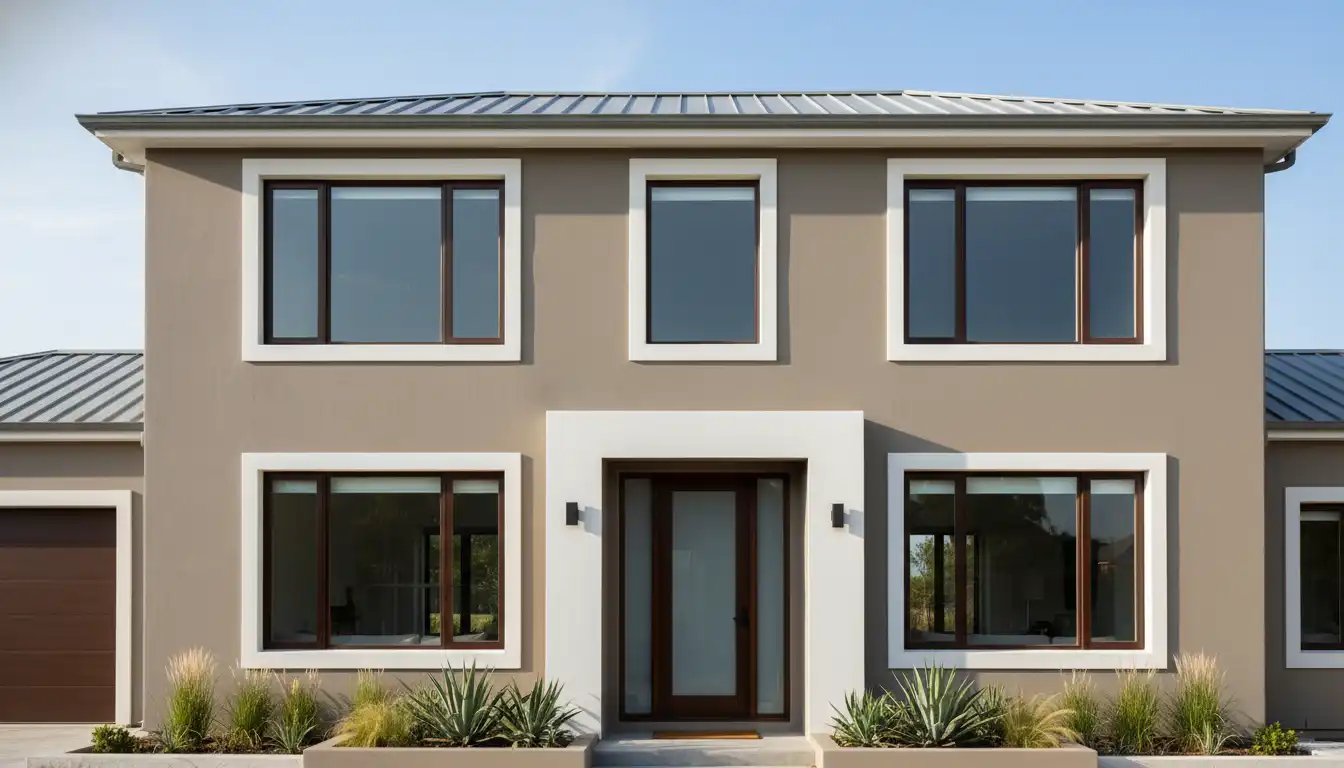
The siding is the largest visual element of your home’s exterior, and its color is the critical factor in unifying your brown windows and white trim. The goal is to select a color that complements both the warm, earthy brown and the crisp, clean white. Choosing the wrong siding shade is where most design plans go astray.
Think of the siding as the canvas for your windows and trim. A well-chosen color will make them look intentional and integrated, while a poor choice will make them feel like an afterthought. This is the moment to bridge the gap between warm and cool tones for a truly cohesive exterior.
Fail-Proof Siding Colors for a Harmonious Look
To ensure a successful design, stick to palettes that naturally work with both brown and white. Warm neutrals and earthy tones are your safest and most effective options. These colors create a gentle transition, allowing the windows and trim to stand out without clashing.
Consider shades like warm beiges, creamy off-whites, taupes, and soft, warm grays (“greige”). These colors have undertones that connect to the warmth of the brown windows while remaining light enough to complement the white trim. For a slightly bolder but still cohesive look, muted earth tones like sage green or dusty blue can also be stunning choices, as they evoke a natural palette where brown and white fit in perfectly.
Siding Colors to Approach with Caution
Certain colors can create a harsh or jarring contrast with brown windows. Stark, cool-toned grays can clash with the warm undertones of the brown, making the windows look muddy or out of place. Likewise, very bright or saturated colors can overpower the subtlety of the combination, creating a look that feels chaotic rather than curated.
If you’re considering a darker siding color, such as a deep navy or charcoal, the key is to ensure it has enough warmth to connect with the brown. A cool-toned charcoal might fight with the windows, but a warmer, browner charcoal could create a sophisticated, moody exterior where the white trim provides a welcome pop of light.
A Deep Dive into Exterior Coordination
Achieving a high-end, cohesive look requires thinking beyond just the siding. Every element of your home’s exterior—from the roof and gutters to the front door—plays a role in the final composition. This is where you can truly elevate the design from good to exceptional.
The secret is to think in layers of color and texture. Your siding is the primary layer, the roof is the overarching element, and your front door is the perfect opportunity for a final, impactful accent. By coordinating these components, you create a home with undeniable curb appeal and a thoughtfully designed aesthetic.
Coordinating Your Roof, Gutters, and Fascia
Your roof color should harmonize with your brown windows. If you have a brown roof, ensure the tones are complementary—a reddish-brown roof with chocolate-brown windows, for example. If you have a gray or black roof, a neutral siding color becomes even more important to bridge the gap between the cool roof and warm windows.
For gutters and fascia, you have two primary options. Matching them to the white trim creates a crisp, clean outline of the entire house, which is a classic and highly effective choice. Alternatively, matching them to the brown windows can create a bolder, more modern look, but this works best when the siding color is light enough to provide strong contrast.
Make Your Front Door a Statement Piece
The front door is your chance to add a touch of personality. A natural wood-stained door is a can’t-miss choice, as it directly ties into the warmth of the brown windows. This creates a beautifully cohesive and inviting entryway.
If you prefer a painted door, consider a color that complements the overall scheme. A deep, muted red or a dark forest green can look stunning against a neutral siding. For a more modern and dramatic flair, a black or very dark charcoal door can provide a grounding anchor point, especially if you have other black accents like light fixtures or hardware.
The Inside Story: Interior Design with Brown Windows
The impact of your window choice doesn’t stop at the curb. Brown window frames make a significant statement on the interior of your home as well, and they require thoughtful consideration to create a cohesive indoor space. The key is to embrace their warmth and character.
Paired with crisp white trim, brown windows on the interior can act as beautiful frames for your view of the outdoors. The goal is to select interior paint colors and window treatments that enhance this feature rather than compete with it. This is an excellent opportunity to create a warm, inviting, and well-designed room.
Wall Colors that Complement Your Windows
For a bright and airy feel, you can’t go wrong with warm, creamy whites for your interior walls. These colors will complement the brown frames and make the white trim pop. For help choosing the perfect shade, exploring comparisons like BM Swiss Coffee vs SW Alabaster can provide invaluable guidance in selecting a white that has the right undertones for your space.
If you desire more color, soft, earthy tones like sage green, muted beige, or warm grays are excellent choices. These colors will create a harmonious and calming atmosphere. Avoid cool-toned grays or blues, which can clash with the warm brown of the windows and make the room feel disjointed.
Window Treatments: The Finishing Touch
When selecting window treatments, opt for styles that complement the window frames rather than obscure them. Natural woven wood shades or bamboo blinds are a perfect choice, as they echo the organic feel of the brown frames. Fabric Roman shades in a neutral linen or cotton can also add softness and texture.
If you prefer curtains, hang the rod high and wide so that the panels frame the window without covering the beautiful trim when open. Choose fabrics in neutral tones or subtle patterns that align with your overall color scheme. This approach ensures your windows remain a celebrated feature of the room.
Material Matters: Vinyl, Wood, and Beyond
The material of your window frames not only affects the aesthetic but also the cost, durability, and maintenance requirements. Brown windows are available in several materials, each with its own set of advantages and disadvantages. Understanding these differences is crucial for making an informed investment in your home.
While vinyl is often the most budget-friendly option, wood and fiberglass offer different benefits that may be better suited to your climate and long-term goals. Making a decision on material is just as important as the color. Consider exploring detailed comparisons, like the differences between Pella 150 and 250 series, to understand how product lines can vary in features and quality even within the same brand.
The Pros and Cons of Different Window Materials
Vinyl windows are popular due to their affordability and low maintenance. However, dark-colored vinyl, like brown, can be more prone to fading or warping over time with intense sun exposure. Modern technologies have improved performance, but it’s a factor to consider, and colored vinyl often costs 10-20% more than standard white.
Wood windows offer unparalleled beauty and a classic, high-end feel. They can be stained to the perfect shade of brown and offer excellent insulation. Their main drawback is the need for regular maintenance—sanding and re-staining or painting—to protect them from the elements. They also represent a higher upfront investment.
Fiberglass and composite windows provide a fantastic middle ground. They are incredibly durable, resistant to warping and fading, and can be manufactured to mimic the look of real wood. They offer the low-maintenance benefits of vinyl with the strength and longevity closer to wood, making them an excellent all-around choice.
| Siding Color Palette | Description | Recommended Paint Shades | Best For |
|---|---|---|---|
| Warm Neutrals | Creates a timeless, harmonious look that bridges the gap between brown and white. Soft, inviting, and safe. | Creamy Off-Whites, Warm Beiges, Taupe | Most architectural styles, including Craftsman, Traditional, and Farmhouse. |
| Earthy Greens & Blues | Evokes a connection to nature. The muted tones complement the brown windows beautifully for a serene feel. | Sage Green, Muted Olive, Dusty Blue | Homes in natural settings; styles that emphasize an organic feel. |
| Warm Grays (“Greige”) | A modern neutral that feels sophisticated. Ensures the gray has warm, brownish undertones to avoid clashing. | Greige, Mushroom, Warm Stone Gray | Transitional, Modern Farmhouse, and Contemporary homes. |
| Bold & Moody | Creates a dramatic, high-contrast look. The white trim becomes a sharp, defining feature. Requires careful execution. | Warm Charcoal, Deep Navy, Burgundy | Modern or Contemporary homes where a bold statement is desired. |
The Secret No One Talks About: Mastering the “Shadow Line Effect”
A little-discussed but highly impactful design concept is the “Shadow Line Effect.” This is the visual phenomenon created by the dark brown window frame against the bright white trim. This sharp contrast creates a natural, subtle shadow line that gives the window assembly incredible depth and dimension.
This effect makes your windows appear more substantial and architecturally significant. It’s what gives this color combination its high-end, custom look. Understanding how to leverage this effect is the key to unlocking the full potential of your design choices. By pairing it with a light-to-medium siding color, you maximize this perceived depth, making your home’s facade more dynamic and interesting.
How Sheen and Finish Can Transform the Look
The final, often-overlooked detail is the paint sheen. For your white trim, a satin or semi-gloss finish is almost always the best choice. This slight sheen will catch the light, further defining the architectural lines and making the trim easier to clean. It also enhances the Shadow Line Effect by creating a subtle contrast in texture against the typically matte finish of the window frames and siding.
For siding, a flat or matte finish is ideal as it hides imperfections and provides a velvety, non-reflective surface that allows the windows and trim to be the stars. Using a higher sheen on the siding can create unwanted glare and detract from the crisp lines you’ve worked so hard to create. Considering elements like the brightness of a white tongue and groove ceiling on a porch can also play into the overall light reflection and feel of your exterior.
Long-Term Care: Keeping Your Windows Looking Pristine
Once you’ve achieved the perfect look, proper maintenance is key to preserving it. The challenges for brown windows and white trim are distinct. The brown frames, especially if they are vinyl, are susceptible to fading from UV exposure, while the white trim can show dirt and mildew more easily.
A consistent but simple maintenance routine will keep both elements looking fresh and new for years to come. This protects your investment and ensures your home continues to have outstanding curb appeal.
Cleaning and Maintenance Tips
For both the frames and the trim, a gentle cleaning twice a year is usually sufficient. Use a soft cloth or sponge with a solution of mild soap and water. Avoid abrasive cleaners or harsh chemicals, as they can damage the finish of both vinyl and painted surfaces.
Pay special attention to the areas under eaves and overhangs, where dirt and pollen can accumulate. For the white trim, a solution with a bit of vinegar can help prevent mildew growth in shady or damp areas. Regularly check the caulking around the trim for any cracks or gaps and reseal as needed to prevent water intrusion and maintain energy efficiency.
Frequently Asked Questions
Is the combination of brown windows and white trim an outdated style?
Not at all. When paired with the right siding colors and architectural elements, this combination is timeless and sophisticated. Its connection to natural, earthy tones keeps it relevant in modern design, which often emphasizes bringing the outdoors in. The key to avoiding a dated look is to ensure the rest of the exterior palette is fresh and current.
Are brown vinyl windows a bad investment due to fading?
This was a bigger concern with older vinyl technology. Modern, high-quality vinyl windows use advanced pigments and protective coatings that are highly resistant to UV fading. While they may still experience some minimal color change over many years of direct, intense sun exposure, they are far more durable than they once were. Always choose a reputable manufacturer with a strong warranty on color stability.
Can I paint my existing white vinyl windows brown?
While technically possible with the right specialty paints designed for vinyl, it is generally not recommended. Painting vinyl is a meticulous process that requires extensive prep work. If not done perfectly, the paint can easily peel, chip, or bubble, voiding your window warranty in the process. It is almost always better to order the windows in the desired factory color for a durable, long-lasting finish.
What is the best front door color for a house with brown windows and white trim?
A natural wood stain is a classic and foolproof choice that enhances the warm, organic feel of the brown windows. If you prefer paint, deep, earthy tones like forest green, rich navy, or a muted burgundy work beautifully. For a timeless option, a black door can provide a strong, elegant anchor point for the entire color scheme.
Conclusion
pairing brown windows with white trim is less about following a trend and more about mastering contrast. This “tuxedo” effect provides the best of both worlds: the brown frames act as a sophisticated anchor that mimics the look of natural wood or industrial steel, while the crisp white trim provides a clean, architectural frame that brightens the room.
By balancing these tones, you create a versatile foundation that supports both rustic and contemporary aesthetics. Whether you are aiming for a cozy farmhouse vibe or a sharp, modern edge, this combination offers a deliberate, high-contrast look that feels intentionally designed rather than dated.
