
Brock Paver Base Problems? Your Ultimate Troubleshooting Guide
You envisioned a perfect patio, a pristine walkway, or a charming garden path. You opted for Brock PaverBase panels, hoping for a faster, less labor-intensive installation. Yet now, you’re looking at uneven stones, worrying dips, and a sense of instability that is anything but relaxing. When you encounter Brock Paver Base problems, it can be incredibly frustrating, turning a dream project into a persistent headache.
The promise of avoiding tons of gravel and heavy excavation is appealing, but when issues arise, many homeowners feel lost. The good news is that nearly every problem associated with this paver base system is not only identifiable but also fixable. The key lies in understanding that the panels themselves are rarely the culprit; instead, the issue almost always traces back to the preparation of the ground underneath.
You'll Learn About
Understanding the Brock PaverBase System
Before diving into the problems, it’s essential to understand what Brock PaverBase is. These are lightweight, interlocking polypropylene panels designed to replace the traditional deep layer of compacted gravel in paver installations. Their design is intended to distribute weight, provide drainage, and significantly reduce the amount of digging and material hauling required.
The system’s appeal is its simplicity: excavate a few inches, compact the native soil, add a thin layer of sand, lay the panels, and then place your pavers. However, this streamlined process places an immense emphasis on the perfection of those few steps. Any shortcut or oversight in the foundation work can lead to failure.
The Core of the Conflict: Why Most Paver Base Installations Fail
Whether you’re using traditional methods or modern panels, the fundamental principles of a lasting paver project remain the same. The surface you walk on is only as stable as the layers beneath it. The vast majority of Brock Paver Base problems stem from inadequacies in one of three critical areas: the subgrade, the sand bed, or the edge restraints.
The Unseen Enemy: Improper Subgrade Preparation
This is, without a doubt, the number one cause of paver failure. The Brock panels are engineered to spread loads, but they cannot create stability where none exists. If the native soil beneath the panels is not uniformly and thoroughly compacted, it will settle over time, taking the panels and your expensive pavers down with it.
Common mistakes include failing to remove all organic material like grass and roots, not achieving a consistent level, or, most critically, insufficient compaction. Homeowners often underestimate the force needed, opting for a quick pass with a hand tamper when a mechanical plate compactor is necessary for true stability, especially on larger areas or with clay-heavy soils. The ground must be unyieldingly firm before any sand or panels are introduced.
A Grain of Truth: Mistakes with the Sand Layer
The thin layer of sand beneath the panels is not just for cushioning; it’s a crucial leveling medium designed to fill minor imperfections in the compacted subgrade. The manufacturer typically recommends a very specific depth—often around a half-inch. Deviating from this is a recipe for trouble.
Using too much sand creates an unstable, “squishy” feeling underfoot and allows pavers to shift and settle into the excess depth. Using too little sand fails to provide a proper bedding layer, leading to wobbling pavers as they rock on high spots in the subgrade. Furthermore, the type of sand is critical; coarse, angular concrete sand is required to lock together, whereas fine play sand will simply wash away.
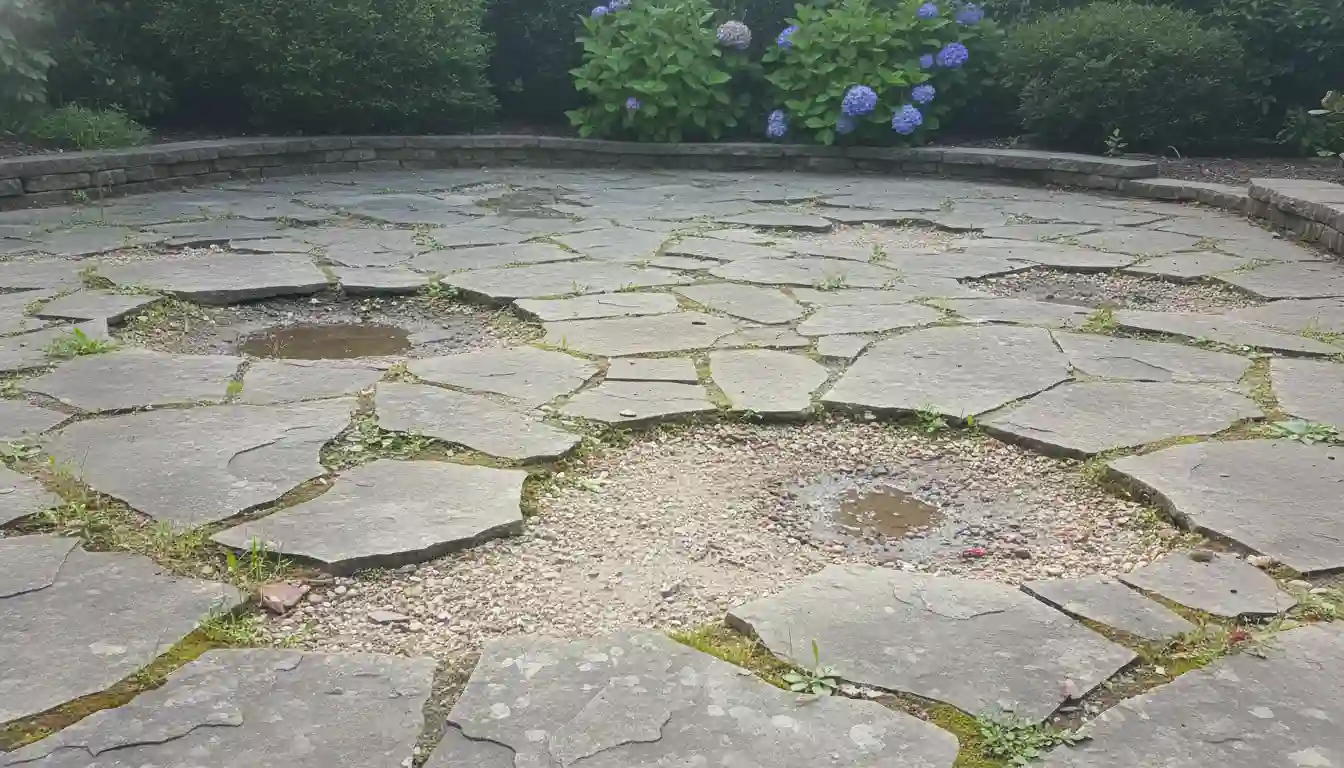
Living on the Edge: The Failure of Edge Restraints
A paver patio is a floating system; the pieces are held together by friction and the confinement of its border. Without robust edge restraints, the entire installation will slowly creep outward. This lateral movement opens up gaps between the pavers, allowing polymeric sand to fail and the interlocking system to fall apart.
Edge restraints must be securely anchored into the compacted subgrade *before* the final layer of pavers is installed. Simply placing them on top of the soil at the end is ineffective. The outward pressure from foot traffic and natural movement will easily push them aside, leading to a domino effect of shifting pavers along the perimeter.
A Diagnostic Checklist for Your Paver Problems
Identifying the specific symptoms your patio is exhibiting is the first step toward a targeted solution. Many issues can seem similar, but their root causes are distinct. Use the table below to diagnose what might be going wrong with your Brock PaverBase installation.
| Symptom | Most Likely Cause | Repair Strategy |
|---|---|---|
| Sinking or Uneven Pavers (Dips) | Poor subgrade compaction or water erosion washing away the base. | Requires removal of pavers and panels in the affected area to re-compact and re-level the subgrade. |
| Wobbly or “Spongy” Feeling | Too much sand used in the leveling bed or voids in the subgrade. | Lift affected pavers and panels to correct the sand depth to the manufacturer’s specification (typically 1/2 inch). |
| Pavers Shifting Sideways / Gaps Opening | Failed or improperly installed edge restraints. | Remove outer pavers, properly install and spike new edge restraints into the compacted base, and reinstall pavers. |
| Weeds Growing Through Joints | Failure of polymeric sand, either from improper installation or joint movement. | Clean out joints completely and re-apply polymeric sand according to instructions, ensuring pavers are stable first. |
| Water Pooling on the Surface | Improper slope/grading of the subgrade. The entire patio should slope away from structures. | Significant repair is needed. The project must be disassembled to re-grade the subgrade with a minimum slope of 1/4 inch per foot. |
The Definitive Guide to Fixing Brock Paver Base Problems
Confronting a failing paver project can be daunting, but a systematic approach will yield a lasting repair. The key is to address the foundational error, not just the surface-level symptom. A quick fix of adding more sand to a low spot is only temporary; the area will continue to sink if the underlying compaction issue isn’t resolved.
Step 1: Careful Deconstruction
Begin by carefully removing the pavers in and around the problem area. A pair of flathead screwdrivers or a paver puller tool can help lift the first one. Numbering the pavers with a chalk marker can make reassembly much easier. Once the pavers are out, lift the Brock PaverBase panels and set them aside. They are durable and can almost always be reused.
Step 2: Re-Establishing the Foundation – The Subgrade
This is the most critical step. With the subgrade exposed, you can identify the problem. Look for low spots, soft areas, or evidence of water erosion. Add new base material (a mix of soil and aggregate can work well) to the low spots, slightly higher than the surrounding grade. Now, you must compact it.
For a truly professional and lasting repair, rent a plate compactor. A hand tamper is often insufficient to achieve the required density. Go over the entire exposed area multiple times until the ground is uniformly hard. A simple but effective technique is the “tap test”: tap the compacted ground with a hammer. It should feel solid and sound consistent across the entire area, not produce a hollow thud, which indicates a void or poor compaction beneath.
Step 3: Perfecting the Leveling Sand Bed
Once the subgrade is solid and correctly sloped, you must re-establish the sand bed. The most foolproof method is to use two pieces of 1/2-inch outer-diameter pipe or electrical conduit as screed rails. Lay them parallel on the compacted subgrade and pour coarse concrete sand between them.
Use a straight 2×4 board, resting it on the two pipes, and pull it across the sand to screed off the excess, leaving a perfectly smooth and uniform 1/2-inch bed. Remove the pipes and carefully fill the resulting voids with a little more sand, smoothing it with a trowel. Do not walk on or compact the screeded sand.
Step 4: Reinstalling Panels and Pavers
Carefully place the Brock PaverBase panels back onto the fresh sand bed. Ensure they interlock snugly with no gaps between them. It’s best practice to lay them in a staggered, brick-like pattern for maximum stability.
You can now begin relaying your pavers directly onto the panels. Work from an established edge and place the pavers gently, being careful not to disturb the sand bed underneath. Use a rubber mallet to tap them into place and ensure they are level with the surrounding pavers.
Step 5: Locking It All In
With the pavers and edge restraints re-secured, the final step is to apply polymeric sand. This specially formulated sand contains a binder that hardens when activated with water, locking the pavers together and preventing weed growth. Sweep the dry sand into the joints until they are completely full. Use a hand tamper on the pavers to vibrate the sand down, then sweep more in until the joints are topped off.
Gently blow off any excess sand from the paver surfaces with a leaf blower before lightly misting the area with a hose to activate the binder. Follow the specific manufacturer’s instructions for watering, as this step is crucial for the sand to cure properly.
Proactive Measures: Avoiding Problems from Day One
If you are in the planning stages of a project, you can avoid these issues entirely. The success of a Brock PaverBase installation hinges on meticulous preparation. Focus your energy on these key areas:
- Over-prepare the subgrade: Dig out an extra inch or two to ensure all topsoil is gone. When in doubt, compact it again.
- Manage water: Ensure the entire area is graded for positive drainage away from your home’s foundation.
- Use the right materials: Only use coarse, angular concrete sand for the leveling bed.
- Invest in edge restraints: Use heavy-duty plastic or metal edging and secure it with 10-inch spikes.
Climate and Soil: The Unspoken Variables
It’s crucial to consider your local environment. In regions with heavy clay soil, proper compaction and drainage are even more critical, as clay holds water and is more susceptible to movement. For those in cold climates, the freeze-thaw cycle can be a formidable enemy. Water penetrating a poorly prepared base will freeze, expand, and heave pavers upwards. A perfectly compacted and well-drained subgrade is the best defense against this seasonal disruption.
Achieving the Perfect, Long-Lasting Paver Surface
While encountering Brock Paver Base problems is disheartening, it is not a dead end. These issues are almost universally a result of installation missteps rather than a fault in the product itself. By understanding the critical role of the subgrade, the precision required for the sand bed, and the necessity of robust edging, you can effectively diagnose and repair any problem.
Treating the cause, not just the symptom, will transform a sunken, shifting patio back into the stable, beautiful, and lasting outdoor living space you originally planned. With patience and a commitment to foundational principles, you can achieve a professional-quality result that provides years of enjoyment.
