
Briggs & Stratton 24 HP ELS Engine: Your Ultimate Fix-It Guide
The Briggs & Stratton 24 HP ELS V-Twin engine is a powerhouse, trusted in countless lawn tractors and zero-turn mowers for its robust performance. Yet, even this dependable workhorse can develop frustrating problems, leaving you with a machine that surges, smokes, or refuses to start. When faced with these issues, many owners feel overwhelmed, unsure of where to begin.
This guide cuts through the confusion. We will explore the most common ailments of this specific engine and provide clear, actionable solutions to restore its power and reliability. You can get your machine running smoothly again without costly professional repairs.
You'll Learn About
Decoding the 24 HP ELS V-Twin: What Makes It Tick?
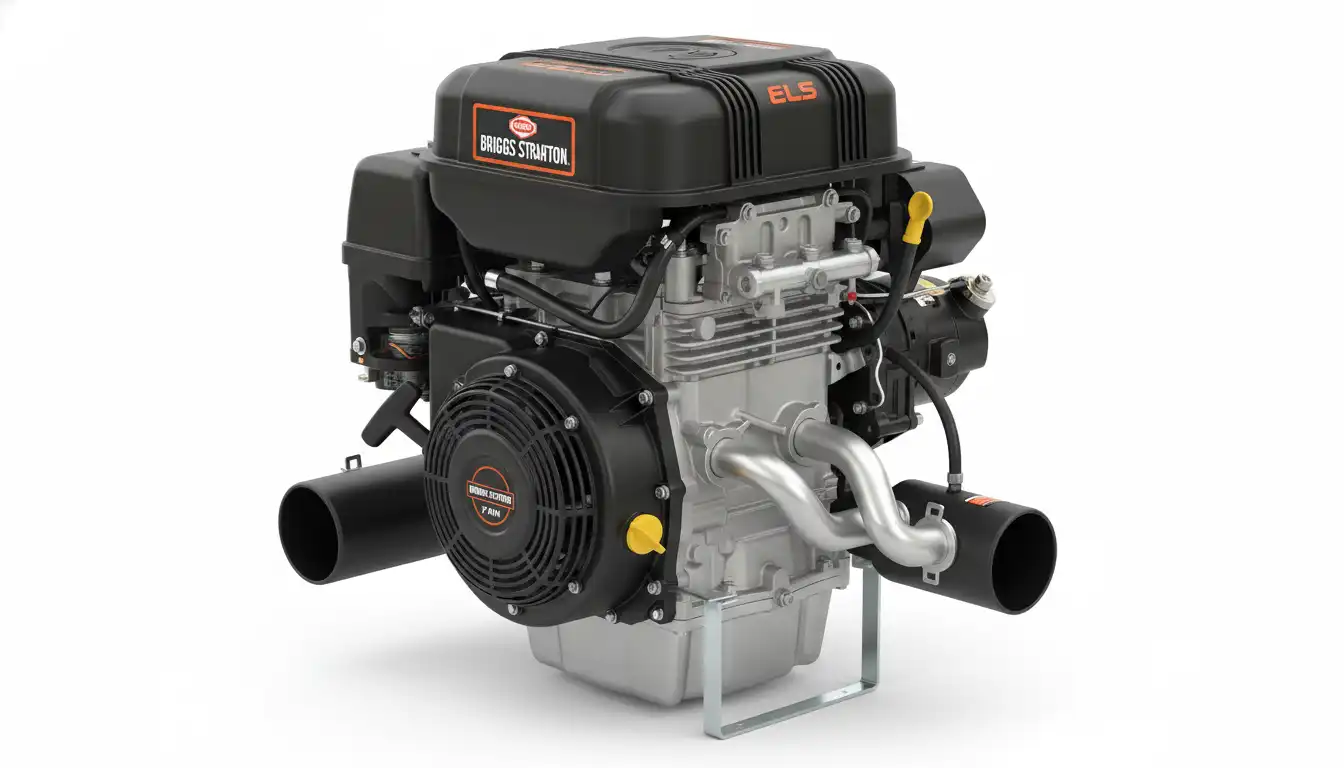
Before diving into repairs, it’s helpful to understand what makes this engine unique. ELS stands for “Extended Life Series,” a designation Briggs & Stratton uses for engines built with enhanced features for durability, including advanced air and oil filtration systems. The V-Twin design, with two cylinders arranged in a “V” shape, provides more power, smoother operation, and less vibration than single-cylinder engines.
Like any engine, its operation relies on three core systems working in harmony: the fuel system, the ignition system, and the lubrication system. A problem in any one of these areas can lead to a cascade of performance issues. Understanding this foundation is the first step toward effective troubleshooting.
The Root of All Evil: Common Stumbling Blocks for Your Engine
Owners of the 24 HP ELS engine frequently report a handful of specific, recurring problems. These issues often seem complex, but they usually stem from a few predictable causes that are entirely fixable. Let’s break down the most common pain points.
The most notorious issue is engine surging or “hunting,” where the engine RPMs fluctuate up and down at a steady throttle. This is almost always a fuel delivery problem. Another significant concern is excessive blue or white smoke, which indicates the engine is burning oil—a problem with several potential causes, some simple, some more serious.
The #1 Problem You Can’t Ignore: Oil Consumption and Smoking
Perhaps the most alarming issue is when your mower starts to billow blue or white smoke and consume oil at a rapid rate. Many owners immediately fear the worst, assuming catastrophic internal damage like worn-out piston rings. While this is a possibility, it’s often not the primary culprit, especially on engines with reasonable hours.
A blown head gasket is another common cause, allowing oil to leak from pressurized passages into the combustion chamber. However, there is a frequently overlooked component that can mimic these exact symptoms: the crankcase breather system. This is a critical point that many online guides fail to emphasize, leading to misdiagnosis and unnecessary expense.
The Hidden Culprit: Understanding the Crankcase Breather
The crankcase breather is essentially the engine’s ventilation system. It allows the pressure that builds up in the crankcase during operation to escape in a controlled manner. It’s designed to separate oil mist from this air, returning the oil to the crankcase and venting the air into the carburetor to be burned.
When this system—specifically the breather reed valve or its filter—becomes clogged with carbon and oil sludge, the pressure can no longer escape properly. This built-up pressure has to go somewhere, and it often forces oil past the piston rings and into the combustion chamber, causing the exact same symptoms as worn rings or a bad head gasket. Cleaning or replacing a simple breather can often solve a severe smoking problem.
Your Step-by-Step Action Plan to a Healthy Engine
Now, let’s move from diagnosis to action. Follow these structured steps to address the most common issues with your Briggs & Stratton 24 HP ELS V-Twin. Always begin with the simplest and most likely solutions before moving to more complex repairs.
Solution 1: Conquer Fuel System Faults and Surging
Engine surging is almost always caused by a lean fuel condition, meaning the engine isn’t getting enough gasoline. This forces the governor to constantly hunt for the correct speed. Start with the basics.
First, ensure you are using fresh, clean fuel. Gasoline can go stale in as little as 30 days, forming gummy deposits that clog tiny passages in the carburetor. If your fuel is old, drain it and replace it. Next, replace the fuel filter, a small and inexpensive part that can easily become clogged.
If surging persists, the problem lies within the Nikki carburetor common to these engines. Tiny internal passages, particularly the idle jets, are likely clogged. A thorough cleaning, paying special attention to the small O-rings on the jets and emulsion tubes, will often resolve the issue. Be meticulous, as even a microscopic piece of debris can cause problems.
Solution 2: Systematically Eliminate Oil Smoking
To tackle the smoking issue, start with the easiest and most overlooked fix: the crankcase breather. Locate the breather housing—a small box, often black plastic, connected to the valve cover and the air filter housing via a rubber tube. Carefully remove the cover and inspect the reed valve and any foam filter inside. Clean them thoroughly with a suitable solvent or replace them if they are damaged. This simple step resolves a surprising number of oil consumption issues.
If cleaning the breather doesn’t work, the next logical step is to check for a blown head gasket. This often occurs between the cylinder and the pushrod gallery, creating a direct path for pressurized oil to enter the combustion chamber. A compression test can help diagnose this; a significant difference in compression between the two cylinders may point to a gasket failure. For more details on this kind of work, understanding the potential Briggs and Stratton compression release repair cost can provide context for more advanced engine repairs.
Solution 3: Address No-Start and Hard-Starting Conditions
An engine that cranks but won’t start is typically suffering from a lack of spark or fuel. First, check the spark plugs. If they are fouled, clean or replace them. An inline spark tester is a great tool to confirm if the ignition coil is firing.
If you have spark, confirm fuel is reaching the carburetor. You can do this by carefully removing the fuel line from the carburetor inlet and cranking the engine to see if the pulse-style fuel pump is working. Another key component is the fuel shut-off solenoid at the bottom of the carburetor bowl; you should hear a distinct “click” when you turn the key on. If it doesn’t click, it’s not opening to allow fuel into the main jet.
Proactive Care: A Schedule for Engine Immortality
The vast majority of engine problems are a direct result of neglected maintenance. Following a simple, regular service schedule is the key to ensuring your Briggs & Stratton 24 HP ELS V-Twin provides years of reliable service. Adhering to proper fluid specifications is just as crucial, as using the wrong oil can cause damage over time. The principles of proper maintenance, like knowing the correct Craftsman 9 hp snowblower oil capacity, apply to all small engines—precision matters.
This table outlines a basic maintenance schedule. For a complete list of service intervals and specifications, always consult your operator’s manual.
| Component | Action | Frequency |
|---|---|---|
| Engine Oil | Check Level | Before Each Use |
| Engine Oil & Filter | Change | Every 50 Hours or Annually |
| Air Filter | Inspect & Clean Pre-Filter | Every 25 Hours |
| Air Filter Cartridge | Replace | Every 100 Hours or Annually |
| Spark Plugs | Replace | Annually |
| Fuel Filter | Replace | Annually |
| Valve Clearance | Inspect & Adjust | Every 100-200 Hours |
| Cooling Fins | Clean Debris | Every 25 Hours |
The Often-Skipped Step: Valve Clearance Adjustment
One of the most impactful yet commonly ignored maintenance tasks is checking and adjusting the valve clearance (lash). Over time, valve train components wear, and the gap between the rocker arm and the valve stem can change. Incorrect valve lash can lead to hard starting, loss of power, and even engine damage.
Adjusting the valves is a straightforward process that requires only basic hand tools and a set of feeler gauges. This single maintenance step can dramatically improve starting performance and overall engine smoothness. It’s a professional-level tip that distinguishes a well-maintained engine from a neglected one.
Beyond the Manual: Advanced Engine Insights
The ELS series engines have specific features that benefit from extra attention. Their advanced air filtration system is excellent, but only if the pre-filter is cleaned regularly and the paper element is replaced annually. Using non-OEM filters can compromise this system and allow fine dust particles to enter the engine, accelerating wear.
Furthermore, these engines are not as simple as those found on older equipment. While the fundamental principles of maintenance are timeless, the tolerances and components are more refined than what you might find on vintage machines. For instance, reviving an older engine on a Homco snowblower might be more forgiving of slight inaccuracies, but modern V-twins demand precision.
Your Engine’s Future Is In Your Hands
The Briggs & Stratton 24 HP ELS V-Twin is a powerful and reliable engine that, with proper care, can provide exceptional service life. Most of the common problems that plague owners—from surging and smoking to hard starting—are not signs of a worn-out engine but rather symptoms of deferred maintenance.
By systematically addressing the fuel system, checking the often-overlooked crankcase breather, and adhering to a proactive maintenance schedule that includes valve adjustments, you can solve existing problems and prevent future ones. You now have the knowledge to move beyond frustration and confidently maintain your machine’s powerhouse for peak performance season after season.
