
Bosch Oven Probe Not Working? Get Perfect Roasts Again
There’s nothing more frustrating than pulling a beautiful roast from the oven, only to discover it’s disappointingly undercooked or tragically dry. You followed the recipe, timed it perfectly, and relied on your sophisticated Bosch oven’s meat probe for precision. When that crucial tool fails, it can ruin a meal and shake your culinary confidence.
The Bosch oven temperature probe is designed to eliminate guesswork, ensuring your meat is cooked to the perfect internal temperature every time. When it’s not working, you’re left flying blind. Fortunately, most issues can be resolved with some straightforward troubleshooting, getting you back to creating perfectly cooked masterpieces.
You'll Learn About
Why Your Bosch Oven Probe Isn’t Working: Common Culprits
Before you can fix the problem, you need to understand the cause. Several factors can prevent your Bosch oven probe from functioning correctly, ranging from simple user error to a faulty component. Let’s explore the most common reasons your probe might be on the fritz.
Probe Not Inserted Correctly
The most frequent and easiest-to-fix issue is an improper connection. The probe’s plug must be fully and securely inserted into the oven’s receptacle for the oven to recognize it. A partial or loose connection will interrupt the signal to the oven’s control board.
When you plug the probe in, you should feel a distinct, satisfying “click” that signals a secure connection. If you don’t feel this, the probe is likely not seated correctly. Wiggling it gently while applying firm pressure can help ensure it’s properly connected.
Dirty or Damaged Probe and Socket
Your oven is a hot, greasy environment, and over time, buildup can occur on both the probe and in the socket. A thin layer of grease, carbonized food particles, or other residue can be enough to interfere with the sensitive electrical connection.
Similarly, the probe itself, particularly its braided metal cord, can sustain damage. Repeated bending, kinking, or pulling on the cord instead of the plug can cause internal wires to break. A visual inspection of the probe’s tip, the cord, and the inside of the oven socket can often reveal the source of the problem.
Incorrect Oven Mode Selected
The meat probe is a specialized tool that only functions with specific cooking modes on your Bosch oven. Attempting to use the probe in a mode like “Broil” or “Warm” will not work, as these settings aren’t designed to monitor internal food temperature in the same way.
Typically, the probe is intended for use with modes such as “Roast,” “Convection Roast,” or sometimes “Bake.” Always consult your oven’s manual to confirm which modes are compatible with the temperature probe to ensure you’re using it correctly.
Software Glitch or Control Board Issue
Modern ovens are complex appliances with sophisticated electronic control boards. Like any computer, these can sometimes experience minor software glitches that affect functionality. An error in the oven’s internal software can cause it to fail to recognize the probe, even if it’s properly connected and clean.
In many cases, a simple power cycle, or “reset,” can clear these temporary electronic faults. This forces the oven’s control board to reboot, which can resolve a host of minor operational issues, including problems with probe recognition.
Step-by-Step Guide to Fixing Your Bosch Oven Probe
Now that you understand the potential causes, it’s time to work through the solutions. Follow these steps systematically to diagnose and fix your Bosch oven probe. This process is designed to start with the simplest fixes before moving to more advanced troubleshooting.
Step 1: A Thorough Visual Inspection
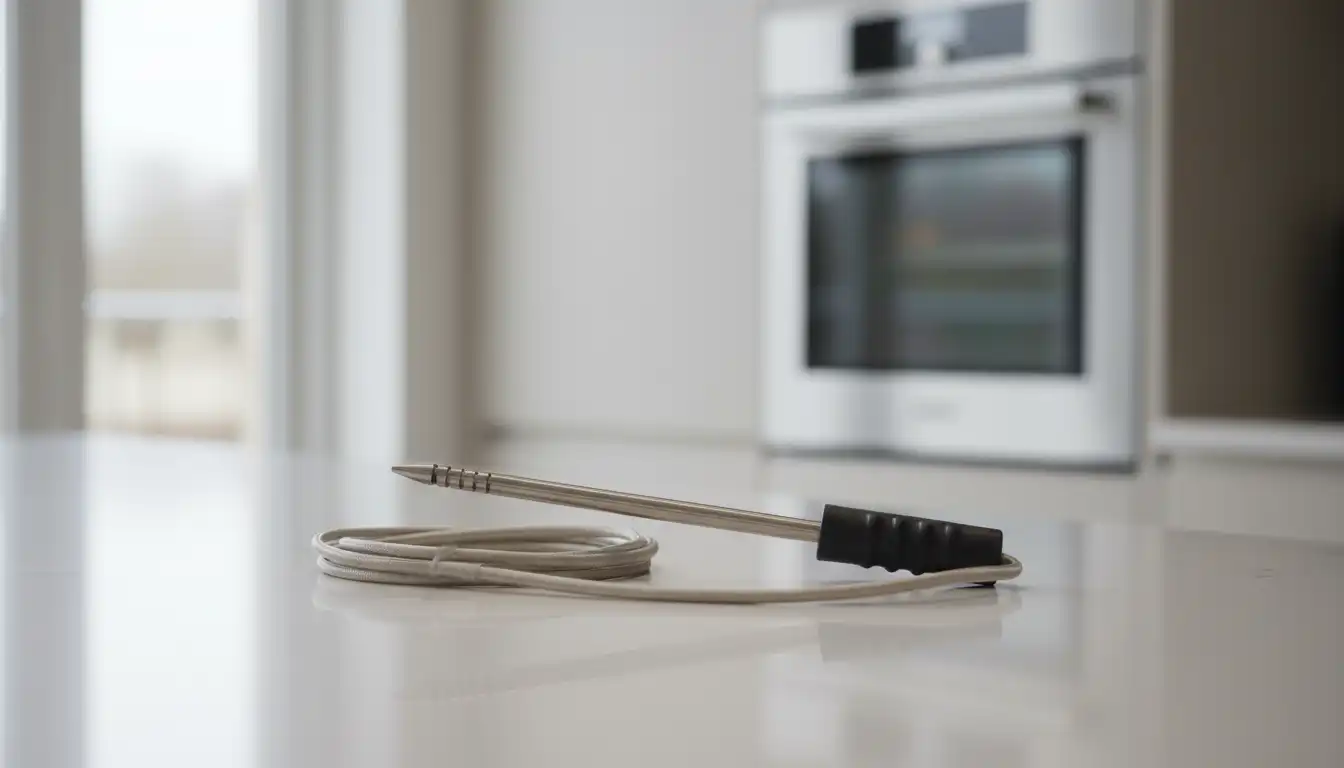
Begin with a careful examination of all components. Unplug the probe from the oven. Look closely at the metal tip of the probe for any signs of corrosion, buildup, or physical damage. Inspect the entire length of the braided cord for any kinks, frayed areas, or sharp bends that might indicate a broken wire inside.
Next, use a flashlight to look inside the probe receptacle in the oven wall. Check for any obvious debris, grease, or corrosion that could be preventing a good connection. This simple inspection often reveals the problem without any need for tools.
Step 2: Clean the Probe and Socket Meticulously
If you see any residue, a thorough cleaning is the next logical step. For the probe itself, use a soft cloth lightly dampened with isopropyl alcohol to wipe down the metal tip and the plug. This will dissolve any grease without leaving a residue.
To clean the socket, first, ensure the oven is completely cool and turned off at the circuit breaker. Dip a cotton swab in isopropyl alcohol and gently clean the inside of the receptacle. Be careful not to leave any cotton fibers behind. Allow both components to air dry completely before attempting to use them again.
Step 3: The “Click” Test for a Secure Connection
Once everything is clean and dry, it’s time to reconnect the probe. Plug it firmly into the socket, listening and feeling for that crucial “click.” If the connection feels loose or mushy, it may be the source of the issue. Gently wiggle it to see if the probe icon appears on the oven’s display, indicating recognition.
A poor connection is a very common point of failure. Don’t be afraid to apply firm, steady pressure to ensure it is fully seated in the receptacle. This simple action resolves a surprisingly high number of probe-related problems.
Step 4: Verify the Correct Cooking Mode
With the probe securely connected, turn your oven on. Navigate through the cooking modes and select one that is compatible with the probe, such as “Roast.” Your oven’s user manual is the best resource for confirming which modes to use.
When you select a compatible mode, the oven’s display should change to show a probe symbol or prompt you to set a target internal temperature. If this happens, your issue was likely related to mode selection. If not, proceed to the next step.
Step 5: Perform a Power Cycle Reset
Electronic glitches can often be cleared with a simple reset. First, try a “soft reset” by turning the oven off at the control panel, waiting a minute, and turning it back on. If this doesn’t work, perform a “hard reset.”
Go to your home’s circuit breaker panel and find the breaker that controls your oven. Switch the breaker to the “off” position for at least five minutes. This completely cuts power to the oven’s control board, allowing it to fully reset. Turn the breaker back on and test the probe again.
Step 6: Advanced Test with a Multimeter
If the previous steps have failed, the probe itself may be faulty. You can test its internal integrity using a multimeter, a device that measures electrical resistance. This is a more advanced step but can definitively tell you if the probe needs to be replaced.
Set your multimeter to the ohms setting (Ω). Touch the multimeter’s leads to the different metal sections on the probe’s plug. The probe’s resistance changes with temperature. At room temperature (around 70°F or 21°C), a functioning Bosch probe should have a resistance reading of approximately 1080-1100 ohms. If the reading is drastically different, or if the multimeter shows an open circuit (“OL”), the probe is defective and needs to be replaced.
Temperature and Resistance Reference Table
The resistance of an oven probe changes predictably with temperature. This table provides expected resistance values at various temperatures, which can help you verify if your probe is responding correctly when heated slightly (e.g., by holding it in your hand).
| Temperature (°F) | Temperature (°C) | Approximate Resistance (Ohms Ω) |
|---|---|---|
| 32°F | 0°C | ~1000 Ω |
| 70°F | 21°C | ~1080 Ω |
| 100°F | 38°C | ~1150 Ω |
| 200°F | 93°C | ~1350 Ω |
| 350°F | 177°C | ~1650 Ω |
When to Call a Professional Technician
If you have worked through all the troubleshooting steps and the probe is still not working, the problem may lie within the oven’s internal components. Issues like a faulty receptacle, damaged internal wiring, or a failed control board are more complex and potentially dangerous to repair yourself.
This is the point where it’s wise to call a qualified appliance technician. They have the diagnostic tools and expertise to safely access and repair the oven’s internal electronics. For recommendations on reliable service professionals, the community at a builders-forum_gem1 can often provide valuable local insights.
Proactive Care: Preventing Future Probe Failures
Once your probe is working again, a few simple habits can help prevent future issues. Proper maintenance is key to the longevity of this essential cooking tool.
Proper Cleaning and Storage
Always clean your meat probe after every use. Wipe it down with a damp, soapy cloth, being careful not to submerge the entire unit in water. Store the probe loosely coiled in a drawer or a dedicated container where the cord will not be crushed, kinked, or tangled.
Handle with Care
Treat the probe gently. When removing it from the oven or from a piece of meat, always pull on the plug or the handle of the probe itself, never on the cord. This prevents stress on the internal connections and is the single best way to extend the life of your probe.
Unlock Ultimate Precision: Calibrating Your Bosch Oven Probe
For the true culinary perfectionist, ensuring your probe is not just working but is also perfectly accurate is the final step. Some Bosch oven models allow you to calibrate the temperature probe for unparalleled precision, a feature that can elevate your cooking from great to flawless.
To check your probe’s accuracy, fill a glass with ice and add just enough cold water to fill the gaps. This creates a mixture with a known, stable temperature of 32°F (0°C). Insert your probe into the ice bath, ensuring it’s not touching the sides or bottom of the glass, and compare its reading to the known temperature. If your oven’s display shows a different temperature, you can adjust it. Consult your owner’s manual for instructions on accessing the calibration or offset settings, which typically allow you to adjust the temperature reading by a few degrees in either direction. This level of precision is especially important in unique home environments, such as a well-designed above-ground-basement_gem1, where ambient temperatures might differ.
Conclusion: Master Your Bosch Oven for Flawless Cooking
A non-functional Bosch oven probe can be a major source of cooking frustration, but it’s rarely an insurmountable problem. By following a logical troubleshooting process—from checking the connection and cleaning the components to performing a reset and testing with a multimeter—you can solve the majority of issues on your own.
Understanding how to care for and even calibrate your probe empowers you to take full control of your appliance. With a functioning and accurate probe, you can return to cooking with confidence, achieving perfectly roasted, juicy, and delicious results every single time.
