Blinds for Andersen 400 Series Windows? Your Ultimate Guide
Andersen 400 Series windows are renowned for their craftsmanship, durability, and performance. Homeowners choose them for their superior quality and timeless design. Yet, this same precision engineering can create a significant challenge when it’s time to choose and install window treatments.
The problem is that standard, off-the-shelf blinds often don’t account for the unique features of these windows. Many homeowners find themselves frustrated, with blinds that clash with the hardware, impede functionality, or risk damaging the expensive window frames. This guide provides a definitive solution to finding the perfect blinds for your Andersen 400 Series windows.
You'll Learn About
Why Standard Blinds Just Don’t Work for Andersen 400 Windows
Understanding the specific design elements of the 400 Series is the first step to appreciating why a one-size-fits-all approach to blinds is destined to fail. The issues primarily revolve around window operation and frame integrity. These are not just any windows; they are a significant investment in your home, and your window treatments should protect and enhance that investment.
From the iconic crank handles of the casement windows to the seamless tilt-wash feature of the double-hung models, every element is designed for performance. The wrong blinds can quickly turn these high-performance features into sources of daily annoyance. Let’s break down the most common points of conflict.
The Casement & Awning Window Crank Conundrum
The most prominent challenge with Andersen 400 Series casement and awning windows is the crank hardware. These smoothly operating handles project inward from the frame, occupying the very space where the bottom rail of a standard inside-mount blind would rest. An ill-fitting blind will either fail to close completely or will constantly knock against the crank.
This interference is more than just an inconvenience. Forcing a blind down over the hardware can strip the blind’s internal gears or damage the crank mechanism itself. The goal is to find a treatment that allows full, unimpeded operation of the window, letting you open and close it for ventilation without ever having to adjust your blinds.
Double-Hung Windows: Preserving the Tilt-to-Clean Function
A key feature of the 400 Series double-hung windows is their effortless tilt-to-clean mechanism. This allows you to clean the exterior glass from inside your home. However, an improperly selected or installed inside-mount blind can completely block this functionality.
If the blind’s headrail or brackets are mounted too close to the sash, they can prevent the window from tilting inward. This forces you to choose between clean windows and functional blinds. The right solution provides privacy and light control without sacrificing the convenient maintenance features you paid for.
Frame Integrity and Your Andersen Warranty
Perhaps the most significant concern for any Andersen window owner is the fear of damaging the frames. The 400 Series windows come with wood interiors and a protective vinyl exterior. Drilling into these frames without proper knowledge can have serious consequences.
Improperly placed screw holes can compromise the window’s seal, leading to moisture intrusion, and could even void your extensive Andersen warranty. It’s crucial to select blinds and an installation method that respects the window’s construction. Protecting your investment is paramount, and the right approach to window treatments is a key part of that.
The Solution: Matching the Right Blind to Your Window
The solution lies in a two-pronged approach: selecting the right style of blind and choosing the correct mounting method. Certain types of blinds are inherently better suited to the shallow depth and unique hardware of the 400 Series. By understanding these options, you can achieve a seamless, fully functional, and beautiful result.
Your choice will affect not only aesthetics but also energy efficiency, light control, and ease of use. The goal is to find a window treatment that feels like an integrated part of the window, not an awkward afterthought. This is where moving beyond generic advice and focusing on specific solutions for Andersen windows pays off.
Top Blind Styles for the Andersen 400 Series
Cellular Shades: Also known as honeycomb shades, these are often the top recommendation for Andersen 400 Series windows, and for good reason. Their slim profile and shallow mounting depth requirements make them an ideal candidate for an inside mount, even in windows with limited space. The honeycomb-shaped cells also provide excellent insulation, boosting the energy efficiency of your already high-performance windows.
Roller Shades: For a clean, minimalist aesthetic, roller shades are an excellent choice. When raised, they retract into a very compact roll, providing a completely unobstructed view. Their slim design means they are less likely to interfere with crank handles. Consider a “reverse roll” option, where the fabric comes off the front of the roll, to gain a little extra clearance from the glass.
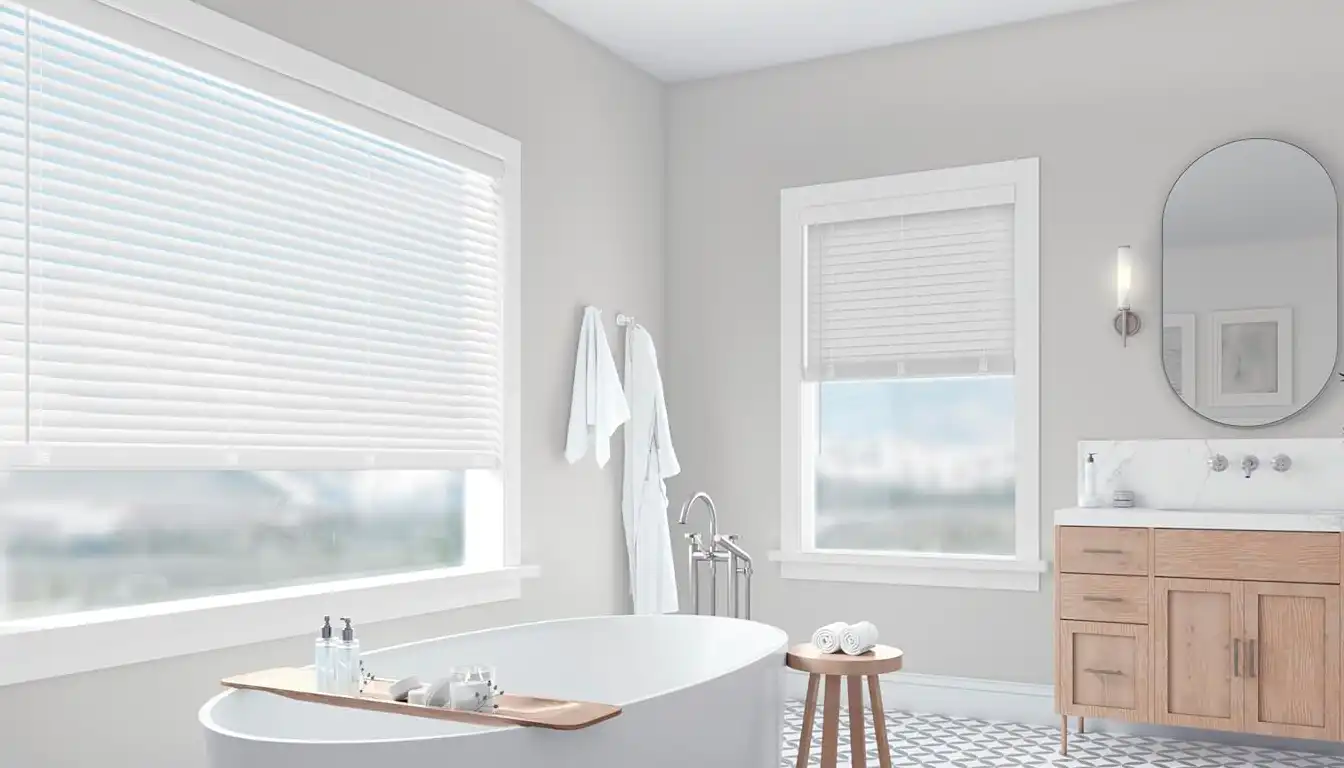
Faux Wood or Wood Blinds: Classic wood and durable faux wood blinds can absolutely work, but they require careful consideration. Due to the depth of their slats and the size of the headrail, they are often best installed as an outside mount. An outside mount places the blind on the wall or trim above the window, completely bypassing any conflict with cranks or window operation.
Roman Shades: Roman shades offer a touch of elegance and softness. Similar to wood blinds, their suitability for an inside mount depends on the window’s depth and the specific shade’s construction. Be mindful of the “stack height”—the amount of space the fabric takes up at the top when fully raised—to ensure it doesn’t block too much of your view.
Inside Mount vs. Outside Mount: The Definitive Choice
The single most important decision you will make is whether to mount your blinds inside the window frame or outside of it. For the Andersen 400 Series, this choice is not just about aesthetics; it’s about functionality. While many homeowners prefer the clean look of an inside mount, an outside mount is often the more practical and problem-free solution.
Making an informed decision requires a clear understanding of the pros and cons of each method as they relate specifically to your windows. This is a critical decision in any home improvement project, much like when weighing options in a comparison of United Windows vs Pella, where specific features dictate the best choice.
When to Opt for an Inside Mount
An inside mount can be achieved if your window frames have sufficient depth to accommodate the blind’s headrail without it protruding into the room. You must measure the depth of your window casing carefully. Take measurements at the top, middle, and bottom, and use the shallowest measurement to determine if the blind you want will fit. For casement windows, you must also ensure the blind, when lowered, will clear the crank handle.
A shallow-mount blind, like a cellular shade, is your best bet for a successful inside mount. This preserves the clean lines of your window trim and creates a custom, built-in appearance. However, if there is any doubt about clearance, it is safer to default to an outside mount.
Why an Outside Mount is Often the Superior Solution
For many Andersen 400 Series windows, especially casement and awning styles, an outside mount is the foolproof solution. By mounting the blind on the wall or the window trim above the opening, you eliminate any potential conflict with the window’s hardware and operation. This is the safest way to guarantee full functionality.
An outside mount also provides better light control, as the overlapping blind covers the entire window opening, reducing the “light gaps” often seen at the sides of inside-mount shades. This method ensures you never have to worry about the blind hitting the crank or preventing your double-hung windows from tilting in for cleaning.
Comparison: Mounting Options for Andersen 400 Series
| Feature | Inside Mount | Outside Mount |
|---|---|---|
| Pros | Clean, built-in look; showcases window trim. | Guarantees clearance for cranks and tilt-wash; better light control; easier to measure and install. |
| Cons | Requires significant window depth; can interfere with hardware; light gaps at sides. | Covers window trim; projects further into the room. |
| Best For | Double-hung windows with sufficient depth; use with low-profile shades like cellular or roller. | Casement and awning windows with cranks; windows with insufficient depth; achieving maximum light blockage. |
| Key Consideration | Measure depth precisely. Confirm the blind’s mounting depth requirements before purchase. | Allow for overlap. Add at least 2-3 inches to the width and height for proper coverage. |
How to Measure Your Andersen 400 Windows Accurately
Correct measurements are the foundation of a successful blind installation. An error of even a quarter of an inch can be the difference between a perfect fit and a non-functional window treatment. Always use a steel tape measure for accuracy and measure each window individually, as openings can vary slightly.
The process differs slightly depending on whether you’ve chosen an inside or outside mount. Follow these steps precisely to ensure you order the correct size. Double-check your numbers before placing an order for custom blinds.
Measuring for an Inside Mount
Width: Measure the inside width of the window frame at three different points: the top, middle, and bottom. Record the narrowest of these three measurements. This is the number you will use to order your blinds, as it ensures the blind will not be too wide to fit in the tightest spot.
Height: Measure the inside height of the frame from the top sill to the bottom sill at three points: left, middle, and right. Record the longest of these three measurements. This ensures the blind will be long enough to cover the entire opening.
Depth: Measure the depth from the surface of the glass to the edge of the window trim. This measurement is critical to confirm that the blind’s headrail will fit within the frame without protruding. Compare this to the manufacturer’s minimum depth requirement for the specific blind you are considering.
Measuring for an Outside Mount
Width: First, measure the width of the window opening, including the trim if you plan to cover it. To ensure proper light coverage and privacy, you need to add extra width. A good rule of thumb is to add 2 to 4 inches to each side (for a total of 4 to 8 inches of overlap). This final number will be your ordering width.
Height: Determine where you will mount the headrail—either on the trim above the window or on the wall. Measure from that point down to where you want the blinds to end, which is typically the bottom of the window sill or trim. Add a few inches of overlap at the bottom for better coverage. This measurement determines the height you will order.
Installation Secrets for a Flawless Finish
Proper installation is the final piece of the puzzle. The primary goal is to secure the blinds safely while protecting the integrity of your Andersen windows. This is where patience and attention to detail are crucial.
While many homeowners are confident in their DIY skills, it’s important to understand the unique considerations for these high-quality windows. The right approach will prevent costly mistakes and ensure your new blinds operate smoothly for years to come. Even small tasks, when done wrong, can lead to bigger issues, a lesson that applies to many DIY projects, from window installation to using heavy tools like when you are cutting asphalt with an angle grinder.
The Best Place to Drill
If you must drill for an outside mount, the safest place is on the wood trim (molding) surrounding the window, not the window frame itself. The trim is decorative and can be more easily repaired or replaced if needed. If mounting on the wall, use appropriate anchors to ensure the brackets are secure.
For an inside mount, you will have to drill into the top window jamb. Proceed with caution and use a drill bit that is slightly smaller than the screw diameter to ensure a snug fit. Do not drill into the side jambs where the operational mechanisms are located. Consulting the installation guide that comes with your specific blinds is non-negotiable.
Considering Professional Installation
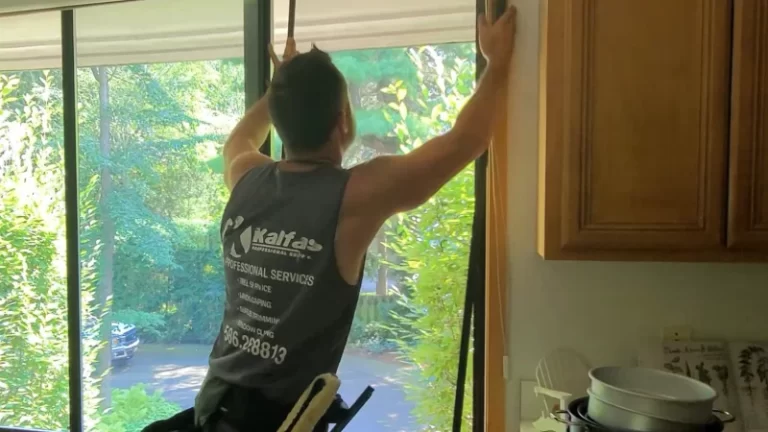
If you are at all unsure about measuring or installing the blinds yourself, hiring a professional is a wise investment. A professional installer has the experience to handle any quirks your window frames might have and can guarantee a perfect fit and function.
The cost of professional installation is often minimal compared to the cost of a new window or a custom-ordered blind that was mismeasured. This provides peace of mind and ensures your warranty remains intact. A well-run household relies on many professionally installed components, and the right appliances can make a world of difference, something to consider when you compare the SHX3AR75UC vs SHE3AR75UC dishwasher models, where installation can affect performance.
Conclusion: The Perfect Blinds for Your Andersen Windows
Choosing blinds for Andersen 400 Series windows doesn’t have to be a frustrating experience. The challenges presented by their unique design are easily overcome with the right knowledge and a clear strategy. By understanding the core issues—crank interference, tilt-wash functionality, and frame integrity—you can make informed decisions.
The solution is to select a blind style, such as a low-profile cellular or roller shade, that is compatible with the window’s design. Most importantly, carefully decide between an inside and outside mount, with the outside mount often being the most reliable and functional choice for casement and awning windows. Armed with precise measurements and a careful installation plan, you can successfully outfit your beautiful Andersen windows with treatments that enhance their style and preserve their flawless operation.