Blackout Shades Behind Plantation Shutters: Your Ultimate Guide
Plantation shutters offer timeless style and excellent light control, but they have one common drawback. Homeowners often discover that shutters alone don’t achieve a true, pitch-black room. This can be a major issue in bedrooms, nurseries, or home theaters where total darkness is essential.
The inherent design of plantation shutters, with their moving louvers and frame construction, creates small gaps. While minor, these gaps allow frustrating slivers of light to penetrate, preventing a complete blackout effect. This light leakage is a frequent problem for anyone sensitive to light during sleep or seeking a cinematic media room experience.
The most effective and elegant solution is to install blackout shades behind plantation shutters. This layered approach combines the classic aesthetic of shutters with the unparalleled light-blocking power of blackout shades, giving you the best of both worlds without compromise. This guide will walk you through everything you need to know to achieve perfect darkness and style.
You'll Learn About
Why Plantation Shutters Alone Aren’t Enough for Total Blackout
Plantation shutters are a premium window treatment for a reason. They provide excellent privacy, light filtering, and a significant boost to your home’s curb appeal. However, their structure is the very reason they cannot create a 100% blackout environment.
Light can seep through the small spaces between each louver, even when they are fully closed. Additional light bleed occurs around the perimeter of the shutter frame where it meets the window casing. For many people, this level of room darkening is sufficient, but for true blackout conditions, a second layer is necessary.
The Power of Layering: A Perfect Pairing
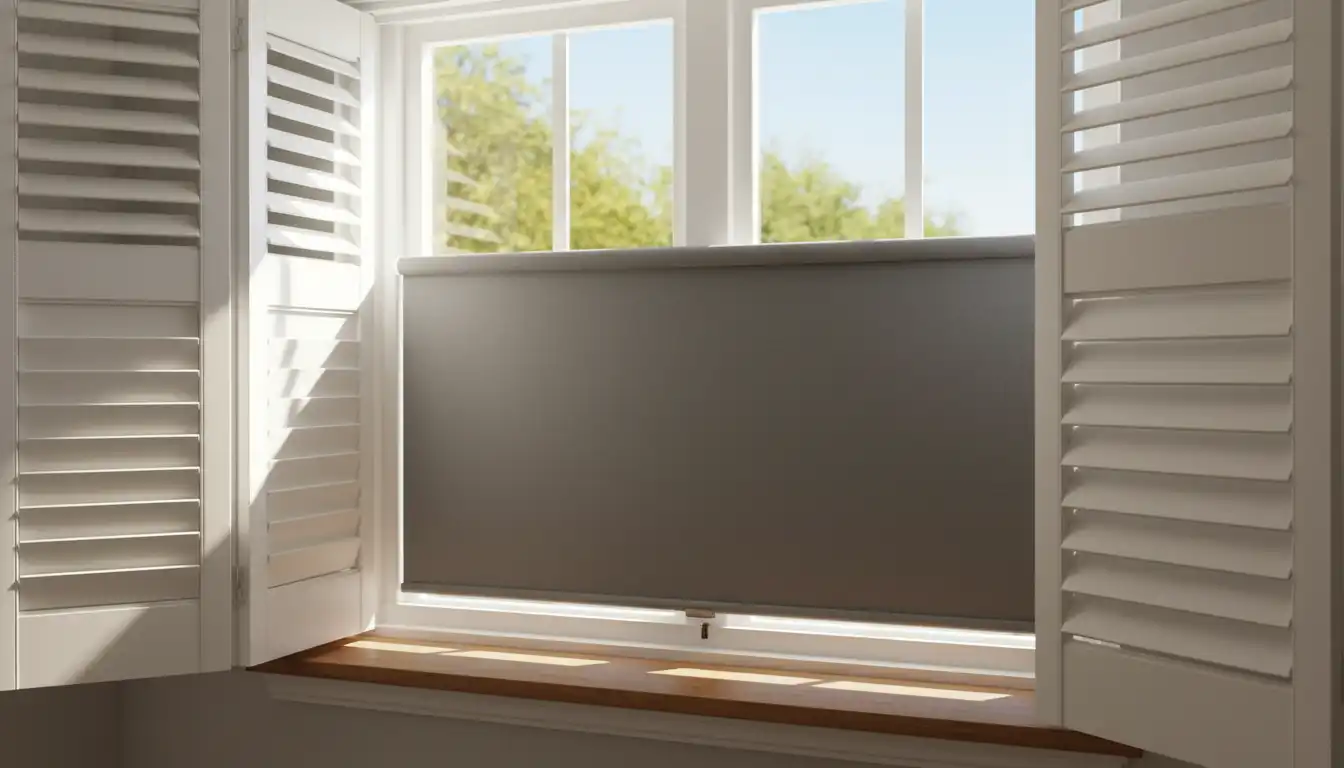
By placing a blackout shade directly against the window, behind the shutter, you create a formidable barrier to light. The shade addresses all the small gaps the shutter leaves behind. When the shade is down and the shutter louvers are closed, you achieve a near-total blackout effect that is impossible with either product on its own.
This combination allows for ultimate flexibility. During the day, you can leave the shade retracted and simply use the shutter louvers to control light and privacy. When you need complete darkness, a quick pull of the shade provides the blackout effect you desire, neatly concealed behind your beautiful shutters.
Choosing the Right Blackout Shades for Your Shutters
When selecting blackout shades to go behind your shutters, several types will work effectively. The best choice depends on your budget, aesthetic preferences, and the specific depth of your window casings. Cellular shades, roller shades, and Roman shades are the most popular and effective options.
It is crucial to consider the mounting depth required for both the shade and the shutter. The shade must be mounted close to the window glass, leaving enough clearance for the shutter’s louvers to operate without obstruction. Careful measurement is the key to a successful installation.
Blackout Cellular Shades
Also known as honeycomb shades, these are a top choice for pairing with plantation shutters. Their unique cellular structure traps air, providing an extra layer of thermal insulation. This can help keep your home cooler in the summer and warmer in the winter, potentially lowering your energy bills.
Blackout cellular shades are made with a foil or Mylar lining inside their cells, which blocks nearly all light. They have a very slim profile when raised, stacking neatly at the top of the window and remaining virtually invisible behind the shutter’s top frame. Their primary advantage is the combination of superior light blocking and energy efficiency.
Blackout Roller Shades
Roller shades are a simple, effective, and often more budget-friendly option. They consist of a single piece of blackout fabric that rolls up onto a tube at the top of the window. When installed as an inside mount, they fit snugly within the window frame, minimizing light gaps.
For even greater light control, you can opt for roller shades with side channels. These are U-shaped tracks installed along the sides of the window frame that the shade fabric runs inside, eliminating light leakage from the edges completely. Their minimalist design makes them a perfect functional companion to the more decorative shutters.
Blackout Roman Shades
For a more decorative touch, blackout Roman shades can also be used. These shades fold up into soft, elegant pleats when raised. While they have a slightly bulkier stack at the top of the window compared to roller or cellular shades, they can add a touch of softness and texture.
Ensure you select a Roman shade with a high-quality blackout liner. Proper measurement is especially important here to ensure the folded fabric doesn’t interfere with the operation of the shutter panels. This option is best for those who may occasionally want to open the shutters fully and still see a stylish shade underneath.
| Shade Type | Key Advantages | Considerations | Best For |
|---|---|---|---|
| Blackout Cellular (Honeycomb) | Excellent insulation, superior light blocking, slim profile when raised. | Can be more expensive than roller shades. | Bedrooms, nurseries, and rooms where energy efficiency is a priority. |
| Blackout Roller Shade | Cost-effective, minimalist design, option for side channels for total blackout. | Slight light gaps on sides without channels. | Home theaters, any room on a tighter budget. |
| Blackout Roman Shade | Adds a decorative, soft look; available in many fabrics. | Thicker stack at the top can interfere with shutter operation if not measured carefully. | Living rooms or bedrooms where style is as important as function. |
How to Measure for Blackout Shades Behind Shutters
Accurate measurements are the most critical step to ensure your shades and shutters work together flawlessly. You will be using an “inside mount” measurement for the shade, which means it will fit entirely inside the window frame.
You need a steel measuring tape for precision. Measure the width at the top, middle, and bottom of the inside of the window frame. Record the narrowest of these three measurements. Then, measure the height at the left, middle, and right sides, and record the tallest of the three. These are the numbers you will use when ordering your shades.
The Critical Depth Measurement
The most important and often overlooked measurement is the window depth. This is the distance from the surface of the window glass to the edge of the window trim. You need enough depth to accommodate both the blackout shade’s headrail and the closed shutter louvers.
Check the product specifications for the minimum mounting depth required for your chosen shade. Then, measure the depth your shutter requires. As a general rule, you will need at least 2.5 to 3 inches of total depth to comfortably fit a standard blackout roller or cellular shade behind a plantation shutter. Always confirm this with your shutter and shade providers.
Installation: A Step-by-Step Overview
The installation process is straightforward but requires care. The blackout shades must be installed first, before the plantation shutters are put in place. If you already have shutters, they will need to be temporarily removed.
First, install the mounting brackets for your blackout shade. They should be positioned at the top corners of the window frame, as close to the glass as possible to maximize clearance for the shutters. Once the brackets are secure, snap the shade’s headrail into place and test its operation.
With the shade installed, you can then proceed to mount the plantation shutter frame in front of it. Ensure there is enough clearance so that when you tilt the shutter louvers, they do not hit the shade. Once the shutter frame is installed and the panels are hung, your dual-layered window treatment is complete.
Motorization and Smart Home Integration
For the ultimate in convenience, consider motorizing your blackout shades. With the touch of a button on a remote or a command through a smartphone app, you can raise and lower the shades without ever having to open your shutter panels. This is especially useful for hard-to-reach windows.
Many motorized shade systems can be integrated into popular smart home platforms like Amazon Alexa, Google Assistant, and Apple HomeKit. You can create schedules to automatically lower the shades at night and raise them in the morning, creating a perfect, automated environment for sleep and waking.
Beyond Light Control: The Added Benefits
While achieving a blackout room is the primary goal, this combination offers several other significant advantages that add value and comfort to your home. These benefits make the investment in a layered system even more worthwhile.
This solution enhances not just your sleep, but also your home’s energy performance and tranquility. The aesthetic cohesion of keeping your stylish shutters while adding hidden functionality is a major plus for design-conscious homeowners. Tackling a project like this often inspires homeowners to address other small issues, because a perfectly finished room is a sum of its parts, right down to the details. Just as you would want to fix annoying issues like vent covers falling out of ceiling, ensuring your windows are perfectly dressed completes the feeling of a well-maintained home.
Enhanced Thermal Insulation
Plantation shutters already provide some insulation, but adding a blackout cellular shade creates a powerful thermal barrier. The air trapped in the shade’s honeycomb pockets, combined with the solid barrier of the shutter, can significantly reduce heat transfer through your windows.
This means your home stays more comfortable year-round, and your HVAC system doesn’t have to work as hard. This increased energy efficiency can lead to noticeable savings on your utility bills over time. To maximize this effect, consider how your wall colors contribute; spaces with bright finishes like alabaster walls and ceiling can feel cooler by reflecting interior light, further enhancing the comfort created by your window treatments.
Superior Noise Reduction
The combination of a fabric shade and a solid shutter creates multiple layers that absorb and dampen sound waves from the outside. This can dramatically reduce the amount of traffic noise, barking dogs, or other neighborhood sounds that enter your home.
This noise reduction is particularly beneficial for bedrooms and nurseries located on busy streets or in dense urban areas. A quieter room, combined with total darkness, creates the ideal sanctuary for restful sleep and peaceful relaxation.
Increased Home Value and Aesthetics
Plantation shutters are a highly desirable feature that can increase a home’s resale value. By adding a functional, hidden blackout solution, you are enhancing a premium feature even further. This thoughtful upgrade is attractive to potential buyers who value both style and practicality.
From an interior design perspective, this solution allows you to maintain the clean, classic look of plantation shutters without compromise. The blackout shade remains completely hidden during the day, so your decor is not affected. This allows you to achieve modern functionality without sacrificing timeless style, making it a smart investment in your home. For those looking to purchase new window treatments, it pays to understand market trends; you can sometimes find great deals by tracking pricing patterns. Exploring a resource on the Blinds.com sale history could offer insights into the best times to buy.
Final Words
Combining blackout shades with plantation shutters is the ultimate solution for achieving total darkness without sacrificing your home’s architectural beauty. While shutters excel at privacy and style, their adjustable louvres naturally allow small amounts of “light bleed.“
By installing a cellular or honeycomb shade discreetly behind the shutter frame, you create a secondary barrier that seals off these gaps. This layered approach not only turns your bedroom into a true sanctuary for sleep but also significantly boosts your home’s energy efficiency by adding an extra layer of thermal insulation against the window glass.
Ultimately, this “shutter and shade” duo offers the best of both worlds: high-end aesthetics and functional performance. Whether you are a shift worker needing daytime rest or a parent creating a nursery, this setup provides 100% light control at your fingertips.
By choosing a low-profile, integrated design, the shades remain invisible when retracted, preserving the clean lines of your shutters during the day. Investing in this simple upgrade ensures that your windows work harder for you, providing a quieter, cooler, and darker environment whenever you need it most.