
Big TV on a Small Stand? Stop Before You Make This Huge Mistake
You’ve just brought home a massive, beautiful new television. The picture is stunning, the features are incredible, and you can’t wait to set it up. There’s just one problem: your existing TV stand looks comically small in comparison. The question then arises, can you place a big TV on a small stand? While it might seem like a temporary fix, this decision can lead to disastrous consequences.
Placing a large television on a stand that is too small is a significant safety risk. It creates a top-heavy, unstable setup that can easily be tipped over by a slight bump from a child, a pet, or even an accidental nudge. This not only risks destroying your expensive new television but, more importantly, poses a serious threat of injury. Understanding the principles of balance, weight distribution, and proper support is crucial for the safety and aesthetics of your home entertainment setup.
You'll Learn About
The Dangers of an Undersized TV Stand
The primary issue with placing a large TV on a small stand is the severe lack of stability. Modern televisions, while lighter than their older counterparts, still have a significant weight that needs to be properly supported. A small stand may not have the width or depth to provide a stable base, making the entire setup precarious.
Every TV stand is designed with a specific weight capacity, and exceeding this limit can cause the stand to bend, crack, or even collapse over time. Furthermore, the aesthetic balance of your room is compromised. A large TV towering over a tiny stand creates a visually jarring, top-heavy look that detracts from your home’s decor.
Understanding Weight, Balance, and Center of Gravity
The stability of your television setup is a matter of physics. A wider base provides a more stable foundation. When a TV is placed on a stand that is narrower than the television itself, the center of gravity is higher and less stable. This makes it much more susceptible to tipping over from even minor forces.
Think of it like trying to balance a tall, narrow object versus a short, wide one. The wider object is inherently more stable. The same principle applies to your TV and its stand. The ideal setup has a stand that is several inches wider than the television on both sides.
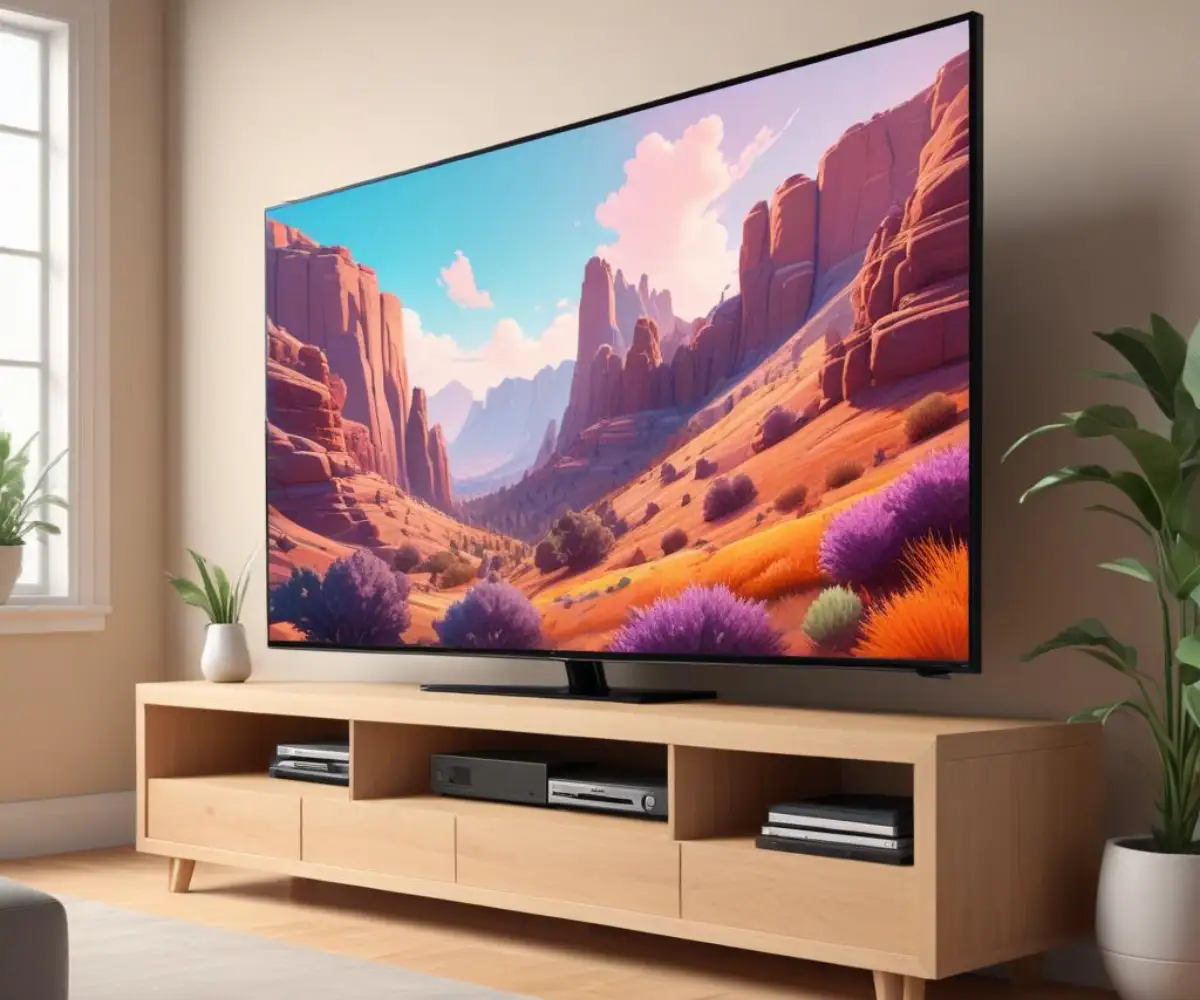
The Mistake of Overlooking TV Feet Placement
A critical factor that is often overlooked is the placement of the television’s feet. Many modern large-screen TVs have feet located at the far ends of the screen to provide stability. If these feet are placed right at the edge of, or even slightly overhanging, a small stand, the risk of a tip-over accident increases dramatically.
It’s essential to ensure that the entire base of the TV’s feet rests securely on the surface of the stand with several inches to spare on all sides. This simple check can be the difference between a secure setup and a preventable accident.
The Right Way: Sizing Your TV Stand for Safety and Style
Choosing the correct size for your TV stand is not just a matter of safety; it also significantly impacts the overall look and feel of your room. A well-proportioned stand will complement your television and enhance your viewing experience. There are a few key principles to follow when selecting the right stand.
The general rule of thumb is that your TV stand should be at least a few inches wider than your TV. This provides a stable base and creates a visually pleasing, balanced look. For a more dramatic, entertainment-center feel, you can opt for a stand that is even wider, providing space for speakers, gaming consoles, or decorative items.
The Golden Rule of TV Stand Width
For optimal safety and aesthetics, your TV stand should be at least 4-6 inches wider than your television, allowing for 2-3 inches of space on each side. This ensures that the TV is well-supported and prevents the setup from looking top-heavy. Never should the television overhang the edges of the stand.
To determine the required width, you need to measure the actual width of your television from edge to edge, not the diagonal screen size that is advertised. This measurement is crucial for selecting a stand that provides adequate support and a balanced look.
Calculating the Perfect TV Stand Height
The height of your TV stand is just as important as its width for a comfortable viewing experience. The goal is to position the center of the television screen at or slightly below eye level when you are seated. A stand that is too high or too low can cause neck strain and discomfort during long viewing sessions.
To find the ideal height, sit in your usual viewing spot and measure the distance from the floor to your eye level. Then, measure the height of your television and divide it by two to find the center. Subtract the center height of the TV from your seated eye-level measurement to determine the optimal height for your TV stand.
| TV Size (Diagonal) | Approximate TV Width | Minimum Recommended Stand Width |
|---|---|---|
| 55 inches | 48 inches | 52-54 inches |
| 65 inches | 57 inches | 61-63 inches |
| 75 inches | 66 inches | 70-72 inches |
| 85 inches | 74 inches | 78-80 inches |
Safe Alternatives and Solutions
If you find yourself with a big TV and a small stand, it’s not the end of the world. There are several safe and aesthetically pleasing solutions that don’t involve precariously balancing your new television. These alternatives can provide the stability your setup needs while also enhancing the overall look of your entertainment area.
One of the most popular and secure solutions is to mount the television on the wall. This completely eliminates the risk of a tip-over and can create a sleek, modern look. Another option is to purchase a universal TV stand or base that attaches to the VESA mounting holes on the back of your television, providing a stable central support that can fit on a smaller stand.
Wall Mounting: The Ultimate Safety Solution
Wall mounting your television is the safest and most secure option, especially in homes with children or pets. A properly installed wall mount will hold your TV firmly in place, preventing any chance of it being knocked over. If you’re dealing with a challenging wall surface, such as drywall over concrete, it’s crucial to use the correct hardware and techniques. For those situations, exploring how to mount a TV to drywall over concrete block can provide the specific guidance needed for a secure installation.
When mounting a TV, especially on drywall, using the right anchors is non-negotiable. A detailed guide on hanging a TV with drywall anchors can walk you through the process to ensure a secure and lasting installation. Also, don’t forget the importance of every piece of hardware; if you forgot to use washers on your TV mount, it’s a mistake that needs to be rectified to ensure a secure hold.
Universal TV Stands and VESA Mounts
If wall mounting isn’t an option, a universal TV stand is an excellent alternative. These stands attach to the VESA (Video Electronics Standards Association) mounting holes on the back of your TV, providing a sturdy and centered base. This allows you to place a larger TV on a smaller stand safely, as the weight is distributed through the center of the stand.
VESA is a universal standard that ensures compatibility between televisions and mounting hardware. By checking your TV’s VESA pattern, you can easily find a compatible universal stand that will provide the stability and security your setup requires.
Securing Your Existing Setup
If you must temporarily use a smaller stand, it is crucial to take extra safety precautions. Anti-tip straps are an essential safety device that can secure your television to the wall or the stand itself, preventing it from falling forward. These straps are inexpensive and easy to install, providing an added layer of protection.
Additionally, you can add weight to the lower shelves of your TV stand to increase its stability. Placing heavy items like books or decorative objects on the bottom of the stand can lower its center of gravity and make it less likely to tip over. However, these are temporary measures, and investing in a properly sized stand or a secure mounting solution is always the best long-term strategy.
