
Bianco Superiore Quartzite Reviews: The Unfiltered Truth Before You Buy
Choosing a new countertop is a significant investment for any home. You want a surface that is not only visually stunning but also durable enough to withstand the rigors of daily life. Bianco Superiore quartzite has emerged as a top contender for those seeking the luxurious look of marble with superior resilience.
The central problem homeowners face is navigating the conflicting information and potential pitfalls associated with natural stone. Is Bianco Superiore truly as durable as advertised, or does it harbor hidden vulnerabilities? This guide offers an unfiltered look into what you absolutely must know before committing to this beautiful stone.
You'll Learn About
What is Bianco Superiore Quartzite? Unveiling the Stone’s True Nature
Before diving into performance reviews, it’s crucial to understand what Bianco Superiore is. It is a natural metamorphic rock, originating from sandstone that has been subjected to intense heat and pressure within the Earth’s crust. This geological process recrystallizes the quartz grains, creating an incredibly hard and dense stone.
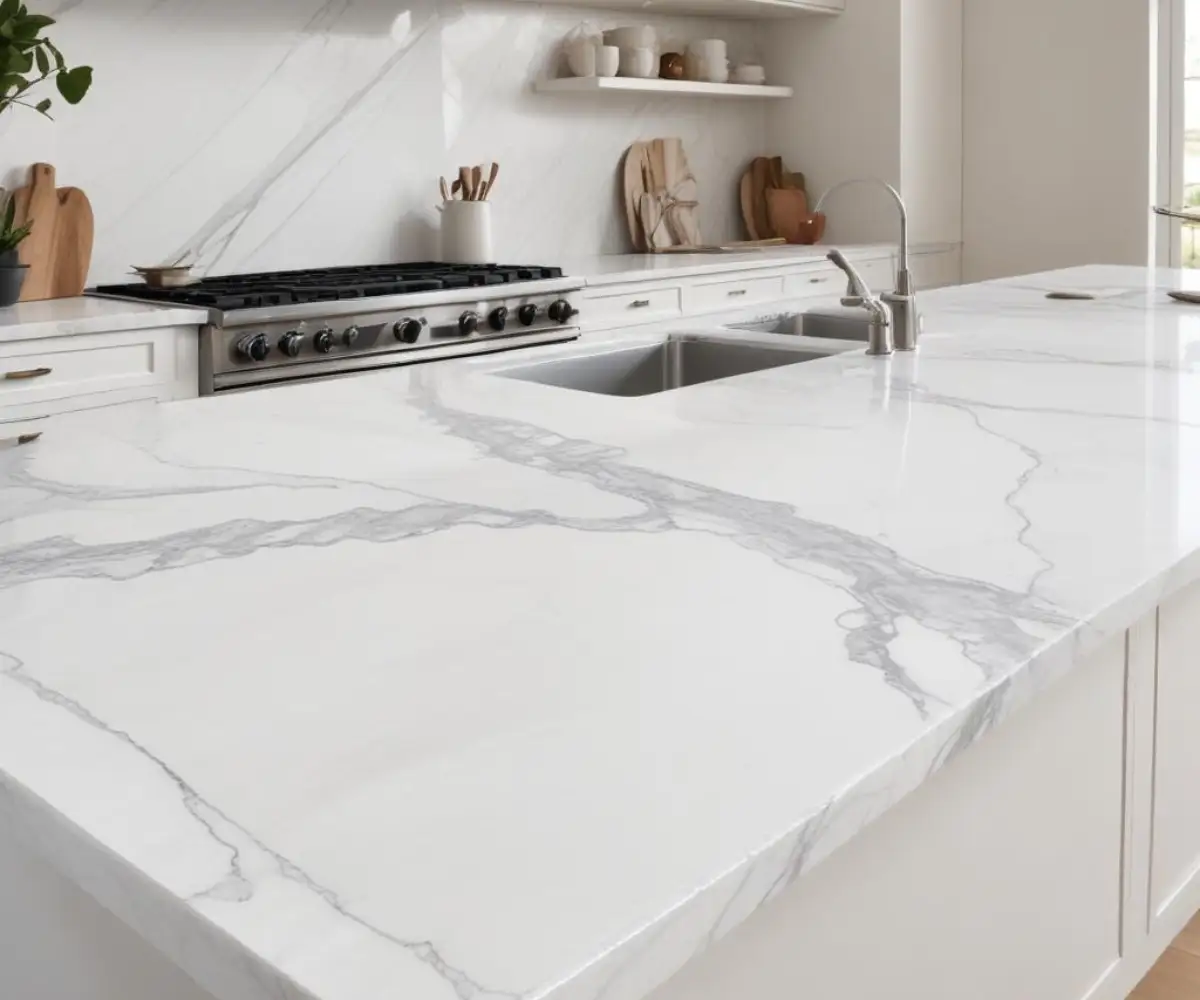
Visually, Bianco Superiore is celebrated for its soft white or light grey background, graced with delicate and often dramatic grey veining. This appearance makes it a popular alternative to classic marbles like Calacatta or Carrara, offering a similar aesthetic with what is often marketed as greater durability.
The Quartz vs. Quartzite Confusion
A common point of confusion is the difference between quartzite and quartz. Quartzite is a 100% natural stone, quarried directly from the earth in large blocks before being cut into slabs. In contrast, quartz countertops are engineered surfaces, composed of approximately 90% ground quartz crystals mixed with resins, polymers, and pigments.
This distinction is critical. Because quartzite is a natural product, each slab is unique in its veining and coloration. While quartz offers consistency, quartzite provides a one-of-a-kind piece of natural art for your home.
The Durability Debate: Bianco Superiore Quartzite Reviews on Strength
The primary appeal of quartzite is its reputed hardness and resilience. On the Mohs scale of mineral hardness, true quartzite scores around a 7. This makes it harder than glass and even granite, offering excellent resistance to scratches and chipping from everyday kitchen activities.
Homeowners consistently praise its ability to withstand high temperatures, a significant advantage in a kitchen setting. You can place hot pots and pans directly on the surface without fear of scorching or melting, a clear benefit over engineered quartz surfaces which can be damaged by excessive heat.
The Etching and Staining Controversy: A Homeowner’s Critical Guide
Herein lies the most significant issue reported in homeowner reviews: the risk of etching and staining. The problem often stems from mislabeling within the stone industry. Some slabs sold as “soft quartzite” or even as true quartzite are actually marbles or dolomitic marbles.
True quartzite is chemically resistant to common household acids like lemon juice or vinegar and will not etch. However, if a slab contains calcite inclusions or is mislabeled marble, it will etch when it comes into contact with acids, leaving a dull, discolored mark. Similarly, the porosity of quartzite can vary. While some varieties are very dense, others can be more porous and susceptible to staining if not properly sealed.
Your Most Important Task: Test Your Slab
To avoid this devastating issue, it is absolutely essential to test a sample of the *exact slab* you intend to purchase. Do not rely on a small sample from a showroom that may not represent the slab you will receive. Obtain a sample and perform these two simple tests:
-
The Scratch Test: Use a glass tile or a sharp knife blade and try to scratch the surface of your sample. True quartzite is harder than glass and steel and will easily scratch the glass or remain undamaged by the knife.
-
The Acid Test: Place a small amount of vinegar or lemon juice on an inconspicuous part of the sample. Let it sit for about 15 minutes, then wipe it clean. If there is no change to the surface—no dulling, no discoloration—you have true quartzite.
Performing these tests provides peace of mind and is the single most important piece of advice from experienced homeowners and stone professionals. Making a decision on a major home feature is similar to comparing trusted brands for other projects, like deciding between Therma-tru vs Jeld-wen doors; you must do your due diligence.
Maintenance and Upkeep: What Real Ownership Looks Like
Assuming you have verified you have a true, high-quality slab of Bianco Superiore quartzite, the maintenance routine is straightforward but non-negotiable. It is not a zero-maintenance surface, and understanding this is key to long-term satisfaction.
Daily cleaning should be done with a pH-neutral cleaner or simply mild soap and water. Avoid abrasive scrubbers and harsh, acidic cleaners as they can damage the sealer. Spills, especially of acidic or colorful substances like wine, coffee, or tomato sauce, should be wiped up promptly.
The Sealing Imperative
Because of its natural porosity, Bianco Superiore quartzite must be sealed to protect against staining. A high-quality impregnating sealer will penetrate the stone and fill the pores, preventing liquids from being absorbed. Your fabricator should apply a sealer upon installation.
You will need to reseal the countertops periodically. A simple way to check if it’s time to reseal is to sprinkle some water on the surface. If the water beads up, the sealer is working; if it soaks in and darkens the stone, it’s time to reapply. For most kitchens, this is an annual task.
| Feature | Bianco Superiore Quartzite | Granite | Marble | Engineered Quartz |
|---|---|---|---|---|
| Hardness (Mohs) | ~7 | 6-7 | 3-4 | ~7 |
| Heat Resistance | Excellent | Excellent | Good | Fair to Poor |
| Scratch Resistance | Excellent | Very Good | Poor | Very Good |
| Stain Resistance | Good (When Sealed) | Good (When Sealed) | Poor | Excellent |
| Acid Resistance (Etching) | Excellent (If True Quartzite) | Excellent | Poor | Excellent |
| Maintenance | Periodic Sealing Required | Periodic Sealing Required | High Maintenance, Sealing | Virtually None |
Cost vs. Value: A Candid Look at Bianco Superiore Quartzite Pricing
Bianco Superiore is a premium natural stone, and its price reflects its beauty and durability. The cost can vary significantly based on the quality of the slab, the complexity of its veining, and your geographic location. Expect it to be in the upper tier of countertop material pricing, often comparable to or exceeding high-end granites and marbles.
The long-term value comes from its longevity and timeless appeal. A properly maintained quartzite countertop can last a lifetime and can be a significant selling point, adding to your home’s resale value.
Hidden Costs Beyond the Slab
When budgeting for your project, remember to account for costs beyond the material itself. Fabrication and installation are major expenses. Quartzite is a hard material that requires specialized tools and expertise to cut and finish, which can increase labor costs compared to other stones.
The weight and fragility of the large slabs during transport and installation mean that professional installation is not just recommended, it’s essential. This is not a DIY-friendly project; the complexity requires seasoned professionals, much like one would need for a challenging task like figuring out how to change a high ceiling chandelier safely and correctly.
Design & Aesthetics: Integrating Bianco Superiore into Your Home
The aesthetic versatility of Bianco Superiore is one of its greatest assets. Its neutral, elegant palette serves as a beautiful foundation for a wide range of design styles, from modern minimalist to classic traditional.
It pairs exceptionally well with a variety of cabinet colors, including crisp whites, warm woods, and bold navy blues or deep greens. The choice of a polished finish will provide a reflective, high-end look, while a honed or leathered finish offers a softer, more contemporary matte appearance. The texture of the stone can also play against different wall finishes, creating an interesting dynamic for those considering unique surfaces like concrete over drywall.
The Verdict: Is Bianco Superiore Quartzite the Right Choice for You?
Bianco Superiore quartzite can be an outstanding countertop choice, offering a rare combination of breathtaking beauty and robust performance. However, it is not without its risks and responsibilities. The potential for mislabeling and the absolute necessity of proper sealing are critical factors to consider.
This stone is best suited for discerning homeowners who value the unique beauty of natural stone, are willing to invest in a premium product, and are committed to performing the required maintenance. If you are seeking a completely maintenance-free surface, an engineered quartz product may be a better fit.
Final Word of Advice
The most important takeaway from countless Bianco Superiore quartzite reviews is this: your satisfaction hinges on the quality of your specific slab and the expertise of your fabricator. Do your homework, test your slab thoroughly, choose a reputable supplier and installer, and commit to the simple maintenance routine. By doing so, you can ensure your Bianco Superiore countertops remain a source of pride and beauty in your home for many years to come.
