
Best Stackable Washer Dryer for Rental Property: A Landlord’s Guide
Providing in-unit laundry is one of the most effective ways to attract high-quality tenants and maximize rental income. Yet, the wrong appliance choice can transform this premium amenity into a costly, time-consuming nightmare. For landlords, the central problem isn’t just finding a washer and dryer; it’s finding a stackable washer dryer that withstands constant use by various tenants, fits into tight spaces, and doesn’t lead to a flood of maintenance calls.
Many property owners make the mistake of choosing a unit based on retail price alone, overlooking the long-term consequences. This often leads to frequent breakdowns, tenant complaints about noise or complexity, and unexpectedly high utility bills, eroding the very profit the amenity was meant to generate. The ideal solution requires a shift in perspective from a simple purchase to a strategic investment in durability, simplicity, and efficiency.
You'll Learn About
Why a Stackable Unit is a Landlord’s Secret Weapon
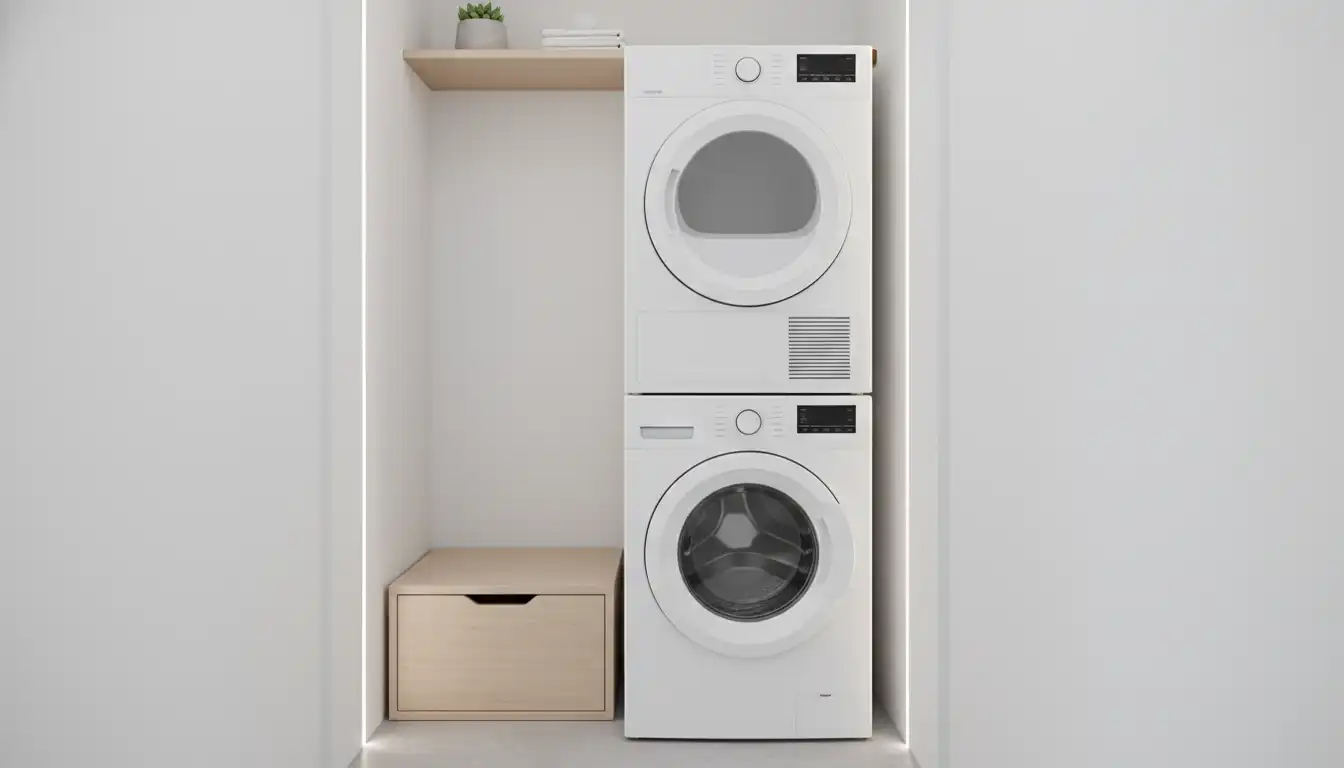
The strategic advantage of a stackable washer dryer in a rental property is undeniable, especially in multi-family housing or smaller single-family homes. Their vertical design is the most obvious benefit, liberating valuable floor space that can be used for storage or simply make a small unit feel more open and less cluttered. In a competitive rental market, a designated laundry closet with a stackable unit is a powerful differentiator.
Beyond optimizing space, offering in-unit laundry directly impacts your bottom line. Properties with this feature consistently command higher rent and experience lower vacancy rates. Tenants are willing to pay a premium for the convenience of not having to use a laundromat, making it a feature that pays for itself over time.
The Hidden Headaches Most Landlords Overlook
While the benefits are clear, the potential pitfalls are significant and often underestimated. The primary challenge is the sheer wear and tear. A washer and dryer in a rental property will see significantly more use, and often less careful use, than one in a typical owner-occupied home. This is where the temptation to buy a cheap, consumer-grade model backfires spectacularly.
Furthermore, overly complex machines with countless cycles and digital touch screens are a recipe for disaster. Tenants, who may be short-term, have little incentive to read a manual. They will press buttons until something works, leading to improper use, service calls for simple “user error” issues, and a frustrated tenant experience. Simplicity is not a missing feature; it is the most important one.
Core Features to Demand in a Rental-Ready Stackable Unit
To avoid these headaches, the focus must be on a specific set of features tailored for the rental environment. These core attributes prioritize longevity, ease of use, and low operational costs over flashy, unnecessary extras. Investing in these areas upfront will save a fortune in repairs and protect your property’s reputation.
Think of the appliance as a long-term asset, not a disposable commodity. A unit that lasts ten years with minimal issues is profoundly more valuable than one that costs half as much but needs replacing every three years. This is the central calculation every savvy landlord must make.
Unbreakable Simplicity: Prioritizing User-Friendly Controls
The ideal stackable washer dryer for a rental property should be operable by anyone without a manual. This means prioritizing robust, mechanical-style controls. Look for sturdy knobs and dials over sensitive electronic touchpads, which are more prone to failure and can be confusing for users.
The fewer cycles, the better. A machine with basic options like “Normal,” “Heavy Duty,” and “Delicates” is more than sufficient. This reduces the chance of tenants selecting an incorrect, inefficient, or potentially damaging cycle for their laundry, which in turn reduces service calls and extends the machine’s life.
The Durability Factor: Commercial-Grade Components Matter
Durability is paramount. Look for models that boast commercial-grade components, even if they are marketed for residential use. A key indicator of quality is a direct-drive motor instead of a belt-driven one. Direct-drive systems have fewer moving parts, which means fewer potential points of failure and a much quieter, more reliable operation over the long term.
Another crucial element is the wash drum material. A stainless steel tub is far superior to plastic or porcelain. It resists rust, chipping, and odors, and it won’t snag or damage clothing, which is a potential source of tenant complaints. This is a non-negotiable feature for any machine destined for a rental property.
Taming the Shake: Advanced Vibration Reduction Technology
Excessive vibration is more than just a noise issue; it’s a structural concern. A shaking washer can annoy tenants in adjacent units and, over time, cause wear and tear on your property’s floors and walls. This is especially critical in second-floor laundry closets, where vibrations can be amplified.
Modern stackable units often feature advanced anti-vibration technology, including internal sensors and counter-balancing systems that automatically adjust the load. Investing in a model with these features protects your building and prevents a steady stream of complaints. It’s as important as ensuring your property is free from other forms of damage; for instance, you’d never want to ignore something like finding out how to remove concrete splatter from Hardie board, as neglecting it can cause permanent damage.
Efficiency is Profit: Decoding Energy Star and Water Factor
Whether you include utilities in the rent or the tenant pays them, efficiency matters. An inefficient appliance can make your unit less attractive to prospective tenants who are savvy about utility costs. For landlords who pay for water, a low Water Factor (WF) rating is essential for profitability.
Always choose an ENERGY STAR certified model. This certification ensures the appliance meets strict energy efficiency guidelines set by the EPA. This not only saves money on electricity and water but also appeals to the growing number of environmentally conscious renters.
Top Stackable Washer Dryer Models for Landlords in 2025
Choosing the right model involves balancing cost, durability, and features. The following table highlights several units that are consistently well-regarded for their performance in demanding rental environments. The focus is on reliability and simple, effective operation.
| Model | Control Type | Motor Type | Key Landlord-Friendly Feature |
|---|---|---|---|
| Speed Queen SF7007WE | Mechanical Knobs | Direct Drive | Commercial-Grade Durability & 5-Year Warranty |
| LG WashTower WKEX200HWA | Digital Knob/Buttons | Direct Drive | Center Control Panel (Easy Reach for All Tenants) |
| GE GUD27ESSMWW | Mechanical Knobs | Belt Drive | Excellent Value & Simplicity |
| Whirlpool WET4024HW | Mechanical Knobs | Belt Drive | Compact Footprint & Trusted Reliability |
While the LG WashTower features a more modern digital interface, its single, centrally located control panel is a significant ergonomic advantage over traditional stackables where the dryer controls are often too high for shorter individuals to reach comfortably. For pure, unadulterated durability and peace of mind, Speed Queen’s commercial heritage makes it a top-tier, albeit more expensive, choice for landlords who want to “set it and forget it.”
Installation and Maintenance: Protecting Your Investment
The best appliance in the world can become a liability if installed incorrectly. Proper installation and a proactive maintenance plan are critical to protecting your investment and ensuring years of trouble-free operation. This is not an area to cut corners.
A poorly installed unit can lead to leaks, electrical issues, or even fires. The long-term health of your property depends on getting this step right, just as you would never attempt a risky fix like trying to bypass a hot tub circuit board; the potential for disaster is simply too high.
Professional Installation is Non-Negotiable
Always hire a qualified and insured professional to install the unit. They will ensure the machine is perfectly level to minimize vibration, that the water supply lines are correctly connected with high-quality, burst-proof hoses, and that the dryer vent is properly installed. A clogged or improperly routed dryer vent is a major fire hazard.
The installer will also confirm that the electrical outlet is appropriate for the appliance’s requirements, preventing tripped breakers or more severe electrical problems. This initial cost for professional installation is a small price to pay for safety and peace of mind.
A Proactive Maintenance Schedule for Landlords
A simple, proactive maintenance routine can double the life of your appliance. Between tenancies, perform a quick check-up. This includes pulling the unit out to inspect the water hoses for any bulges or cracks, ensuring the clamps are tight, and cleaning the dryer vent line completely from the machine to the exterior vent.
Also, take the time to clean the washer’s water inlet screens, which can become clogged with sediment over time. Running a washing machine cleaner through an empty hot cycle will also help prevent buildup and odors. These small steps prevent the majority of common service calls.
Beyond the Machine: Building a Better Laundry Space
The appliance is the star, but the supporting environment matters too. A well-designed laundry space can further protect your investment. Ensure the floor beneath the unit is solid and level; a reinforced floor can make a significant difference in reducing vibration and noise transfer.
The quality of the surrounding storage and surfaces also contributes to the overall durability of the space. Investing in well-made storage solutions is crucial. When considering built-ins, many landlords wonder, are Legacy cabinets good quality for a high-traffic area like a laundry room? Choosing robust materials for flooring and cabinetry prevents damage from leaks, spills, and the general wear and tear of a rental unit.
Ultimately, selecting the best stackable washer and dryer for a rental property is a strategic decision that prioritizes long-term value over short-term savings. By focusing on durability, user-friendly controls, and operational efficiency, you can provide a highly sought-after amenity that enhances your property’s appeal and profitability. This thoughtful approach minimizes headaches, satisfies tenants, and solidifies your reputation as a quality landlord.
