Best Place to Buy Doors: An Insider’s Guide Before You Spend a Dime
Choosing a new door for your home feels like it should be simple. Yet, homeowners often find themselves stuck in a cycle of confusion, overwhelmed by endless choices and fearing a costly mistake. It’s a decision that impacts your home’s curb appeal, security, and energy efficiency, making the pressure to get it right immense.
The core of the problem isn’t just the door itself, but where you buy it. The retailer you choose dictates the quality, price, selection, and level of expert guidance you’ll receive. Making the wrong choice can lead to a low-quality door that warps, a poor installation that causes drafts, or simply overpaying for a product you could have found for less elsewhere.
You'll Learn About
The Overwhelming Search: Why Finding the Right Door Is So Hard
The journey to a new door is filled with potential pitfalls. You face a barrage of materials: wood, fiberglass, steel, and composites. You have to decipher technical terms like “pre-hung” versus “slab” and understand how each impacts your installation process and budget.
This decision paralysis is compounded by the sheer number of places selling doors, from massive home improvement warehouses to niche online stores and local lumberyards. Each option presents a different trade-off between cost, quality, and service. This guide will demystify the process, breaking down the best places to buy doors so you can make an informed decision with confidence.
Big-Box Retailers: Convenience vs. Expertise
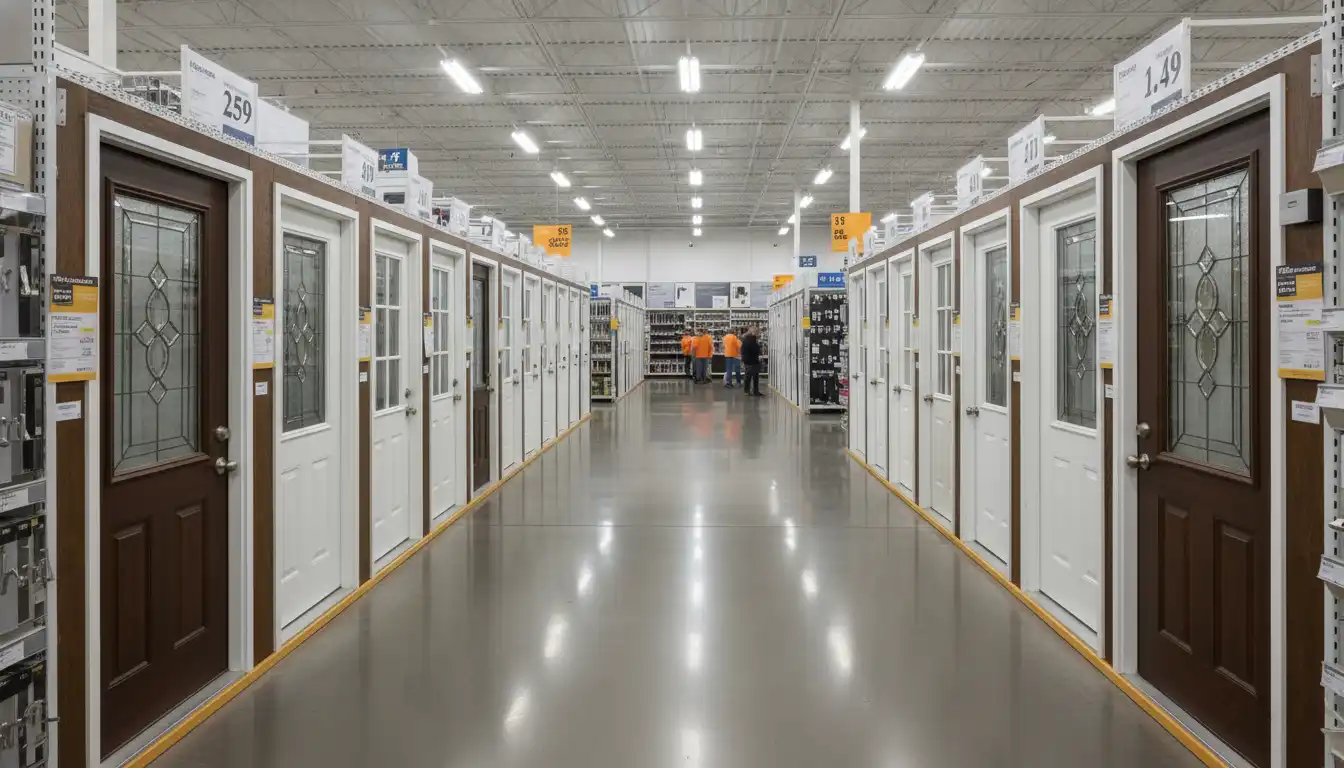
Stores like The Home Depot and Lowe’s are often the first stop for many homeowners. Their massive stores and extensive online catalogs offer a seemingly endless supply of options, making them a convenient starting point for any home improvement project.
These retailers are masters of accessibility. You can walk in, see a variety of doors on display, and often purchase one right off the shelf. This immediacy is a powerful draw for those on a tight timeline.
Pros of Big-Box Stores
The primary advantage of big-box retailers is price and availability. They leverage their immense buying power to offer competitive pricing on standard-sized doors from major brands like Jeld-Wen and Masonite. Frequent sales and promotions can make their deals even more attractive.
Their one-stop-shop nature is another major benefit. You can pick up your door, hardware, paint, and all necessary installation tools in a single trip. This convenience simplifies the logistics of your project.
Cons of Big-Box Stores
However, this convenience can come at a cost. While the staff is generally helpful, they are often generalists, not door specialists. You may not receive the in-depth, expert advice needed for a complex project or custom order. The quality of products can also be a concern; some brands produce lower-quality lines specifically for big-box stores to meet their aggressive price points.
Perhaps the biggest gamble is installation. These stores subcontract installation to local contractors, and the quality of work can be inconsistent. A poorly installed door can negate the benefits of even the highest-quality product, leading to drafts, security vulnerabilities, and operational issues.
Specialty Door & Window Showrooms: The Expert’s Choice
For those who prioritize quality and expertise over rock-bottom prices, a specialty door and window showroom is an excellent choice. These businesses focus exclusively on doors and related products, and their staff possesses a deep well of knowledge.
Walking into a specialty showroom is a different experience. The focus is on consultation and customization, helping you find the perfect door that meets your home’s specific architectural and functional needs.
Why Choose a Specialty Store?
The number one reason to visit a specialist is unmatched expertise. The sales team can guide you through every nuance of the selection process, from material performance in your specific climate to the subtle differences between hardware finishes. They offer high-quality brands that you won’t find in big-box stores, such as Therma-Tru and Pella.
Specialty stores excel at custom orders. If you have an odd-sized opening or a unique design vision, they have the supplier relationships and product knowledge to bring it to life. Their installers are typically in-house employees or long-term, trusted partners, ensuring a higher standard of workmanship and accountability.
The Downside of Specialization
This level of service and quality comes with a higher price tag. Doors from specialty showrooms are generally more expensive than their big-box counterparts. The lead times for custom orders can also be significantly longer, which may not work for every project timeline.
Their selection, while high-quality, might be narrower, focusing on the specific brands they carry. You won’t find the same sprawling, budget-friendly variety that defines the big-box experience.
Local Lumberyards: The Pro’s Secret Weapon
Often overlooked by the average homeowner, local lumberyards are a hidden gem in the search for the best place to buy doors. Contractors and builders have long relied on them for high-quality materials and knowledgeable service, and homeowners can benefit from this professional-grade resource as well.
Lumberyards often carry higher-grade materials and brands than big-box stores, catering to the exacting standards of professional builders. This is the place to go when durability and solid construction are your top priorities.
Advantages of Your Local Lumberyard
The quality of products is a key differentiator. A lumberyard is more likely to stock solid core interior doors and robust exterior doors built to withstand the rigors of a job site and provide long-lasting performance. If you’re looking for a door that feels substantial and operates smoothly, this is an excellent place to start.
The staff at a lumberyard typically has deep, practical knowledge of building materials. They can provide no-nonsense advice and help you navigate the technical aspects of your door purchase, ensuring you get a product that is not only beautiful but also structurally sound. They can also be a great source for finding reputable local installers.
What to Expect
Don’t expect a polished showroom experience. A lumberyard is a working facility, and the focus is on function over aesthetics. The selection of in-stock doors might be limited to common sizes and styles favored by builders, but they can special-order a vast array of options from their suppliers.
While their prices may be slightly higher than a big-box store’s promotional deals, the value is often superior when you factor in the higher quality of the materials. This is an investment in longevity.
Online Retailers: The Modern Approach to Door Shopping
The digital age has brought the door marketplace to your fingertips. Online retailers offer a vast, unparalleled selection of doors from manufacturers all over the world, often at very competitive prices. This option is ideal for those who are comfortable with online shopping and have a clear idea of what they need.
Websites provide detailed specifications, images, and customer reviews, allowing you to conduct thorough research from the comfort of your home.
The Allure of Buying Doors Online
Selection and price are the biggest draws of online retailers. You can find everything from standard interior doors to massive, custom-built entry systems without leaving your house. Because they have lower overhead than brick-and-mortar stores, online sellers can often pass those savings on to the customer.
The convenience of browsing and ordering at any time is a significant advantage. For homeowners in rural areas with limited local options, online retailers provide access to a world of choices.
Critical Risks of Online Door Purchases
The biggest risk is that you cannot see or touch the product before you buy it. Colors can look different on a screen, and it’s impossible to judge the weight and feel of a door from a picture. Shipping is another major hurdle; doors are large, heavy, and susceptible to damage in transit. Always inspect your delivery thoroughly before accepting it and understand the seller’s return policy for damaged goods.
With an online purchase, you are also responsible for finding your own installer. This adds another layer of coordination and potential complication to your project.
Unconventional Sources: Finding Unique Doors for Less
For the budget-conscious or creatively inclined, there are alternative places to find doors that offer unique character and significant savings. These sources require more patience and a willingness to embrace imperfection, but the reward can be a one-of-a-kind piece for your home.
Thinking outside the box can lead to a door that is not just a functional object, but a conversation piece with a rich history.
The Thrill of the Hunt: Architectural Salvage
Architectural salvage yards are treasure troves of reclaimed building materials from demolished or renovated homes. Here you can find vintage and antique doors with intricate details and craftsmanship that are difficult to find in new products. These doors add instant character and charm to any home.
Be prepared to do some refinishing work, as salvaged doors will show their age. You’ll also need to be flexible, as finding a door in the exact size you need can be a matter of luck and timing.
Giving Back: Habitat for Humanity ReStores
Habitat for Humanity ReStores are retail outlets that sell new and gently used building materials and home goods donated by individuals and businesses. You can often find high-quality doors, both new and used, at a fraction of their retail price. Shopping at a ReStore not only saves you money but also supports a worthy cause in your community.
Inventory changes daily, so frequent visits can yield the best results. This is an excellent option for finding interior doors or a simple, functional exterior door for a secondary entrance.
The Ultimate Comparison: Where Should You Buy Your Door?
To simplify your decision, this table breaks down the key attributes of each retailer type. Use it to weigh the factors that are most important to you, whether it’s budget, quality, or the level of service you require.
| Retailer Type | Price Range | Selection & Customization | Quality | Expertise & Service |
|---|---|---|---|---|
| Big-Box Retailers | Low to Mid | Good in-stock selection; limited custom options. | Varies (can be lower quality) | Generalist knowledge; installation quality varies. |
| Specialty Showrooms | Mid to High | Excellent selection of high-end brands; extensive customization. | High to Excellent | Specialized experts; professional installation. |
| Local Lumberyards | Mid-range | Good selection of professional-grade doors; strong special-order capabilities. | High | Deep product knowledge; practical advice. |
| Online Retailers | Low to High | Vast, nearly unlimited selection and customization. | Varies by seller | Self-service; no installation support. |
| Salvage/ReStores | Very Low | Unique, one-of-a-kind items; no customization. | Varies (often requires refinishing) | Minimal; self-service. |
Critical Factors to Consider Before You Buy
Regardless of where you choose to shop, several key decisions will shape your purchase. Understanding these factors will ensure you buy a door that fits your home, your budget, and your lifestyle perfectly. These are the details that separate a successful project from a frustrating one.
Thinking through these elements ahead of time will arm you with the right questions to ask, no matter which retailer you visit.
Material Matters: Wood, Fiberglass, Steel, or Composite?
The material of your door is its most important attribute, affecting its appearance, durability, security, and energy efficiency. Fiberglass doors offer a great balance of durability and low maintenance, often with realistic wood-grain finishes. If you’re comparing brands, understanding the nuances of a Therma-Tru vs Jeld-Wen door can reveal key differences in fiberglass technology.
Wood provides a classic, high-end look but requires more maintenance. Steel doors are a strong, secure, and budget-friendly choice, though they can be dented. Your climate and the amount of maintenance you’re willing to perform should heavily influence this decision.
Pre-Hung vs. Slab: The Most Important Decision You’ll Make
This is a critical, project-defining choice. A slab is just the door itself, without a frame, hinges, or hardware. Buying a slab is a good option if your existing door frame is in perfect condition and you are simply swapping out the door.
A pre-hung door comes as a complete unit, already mounted in its frame with hinges attached. For new construction or situations where the old frame is damaged or rotted, a pre-hung unit is almost always the better, easier choice. While it costs more upfront, it can save significant labor time and prevent installation headaches.
The Hidden Cost: Professional Installation
Never underestimate the importance of proper installation. A door that is not perfectly level and plumb will not open, close, or lock correctly. Poor installation can also lead to significant air and water leaks, compromising your home’s energy efficiency and potentially causing water damage.
Unless you are a highly experienced DIYer, hiring a professional is a worthwhile investment. It ensures your door performs as it should and protects your warranty. When getting quotes, always ask if the price includes installation and what that service entails.
Final Verdict: Making the Smartest Choice for Your Home
There is no single “best” place to buy a door for everyone. The ideal choice depends entirely on your project’s specific needs, your budget, and your comfort level with the process. For a standard replacement on a tight budget, a big-box store offers unbeatable convenience and value.
If you have a custom project, value expert guidance, and are investing in a high-quality, long-term solution, a specialty showroom is the superior option. For those who prioritize durable, professional-grade materials and straightforward advice, the local lumberyard is an excellent, often-overlooked choice. Finally, for the savvy shopper with a clear vision and a trusted installer, online retailers and salvage yards offer a world of unique possibilities.