
Best Paint for Brick Floor: The Pro Secret to a Finish That Won’t Peel
A brick floor possesses a timeless, rustic charm that can ground any room with character and warmth. But over time, that same charming brick can start to look dark, dated, or become a constant battle to keep clean due to its porous nature. A fresh coat of paint seems like the perfect, modernizing solution.
However, this is a project where good intentions often lead to disastrous results. Many homeowners find their beautifully painted floor bubbling, chipping, and peeling within months, turning a dream upgrade into a maintenance nightmare. The problem isn’t the idea of painting the brick, but the execution and, most importantly, the choice of product.
The secret to a durable, long-lasting painted brick floor isn’t found in a single can of paint. It’s found in understanding why most paints fail and choosing a complete painting system designed to combat the unique challenges of a masonry surface. This guide will reveal the professional approach that ensures your finish won’t peel.
You'll Learn About
Why Your Brick Floor is a Paint Killing Machine
Before choosing a paint, you must understand the forces working against you. Brick floors are fundamentally different from walls or wood surfaces, and these differences are what cause most paint jobs to fail.
The Constant Threat of Moisture
Brick is essentially a hard sponge. If your floor is on a slab foundation (on-grade) or in a basement (below-grade), it is constantly wicking imperceptible amounts of moisture from the ground beneath. This process, known as moisture vapor transmission, is harmless with unsealed brick.
When you apply a non-breathable paint, you trap this moisture. As the water vapor builds up, it creates immense hydrostatic pressure, pushing outward until it blows the paint right off the surface in bubbles and blisters. You may also see a chalky white powder called efflorescence, which is mineral salts left behind as moisture evaporates—another sure sign of a moisture problem.
Alkalinity and Chemical Breakdown
Masonry products like brick and the mortar that holds them together are naturally alkaline, meaning they have a high pH. Many standard paints are not formulated to handle this high pH level. Over time, the alkalinity chemically attacks the paint’s binder, breaking it down and causing it to lose its grip, a process called saponification.
The Punishment of Foot Traffic
A floor is not a wall. It is a high-impact, high-abrasion surface that endures daily foot traffic, scraping furniture, pet claws, and dropped items. Standard wall paint is not designed to withstand this level of physical abuse. It will quickly scratch and wear away, creating a patchy, worn-out look that requires constant touch-ups.
Forget Paint—Start with the Primer System
The most critical decision you’ll make is not the color, but the primer. An ordinary primer won’t do. You need a specialized masonry sealer that addresses the core problems of moisture and alkalinity head-on. This is the foundation of your entire project.
The Professional’s Choice: Epoxy Primer/Sealer
For the absolute best, most foolproof result, a high-quality epoxy primer is the answer. These primers are designed for concrete and masonry floors in demanding environments like garages and industrial settings. They create an incredibly tough, durable, and non-porous film that bonds tenaciously to the brick.
More importantly, an epoxy primer acts as a vapor barrier, effectively blocking moisture vapor transmission from pushing off your topcoat. It also seals the surface completely, preventing the brick from soaking up your expensive topcoat paint unevenly. It’s the ultimate problem-solver for a brick floor.
A Solid Alternative: Alkali-Resistant Masonry Primer
If a two-part epoxy system feels too intimidating, a high-quality, water-based acrylic masonry primer is a viable alternative. When selecting one, you must look for specific features on the label. Ensure it is rated for floors and specifically states it is alkali-resistant and can block efflorescence. This type of primer will neutralize the surface pH and provide a stable base for your paint.
The Best Paint for a Brick Floor: Your Topcoat Options
With the critical primer coat selected, you can now choose your topcoat. This layer provides the color and the final wear surface. It’s crucial to select a product specifically labeled as a “floor paint” or “porch and patio paint,” as these are formulated with much stronger binders than wall paint.
Two-Part Epoxy Floor Paint
For maximum durability, nothing beats a two-part epoxy floor coating system. This is the same type of coating used on garage floors and in workshops. It consists of a resin (Part A) and a hardener (Part B) that you mix together just before application. The resulting chemical reaction creates a thick, incredibly hard, and chemical-resistant finish that can last for years.
One-Part Epoxy Floor Paint
A great DIY-friendly option is a one-part epoxy paint. This is a pre-mixed, water-based acrylic paint that has been fortified with epoxy resins for enhanced durability. While not quite as tough as a two-part system, it is significantly stronger than standard latex floor paint and is very easy to apply with a roller and brush. This is often the sweet spot for homeowners in terms of performance and ease of use.
Porch & Floor Enamel (Acrylic Latex)
The most accessible and budget-friendly option is a high-quality acrylic latex porch and floor paint. Do not use regular wall paint. Porch and floor paints are fortified for durability and scuff resistance. While they are the least durable of the three options, they can still provide a good result in lower-traffic areas, provided they are applied over a high-quality masonry primer.
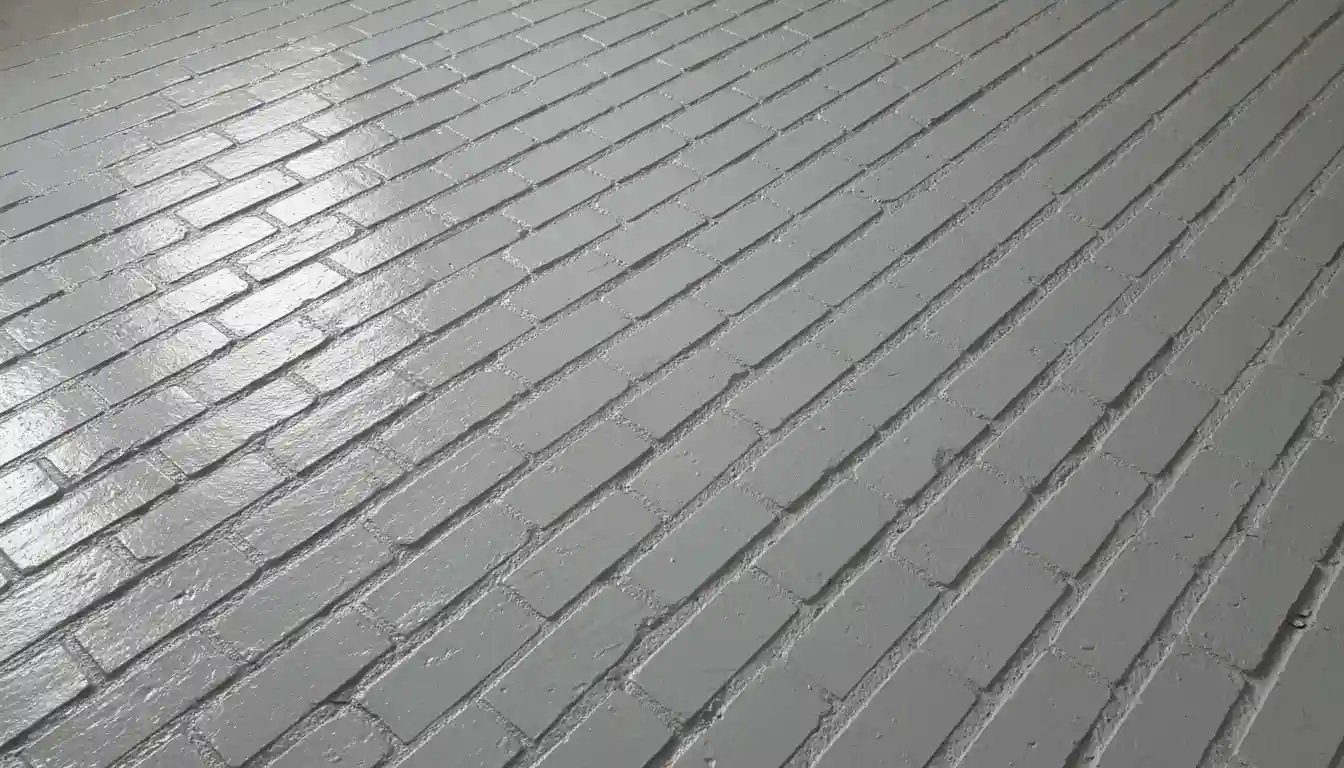
Comparing Your Brick Floor Paint Options
Making the right choice depends on your budget, your DIY comfort level, and the amount of traffic the floor will receive. Use this table to compare the systems at a glance.
| Paint System | Durability | Cost | Ease of Use | Best For |
|---|---|---|---|---|
| Two-Part Epoxy System | Highest | High | Difficult (Mixing required, short pot life) | High-traffic areas, kitchens, entryways, basements. |
| One-Part Epoxy Paint | High | Medium | Easy (Pre-mixed, soap & water cleanup) | Living rooms, sunrooms, moderate-traffic areas. |
| Acrylic Porch & Floor Paint | Medium | Low | Easiest (Pre-mixed, widely available) | Low-traffic areas, guest rooms, basements. |
Your Step-by-Step Guide to a Perfect, Peel-Proof Finish
Proper preparation is 90% of the job. Rushing this stage is a guarantee of failure. Follow these steps meticulously for a professional-grade result that will stand the test of time.
Step 1: Deep Clean and Degrease
First, remove all furniture and thoroughly sweep or vacuum the entire floor, paying special attention to the mortar joints. Then, you must aggressively clean the brick. Mix a solution of a TSP (Trisodium Phosphate) substitute or a heavy-duty degreasing cleaner with water according to the manufacturer’s directions.
Use a stiff-bristled deck brush to scrub the entire floor with the solution. This will remove years of dirt, grease, and any old, failing sealers. If you have a stubborn coating, you may first need to figure out how to remove polyurethane from brick to ensure a clean slate. Once done, rinse the floor thoroughly with clean water multiple times until no suds or residue remain.
Step 2: Let it Dry Completely
This is the step where patience pays off. A brick floor can take several days to dry out completely after being saturated with water. Do not paint over a damp floor. Use fans and a dehumidifier to speed up the process. A good test is to tape a small square of plastic sheeting to the floor; if you see condensation under it after 24 hours, it’s still too wet.
Step 3: Repair Any Damage
Inspect the floor for any significant cracks in the bricks or crumbling mortar joints. Use a high-quality masonry crack filler or a paintable acrylic caulk to fill these imperfections. Let the repairs cure completely according to the product’s instructions.
Step 4: Apply Your Primer
Now for the most important step. Using a high-quality synthetic roller with a 1/2″ nap, apply a thin, even coat of your chosen primer (epoxy or masonry primer). Use a paintbrush to “cut in” around the edges of the room and work the primer into the mortar joints. Let the primer dry completely as directed.
Step 5: Apply the First Topcoat
Once the primer is fully cured, you can apply your first coat of floor paint. Start by cutting in the edges again with a brush. Then, use a new roller to apply the paint to the rest of the floor, working in small sections and maintaining a wet edge to avoid lap marks. Apply a thin, even coat.
Step 6: The Essential Second Coat
A single coat is never enough for a floor. It will look uneven and lack the necessary film thickness for durability. Allow the first coat to dry for the time recommended on the can (typically 4-6 hours), then apply a second, thin and even coat in the same manner.
Step 7: The Curing Process
There is a huge difference between “dry to the touch” and “fully cured.” Your floor might feel dry in a few hours, but the paint is still soft and vulnerable. It needs to chemically harden, or cure. Most floor paints require at least 72 hours before they can handle light foot traffic and up to 7 days or more before you should move heavy furniture back into place. Rushing this will lead to scuffs and scratches.
Choosing Colors and Sheens for Your New Floor
Painting your brick floor dramatically opens up your design possibilities. A light color like a soft gray or warm beige can instantly make a room feel larger and brighter, turning a formerly dark space into an airy one. This effect is especially powerful if you have a prominent feature like a 20 foot wall, as the light floor will help balance the vertical space.
For a bold, modern statement, don’t be afraid of contrast. A deep charcoal or even a soft black floor can be incredibly chic and dramatic, especially when paired with light-colored walls. This creates a powerful grounding effect similar to the impact of painting fireplace mantel black. The choice of sheen is also critical. A satin or semi-gloss finish is highly recommended for floors as it offers the best combination of durability and cleanability. A flat or matte finish will be harder to keep clean and may show scuffs more easily.
Exploring Other Brick Floor Finishes
While a solid coat of paint offers a transformative, modern look, it’s not the only option. If you prefer to retain more of the brick’s natural texture and color variation, you might consider a concrete stain. This provides a translucent color that soaks into the brick rather than sitting on top of it.
For a rustic, old-world aesthetic, another popular technique is the German Schmear. This involves applying a thin layer of white mortar over the brick and then partially wiping it off. For those interested in this distinct style, exploring a guide on the German Schmear brick floor can provide a completely different but equally stunning outcome. For those seeking nuanced color palettes for their walls to complement their new floor, comparing subtle off-whites like in a Shiitake vs Accessible Beige analysis can be very helpful.
A Lasting Foundation for Your Home’s Style
Painting a brick floor is a high-reward project that can completely redefine a space. But success is entirely dependent on resisting the temptation to take shortcuts. By focusing on a complete system—thorough cleaning, a high-performance masonry primer, and a durable topcoat—you can create a beautiful, lasting finish.
The secret is to treat the cause of paint failure, not just the symptom. Address moisture and alkalinity with the right primer, and you’ll have a stable foundation for a topcoat that can withstand the demands of daily life, giving you a floor you can be proud of for years to come.
