Best Paint Colors for a Florida Lanai: Your Ultimate Guide
Choosing the perfect paint color for a Florida lanai feels like it should be a simple task. Yet, many homeowners find themselves paralyzed by endless swatches and conflicting advice. The intense Florida sun, oppressive humidity, and desire for a tranquil outdoor oasis create a unique set of challenges that can turn a straightforward project into a source of frustration.
The wrong color can fade in months, feel uncomfortably hot, or clash with the vibrant natural surroundings. Even worse, the humid climate can quickly lead to unsightly mildew and paint failure. This guide cuts through the confusion, offering expert-backed solutions to help you select a lanai paint color that is not only beautiful but also engineered to withstand Florida’s demanding environment.
You'll Learn About
Why Lanai Paint Selection Is Crucial in Florida
Painting a lanai in Florida isn’t just about aesthetics; it’s a strategic decision to protect your investment and enhance your outdoor living experience. The subtropical climate presents a unique combination of intense sun and high moisture, both of which are relentless enemies of exterior paint.
The Battle Against the Sun: Understanding LRV
The Florida sun is unforgiving. Its powerful ultraviolet (UV) rays can cause paint colors to fade, chalk, and break down prematurely. This is where understanding Light Reflectance Value (LRV) becomes essential. LRV is a measurement on a scale from 0 (pure black) to 100 (pure white) that indicates how much light a color reflects.
Colors with a high LRV (typically 60 and above) reflect more light and heat. This keeps the lanai cooler, making the space more comfortable during hot summer days and potentially reducing cooling costs for the adjacent indoor areas. Conversely, dark colors with a low LRV absorb heat, which can make the lanai feel like an oven and cause the paint to degrade faster.
Fighting Humidity, Mold, and Mildew
High humidity is a year-round reality in Florida, creating the perfect breeding ground for mold and mildew. These fungal growths not only look unsightly but can also damage the paint film over time. Using a high-quality 100% acrylic latex exterior paint with mildew-resistant additives is non-negotiable. These formulations create a surface that is hostile to mildew spores, keeping your lanai looking fresh and clean.
Top Paint Color Families for a Stunning Florida Lanai
The right color palette can transform your lanai from a simple patio into a seamless extension of your living space. The goal is to create a mood that is relaxing, complements the natural landscape, and stands up to the climate. Here are the top color families that achieve this balance perfectly.
Cool and Calming Coastal Blues
It’s no surprise that blues are a popular choice for Florida homes. Light to mid-tone blues evoke the serenity of the sky and ocean, promoting a sense of calm and relaxation. These colors are perfect for creating a tranquil, spa-like retreat right in your backyard.
Soft, airy blues with a high LRV are particularly effective at making a space feel larger and brighter. They pair beautifully with crisp white trim, light-colored wicker furniture, and lush green plants. Consider shades like Sherwin-Williams Sea Salt or Benjamin Moore Palladian Blue for a timeless coastal vibe.
Sophisticated and Grounding Neutrals
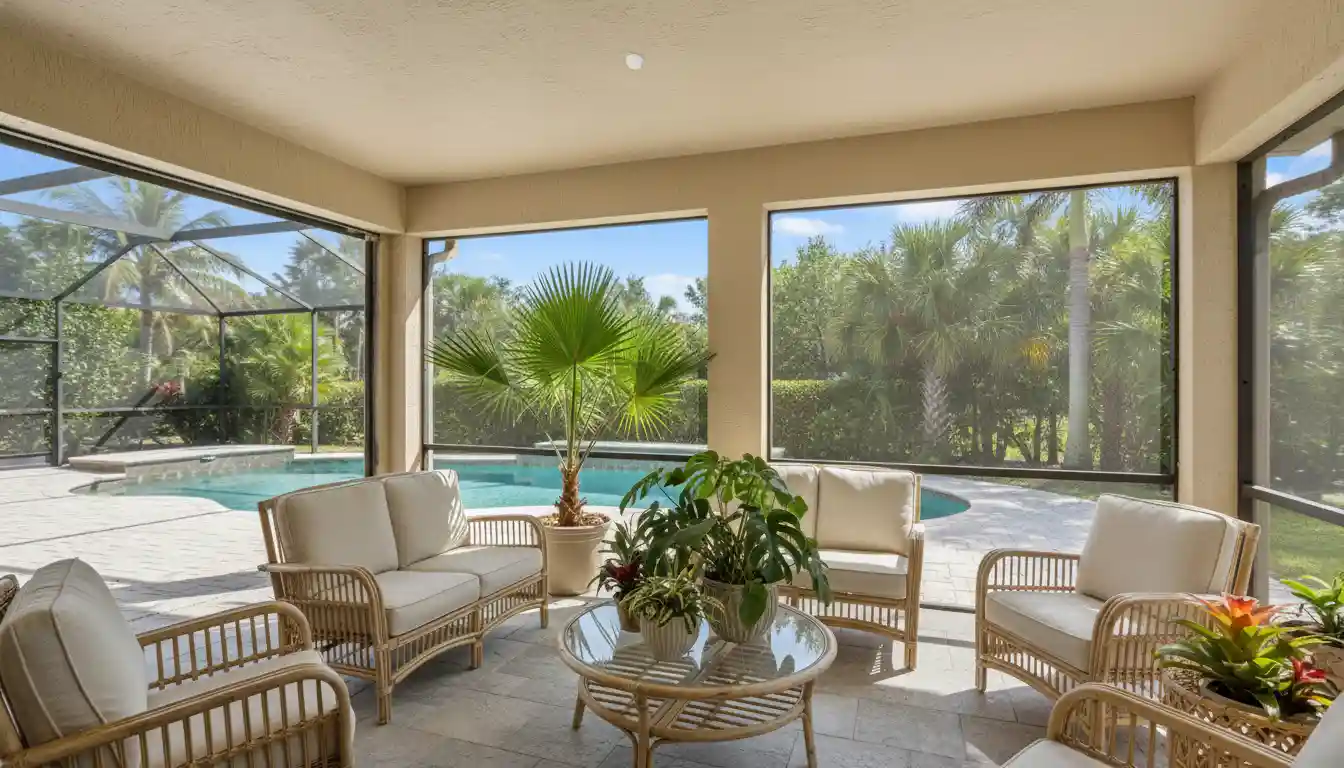
Earthy neutrals like beige, tan, and greige (a mix of gray and beige) offer a sophisticated and versatile backdrop. These colors are excellent at hiding dirt and dust, making them a practical choice for a high-use outdoor area. They create a warm, inviting atmosphere without competing with the vibrant colors of your pool or garden.
Warm neutrals provide a timeless foundation that works with nearly any decor style, from modern to traditional. Look to popular shades like Sherwin-Williams Accessible Beige or Benjamin Moore Manchester Tan to create a chic and welcoming lanai.
Refreshing and Natural Greens
Soft greens are another fantastic choice for blurring the line between your indoor and outdoor spaces. These colors harmonize with the lush foliage of a Florida garden, creating a refreshing and organic feel. Green is known to promote a sense of balance and well-being, making it ideal for a space designed for relaxation.
Choose muted greens with gray or blue undertones to avoid a color that feels too jarring. Shades like Sherwin-Williams Comfort Gray or Benjamin Moore Healing Aloe can transform your lanai into a verdant, peaceful sanctuary.
Bright and Airy Whites and Off-Whites
For a clean, modern, and resort-like feel, you can’t go wrong with white. White paint has the highest LRV, meaning it does the best job of reflecting heat and making a space feel bright and expansive. This makes it an excellent choice for smaller or darker lanais.
To avoid a sterile look and reduce glare, opt for a soft off-white or a white with a subtle warm undertone. Colors like Sherwin-Williams Alabaster or Benjamin Moore White Dove provide a crisp, clean look that feels both timeless and refreshing.
Beyond the Walls: Floors and Ceilings Matter Too
A truly cohesive lanai design considers all surfaces. The floor and ceiling present unique opportunities to add durability, character, and a touch of tradition to your outdoor space.
Lanai Floor Solutions
The lanai floor endures heavy foot traffic, furniture scuffs, and constant exposure to the elements. Standard wall paint won’t suffice. Instead, opt for a durable concrete stain or an epoxy-based floor paint. These products are designed to penetrate the concrete, providing a long-lasting finish that resists chipping and peeling.
Light grays and tans are popular floor colors as they hide dirt well and stay cooler underfoot. For a custom touch, consider using stencils to create a tile-like pattern.
The “Haint Blue” Ceiling Tradition
Painting a porch ceiling a specific shade of light blue-green is a time-honored tradition in the American South, with deep roots in the Gullah Geechee culture. This color, known as “Haint Blue,” was believed to ward off spirits, or “haints.” The Gullah people thought that the color would mimic the sky or a body of water, which spirits could not cross.
While the superstition has faded for many, the tradition endures for both aesthetic and practical reasons. Many homeowners swear that a blue ceiling repels wasps and other insects, who are supposedly tricked into thinking it’s the sky and won’t build nests there. Regardless of its effectiveness as an insect repellent, a haint blue ceiling adds a touch of historical charm and creates the beautiful illusion of a perpetual clear sky. Popular choices include Sherwin-Williams Interesting Aqua and Benjamin Moore Wythe Blue.
Choosing the Right Paint Type and Sheen
The type of paint and its finish are just as important as the color. Making the right choice here is critical for ensuring your paint job lasts for years in Florida’s challenging climate.
Paint Type: 100% Acrylic Latex Is King
For lanai walls and ceilings, always choose a premium 100% acrylic latex exterior paint. This type of paint offers the best performance against Florida’s weather. It is flexible enough to expand and contract with temperature fluctuations, resistant to UV damage, and provides a durable, breathable film that allows moisture to escape, preventing blistering and peeling. Ensure the formula you choose contains a mildewcide to inhibit mold growth.
A Guide to Paint Sheens
The paint’s sheen affects its appearance, durability, and cleanability. For a lanai, you want a finish that can be easily wiped down but doesn’t create excessive glare.
- Flat/Matte: This sheen has no shine and is excellent at hiding surface imperfections. However, it’s the least durable and most difficult to clean, making it best suited for ceilings only.
- Eggshell/Satin: These are the most recommended sheens for lanai walls. They offer a soft, low-luster glow that is highly durable and easy to clean without being overly reflective. A satin finish strikes the perfect balance between aesthetics and performance.
- Semi-Gloss: With its noticeable shine, a semi-gloss finish is extremely durable and easy to clean. However, it will highlight every flaw on the surface. Reserve this sheen for trim, doors, and window frames that require maximum durability.
| Color Family | Vibe & Mood | LRV Range | Best For | Recommended Sheen |
|---|---|---|---|---|
| Coastal Blues | Calm, Serene, Relaxing | High (60-75) | Creating a tranquil, spa-like atmosphere. | Satin or Eggshell |
| Earthy Neutrals | Warm, Grounding, Sophisticated | Medium to High (50-70) | A versatile backdrop that hides dirt well. | Satin |
| Soft Greens | Refreshing, Natural, Harmonious | Medium to High (55-70) | Blending the lanai with lush landscaping. | Satin or Eggshell |
| Airy Whites | Bright, Clean, Expansive | Very High (80+) | Making small spaces feel larger and reflecting heat. | Satin |
Your Step-by-Step Lanai Painting Guide
A professional-looking paint job is 90% preparation. Rushing this crucial stage is the single biggest mistake homeowners make. Follow these steps for a durable, beautiful finish.
Step 1: Aggressive Surface Preparation
Start by clearing the lanai of all furniture and plants. Thoroughly pressure wash all surfaces—walls, ceiling, and floor—to remove dirt, cobwebs, salt residue, and chalking paint. Use a cleaner formulated to kill mold and mildew. Once clean, scrape away any remaining loose or peeling paint and sand the edges smooth. Repair any cracks in stucco or concrete with an appropriate patching compound.
Step 2: Protect and Mask
Use painter’s tape to carefully mask off all window and door frames, light fixtures, and outlets. Cover the entire floor area with drop cloths to protect it from drips and splatters. This meticulous step ensures clean, professional lines.
Step 3: Prime for Success
Priming is an essential step, especially on patched areas or surfaces with stains. Use a high-quality exterior bonding primer. Primer ensures the topcoat adheres properly, blocks stains from bleeding through, and results in a more uniform final color. Allow the primer to dry completely according to the manufacturer’s instructions.
Step 4: Cut In and Roll
Begin by “cutting in”—using a 2-3 inch angled brush to paint along the edges of trim, corners, and ceilings where a roller can’t reach. Immediately after cutting in a section, use a roller to paint the main surface area, rolling as close to the cut-in lines as possible to blend them. Always maintain a wet edge to avoid lap marks. Apply two thin coats for the best coverage and durability, allowing proper drying time between each coat.
Key Mistakes to Avoid
Steer clear of these common pitfalls to ensure your lanai painting project is a success.
- Using Interior Paint: Interior paint lacks the necessary binders and additives to withstand UV rays and moisture. It will fail quickly in an outdoor environment.
- Painting in Bad Weather: Avoid painting in direct, intense sunlight, high humidity, or when rain is in the forecast. These conditions can cause the paint to dry too quickly or not cure properly, leading to a weak finish.
- Skipping the Prep Work: The most beautiful color in the world will peel and fail if applied to a dirty, unprepared surface. Do not cut corners on cleaning and priming.
– Choosing a Color from a Tiny Swatch: Always buy sample pots and paint large test patches on your lanai walls. Observe the colors at different times of the day—morning, noon, and dusk—to see how they change in the light before making a final decision. Making smart, durable choices for your home’s exterior is a wise investment, much like when you compare long-term solutions for home systems like water heaters.
Choosing the best paint colors for your Florida lanai is about creating a beautiful, comfortable, and durable outdoor living space. By focusing on light, high-LRV colors in high-quality, mildew-resistant acrylic latex paint, you can achieve a stunning result. Combined with meticulous preparation, your newly painted lanai will provide a welcoming retreat that stands strong against the Florida elements for years to come.