
Best Flooring for a Pier and Beam House: Avoid Costly Mistakes
Choosing the right flooring for your pier and beam house is more than a design decision. It’s a crucial step to protect your investment and ensure long-term stability and comfort. Making the wrong choice can lead to warped floors, moisture damage, and expensive repairs down the line.
This guide will walk you through the unique challenges of pier and beam foundations. We will provide clear, expert-backed solutions to help you select the perfect flooring that is both beautiful and durable.
You'll Learn About
Understanding the Unique Challenges of Pier and Beam Foundations
Pier and beam houses, also known as crawl space foundations, are elevated off the ground. This construction style creates a unique set of environmental factors that directly impact the flooring above. Ignoring these challenges is a recipe for disaster.
The Problem of Subfloor Movement and Flexibility
The very nature of a pier and beam foundation means it has more potential for flex and movement compared to a concrete slab. The subfloor is typically made of wood planks or plywood resting on floor joists. Over time, settling and natural expansion and contraction of the wood can occur.
This subtle movement can be devastating for rigid flooring materials. It can cause them to crack, separate at the seams, or buckle. Your flooring choice must be able to accommodate this inherent flexibility.
Moisture and Humidity: The Crawl Space Menace
The dark, often unsealed, space beneath your home is a major source of moisture. Ground moisture evaporates and rises, getting trapped in the crawl space. This humid air can easily penetrate the subfloor from below.
This constant exposure to moisture can lead to wood rot in your subfloor and joists. It also creates a perfect breeding ground for mold and mildew, which can affect your home’s air quality and cause your chosen flooring to fail prematurely.
Pervasive Temperature Fluctuations
The air within the crawl space is not temperature-controlled. It gets cold in the winter and hot and humid in the summer. These temperature swings are transferred directly through the subfloor to your flooring material.
Materials that expand and contract significantly with temperature changes can be problematic. This can lead to gapping in the winter and buckling in the summer, creating an unstable and unsightly surface. You might even notice your floors feeling uncomfortably cold to the touch.
The Potential for an Uneven Surface
Over decades, piers can settle at different rates, leading to a floor that is no longer perfectly level. While significant issues may require foundation repair, even minor unevenness can pose a problem for flooring installation. You may find that what appears to be a level surface has subtle dips and rises.
Installing new flooring over a flawed base can amplify these imperfections. If you are dealing with a more pronounced issue, understanding how to fix an uneven floor is a critical first step before any new material is laid down.
The Best Flooring Solutions for Pier and Beam Homes
Now that we have identified the problems, let’s focus on the solutions. The best flooring options for a pier and beam foundation are those that can successfully manage moisture, temperature changes, and minor subfloor movement. Here are the top contenders.
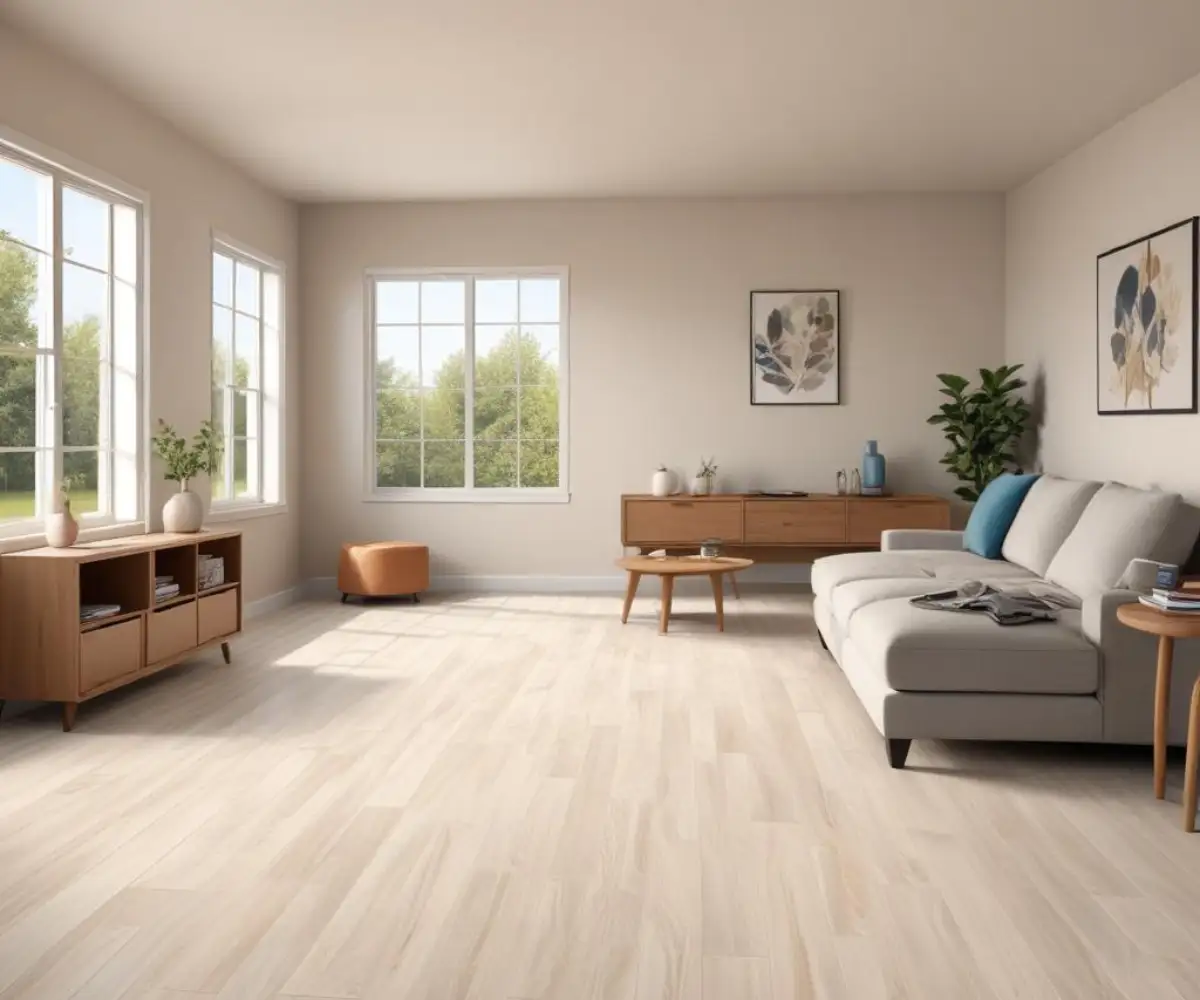
Engineered Hardwood: The Gold Standard for Stability
Engineered hardwood offers the timeless beauty of real wood without the instability of solid hardwood. Its construction is the key to its superior performance in this environment. It is made of a thin layer of real hardwood bonded to multiple layers of high-quality plywood or high-density fiberboard (HDF).
This cross-layered structure gives it exceptional dimensional stability. It is far less likely to warp, cup, or swell when exposed to the moisture and temperature changes common with crawl spaces. Engineered hardwood is an excellent choice for achieving a classic wood look with modern performance.
Luxury Vinyl Plank (LVP) & Tile (LVT): The Waterproof Champion
Luxury vinyl is arguably one of the most practical and popular choices for pier and beam houses. This is not the sheet vinyl of the past; modern LVP and LVT are thick, durable materials that realistically mimic the look of wood or stone. Their primary advantage is that they are 100% waterproof.
Because they are unaffected by moisture, they are a fantastic defense against humidity from the crawl space. They are also flexible, which allows them to bridge minor subfloor imperfections without cracking. For kitchens, bathrooms, and laundry rooms on a pier and beam foundation, LVP is an almost unbeatable option.
Laminate Flooring: A Budget-Conscious Performer
Modern laminate flooring has come a long way in terms of both durability and water resistance. While its core is typically made of fiberboard, which can be susceptible to moisture, many high-quality options now come with water-resistant or even waterproof technologies and protective topcoats.
The key to a successful laminate installation in a pier and beam house is the underlayment. A high-quality underlayment with a built-in vapor barrier is not optional; it is a requirement. This will protect the laminate’s core from any moisture that may seep through the subfloor.
Beyond the Basics: Critical Factors for a Lasting Floor
Simply choosing the right material isn’t enough. The success of your flooring project hinges on addressing the root cause of the problems: the crawl space itself. This is the expert-level advice that ensures a truly permanent solution.
The Ultimate Solution: Crawl Space Encapsulation
The single most effective thing you can do to protect your flooring and the entire structure of your home is to encapsulate the crawl space. This process involves lining the floor and walls of the crawl space with a heavy-duty vapor barrier, sealing all vents and gaps, and often installing a dehumidifier.
Encapsulation effectively stops moisture at its source. It turns a damp, dirty crawl space into a clean, dry, and conditioned part of your home. A properly encapsulated crawl space dramatically reduces the risk of moisture damage and makes almost any flooring type a viable option.
Subfloor Preparation is Absolutely Non-Negotiable
Never install new flooring without a thorough inspection and preparation of the subfloor. Check for any soft, spongy, or discolored spots, which could indicate water damage or rot. Any damaged sections of plywood or planks must be replaced.
You must also ensure the subfloor is flat. Use a long level to check for high and low spots. High spots can be sanded down, and low spots can be filled with a leveling compound to create a smooth, stable base for your new floor.
The Unsung Hero: High-Performance Underlayment
Underlayment is a thin layer of material that sits between the subfloor and your new flooring. For a pier and beam house, its role is critical. Do not treat it as an afterthought. You need an underlayment that provides a robust moisture barrier.
Look for products that have a high perm rating for moisture protection. A good underlayment also provides thermal insulation, which will help keep your floors warmer in the winter. It can also provide sound-dampening qualities, reducing the hollow sound sometimes associated with elevated floors.
Flooring Comparison for Pier and Beam Houses
To help you decide, here is a direct comparison of the top flooring options based on the factors that matter most for a pier and beam foundation. This will help you balance your budget, lifestyle needs, and performance expectations.
| Flooring Type | Moisture Resistance | Stability | Average Cost (Material Only) | Best For |
|---|---|---|---|---|
| Luxury Vinyl (LVP/LVT) | Excellent (Waterproof) | Excellent | $2 – $7 per sq. ft. | Kitchens, bathrooms, high-traffic areas, and homes with pets. |
| Engineered Hardwood | Good | Very Good | $4 – $12 per sq. ft. | Living rooms, bedrooms, and homeowners wanting a real wood feel. |
| Laminate Flooring | Fair to Good | Good | $1 – $5 per sq. ft. | Budget-conscious projects, living areas, and bedrooms. |
| Solid Hardwood | Poor | Fair | $5 – $15 per sq. ft. | Homes with fully encapsulated and climate-controlled crawl spaces only. |
| Porcelain/Ceramic Tile | Excellent | Poor (Requires rigid subfloor) | $2 – $10 per sq. ft. | Bathrooms and kitchens, but only with proper subfloor reinforcement and an uncoupling membrane. |
Installation Tips for a Perfect, Long-Lasting Finish
Proper installation is just as important as material selection. The unique conditions of a pier and beam house require careful attention to detail during the installation process to prevent future problems.
Acclimation is Not an Optional Step
Every type of flooring needs to acclimate to the environment where it will be installed. This means bringing the boxes of flooring into your home and letting them sit for at least 48-72 hours before installation. This allows the material to adjust to your home’s specific temperature and humidity levels.
Skipping this step can cause the flooring to expand or contract significantly after it has been installed. This can lead to unsightly gaps or damaging buckling, ruining your new floor before you even have a chance to enjoy it.
Always Use Expansion Gaps
Most flooring materials, especially “floating floors” like LVP and laminate, require a small gap around the perimeter of the room. This expansion gap, typically about 1/4-inch, is hidden by baseboards but is critically important. It gives the floor room to expand and contract naturally with seasonal changes.
Without this gap, a floor that expands in the humid summer months will have nowhere to go. This pressure can cause the planks to lift off the subfloor, creating a buckled and potentially hazardous surface.
Flooring Types to Avoid (Or Use With Extreme Caution)
While some flooring types are ideal, others are poorly suited for the challenges of a pier and beam foundation. Installing these materials without significant preparatory work is often a costly mistake that will lead to failure.
Traditional Wall-to-Wall Carpet
Carpet and its underlying pad can act like a giant sponge. They can absorb moisture vapor rising from the crawl space, creating a persistent dampness. This is an ideal environment for mold, mildew, and dust mites to thrive, which can be a serious health concern.
If you are set on having carpet, it should only be considered if you have a fully encapsulated crawl space with a dehumidifier running. Otherwise, you risk creating an unhealthy and perpetually musty-smelling environment in your home.
Solid Hardwood Without Professional Guidance
Solid hardwood is a beautiful, timeless choice, but it is the least forgiving option for a pier and beam foundation. It is a single piece of wood that is highly susceptible to changes in moisture and humidity. It will readily cup, warp, or gap if conditions are not perfect.
Installation requires a very stable and dry subfloor, a high-quality vapor retarder, and expert nailing techniques. For most homeowners with a standard crawl space, engineered hardwood is a much safer and more stable alternative.
Conclusion: The Smart Choice for Your Foundation’s Future
The best flooring for your pier and beam house is one that respects the unique environment created by your crawl space. Materials like luxury vinyl plank and engineered hardwood offer the ideal combination of beauty, durability, and resistance to moisture and movement.
However, the real secret to a long-lasting floor is addressing the subfloor and crawl space. By preparing your subfloor correctly, using a high-quality underlayment with a vapor barrier, and considering crawl space encapsulation, you are not just installing a new floor. You are investing in the health and structural integrity of your entire home.
