
Bees in House in Winter? Don’t Panic—Here’s What It Means
Finding a bee buzzing drowsily by a window in the middle of winter can be startling. Aren’t they supposed to be dormant? The unexpected sight often triggers a wave of questions: Is there a nest in my walls? Are they dangerous? How did it even get in?
Seeing a bee indoors when snow is on the ground is more common than you might think. It’s rarely a sign of a massive, active hive about to descend on your living room. Instead, it’s usually an isolated incident with a logical, and often harmless, explanation.
You'll Learn About
Why Am I Finding Bees in My House in Winter?
The appearance of a bee during a cold spell is typically linked to warmth. Your heated home can trick dormant insects into thinking spring has arrived. There are three primary reasons you might be sharing your winter space with a buzzing guest.
The Lone Overwintering Queen
The most common scenario involves a solitary queen bee. Fertilized bumblebee queens and some wasp queens seek out sheltered places to hibernate for the winter after they have mated. Your home offers the perfect sanctuary: dry, protected, and free from predators.
She might tuck herself away in a wall void, an attic, or a little-used chimney. When your furnace kicks on, the warmth can penetrate her hiding spot, waking her prematurely. Disoriented, her first instinct is to seek light, which is why you’ll often find her bumping against a window, trying to get outside.
An Unseen Honey Bee Colony
While less common, finding multiple bees over several days could signal an established honey bee colony within your home’s structure. Honey bees don’t hibernate; they form a tight “winter cluster” around their queen, vibrating their muscles to generate heat and stay warm. They survive on the honey they stored during the summer.
If a colony is living in a wall void, especially one adjacent to a heated room, the warmth can stimulate their activity. On milder, sunny winter days, some bees may venture out for “cleansing flights” and accidentally find their way into your living space through small cracks or openings around light fixtures or vents.
Dormant Carpenter Bees
Carpenter bees also overwinter as adults, often inside the wooden tunnels they excavated during the spring and summer. These bees prefer unpainted or weathered wood and can be found in eaves, decks, and fascia boards. Like other dormant bees, the warmth from your home can rouse them from their slumber.
If their tunnels are deep enough to be affected by indoor heating, a confused carpenter bee might emerge and buzz its way inside. You may hear faint scratching or buzzing sounds within the walls as a sign of their presence.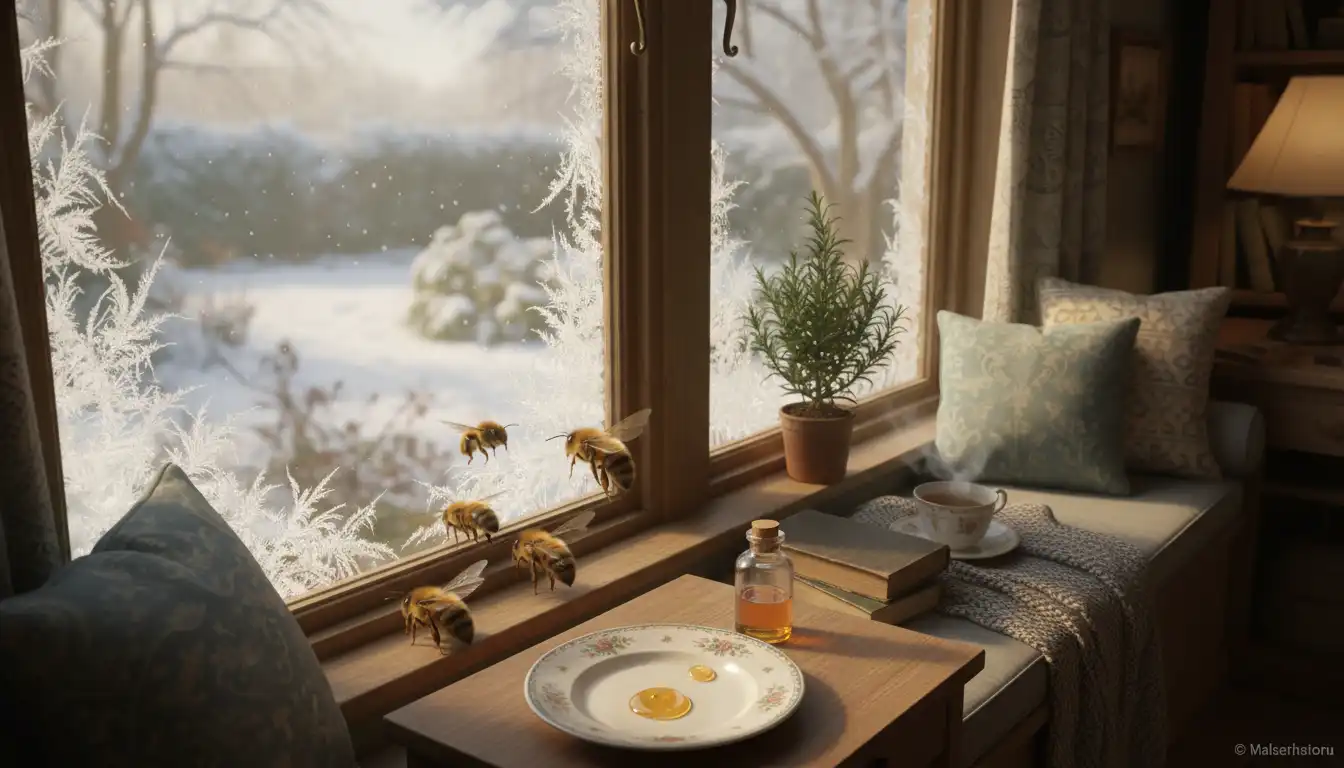
Identifying Your Winter Visitor
Knowing what kind of bee you’re dealing with can help you decide on the best course of action. While it can be difficult to get a close look, a few key features can help you identify your guest.
| Bee Type | Key Features | Typical Winter Behavior |
|---|---|---|
| Bumblebee Queen | Large, fuzzy body with distinct black and yellow (or sometimes orange) markings. Appears robust and slow-moving. | Usually found alone and lethargic. Awakened from hibernation by indoor heat and is looking for a way out. |
| Honey Bee | Smaller and slimmer than a bumblebee, with golden-brown and black stripes. Less fuzzy appearance. | May be found alone or in small numbers. If multiple are seen, it could indicate a hidden colony in the walls. |
| Carpenter Bee | Resembles a bumblebee, but its key identifier is a shiny, black, hairless abdomen. Bumblebees have fuzzy abdomens. | Often found alone near wooden structures. Its presence could mean nests exist in your home’s eaves, siding, or deck. |
What to Do When You Find a Bee in Winter
Your response should depend on whether you’ve found a single, sleepy bee or are seeing them regularly. In most cases, there is no need to panic or reach for an insecticide.
For a Single, Sleepy Bee
If you’ve found one disoriented bee, it is almost certainly a queen who was awakened too early. She is not aggressive and is vital for starting a new colony in the spring. The most humane approach is to help her get back to a safe place to continue her rest.
Gently trap the bee in a jar and slide a piece of stiff paper underneath to contain it. You can then release her outside in a protected area, such as a woodpile, shed, or under a dense evergreen shrub. This will shield her from the harshest cold and give her a chance to survive until spring. Handling a lethargic bee in the house is generally safe as they are too slow to be a threat.
If You See Multiple Bees
Finding several bees over a period of days, or even a steady stream of them, is a strong indicator of a nest within your home’s structure. Do not seal the hole you think they are using to get inside. This will trap them, forcing them to find another way out, which could be deeper into your home.
Observe where the bees are coming from. Listen closely to walls for faint buzzing sounds. This information will be critical if you need to call for professional help.
When to Call a Professional
A honey bee colony or a significant carpenter bee infestation inside your walls is not a DIY project. The risks of stings, structural damage from honey and wax, and attracting other pests are high. Contact a local beekeeper or a pest management professional who specializes in bee removal.
A beekeeper will prioritize saving the colony, while a pest control service will focus on extermination and prevention. Be sure to ask about their methods for removing the hive material itself, as leaving honeycomb in the walls can lead to rot and attract other pests.
Preventing Bees from Entering Your Home
The best way to handle bees in your house in winter is to prevent them from getting in in the first place. A thorough inspection and sealing of your home’s exterior is the most effective strategy.
Seal the Gaps
Bees can enter through surprisingly small openings. Conduct a detailed walk-around of your property in the fall to identify and seal potential entry points. Pay close attention to areas where different materials meet.
Common entry points include gaps around window and door frames, cracks in the foundation, and openings where utility pipes or wires enter the house. Use caulk or expanding foam to seal these cracks. Unmaintained rafter tails and gutters can also create hidden openings, so ensure your roofline is in good repair.
Inspect Siding, Vents, and Chimneys
Check your siding for any cracks or holes. Ensure that all vents (attic, soffit, and dryer vents) are covered with fine-gauge wire mesh to block insects without impeding airflow. Installing a chimney cap can also prevent bees, wasps, and other animals from nesting there.
Maintain Wooden Structures
To deter carpenter bees, it is important to keep all wooden surfaces painted or stained. They are strongly attracted to bare, weathered wood. Fill any existing holes with wood putty and paint over them to prevent bees from returning to the same nests year after year.
The Hidden Dangers of an Indoor Colony
While a single bee is harmless, an entire colony living in your walls can cause significant issues that go beyond the threat of stings. Understanding these risks underscores the importance of addressing an infestation promptly.
Structural Damage
A honey bee colony can build a massive nest, with honeycomb weighing over 100 pounds. The sheer weight can strain drywall, and melting honey can seep into insulation and wooden structures, causing rot and compromising structural integrity. Carpenter bee tunnels, while less dramatic, can weaken wood over time if multiple generations continue to nest in the same areas.
Attracting Other Pests
An abandoned hive is an open invitation to other pests. The leftover honey and wax can attract ants, rodents, and carpet beetles. These secondary infestations can create a whole new set of problems long after the bees are gone.
Ultimately, finding a bee in your house during winter is usually just a sign that your warm home has disturbed a hibernating queen. By taking a calm and measured approach, you can safely help her on her way and take steps to ensure your home remains a pest-free sanctuary for the rest of the season.
Final Word
A lone winter bee in your home is far more a curiosity than a cause for alarm. These sluggish visitors are usually individuals caught out of season, roused by indoor warmth, or simply seeking a last refuge—not scouts for an invasion. Understanding why they appear can turn that initial jolt of concern into a moment of appreciation for how resilient, resourceful, and unexpectedly present nature can be, even in the coldest months.
