
Bathroom Sink Not Centered? Why It’s The Hottest Trend
That sudden realization can be jarring. You step back to admire your new bathroom vanity, and it hits you: the bathroom sink is not centered in the cabinet. For many, this moment triggers a wave of panic, a feeling that a critical mistake has been made.
But what if this supposed error is actually a stroke of genius? Asymmetrical design is quickly becoming a hallmark of high-end, functional bathrooms, turning what was once considered a flaw into a celebrated feature.
You'll Learn About
The Off-Center Sink: Is It a Mistake or a Statement?
Before assuming the worst, it’s important to understand that an off-center sink is rarely an accident. More often than not, it’s a deliberate choice driven by either structural necessity or a desire for superior functionality. The perfectly symmetrical bathroom is a classic look, but modern design is increasingly prioritizing practicality and personality over rigid uniformity.
An asymmetrical layout can solve spatial puzzles, maximize utility, and create a visually dynamic space. So, while it may defy traditional expectations, an off-center sink is often the smartest solution for a contemporary bathroom.
Why Your Bathroom Sink Isn’t Centered (The Real Reasons)
There are several logical and practical reasons why a sink might be positioned to one side of the vanity. These reasons often revolve around overcoming challenges hidden behind the wall or making the space more livable.
Structural Hurdles: When Walls Get in the Way
Sometimes, the ideal centered position for a sink is impossible to achieve due to the home’s construction. The wall behind your vanity isn’t empty; it contains studs, electrical wiring, and existing plumbing lines that can obstruct the path of a new drain pipe.
Moving these structural elements is often costly and complex. Placing the sink slightly off-center can be an elegant workaround, avoiding major construction while still achieving a beautiful and functional result.
Plumbing Predicaments: The Unmovable Drain
The most common obstacle is the existing plumbing stub-out. If the drainpipe in the wall doesn’t align perfectly with the center of your new vanity, you have two choices: undertake a significant plumbing project or adapt the sink’s position. Often, the simplest and most cost-effective solution is to shift the sink to align with the existing drain.
While some homeowners may wonder how to move sink plumbing over a few inches, working with the existing layout is usually the path of least resistance. This avoids the need for opening walls and re-routing pipes, saving both time and money.
A Deliberate Design Choice: Embracing Asymmetry
Beyond structural constraints, the number one reason for an off-center sink is a conscious design decision to maximize counter space. In any bathroom, but especially in smaller ones, countertop real estate is precious. Centering a sink on a vanity divides the available surface into two smaller, often less useful sections.
By shifting the sink to one side, you create a single, expansive stretch of uninterrupted counter. This provides a dedicated area for toiletries, hair styling tools, or decorative items, transforming the vanity from a simple washing station into a versatile grooming hub.
The Asymmetrical Advantage: Turning a Problem into a Feature
Embracing an off-center sink layout unlocks a level of functionality that symmetrical designs can’t match. It’s a practical approach that has become a signature of sophisticated, user-focused bathroom design.
This layout creates a clear “wet zone” and “dry zone.” The area around the sink is for washing, while the large, open counter becomes a clutter-free space for everything else. This intentional separation is not just practical; it creates a sense of order and luxury.
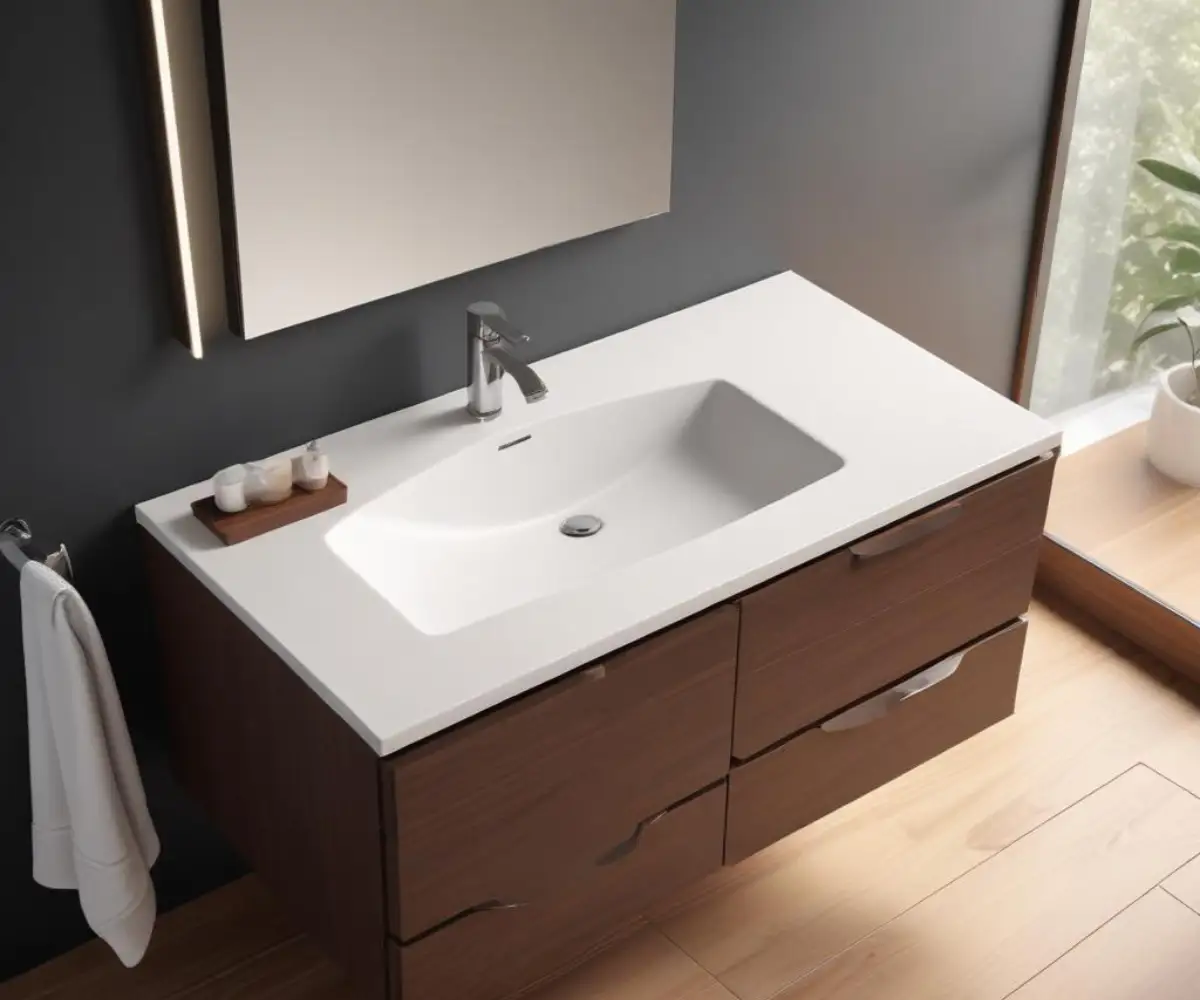
Creating Balance: How to Make an Off-Center Sink Look Intentional
The key to a successful asymmetrical design is creating a sense of visual balance. While the sink itself is not centered, the overall composition of the vanity area should feel harmonious and deliberate. This is achieved through the strategic placement of mirrors, lighting, and hardware.
Mirror Placement is Everything
You have two primary options for placing a mirror over an off-center sink, each creating a different aesthetic. Centering the mirror over the vanity cabinet creates a balanced, anchored look that makes the entire setup feel cohesive. The mirror’s central placement provides a sense of order, while the sink’s position adds functional appeal.
Alternatively, centering the mirror directly over the sink creates a more focused, personal grooming station. This approach works especially well with smaller, statement mirrors and can be complemented by artwork or shelving on the open countertop to balance the visual weight.
Lighting a Crooked Situation
Proper lighting is crucial for both function and style. If you opt for a vanity light bar, the best practice is to center it over the vanity itself, not the sink. This provides even, balanced illumination across the entire countertop and reinforces the overall symmetry of the space.
For those who prefer sconces, placing one on either side of a mirror centered over the vanity creates a classic, high-end look. This draws inspiration from other design challenges, such as when pendant lights not centered over island layouts are used to create a dynamic kitchen focal point.
Faucet and Hardware Choices
The right hardware completes the look and reinforces the intentionality of your design. A faucet with a striking finish can turn the sink into a beautiful focal point. On the cabinet doors and drawers, consider hardware that complements the overall aesthetic.
Sleek and modern pulls can enhance a minimalist design. For a clean, integrated look, installing edge pulls on upper cabinets and vanities is a professional touch that adds to the custom feel of the space.
The Off-Center Sink: A Practical Installation Guide
Installing an off-center sink is no more difficult than a centered one, but it does require careful planning. From countertop fabrication to plumbing adjustments, each step should be thoughtfully considered to ensure a flawless result.
| Feature | Centered Sink | Off-Center Sink |
|---|---|---|
| Counter Space | Two smaller, divided sections | One large, continuous usable surface |
| Aesthetics | Traditional, symmetrical, and classic | Modern, asymmetrical, and dynamic |
| Installation | Standard; requires centered plumbing | Flexible; can accommodate off-center plumbing |
| Functionality | Good for basic use | Excellent for multitasking and storage |
Step 1: Planning Your Layout and Plumbing
Before cutting any materials, finalize the exact placement of your sink. Measure the vanity, the sink, and the countertop to create a precise template. During this phase, confirm the location of your existing plumbing and determine what adjustments will be necessary.
Step 2: Cutting the Countertop
This is a critical step that requires precision. Whether you are working with laminate, stone, or a solid surface, the cutout for the sink must be exact. It is highly recommended to have a professional fabricator cut the hole to ensure clean lines and a perfect fit.
Step 3: Addressing the Plumbing Shift
Connecting an off-center sink to an existing drain is usually straightforward. The P-trap assembly under the sink offers a good degree of flexibility, as the pieces can be swiveled and adjusted. In cases where the offset is more significant, a flexible drain hose or an offset fitting can easily bridge the gap, ensuring a secure and leak-free connection.
Common Questions About Off-Center Sinks
Despite their growing popularity, many homeowners still have questions about embracing an asymmetrical design.
Will an off-center sink affect my home’s resale value?
Not at all. In fact, a well-designed, functional bathroom with ample counter space is a major selling point. Buyers are increasingly sophisticated and recognize thoughtful design that prioritizes usability.
What is the best vanity size for an asymmetrical sink?
Off-center sinks work beautifully on vanities of almost any size, but they are particularly impactful on vanities ranging from 36 to 60 inches. This provides enough room for a standard sink while leaving a generous and highly functional countertop area.
How far off-center can a sink be?
There are no strict rules, but functionality should be your guide. Ensure there is enough clearance around the sink for comfortable use. A good starting point is to leave at least 6-8 inches of counter space on the narrower side to prevent water from splashing against a wall.
Conclusion: The Center of Attention Doesn’t Have to Be Centered
A bathroom sink that is not centered in the cabinet is far from a design flaw. It is a smart, modern, and increasingly popular choice that champions function over outdated conventions. It solves structural problems, maximizes precious counter space, and creates a unique, high-end look.
So, the next time you see an off-center sink, don’t see a mistake. See a deliberate and intelligent design choice that proves the most beautiful and effective solutions are often found when you think outside the center line.
