
Bad Floor Plans: Is Your Home’s Layout Secretly Stressing You Out?
A home should be a sanctuary, a place of comfort and ease. Yet, many homeowners find themselves fighting against their own living space, battling daily frustrations caused by a fundamentally flawed design.
These issues often stem from bad floor plans. A poor layout can disrupt flow, erase privacy, and turn simple daily tasks into frustrating chores, ultimately impacting your quality of life and your home’s value.
You'll Learn About
The Silent Sabotage of a Poorly Designed Home
A bad floor plan is more than just an inconvenience; it’s a constant source of low-grade stress. It dictates how you move, how you interact, and how you feel within your own walls.
Understanding the common pitfalls of residential design is the first step toward creating a more harmonious living environment, whether you’re buying, renovating, or simply trying to improve your current space.
1. The Labyrinth: Navigating Needless Hallways
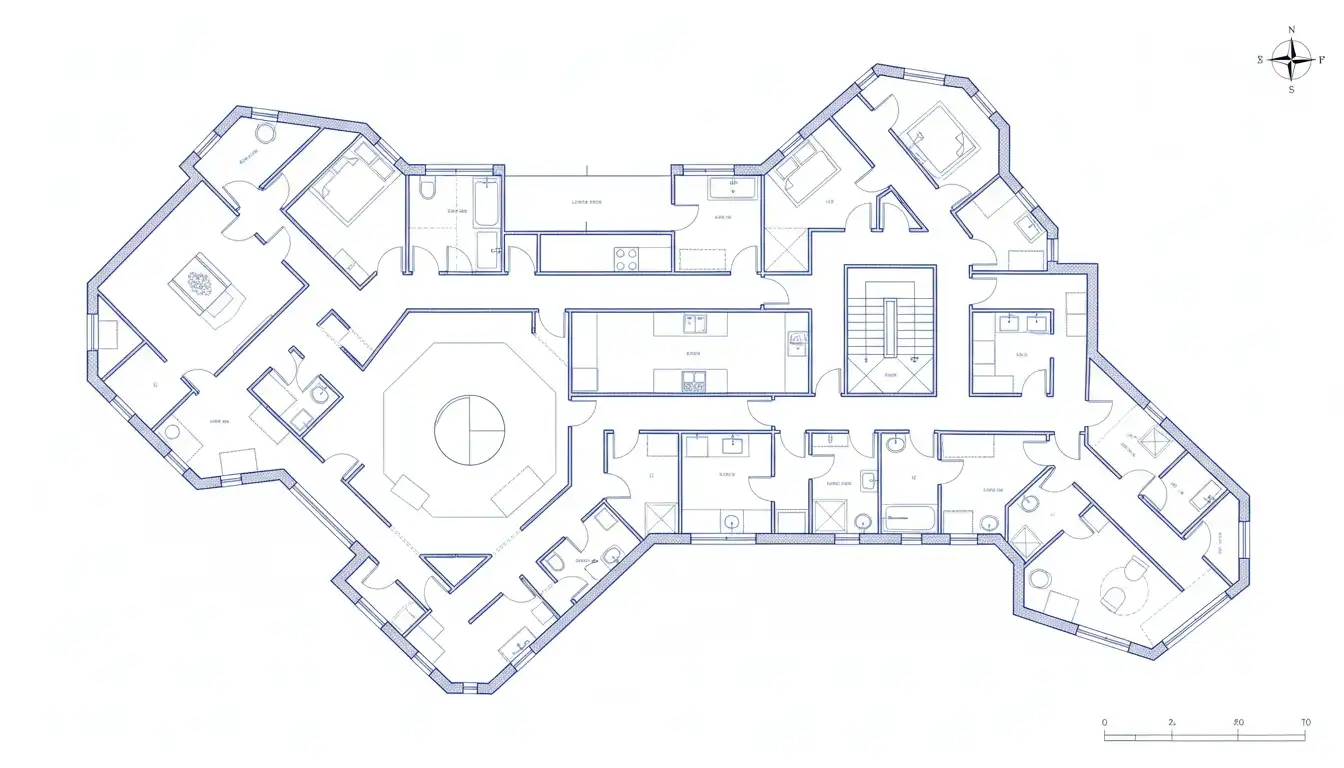
One of the most common offenders in residential architecture is the creation of long, narrow, and dark hallways. These spaces, often referred to as “bowling alleys,” consume valuable square footage without providing any functional benefit.
They serve only to connect rooms, but in the process, they can make a home feel disjointed and smaller than it actually is. This wasted space could have been allocated to larger rooms, storage, or a more open-concept living area.
2. The Privacy Problem: Bedrooms on Public Display
A well-designed home has clear zones for public and private life. A major red flag is a floor plan where private spaces, like bedrooms and bathrooms, open directly into public gathering areas such as the living room or kitchen.
Imagine having guests over for dinner while a family member has to walk through the main entertaining space to get from their bedroom to the bathroom. This lack of a privacy buffer is a classic sign of an amateur or poorly considered layout.
3. The Isolated Kitchen: A Recipe for Discontent
The kitchen is often called the heart of the home, but in many bad floor plans, it’s treated like a forgotten appendix. An isolated kitchen, walled off from the dining and living areas, separates the person cooking from the rest of the household.
Beyond social isolation, a poorly designed kitchen often suffers from a broken “work triangle.” The path between the sink, refrigerator, and stove should be clear and efficient, not a frustrating obstacle course. Improving this space during a remodel with durable surfaces like a honed porcelain countertop can enhance both function and value.
Recognizing the Red Flags: A Homeowner’s Checklist
Identifying a bad floor plan requires a critical eye and an understanding of daily life. It’s not just about room dimensions; it’s about flow, function, and the feeling a space evokes.
Before you commit to a property or a renovation plan, walk through the space—or the blueprint—and imagine your daily routines. This mental exercise can reveal flaws that aren’t immediately obvious on paper.
4. The Main View Toilet: An Unfortunate Welcome
Few design choices are more universally disliked than a bathroom layout where the toilet is the first thing you see. When a bathroom door is left open, the toilet should not be in the direct line of sight from a hallway or adjacent room.
This is a small detail with a significant impact on a home’s sense of refinement and thoughtful design. The ideal layout places a vanity or a piece of art in the primary sightline, with the toilet tucked away to the side.
| Good Floor Plan Feature | Corresponding Bad Floor Plan Flaw |
|---|---|
| Clear Sightlines: Creates a sense of openness and connection between spaces. | Obstructed Views: Walls and corners that break up the space and make it feel smaller. |
| Functional Entryway: A defined foyer with a coat closet and landing space. | Abrupt Entrance: Front door opens directly into the living room with no transition. |
| Logical Room Adjacency: Dining room near the kitchen; laundry near bedrooms. | Illogical Flow: Having to walk through a bedroom to reach a home office. |
| Ample Natural Light: Windows placed strategically to illuminate the home throughout the day. | The “Cave Effect”: Lack of windows or poor placement leading to dark, gloomy interiors. |
| Standard Room Shapes: Rectangular rooms that are easy to furnish and navigate. | Awkward Geometries: Odd angles and trapezoidal rooms that create unusable space. |
5. The Awkwardly Shaped Room: A Furniture Nightmare
Rooms with strange angles, too many doors, or poorly placed windows can be nearly impossible to furnish. A living room where no wall is long enough for a sofa is a classic example of a layout that failed the test of practicality.
Good design considers furniture placement from the very beginning. When a room’s layout forces you into awkward or impractical furniture arrangements, the space will never feel comfortable or resolved.
6. Window Woes: An Asymmetrical Disaster
Windows are critical for natural light and views, but their placement and sizing are just as important for aesthetics. A common mistake is a lack of consideration for how windows look from both the inside and the outside.
This can result in jarring asymmetry that throws off a room’s balance. Sometimes homeowners even find themselves dealing with different height windows in the same room, a perplexing issue that can be a real design challenge.
The Long-Term Cost of a Bad Layout
The consequences of a bad floor plan extend beyond daily annoyance. These homes can be difficult to sell, often lingering on the market and fetching lower prices than their well-designed counterparts.
Furthermore, the “solutions” to bad layouts often involve costly renovations. Moving walls, rerouting plumbing, and adding windows are significant investments that could have been avoided with a better initial design.
The Psychological Toll of Poor Design
Living in a space that doesn’t function well can have a subtle but significant impact on mental well-being. A lack of storage creates clutter, which is a known stressor. A dark, gloomy interior can affect mood.
The constant, low-level friction of dealing with an impractical space—like squeezing past a poorly placed island or navigating a maze of hallways—adds up over time. A good floor plan promotes calm and efficiency, while a bad one creates chaos and frustration.
From Flawed to Functional: How to Fix a Bad Floor Plan
If you’re stuck with a less-than-ideal layout, don’t despair. While some issues require a full-scale renovation, many problems can be mitigated with clever strategies and professional help.
The key is to correctly identify the core problem and explore the most effective solutions for your budget and lifestyle.
Solutions for Common Layout Problems
For a home that feels dark and disconnected, the most dramatic solution is often to remove a non-load-bearing wall. This can instantly create an open-concept feel, combining a kitchen, living, and dining area into one cohesive space.
For rooms that are difficult to furnish, consider creating “zones” with area rugs and furniture groupings. In some cases, custom built-in storage can solve the problem of awkward corners and unusable nooks.
When to Call in the Professionals
While some cosmetic fixes are DIY-friendly, tackling a bad floor plan often requires expertise. An interior designer can help with space planning and furniture layout, while an architect or a design-build firm is necessary for structural changes.
Attempting to move walls without proper assessment can be disastrous. It’s crucial to determine if a wall is load-bearing before any demolition begins. This kind of major renovation can also sometimes reveal underlying structural issues. For example, opening up a wall might expose problems in the foundation’s base, and it’s essential to know who to hire for this critical fix to ensure the home’s integrity.
The Final Blueprint for a Better Home
A floor plan is the very foundation of a home’s functionality. It is the invisible framework that governs your life within its walls. Recognizing the signs of a bad layout is a crucial skill for any homeowner or prospective buyer.
By prioritizing logic, flow, and thoughtful design, you can ensure your home is a source of comfort and support, not a daily puzzle that needs to be solved. A truly great home is one where the design is so intuitive, you don’t even notice it’s there.
Conclusion
A floor plan is the invisible engine of the home; when it fails, the entire living experience stalls. Designing or choosing a layout is not merely an aesthetic exercise, but a vital investment in your long-term well-being. By prioritizing intuitive flow, functional zoning, and intentional privacy, you transform a house from a source of friction into a true sanctuary.
A thoughtful design anticipates your needs, turning chores into effortless habits and rooms into restorative retreats. Ultimately, addressing layout flaws before they are set in stone—or through strategic renovation—reclaims the harmony of your daily life. Investing in a superior floor plan ensures that your home remains your greatest asset, both in financial value and personal peace.
