Bad Bathroom Remodels: 10 Signs Your Project Is a Disaster
The dream of a spa-like oasis quickly becomes a nightmare. Weeks of dust and disruption are supposed to end with a beautiful, functional new bathroom. Instead, you are left with crooked tiles, a mysterious puddle near the tub, and a vanity that is not quite level. These are the hallmarks of bad bathroom remodels, a frustratingly common experience for homeowners.
A poorly executed renovation is more than just an eyesore; it can be a financial drain and a source of significant stress. Understanding the signs of shoddy work is the first step in preventing it. This guide will expose the most common remodeling failures and provide an actionable blueprint to ensure your project is a resounding success from start to finish.
You'll Learn About
The Anatomy of a Botched Bathroom: Telltale Signs of a Bad Remodel
Identifying a bad remodel early can save you from costly future repairs. Some signs are immediately obvious, while others are subtle indicators of deeper problems lurking behind the walls. Pay close attention to the details, as that is where quality craftsmanship truly reveals itself.
1. Shoddy Tile and Grout Work
Tile work is often the centerpiece of a bathroom, and it is also one of the easiest places to spot amateur mistakes. Look for uneven tiles, a condition known as “lippage,” where one tile edge is higher than its neighbor. This is not only visually unappealing but can also be a trip hazard on floors. Run your hand across the surface; it should feel smooth and uniform.
Inconsistent grout lines are another major red flag. Gaps between tiles should be uniform in width, and the grout itself should be smooth and fully packed into the joints. Poorly applied grout can crack and crumble, allowing water to seep behind the tiles. Also, check for sloppy cuts around fixtures and in corners; they should be precise and clean.
2. Faulty Plumbing and Leaks
Plumbing mistakes are among the most destructive issues in a bad bathroom remodel. Obvious signs include a dripping faucet or a toilet that constantly runs. Less obvious signs, like low water pressure or slow drains, can indicate improper pipe installation or venting issues. A gurgling sound from the drain is a classic sign of a venting problem.
The most dangerous plumbing failures are the hidden ones. Even a small, slow leak behind a wall can lead to catastrophic damage over time, promoting mold growth and rotting the structural framing of your home. Always check under the sink and around the base of the toilet for any signs of moisture after a remodel.
3. Inadequate Ventilation
A bathroom requires proper ventilation to exhaust moist air and prevent the growth of mold and mildew. If your new bathroom feels persistently damp or steamy long after a shower, the ventilation is likely insufficient. Peeling paint or dark spots on the ceiling are clear indicators of a moisture problem. A properly sized and installed exhaust fan is non-negotiable for a healthy bathroom environment.
4. Waterproofing Failures: The Unseen Menace
What you cannot see is often the most critical part of a bathroom remodel. Proper waterproofing is the single most important element of a long-lasting shower and bathroom. Failure here is not a matter of if, but when, it will cause severe damage. Modern bathrooms should use a complete waterproofing system, such as a liquid-applied membrane or a sheet membrane, behind the shower walls and on the shower floor before any tile is installed.
Skipping this step, or applying it incorrectly, is a catastrophic shortcut taken in many bad bathroom remodels. Water will inevitably find its way through grout and tile, and without this barrier, it will saturate the wallboard and wood studs. The result is structural rot, widespread mold, and a complete tear-out and redo that costs far more than doing it right the first time.
5. Crooked Fixtures and Poor Layout
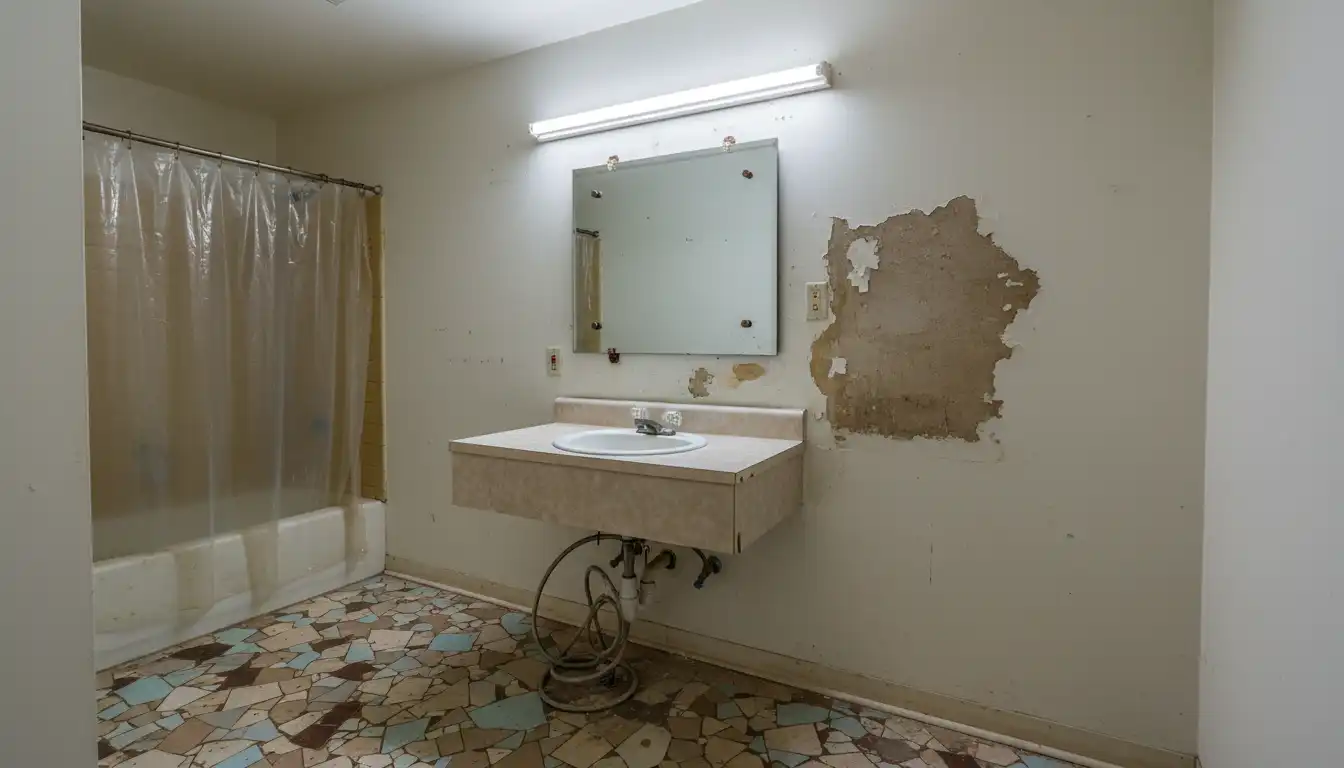
This category of errors points to a fundamental lack of care and precision. A vanity should be perfectly level, a toilet should sit squarely on the floor, and a shower door should open and close smoothly without catching. Take a step back and look at the overall alignment. Do the fixtures seem properly placed and spaced?
Poor layout planning can make a bathroom frustrating to use. For example, a toilet installed too close to a wall or vanity can feel cramped and may not meet building codes. A well-executed remodel considers both aesthetics and ergonomics, ensuring the space is comfortable and functional.
6. Electrical Hazards
Electrical work in a damp environment like a bathroom must be handled with the utmost care. A major red flag is the absence of Ground Fault Circuit Interrupter (GFCI) outlets within a few feet of any water source. These specialized outlets are a critical safety feature that protects against electrical shock.
Other warning signs include switches that are difficult to operate or light fixtures that flicker. Shoddy electrical work is a serious fire hazard. When planning your lighting, consider more than just a single overhead fixture; you can avoid common issues like making a mistake with recessed lights over your vanity by layering different types of light for better functionality.
Behind the Drywall: Root Causes of Remodeling Disasters
Understanding what goes wrong on the surface is only half the story. The root causes of bad bathroom remodels almost always trace back to poor decisions made before the first tile was ever laid. These foundational errors set the stage for failure.
Cutting Corners on Materials
The temptation to save money by opting for cheaper materials is a common pitfall. Using standard drywall instead of moisture-resistant cement board behind a shower is a classic example. While it may look fine initially, it will quickly degrade and fail when exposed to moisture. The same applies to plumbing fittings, valves, and waterproofing products. High-quality materials are an investment in the longevity of your remodel.
Hiring the Wrong Contractor
The single biggest factor in the success or failure of your project is the person you hire to do the work. A bad contractor often reveals themselves through a series of red flags: an unusually low bid, a demand for a large upfront payment, a lack of a detailed written contract, or an inability to provide proof of license and insurance. They may also exhibit poor communication and a general lack of professionalism.
Thoroughly vetting potential contractors is crucial. Taking the time to read detailed customer feedback, such as in-depth Made Bathroom Renovation reviews, can provide valuable insight into a company’s reliability and quality of work. This due diligence can save you from a world of frustration.
The Dangers of DIY Overreach
While taking a hands-on approach can be rewarding, some tasks are best left to licensed professionals. Waterproofing, plumbing, and electrical work require specialized knowledge and experience. A small mistake in these areas can have severe and costly consequences. An honest assessment of your own skills is essential before deciding which parts of the remodel to tackle yourself.
Your Defense Plan: How to Guarantee a Successful Bathroom Remodel
Avoiding a bathroom remodeling nightmare is entirely possible with the right knowledge and preparation. By taking a proactive approach, you can protect your investment and ensure the final result meets your expectations. This defense plan is your roadmap to a flawless renovation.
The process begins long before demolition. It involves careful planning, diligent research, and establishing clear expectations with the professionals you hire. A successful remodel is built on a foundation of communication, quality materials, and expert craftsmanship.
The Vetting Process: Choosing a Reputable Contractor
Your first line of defense is selecting a qualified and trustworthy contractor. Always verify that they are licensed and fully insured. Ask for a list of recent references and take the time to call them. A reputable contractor will be proud to share their portfolio and connect you with past clients. Get at least three detailed, written bids to compare scope and cost.
During the interview process, pay attention to their communication style. Do they listen to your ideas and answer questions clearly? A professional who is transparent and easy to communicate with is more likely to deliver a positive experience. Trust your intuition; if something feels off, it probably is.
The Ironclad Contract: Your Most Important Tool
Never proceed with a project without a comprehensive, written contract. This document is your primary protection and should leave no room for ambiguity. It must include a detailed scope of work, specifying exactly what will be done and what materials will be used. It should also outline a clear payment schedule tied to project milestones, as well as start and estimated completion dates.
The contract should also have a clause that outlines the process for handling “change orders” — any additions or alterations to the original plan. This ensures that any changes in scope or cost are agreed upon in writing by both parties before the work is done. A vague contract is a significant red flag.
| Bad Remodel Red Flag | Quality Work Green Flag |
|---|---|
| Vague, one-page estimate | Detailed, itemized bid and scope of work |
| Requests large cash payment upfront | Clear payment schedule tied to project milestones |
| No proof of license or insurance | Provides license number and insurance certificates upfront |
| Poor communication, slow to respond | Professional, clear, and prompt communication |
| Pressures you to sign immediately | Encourages you to check references and take your time |
| Avoids pulling necessary permits | Handles all necessary permits as part of the service |
| No written warranty | Provides a clear written warranty for labor and materials |
Beyond the Basics: Advanced Considerations for a Flawless Finish
To truly elevate your bathroom remodel from good to great, it is essential to focus on foundational elements that are often overlooked. These “unseen” details are what separate a standard renovation from one that is built to last for decades, ensuring both beauty and durability.
These advanced considerations address the root causes of many common failures, like cracked tiles and persistent leaks. By understanding and insisting on these best practices, you empower yourself to demand a higher standard of quality from your contractor, resulting in a superior finished product.
The Unsung Hero: Subfloor Preparation
Many homeowners focus on the visible tile, but the tile is only as good as the subfloor it rests on. An improperly prepared subfloor is a primary cause of cracked tiles and grout failure. The subfloor must be structurally sound, clean, and perfectly flat. For wood subfloors, this often means adding a layer of cement backer board, which provides a stable, moisture-resistant base for the tile.
The floor must be rigid, with minimal “deflection” or bounce. A professional will check the floor joists to ensure they can support the weight of tile and mortar without flexing. For concrete subfloors, any cracks must be repaired, and the surface must be leveled with a self-leveling compound if necessary. Insisting on meticulous subfloor preparation is a key step in preventing long-term problems.
The Nuances of Sealing and Caulking
The final sealing and caulking steps are your bathroom’s last line of defense against water intrusion. This is not the place for sloppy work. All joints where different planes or materials meet—such as where the tub meets the tile or where the vanity top meets the wall—must be sealed with high-quality, 100% silicone caulk, not grout.
Grout is rigid and will crack with the natural movement of the house, whereas silicone is flexible and maintains a waterproof seal. The application of the caulk bead should be neat and clean. While some wonder about having no caulk between the tub and tile, it’s a critical step that prevents water from wicking into the wall cavity, leading to mold and rot.
Final Checklist
Embarking on a bathroom remodel is a significant undertaking, but it does not have to be a gamble. By arming yourself with knowledge, you can spot the warning signs of a bad remodel and take control of the process. Remember the most critical steps: vet your contractor diligently, insist on an ironclad contract, and understand that quality lies in both the visible finishes and the crucial work done behind the walls.
A successful remodel is a partnership between an informed homeowner and a skilled, professional contractor. By following these guidelines, you can navigate the renovation with confidence, ensuring your investment results in a beautiful, functional, and durable bathroom that you will enjoy for years to come.