
Aztec Grass vs Liriope: The #1 Mistake You’re Making in Your Garden
Choosing the right border plant can make or break your landscape design. You want something lush, green, and low-maintenance, but the options at the garden center can be overwhelming. Two popular contenders, Aztec grass and Liriope, often cause the most confusion.
They look strikingly similar with their grass-like leaves, leading many gardeners to believe they are interchangeable. This is a critical error. While they share a similar appearance, their growth habits, needs, and roles in the garden are fundamentally different, and choosing the wrong one can lead to years of frustration.
This guide will illuminate the crucial distinctions between these two landscape powerhouses. We will delve into their unique characteristics, ideal uses, and the common problems you might face, ensuring you can confidently select the perfect plant for your garden’s needs.
You'll Learn About
Unmasking the Impostors: The Critical Difference You Must Know
The primary source of confusion between Aztec grass and Liriope stems from their similar appearance and common names. Liriope is often called “monkey grass,” and some nurseries incorrectly label Aztec grass with the same nickname. However, they belong to entirely different botanical families.
Understanding this fundamental genetic difference is the first step to mastering their use. One is a well-behaved, clumping plant, while the other can be an aggressive spreader. Mistaking one for the other is a frequent and frustrating landscaping blunder.
Meet Aztec Grass (Ophiopogon jaburan ‘Vittatus’)
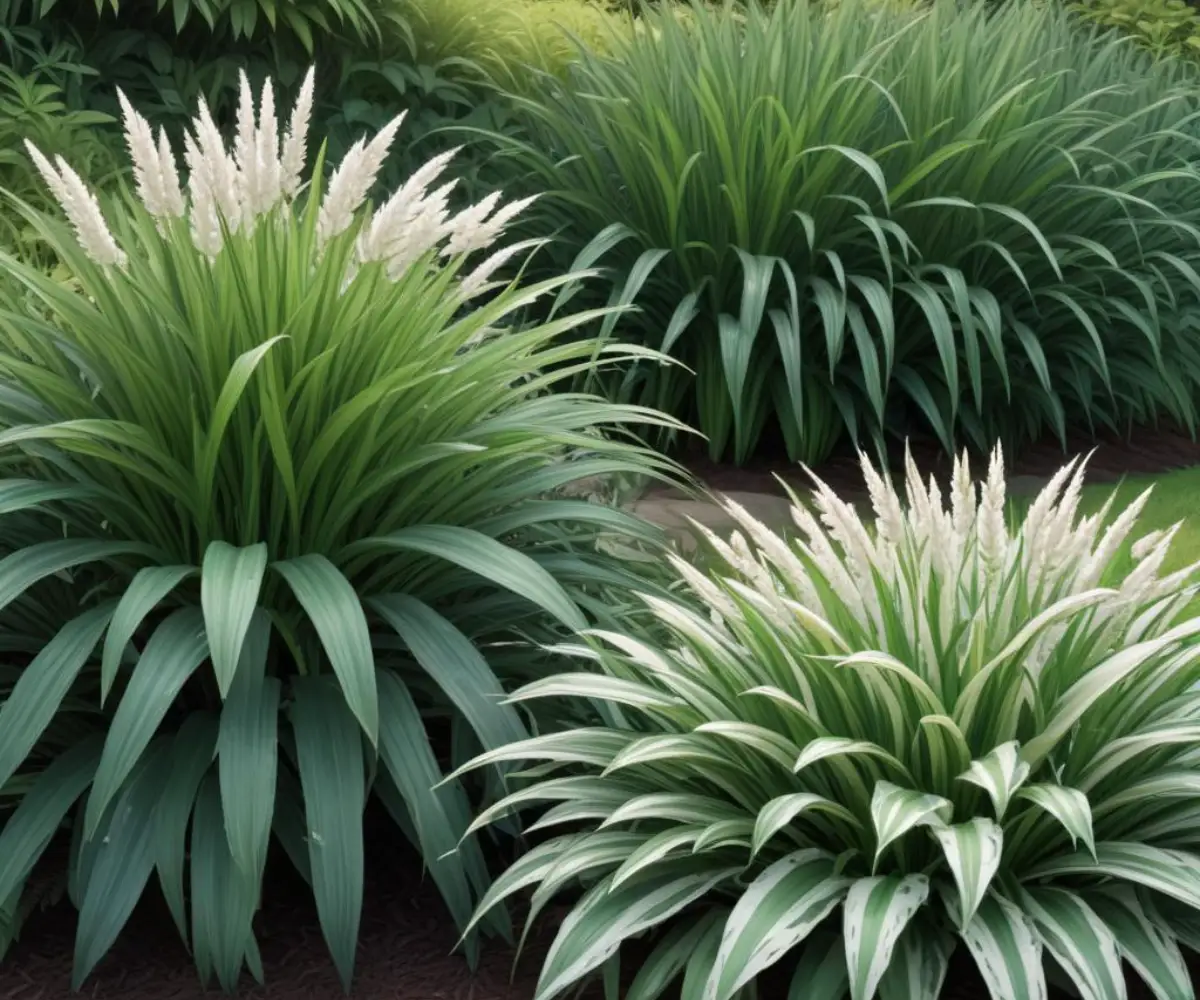
Aztec grass is not a true grass but a member of the Asparagus family. Its most defining feature is its stunning variegated foliage, with creamy white or yellowish stripes running the length of its dark green leaves. This gives it a brighter, more refined appearance in the landscape.
Crucially, Aztec grass has a clumping growth habit. It expands slowly outward from a central point, forming a dense, neat mound that does not send out aggressive underground runners. This makes it a predictable and well-behaved plant for formal designs.
Meet Liriope (Liriope muscari)
Liriope, often called Lilyturf, is also a member of the Asparagus family but belongs to a different genus. While there are variegated cultivars, the most common varieties feature solid, deep green foliage. Its leaves are typically wider and more strap-like than those of Aztec grass.
The most significant difference is its growth habit. Many popular varieties of Liriope spread via underground rhizomes. This allows it to fill in areas quickly, making it an excellent ground cover, but it can also become invasive if not properly contained, creeping into lawns and other garden beds.
Head-to-Head Comparison: The Ultimate Showdown
To truly understand which plant is right for you, a direct comparison is essential. This table breaks down their key attributes, highlighting the subtle and significant differences that will influence your decision.
| Feature | Aztec Grass (Ophiopogon jaburan ‘Vittatus’) | Liriope (Liriope muscari) |
|---|---|---|
| Botanical Name | Ophiopogon jaburan ‘Vittatus’ | Liriope muscari |
| Common Names | Variegated Mondo Grass, White Lilyturf | Lilyturf, Monkey Grass, Border Grass |
| Growth Habit | Clumping; forms dense, non-spreading mounds. | Spreading via rhizomes (most common varieties). |
| Spread | Very slow; predictable and easy to contain. | Moderate to aggressive; can become invasive if not managed. |
| Sun Exposure | Part shade to full shade is ideal. Can tolerate some morning sun but may scorch in intense afternoon sun. | Full sun to part shade. Extremely adaptable and tolerant of various light conditions. |
| Water Needs | Prefers consistently moist, well-drained soil. Intolerant of “wet feet” and prone to root rot. | Drought-tolerant once established. More forgiving of inconsistent watering. |
| Soil Preference | Rich, organic, well-draining soil. Does not tolerate heavy clay well. | Highly adaptable to various soil types, including clay, sand, and loam. |
| Foliage | Fine-textured, narrow leaves with prominent creamy-white variegation. | Wider, strap-like leaves, typically solid dark green (though variegated cultivars exist). |
| Flowers | Small, subtle white or lilac flowers on short stalks, often hidden within the foliage. | Showy spikes of purple or white flowers in late summer, resembling grape hyacinths. |
| Hardiness Zones | USDA Zones 7-10. Less cold-hardy. | USDA Zones 5-10. More cold-hardy and widely adaptable. |
| Maintenance | Low. No division or containment needed. May require trimming of winter-damaged leaves. | Higher. Requires annual trimming and often containment (edging, root barriers) to prevent unwanted spreading. |
Choosing Your Champion: Which Plant Solves Your Garden Problem?
Your choice between Aztec grass and Liriope should be driven by the specific problem you are trying to solve in your garden. Are you looking for a neat, tidy border or a fast-growing ground cover to suppress weeds? Your answer to this question is the key.
Thinking about the long-term vision for your space is crucial. When considering the overall aesthetic, some homeowners even seek out professional guidance to ensure every element works in harmony, a service explored in a Pottery Barn in-home design services review, which highlights the value of expert planning.
The Case for Aztec Grass: For Precision and Control
You should choose Aztec grass when your design requires precision, elegance, and predictable growth. Its clumping nature means it will stay exactly where you plant it, making it the superior choice for several specific applications.
Use it for formal pathway edging, container gardens, rock gardens, or as an accent plant in a mixed perennial bed. Because it won’t invade its neighbors, it pairs beautifully with other plants without choking them out. Its bright, variegated foliage is also perfect for illuminating shady corners of the garden.
The Case for Liriope: For Rapid Coverage and Durability
You should choose Liriope when your primary goal is durability, rapid coverage, and erosion control. Its spreading habit, which can be a problem in a formal bed, becomes a major asset when you need to cover a large area quickly and affordably.
Use Liriope for stabilizing slopes, creating a dense ground cover under large trees where grass won’t grow, or for filling in large, informal landscape beds. Its toughness allows it to withstand foot traffic and challenging soil conditions far better than the more delicate Aztec grass.
Common Pitfalls and How to Avoid Them (Advanced Care)
Even the toughest plants can fail if not cared for properly. Moving beyond basic planting instructions and understanding the common real-world problems will ensure your plants thrive for years to come. These expert tips address the most frequent issues gardeners face with both species.
Knowing how to handle these challenges will save you time, money, and the disappointment of seeing your beautiful plants struggle.
The #1 Mistake with Aztec Grass: Preventing Root Rot
The most common cause of failure for Aztec grass is root rot. This plant absolutely despises soggy, poorly drained soil. Planting it in heavy clay or a low-lying area that collects water is a recipe for disaster. The roots will quickly suffocate and rot, causing the entire plant to turn yellow and die.
To prevent this, amend your soil heavily with compost or other organic matter to improve its structure and drainage. If you have dense clay soil, consider planting Aztec grass in raised beds or on a slight mound to ensure water drains away from the crown of the plant efficiently.
Taming the Beast: How to Contain Spreading Liriope
The primary complaint about Liriope is its tendency to spread aggressively. While this is great for ground cover, it becomes a maintenance nightmare when it starts invading your lawn or other garden beds. The key is proactive containment.
Before planting, install a durable landscape edging or a root barrier at least 6-8 inches deep around the area where the Liriope is planted. This physical barrier will block the underground rhizomes. You will also need to periodically patrol the border and dig out any runners that manage to escape.
Why Your Grass is Turning Brown or Reverting
Brown tips on both plants are common after a harsh winter or in very hot, sunny locations. This is easily solved by shearing the entire plant back to about 2-3 inches in late winter or early spring before new growth appears. This refreshes the plant and results in a flush of beautiful, clean foliage.
For some variegated Liriope cultivars, you may notice some clumps “reverting” to a solid green color. This happens when the more vigorous, non-variegated part of the plant takes over. The best solution is to dig up and remove the all-green clumps to preserve the desired variegated look.
The Soil’s Secret Role: A Factor Almost Everyone Overlooks
While we’ve discussed drainage, the true secret to long-term success with these plants lies deeper within the soil’s health. Many guides stop at “well-drained soil,” but the microbial life and organic content of that soil are what truly build plant resilience. This is a foundational concept, much like ensuring a home has durable, long-lasting surfaces. When making choices for longevity, homeowners often research extensively, even looking into Chesapeake vinyl flooring reviews to find a product that will stand the test of time.
Instead of just focusing on soil type, focus on creating a living soil ecosystem. Regularly top-dressing with high-quality compost does more than just provide nutrients. It feeds beneficial microbes, improves soil structure, helps retain moisture during dry spells, and enhances drainage during wet periods. This living soil helps Aztec grass resist fungal diseases like root rot and gives Liriope the resources to stay healthy and lush, even in challenging conditions.
This holistic approach to soil health is what separates struggling plants from spectacular ones. It creates a robust foundation that buffers the plant against environmental stresses. Poor soil can also contribute to moisture issues around a home’s foundation, a critical concern that extends to other systems, like ensuring you have a properly installed crawl space dryer vent to prevent dampness and mold.
Your Final Verdict: Making the Confident Choice
The “Aztec grass vs Liriope” debate is not about which plant is better overall, but which plant is uniquely suited to your specific landscaping needs. By understanding their core differences in growth habit, you can avoid the common mistake of using them interchangeably.
To put it simply:
Choose Aztec Grass for controlled elegance. It is the perfect choice for formal designs, tight spaces, containers, and shady spots where you want a bright, predictable accent.
Choose Liriope for tough, fast coverage. It is the undisputed champion for filling large areas, controlling erosion, and surviving in a wide range of challenging conditions with minimal fuss.
Armed with this knowledge, you can now walk into any garden center with confidence, look past the superficial similarities, and select the exact plant that will not only solve your landscaping problem but will also bring you joy and beauty for many seasons to come.
