
Astilbe with Hostas: Unlock Your Dream Shade Garden Today
That frustrating, gloomy corner of the yard—it promises the cool serenity of a woodland escape but often delivers a patchy, uninspired landscape. Many gardeners envision a lush tapestry of textures and colors, turning to the classic pairing of astilbe and hostas to bring this dream to life. Yet, the reality is often a disappointing collection of struggling plants that fail to capture the garden’s potential.
The problem isn’t the plants themselves; it’s a fundamental misunderstanding of their needs and how they interact. A truly stunning shade garden is more than just putting two shade-loving plants together. It requires a deeper knowledge of light, water, and design to create a harmonious and thriving ecosystem.
You'll Learn About
Why Your Perfect Pairing Looks Perfectly Awful
The classic combination of astilbe and hostas can fail for several reasons that go beyond basic care. Success lies in understanding the subtle, yet critical, differences in their requirements and the environment you provide. Ignoring these nuances is the primary reason so many of these plantings underwhelm.
The Critical Mismatch: Water and Light Needs
While both plants are designated for shade, their tolerance levels and specific needs differ significantly. Astilbes are true moisture lovers and demand consistently damp soil to produce their iconic, feathery plumes. Hostas, on the other hand, are remarkably resilient and can tolerate drier conditions once established, making them susceptible to root rot if overwatered.
Similarly, “shade” is not a monolithic condition. Hostas can thrive in deep shade, but astilbes require some dappled sunlight or bright, indirect light to fuel their bloom production. Placing an astilbe in the dense shade where a hosta flourishes will often result in lush foliage but a complete lack of flowers.
The Design Flaw: A Monotonous Sea of Green
Even when healthy, a bed composed solely of hostas and astilbes can appear flat and uninteresting for much of the year. The issue is a lack of varied texture, form, and year-round structure. Without other elements, the garden lacks the dynamic, layered look that defines a truly masterful design.
The bold, broad leaves of hostas and the fine, fern-like foliage of astilbes offer a great starting point for contrast. However, without companions to bridge the gap and add different shapes and seasonal interest, the effect can be lost. This is the visual trap many well-intentioned gardeners fall into.
The Strategic Blueprint for a Thriving Shade Garden
Transforming a struggling shade bed into a vibrant oasis requires a strategic approach. It begins with a careful assessment of your specific site and moves toward intentional plant selection and design. This blueprint will guide you from correcting the core problems to creating a garden that excels in both health and beauty.
Step 1: Become a Microclimate Master
Before planting, map your garden’s unique conditions. Observe how sunlight moves across the area throughout the day. Identify the locations that receive gentle morning sun versus those in deeper, more consistent shade. This will dictate where your astilbes (which need some light) and your deepest-shade-tolerant hostas will thrive.
Next, assess the soil’s moisture. Create “moisture zones” by identifying areas that naturally stay damp and those that dry out more quickly. Amend the soil in astilbe-designated zones with extra compost or organic matter to boost water retention, ensuring they get the consistent moisture they crave without waterlogging their hosta neighbors.
Step 2: Curate Your Plant Palette with Purpose
Choosing the right varieties is crucial for visual impact. Don’t just pick any hosta and any astilbe. Select cultivars that complement each other in size, color, and bloom time to create a cohesive and dynamic display. The goal is to create contrast that highlights the best features of each plant.
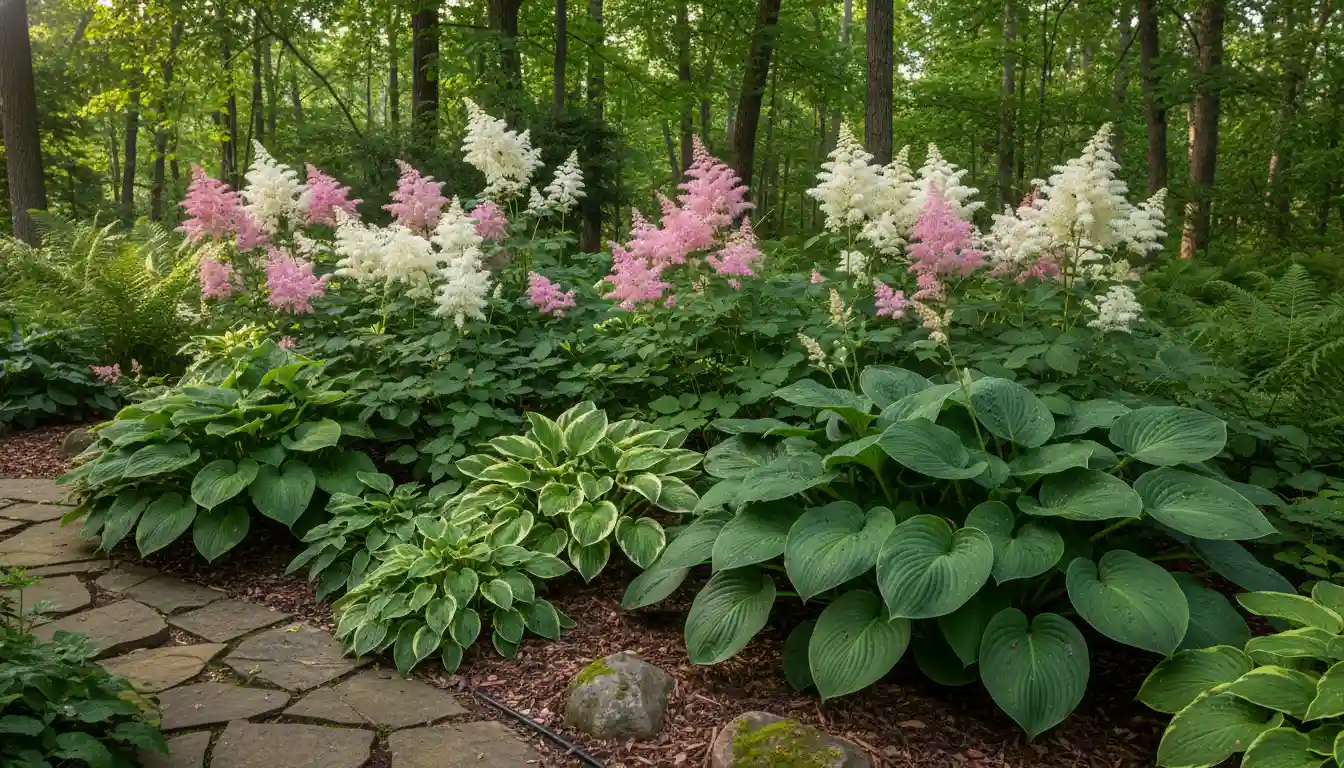
For example, pair a giant, chartreuse hosta like ‘Sum and Substance’ with the deep, blood-red plumes of Astilbe ‘Fanal’ for a dramatic, high-contrast statement. For a more subtle and elegant look, combine the blue-toned leaves of Hosta ‘Halcyon’ with the delicate, pale pink flowers of Astilbe ‘Visions in Pink’.
Step 3: Layer with Companion Plants for All-Season Interest
To avoid a monotonous look, introduce companion plants that add new textures, forms, and colors. These additions are what elevate a simple pairing into a sophisticated garden design. Choose plants that share similar light and soil preferences to ensure a harmonious and low-maintenance bed.
Excellent companions include Japanese Painted Ferns, whose silvery fronds provide a delicate texture that contrasts beautifully with hosta leaves. Coral Bells (Heuchera) offer a stunning array of foliage colors, from deep purples to vibrant limes, adding pops of color even when nothing is in bloom. For early spring interest, consider planting Bleeding Hearts (Dicentra), whose graceful, arching stems of heart-shaped flowers will shine before the hostas fully unfurl.
| Hosta Variety | Astilbe Pairing | Design Rationale | Peak Season Interest |
|---|---|---|---|
| ‘Sum and Substance’ (Giant, Chartreuse) | ‘Fanal’ (Deep Red) | Creates a bold, high-contrast focal point with dramatic color opposition. | Mid-Summer |
| ‘Halcyon’ (Medium, Blue-Green) | ‘Visions in Pink’ (Pale Pink) | Offers a cool, serene palette with soft, elegant color harmony. | Early to Mid-Summer |
| ‘Patriot’ (Medium, Variegated Green/White) | ‘Deutschland’ (Pure White) | A classic, clean look where the white astilbe plumes echo the white hosta margins. | Early Summer |
| ‘Blue Mouse Ears’ (Miniature, Blue) | ‘Sprite’ (Dwarf, Shell Pink) | Perfect for front-of-border or container gardens, offering a delicate, small-scale design. | Mid-Summer |
Advanced Care for a Lasting Legacy
Once your design is in place, consistent and correct care will ensure your garden not only survives but thrives for years to come. Long-term success hinges on mastering the nuances of watering, feeding, and timely maintenance. These advanced techniques will keep your plants vigorous and your garden looking pristine.
Watering Wisdom for a Perfect Balance
The most critical aspect of long-term care is managing the different water needs of astilbe and hosta. Use a soaker hose or drip irrigation snaked through the garden bed. This allows you to provide deep, consistent moisture directly to the soil, which is essential for thirsty astilbes, while preventing the foliage from getting wet, which can lead to fungal issues.
Water deeply once or twice a week during dry periods, focusing more water on the astilbe zones. This encourages deep root growth for both plants, making them more resilient to drought and heat stress over time.
A Specialized Feeding Strategy
Feed your shade garden in the early spring with a balanced, slow-release granular fertilizer. For an advanced boost, consider the soil’s microbiome. Amending the soil with compost and encouraging beneficial mycorrhizal fungi can significantly improve water and nutrient uptake, especially in challenging environments like those found when planting under pine trees.
This approach builds a healthier soil ecosystem, which in turn supports more robust and resilient plants. Healthy soil biology helps buffer plants against stress and reduces the need for frequent chemical interventions.
Pruning and Division for Vigor
Maintenance for this pairing is straightforward. After astilbes have finished blooming, you can leave the dried flower heads for winter interest or trim them back to the base to keep the garden looking tidy. For hostas, remove any yellowing leaves throughout the season and cut the foliage back to the ground after the first hard frost.
To ensure continued vigor, divide your hosta and astilbe clumps every three to five years in the early spring. This prevents overcrowding, which can lead to reduced flowering and weaker plants, and provides you with new plants to expand your garden or share with others.
Troubleshooting Common Shade Garden Woes
Even with the best planning, challenges can arise. Identifying problems early and knowing how to respond is key to maintaining a healthy and beautiful astilbe and hosta garden. Here are solutions to the most common issues gardeners face.
Why Are My Astilbe Leaves Crispy and Brown?
This is almost always a sign of insufficient water or too much direct sun. The leaf edges turning brown and crispy is called leaf scorch. Ensure the soil around your astilbes remains consistently moist, but not waterlogged. If they receive hot afternoon sun, consider transplanting them to a location with more protection or providing shade during the hottest part of the day.
What Is Chewing Holes in My Hosta Leaves?
The number one culprit for holes in hosta leaves is slugs and snails. These pests are active at night and thrive in the same moist, shady conditions as your plants. To combat them, use organic slug baits containing iron phosphate, create barriers of crushed eggshells or diatomaceous earth around your plants, or set beer traps to lure them away from your prized foliage.
My Astilbe Grew Leaves But Never Bloomed. Why?
A lack of flowers on a healthy-looking astilbe plant typically points to one of three issues. The most common cause is not enough light; while they are shade plants, they need several hours of bright, indirect, or dappled sun to produce blooms. Another reason could be soil that is too dry during the bud-setting period. Finally, if the plant was divided or transplanted in the fall, it may simply be focusing its energy on root development and will likely bloom the following year.
Here’s a fresh concluding paragraph that ties the ideas together with a sense of possibility and optimism:
Conclusion:
With a more thoughtful approach, that dim, overlooked corner of the yard can become far more than a graveyard for wilted astilbes and half-hearted hostas. By embracing plants that truly thrive in shade, experimenting with layers of texture, and matching your design to the site’s natural character, you can transform the space into the woodland retreat you originally imagined. What begins as a challenge becomes an opportunity—an invitation to craft a quietly vibrant sanctuary that finally lives up to its promise.
