
Ariens Snowblower Spark Plug Gap: The #1 Reason It Won’t Start?
That first heavy snowfall is blanketing your driveway. You wheel out your trusted Ariens snowblower, pull the cord, and get nothing but a sputtering, defeated cough. Or worse, complete silence. Before you panic and start thinking about expensive repairs, the culprit could be a tiny detail with a massive impact: the Ariens snowblower spark plug gap.
An incorrect spark plug gap is one of the most common, yet frequently overlooked, reasons for a snowblower failing to start, running rough, or losing power. This single, simple adjustment can be the difference between a frustrating morning and a quickly cleared driveway.
This comprehensive guide will walk you through everything you need to know. We’ll uncover why this gap is so critical, how to find the exact specification for your model, and provide a step-by-step process to measure and adjust it perfectly. Get ready to unlock your machine’s full power.
You'll Learn About
Why a Tiny Gap Causes Massive Engine Problems
Think of the spark plug as the match that ignites the fire in your engine. The spark plug gap is the precise distance between the center electrode and the ground electrode. For the engine to run, a high-voltage spark must jump across this gap at the perfect moment, igniting the air-fuel mixture.
If that gap is off by even a fraction of a millimeter, it disrupts this entire process. It’s a small detail that directly controls the quality of the spark, which in turn dictates your engine’s health and performance.
When the Gap is Too Wide
A gap that is too large requires more voltage from the ignition coil to create a spark. Under the high compression of a running engine, the system may fail to produce enough voltage, leading to a weak or non-existent spark.
This results in classic symptoms like difficulty starting, especially in cold weather, noticeable engine misfires under load (while throwing heavy snow), and a general feeling that the machine is underpowered.
When the Gap is Too Narrow
Conversely, a gap that is too small can be just as problematic. It produces a smaller, weaker spark that may not be hot enough to fully ignite the air-fuel mixture. This leads to incomplete combustion.
Symptoms include a rough idle, engine stalling, and excessive carbon buildup on the spark plug itself, which is known as fouling. A fouled plug will quickly cease to function, leaving you with an engine that won’t start at all.
Finding the Correct Spark Plug Gap for Your Ariens Model
There is no single “one-size-fits-all” gap for every Ariens snowblower. The correct specification is determined by the specific engine installed on your machine. Ariens has used various engines over the years, including their own AX series, LCT, and Briggs & Stratton.
The most reliable way to find the exact gap is to consult your owner’s manual. If you no longer have the manual, the following table provides the most common spark plug types and their corresponding gaps for popular Ariens engines. Always double-check for your specific model when possible.
| Ariens Engine Model / Series | Common Spark Plug Part # | Recommended Spark Plug Gap (Inches) | Recommended Spark Plug Gap (mm) |
|---|---|---|---|
| Ariens AX (208cc, 254cc, 291cc, 369cc, 420cc) | Torch F6RTC / NGK BPR6ES / Champion RN9YC | 0.030″ | 0.76mm |
| LCT StormForce (208cc, 254cc) | Torch F6RTC / NGK BPR6ES | 0.028″ – 0.031″ | 0.70mm – 0.80mm |
| Briggs & Stratton (Various Snow Series) | Champion RJ19LM / NGK B2LM | 0.030″ | 0.76mm |
| Tecumseh Snow King (Older Models) | Champion J19LM / NGK B2LM | 0.030″ | 0.76mm |
| Ariens Sno-Tek (LCT 208cc) | Torch F6RTC / NGK BPR6ES | 0.028″ – 0.031″ | 0.70mm – 0.80mm |
Your Step-by-Step Guide to a Perfect Spark Plug Gap
Setting the spark plug gap is a straightforward task that anyone can perform with a few basic tools. This process should be part of your annual pre-season maintenance to ensure reliability all winter long.
Essential Tools You’ll Need
Before you begin, gather the necessary equipment. Having the right tools makes the job quick and easy, preventing potential damage to the spark plug or your engine.
You will need a spark plug socket (usually 5/8″ or 13/16″, check your plug), a ratchet with an extension, and a dedicated spark plug gapping tool. These come in two main styles: a feeler gauge set or a less precise but still effective coin-style ramped gauge.
Safety First: Pre-Check and Preparation
Safety should always be your top priority. First, make sure your snowblower is on a flat, level surface and the engine is completely cool to the touch.
The most important safety step is to disconnect the spark plug wire (also called the boot). Firmly grasp the boot, not the wire, and pull it off the tip of the spark plug. This prevents any possibility of the engine accidentally starting while you work.
Locating and Removing the Spark Plug
The spark plug is typically easy to find. Look for the black rubber wire leading to the top or front of the engine cylinder head. Before removing the plug, use a rag or compressed air to clean any dirt or debris from the area around it.
This simple step is crucial to prevent contaminants from falling into the engine’s combustion chamber. Place the spark plug socket over the plug, attach the ratchet, and turn it counter-clockwise to loosen and remove it.
Measuring and Adjusting the Gap
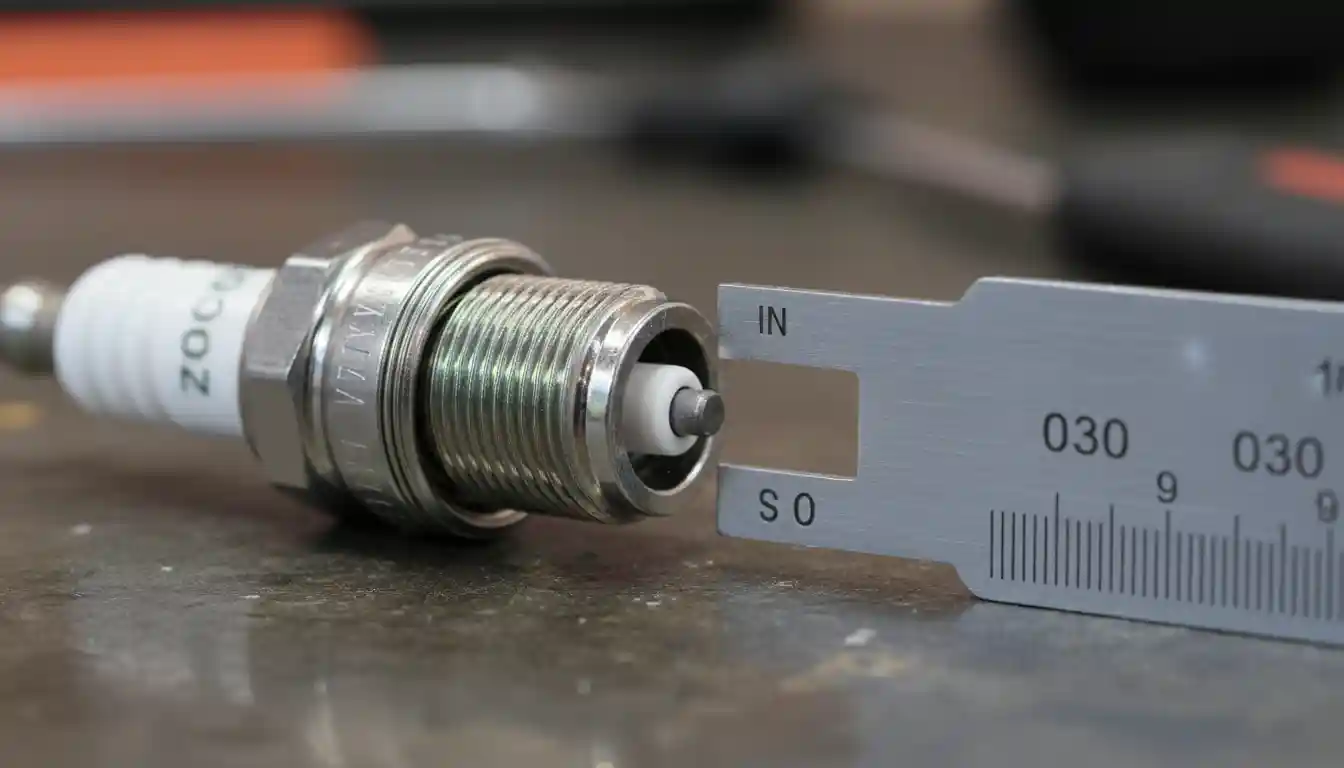
With the spark plug removed, you can now measure the gap. Using a feeler gauge, slide the correct thickness blade between the center and ground electrodes. If you are using a coin-style tool, slide the plug along the ramp until it stops.
The fit should be snug; you should feel slight drag when pulling the gauge through. If the gap is too narrow, gently pry it open with the notch on your gapping tool. If it’s too wide, carefully tap the ground electrode on a hard, solid surface to close the distance. Never apply pressure to the fragile center electrode.
Reinstallation: The Final, Critical Step
Proper reinstallation is key to avoiding damage. Start by threading the spark plug back into the engine by hand. This ensures it is not cross-threaded, which can ruin the threads in the engine’s cylinder head.
Once it is finger-tight, use your socket and ratchet to tighten it another 1/4 to 1/2 turn. Do not over-tighten. Finally, reconnect the spark plug wire firmly, ensuring it “clicks” into place. Your snowblower is now ready to start.
Beyond the Gap: What Your Old Spark Plug Is Telling You
Before you install that new or re-gapped plug, take a moment to inspect the old one. The condition of the firing end provides a valuable window into the health of your engine. This diagnostic skill separates routine maintenance from expert-level engine care.
Reading the plug can help you identify underlying issues that a simple gap adjustment won’t fix. It allows you to catch small problems before they become catastrophic failures.
Light Tan or Grayish-Brown
If the insulator tip is a light brown or gray color, congratulations. This indicates your engine is running efficiently, with the air-fuel mixture and operating temperature in the optimal range. This is the sign of a healthy, well-maintained machine.
Sooty and Black
A dry, black, sooty coating points to a rich fuel mixture or a weak spark. The engine is receiving more fuel than it can burn. Common causes include a dirty air filter restricting airflow or a carburetor that is improperly adjusted.
Oily and Black
An oily, wet black deposit is a more serious sign. This often indicates that engine oil is leaking into the combustion chamber. This could be due to worn piston rings or failing valve seals, pointing to significant internal engine wear that requires professional service.
White and Glazed
White, blistered, or glazed deposits on the insulator suggest the engine is running too hot or too lean (too much air, not enough fuel). This can be caused by an air leak in the intake manifold or carburetor gaskets. An overheated engine can suffer severe damage if left unaddressed.
Frequently Asked Questions and Expert Answers
Even a straightforward process can lead to questions. Here are expert answers to some of the most common queries about Ariens snowblower spark plugs.
How Often Should I Replace My Spark Plug?
As a rule of thumb, it’s best practice to replace your snowblower’s spark plug at the beginning of every winter season. They are inexpensive, and a fresh plug guarantees the strongest spark for reliable cold-weather starting.
If you don’t replace it annually, you should at least remove it for inspection and gap adjustment. At a minimum, a spark plug should be replaced after every 100 hours of use.
Can I Just Clean an Old Spark Plug?
While you can clean a lightly fouled plug with a wire brush and brake cleaner, it’s often a temporary fix. Over time, the sharp edges of the electrodes wear down, becoming rounded.
New plugs have sharp edges that promote a more focused, powerful spark. Given their low cost, replacing the plug is always the superior choice for ensuring peak performance and reliability.
What Happens If I Use the Wrong Spark Plug?
Using the wrong type of spark plug can lead to poor performance or even severe engine damage. A plug with the incorrect “heat range” can cause overheating or fouling. A plug with the wrong thread length or “reach” can physically strike the piston, causing catastrophic failure.
When the Spark Plug Isn’t the Problem
If you’ve installed a new, perfectly gapped spark plug and your Ariens snowblower still won’t start or run correctly, it’s time to investigate other potential causes. The spark plug is just one part of a larger system.
For instance, if you hear a clicking sound but the engine doesn’t turn over, the issue may lie elsewhere. The troubleshooting principles for when a snowblower electric start is not working are often universal and can point you toward a faulty starter or battery. Sometimes, excessive vibration or poor performance isn’t ignition-related at all. A problem with the drivetrain, such as a loose or worn belt, requires checking the Ariens snowblower belt tensioner spring location to ensure proper operation.
Finally, overall machine setup affects how the engine performs under load. If your machine is struggling to move through snow, make sure you know how to quick adjust snowblower skids to set the proper height for the auger housing. This prevents the engine from being overloaded by digging into the pavement.
The 5-Minute Fix for a Winter of Reliability
The spark plug gap is a small detail that holds immense power over your engine’s performance. It is the gatekeeper of combustion, and ensuring it is set to the correct specification is one of the most effective pieces of preventive maintenance you can perform.
Taking just five minutes before the first storm to check and adjust this gap will pay dividends all winter. You’ll be rewarded with easier starts, smoother operation, and the full, snow-clearing power your Ariens machine was designed to deliver.
