
Are Proline Range Hoods Good? The Unfiltered Truth
A kitchen filled with the lingering aroma of last night’s dinner or hazy with smoke from a searing steak is a common problem for many home cooks. This isn’t just an issue of comfort; it’s about the health of your home’s air and the cleanliness of your kitchen surfaces. The culprit is often an underpowered, inefficient range hood that simply recirculates greasy air rather than removing it.
For those who take cooking seriously, the search for a powerful ventilation solution often leads to brands like Proline. Known for offering professional-grade power at a consumer-friendly price point, Proline presents a compelling option. But the central question remains: are they genuinely a good investment for your home and garden?
You'll Learn About
Why Your Range Hood Choice is More Critical Than You Think
Choosing a range hood is one of the most underrated decisions in a kitchen renovation. A quality ventilation system does far more than just eliminate odors. It is a crucial appliance for maintaining good indoor air quality by capturing grease particulates, smoke, steam, and harmful volatile organic compounds (VOCs) released during cooking.
An effective range hood protects your cabinetry from grease buildup and moisture damage, reduces cleaning time, and makes the cooking experience significantly more pleasant. This is where the debate over brands like Proline begins. They promise high performance, but understanding their true value requires a deeper look into their design, power, and real-world user experiences.
Decoding Proline: What Sets Them Apart?
Proline operates primarily on a direct-to-consumer model, which is a key factor in their pricing strategy. By cutting out the retail middleman, they can offer hoods with specifications that often compete with premium brands at a fraction of the cost. Their main focus is on delivering exceptionally high suction power, measured in Cubic Feet per Minute (CFM).
Many Proline models boast CFM ratings of 900, 1200, or even higher, numbers typically associated with commercial kitchens. They pair this power with features that appeal to serious cooks, such as durable stainless steel construction and dishwasher-safe baffle filters. These filters are more effective at trapping grease than the mesh filters found in many standard residential hoods.
The Core Question: Are Proline Range Hoods a Good Investment?
Evaluating whether a Proline range hood is a good choice involves balancing its impressive power and attractive price against factors like noise, build quality, and customer support. For many, the value proposition is undeniable, but it’s essential to understand the trade-offs to make an informed decision.
The Power Proposition: CFM and Performance
The standout feature of any Proline hood is its CFM rating. This measurement indicates how much air the hood can move in one minute. For context, most standard residential hoods operate between 200 and 600 CFM. Proline’s focus on 900+ CFM models makes them particularly well-suited for kitchens with professional-style gas ranges, which produce significant heat and effluent.
However, raw power is only effective if it’s properly managed. The secret that few talk about is the critical role of ductwork. A 1200 CFM range hood connected to an undersized or convoluted duct system will never perform to its potential. For optimal performance, these powerful hoods require large-diameter (often 8 to 10-inch) rigid ducting with minimal bends to ensure a clear path for air to exit the home.
Build Quality and Durability: A Closer Look at Materials
Proline hoods are typically constructed from 430-grade stainless steel. This is a durable, magnetic grade of stainless steel that offers good corrosion resistance in a typical kitchen environment, making it a practical choice for this application. The finish is generally a brushed stainless steel that complements other modern kitchen appliances.
The inclusion of baffle filters is another significant mark of quality. These interlocking metal baffles force the air to change direction, causing grease to separate and drip into collection trays. They are more durable and efficient at grease capture than mesh filters and can be easily cleaned in the dishwasher, maintaining performance over the long term.
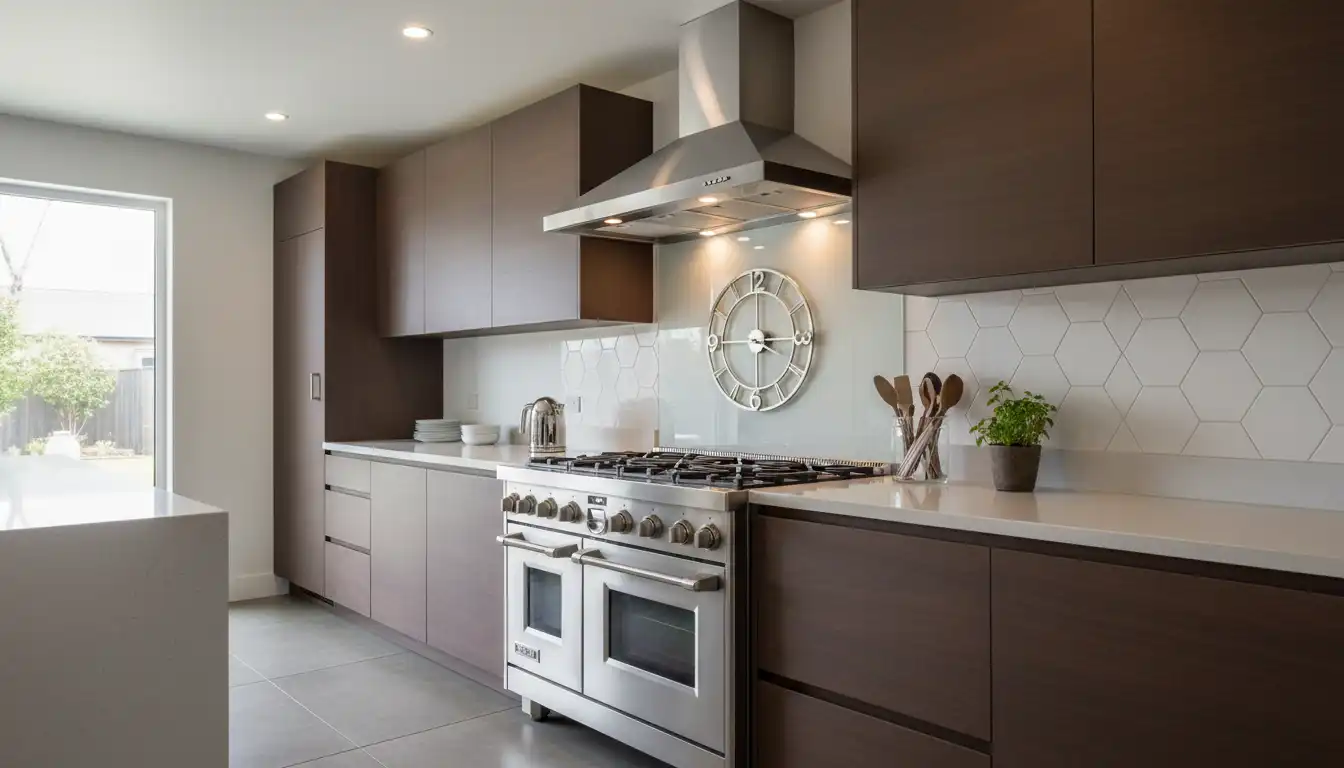
The Sound of Silence? Unpacking Noise Levels (Sones)
A common concern with high-CFM range hoods is the noise they produce. Noise levels are measured in “sones,” where 1 sone is roughly equivalent to the sound of a quiet refrigerator. A powerful range hood running at its highest setting will inevitably be loud; there is no way around the physics of moving that much air.
Proline hoods can reach 7 sones or more at their maximum speed, which is comparable to a loud conversation. However, the key is that their immense power often means you don’t need to run them at full blast for typical cooking. At lower speeds, many models operate at a much more manageable 2-4 sones, providing excellent ventilation without overwhelming noise.
Proline Range Hood Models: Which One Fits Your Kitchen?
Proline offers a wide array of styles to fit different kitchen layouts and designs. Understanding the primary types can help narrow down the best option for your space. Each style has unique installation requirements and aesthetic considerations.
The choice of finish and color is also an important part of integrating an appliance into your kitchen’s design. Just as one might carefully consider the subtle differences between finishes like Kohler’s Sea Salt vs. standard white for fixtures, the look of your range hood is a defining feature. Proline primarily focuses on a timeless stainless steel finish that works in most modern kitchens.
| Hood Type | Best For | Installation Style | Key Feature |
|---|---|---|---|
| Wall Mount | Kitchens where the range is against a wall | Mounted directly to the wall like a chimney | Creates a strong visual focal point |
| Island | Kitchens with a cooktop on a central island | Suspended from the ceiling over the island | Designed for 360-degree appeal and airflow |
| Under Cabinet | Smaller kitchens or where cabinet space is prioritized | Fits underneath existing upper cabinets | Sleek, integrated, and space-saving |
| Insert/Liner | Custom-built range hood enclosures (wood, plaster, etc.) | Installed inside a custom-made hood structure | Provides the power while allowing for a custom look |
The Real-World Experience: What Owners Are Saying
To get a balanced view, it’s crucial to look at feedback from actual homeowners. Reviews on forums and retail sites provide valuable insight into the long-term experience with Proline hoods, including both the highlights and the potential challenges.
The Positives: Unbeatable Power for the Price
The most consistent praise for Proline revolves around its core value proposition: exceptional ventilation power for the money. Customers frequently report that their hoods effectively eliminate smoke and strong cooking odors from things like searing fish or stir-frying, keeping their kitchens fresh. Many are also impressed by the professional aesthetic and solid feel of the units.
Users who have upgraded from standard, recirculating microwave hoods are often astounded by the difference a powerful, ducted system makes. The ability to cook without setting off smoke detectors or dealing with lingering smells is a frequently cited benefit that transforms the cooking experience.
The Drawbacks: Potential Hurdles to Consider
While most users are satisfied, some common complaints do emerge. As mentioned, noise at the highest fan speeds is a frequent comment, though many accept it as a necessary trade-off for high CFM. A more significant concern for some has been customer service variability and issues with shipping, with some units arriving with dents or damage.
The installation process can also be a challenge. These are heavy, robust units, and mounting them securely often requires two people. Some users have found the included instructions to be less clear than desired, making DIY installation more difficult for those with limited experience. It is critical to inspect the unit thoroughly upon arrival and before installation begins.
Maximizing Your Proline Hood: Installation and Maintenance Secrets
A Proline range hood’s performance is not just about the unit itself; it is heavily dependent on proper installation and regular maintenance. Following best practices ensures you get the powerful, quiet, and efficient operation you paid for.
The Golden Rule of Installation: Proper Ducting
The single most important factor for success with a high-CFM hood is the ductwork. Using a duct that is too small in diameter will choke the airflow, increasing noise and drastically reducing performance. It’s essential to use the duct size specified in the manual—typically 8″ or 10″ round ducting—and to use rigid metal ducting, not flexible ducting which can impede airflow.
Furthermore, the duct run should be as short and straight as possible. Every 90-degree bend adds the equivalent of several feet of straight duct in terms of air resistance. A straight vent up through the roof or directly out an exterior wall is the ideal scenario for maximizing suction power and minimizing noise.
Keeping It Clean and Efficient
Maintenance for a Proline hood is straightforward. The stainless steel baffle filters should be cleaned regularly to prevent grease buildup, which can restrict airflow. Most are dishwasher-safe, making this an easy task. Simply pop them out and run them through a cycle every few weeks, depending on your cooking habits.
The stainless steel exterior can be wiped down with a soft cloth and a cleaner formulated for stainless steel to keep it looking its best. Proper care not only maintains its appearance but also protects your investment. This is true for all kitchen components; for example, homeowners often debate the merits of wood protectors like Thompson’s Water Seal vs. polyurethane for cabinetry to ensure longevity.
The Verdict: Is a Proline Range Hood Right for Your Home?
After weighing the evidence, a clear picture of the ideal Proline customer emerges. A Proline range hood is an excellent choice for the serious home cook who prioritizes performance and value above all else. If you have a high-output gas range, frequently sear, fry, or cook aromatic foods, and want to ensure your kitchen air stays clean, the power offered by Proline is hard to beat at its price point.
This customer is also prepared for the realities of a high-power appliance. They understand that it will be loud on its highest setting and are willing to undertake a potentially challenging installation—or hire a professional—to ensure the critical ductwork is done correctly. A clean and well-maintained kitchen is a priority, extending to all aspects of home care, even addressing unwelcome pests like a mouse in the fridge, which underscores a commitment to a healthy home environment.
Conversely, if you are a light cook, have a standard electric range, or are highly sensitive to noise, a Proline hood might be overkill. For those who prioritize a whisper-quiet experience or want a simple, plug-and-play installation, a lower-CFM model from another brand might be a more suitable, albeit less powerful, option.
Ultimately, Proline range hoods are a good and often great choice for the right user. They deliver on their promise of professional-grade ventilation power, offering a tangible improvement to the kitchen environment for those who love to cook. By understanding their strengths and the requirements for proper installation, you can make an informed decision and enjoy a cleaner, fresher kitchen for years to come.
