
Are Exposed Hinges Outdated? The Surprising Truth for 2026
You’re standing in your kitchen, planning a remodel. Every detail matters, from the countertops to the backsplash. But then you face a surprisingly tough decision: what about the cabinet hinges?
It’s a choice that feels loaded with design implications. Do you opt for the clean, seamless look of hidden hinges, or do you embrace the character of exposed hardware? The central question looms large: are exposed hinges outdated?
This single detail can pivot the entire feel of your space from modern minimalist to cozy farmhouse. The fear is choosing a style that will quickly look dated, turning a costly renovation into a source of regret. Let’s settle the debate and explore how this classic hardware choice fits into the modern home.
You'll Learn About
The Enduring Allure: Why Exposed Hinges Aren’t Going Away
Before dismissing exposed hinges as a relic of the past, it’s crucial to understand their aesthetic function. Unlike their concealed counterparts, exposed hinges are a deliberate design element. They are meant to be seen, adding a layer of detail, texture, and personality to cabinetry.
In a world of increasingly streamlined and minimalist interiors, this touch of visual character can be a welcome contrast. They serve as a nod to craftsmanship and a time when the mechanics of furniture were a celebrated part of the design itself. This visible functionality adds a story to your space that hidden hardware simply cannot.
A Cornerstone of Beloved Design Styles
The primary reason exposed hinges remain relevant is their integral role in specific, and enduringly popular, design aesthetics. For many styles, they aren’t just an option; they are a defining characteristic. Trying to create these looks without them would be like trying to build a brick house without mortar.
Styles that prominently feature exposed hinges include:
- Farmhouse & Rustic: This is the most obvious and popular application. Wrought iron or matte black exposed hinges are fundamental to achieving an authentic farmhouse feel, evoking a sense of handcrafted, sturdy construction.
- Cottage & Coastal: In these styles, butterfly or simple butt hinges in finishes like brushed nickel or antique brass can add a touch of vintage charm and quaintness. They contribute to a light, airy, and lived-in atmosphere.
- Industrial: For an industrial look, robust, functional-looking exposed hinges in dark metals can complement raw materials like brick, concrete, and reclaimed wood.
- Traditional & Colonial: Ornate or classic butt hinges are often essential for period-specific designs, providing historical accuracy and a touch of elegance.
The “Outdated” Argument: Why People Choose Concealed
The perception that exposed hinges are outdated stems directly from the rise of modern and contemporary design. These styles prioritize clean lines, uninterrupted surfaces, and a minimalist aesthetic. In this context, the visual “clutter” of an exposed hinge can seem jarring and out of place.
Concealed “Euro-style” hinges allow cabinet doors to sit perfectly flush, creating a seamless wall of cabinetry that is sleek and sophisticated. This look has dominated kitchen design for several decades, cementing the idea that anything else is a step backward. For homeowners seeking a truly modern, high-end feel, hidden hinges are often the default and only choice.
Practical Downsides to Consider
Beyond aesthetics, there are practical reasons homeowners might hesitate. Exposed hinges can be more challenging to keep clean. Their surfaces and crevices can attract dust, grease, and grime, especially in a busy kitchen environment.
Furthermore, while traditional hinges are simple, they offer less adjustability than modern concealed hinges. Achieving perfect alignment on a long bank of cabinets can be more difficult with exposed hinges, whereas concealed hinges often have simple screws for three-dimensional adjustment, making installation and long-term maintenance easier for DIYers.
Hinge Showdown: A Head-to-Head Comparison
Making an informed decision requires a clear look at the pros and cons of each option. The right choice for your home depends on your priorities, balancing visual style with practical functionality.
| Feature | Exposed Hinges | Concealed Hinges |
|---|---|---|
| Aesthetic | Adds character, detail, and a vintage or rustic feel. Becomes a decorative element. | Creates a clean, seamless, and modern look. Hardware is completely invisible. |
| Best Fit | Farmhouse, Rustic, Industrial, Traditional, Cottage styles. | Modern, Contemporary, Minimalist, Transitional styles. |
| Installation | Generally straightforward but requires precise alignment for a clean look. | Requires specific tools (like a Forstner bit) to drill cup holes but offers easy adjustment. |
| Maintenance | Exposed surfaces can collect dust and grease, requiring more frequent cleaning. | Hidden from dirt and grime, making them easier to keep clean. |
| Cost | Can be less expensive, though high-end decorative hinges can be costly. | Often more expensive per unit, especially with soft-close features. |
| Features | Typically basic functionality. Soft-close options are less common and can be bulky. | Widely available with integrated soft-close and push-to-open mechanisms. |
Beyond the Binary: The Modern Take on Exposed Hinges
The conversation about hinges is no longer a simple choice between “old” and “new.” The most interesting designs today often blend elements from different eras. The key to using exposed hinges in 2026 and beyond is intention. When chosen thoughtfully, they can look fresh, modern, and incredibly stylish.
Instead of being an outdated relic, the exposed hinge has become a powerful tool for designers to add curated detail. This is especially true when modern finishes are applied to classic designs. A traditional butterfly hinge, for example, feels completely different in a trendy matte black or brushed gold finish than it does in old-fashioned antique brass.
The Power of High-Contrast Hardware
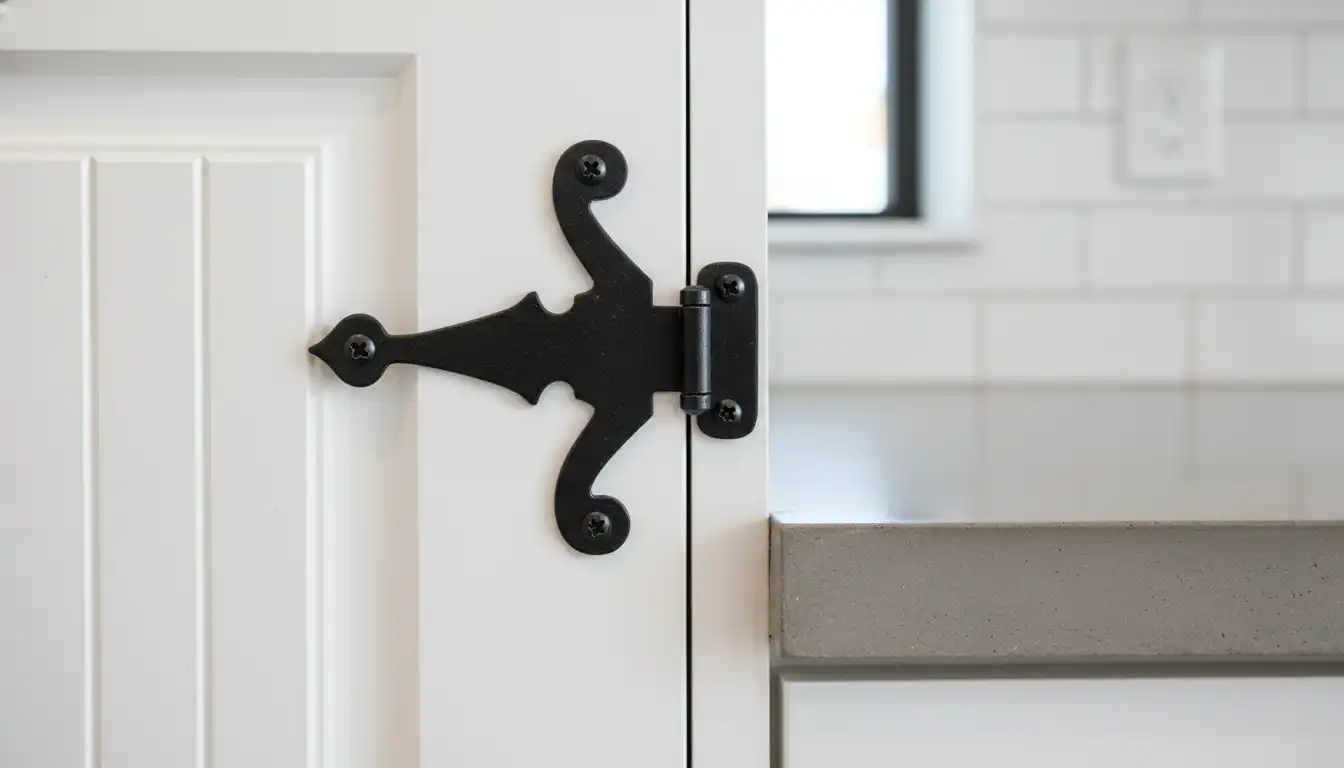
One of the most effective modern uses for exposed hinges is creating a bold visual contrast. Think of crisp, white shaker cabinets punctuated by striking matte black strap hinges. This combination is a hallmark of the “modern farmhouse” aesthetic that continues to dominate design trends.
This approach transforms the hinge from a mere functional piece into a key decorative accent. It’s a deliberate choice that adds graphic punch and personality. For those looking to elevate their cabinetry, exploring high-quality options is a great start; a well-made cabinet line like the KraftMaid Momentum collection demonstrates how hardware can define the final look.
Not Just for Kitchens: Expanding the Application
The appeal of exposed hinges extends far beyond the kitchen. They can add immense character to bathroom vanities, laundry room cabinets, or custom built-ins in a living room or office. Using them in these spaces can tie together a home’s overall design narrative.
For instance, in a bathroom renovation project, perhaps after you remove a walk-in tub to create a more modern space, adding a vanity with classic exposed hinges can introduce a layer of warmth and prevent the room from feeling sterile. It’s about mixing modern functionality with timeless details.
A Practical Guide to Choosing and Using Exposed Hinges
If you’ve decided to embrace the character of exposed hinges, success lies in the details. The right hinge, installed correctly, will look timeless. The wrong choice can look cheap or out of place.
First, consider the quality of the hinge itself. A cheap, flimsy hinge will bring down the entire look of your cabinetry. Invest in solid, heavy hardware with a durable finish. This is a small detail that makes a significant difference in the perceived value of your project.
Matching Hinge Style to Your Home
The type of exposed hinge you choose should align with your home’s architectural style and your cabinet door type. Here are a few common styles to consider:
- Butt Hinge: A classic, simple hinge where only the barrel is visible when the door is closed. It’s versatile and works well in traditional and transitional spaces.
- H-Hinge or HL-Hinge: Shaped like the letters they’re named after, these are common in Colonial and rustic designs.
- Butterfly Hinge: These surface-mounted hinges look like butterfly wings and add a delicate, decorative touch perfect for cottage or vintage-inspired pieces.
- Strap Hinge: Long and decorative, these are often used on gates or large barn doors but can be scaled down to make a bold statement on rustic or industrial-style cabinets.
Proper installation is paramount for a professional finish. If you’re undertaking a significant renovation, understanding the roles of different tradespeople is important. While you might know who builds stairs, it’s often a finish carpenter or cabinet installer who will have the precision skills needed to hang doors perfectly with exposed hinges.
The Final Verdict: Timeless, Not Tired
So, are exposed hinges outdated? The answer is a resounding no. While they may not be the right fit for a strictly minimalist or ultra-modern aesthetic, they are far from being obsolete. In fact, they are experiencing a resurgence as homeowners and designers look for ways to inject personality and custom detail into their spaces.
The key is to view them not as a default, but as a deliberate design choice. When selected to complement the style of the home and finished in a modern colorway, exposed hinges serve as beautiful, functional jewelry for your cabinetry. They prove that good design is less about following rigid trends and more about making intentional choices that create a cohesive and personalized home.
