
Are Dresser Scarves Out of Style? The Surprising Verdict
There it is, sitting on the antique dresser you inherited or perhaps tucked away in a linen closet: the dresser scarf. Often made of delicate lace, crochet, or embroidered fabric, this single piece of decor can evoke powerful feelings of nostalgia. For many, it brings back warm memories of a grandmother’s impeccably kept home.
But in the world of modern home decor, a pressing question arises: are dresser scarves out of style? The fear is that this vintage accessory will make a room look dated, cluttered, or out of touch with contemporary aesthetics. The truth, however, is more nuanced than a simple yes or no. It’s not about the scarf itself, but how you style it.
You'll Learn About
The Great Debate: Are Dresser Scarves a Relic of the Past?
The hesitation to use dresser scarves is understandable. For decades, interior design has leaned towards minimalism, with clean lines and uncluttered surfaces reigning supreme. In this context, any extra layer of decor, especially one with vintage associations, can feel like a step backward.
However, design trends are cyclical. Styles like Grandmillennial, Cottagecore, and Coastal Grandmother are bringing back a love for texture, pattern, and pieces with a sense of history. This shift reopens the conversation about items once considered old-fashioned, including the humble dresser scarf. The verdict for 2025 is clear: dresser scarves are not definitively “out,” but their application has evolved dramatically.
Understanding the Purpose: Why Dresser Scarves Existed in the First Place
To understand how to use dresser scarves today, it helps to know their original purpose. These textiles were not merely decorative; they served practical functions that were highly valued in their time. Understanding these roles is key to adapting their use for a modern home.
Historically, furniture was a significant investment, often intended to last a lifetime and be passed down through generations. A dresser scarf was, first and foremost, a tool for protection. It created a barrier between the wood surface and items that could cause damage, such as the sharp edges of a jewelry box, spills from perfume bottles, or the daily friction of keys and coins.
Beyond protection, these runners added a layer of elegance and personality to a bedroom. They were an opportunity to introduce color, intricate handiwork like embroidery or crochet, and a touch of softness to the hard surface of a wooden dresser. Finally, they offered a hygienic benefit; it was far easier to launder a small piece of fabric than to meticulously clean and polish a wood finish.
The Modern Verdict: When Dresser Scarves Look Dated
Let’s address the primary concern: what makes a dresser scarf look old-fashioned? The dated reputation often comes from specific materials, patterns, and styling choices that feel out of sync with modern interiors. Recognizing these pitfalls is the first step toward avoiding them.
A key offender is often the material. Heavy, ornate polyester lace or synthetic fabrics can instantly date a space, giving it a stuffy or artificial feel. Similarly, busy floral patterns in garish or faded colors can clash with a calm and curated bedroom palette. It’s these specific textiles that contribute to the “out of style” perception.
Another issue is clutter. When a dresser scarf serves as the base for a disorganized collection of trinkets, photos, and stray items, it only adds to the visual noise. The original purpose of creating an elegant surface is lost, and the scarf becomes just another layer in a messy display.
Finally, context is everything. Placing a traditionally frilly or elaborate scarf on a sleek, minimalist dresser creates a jarring contrast. The most successful applications occur when the style of the scarf is in harmony with the furniture and the overall design theme of the room.
The Comeback: How to Make Dresser Scarves Look Chic and Modern
The secret to successfully using a dresser scarf today lies in intentional styling. By making conscious choices about material, color, and placement, you can transform this vintage accessory into a chic and contemporary design element. The focus should be on creating a look that feels both fresh and timeless.
For a minimalist approach, opt for a runner made from natural, high-quality fabrics. A simple scarf in a solid color—such as white, beige, charcoal, or navy—made from linen, cotton, or a soft wool blend can add a touch of texture without overwhelming the space. This clean, understated look works well on almost any dresser style, from mid-century modern to contemporary.
Alternatively, lean into popular aesthetics where vintage charm is celebrated. In a Grandmillennial or Cottagecore design, a high-quality lace or embroidered scarf feels right at home. For a Bohemian vibe, consider a runner made of macrame or woven jute. In a coastal-themed room, a light and airy linen runner in a soft, sea-inspired hue can complete the look perfectly.
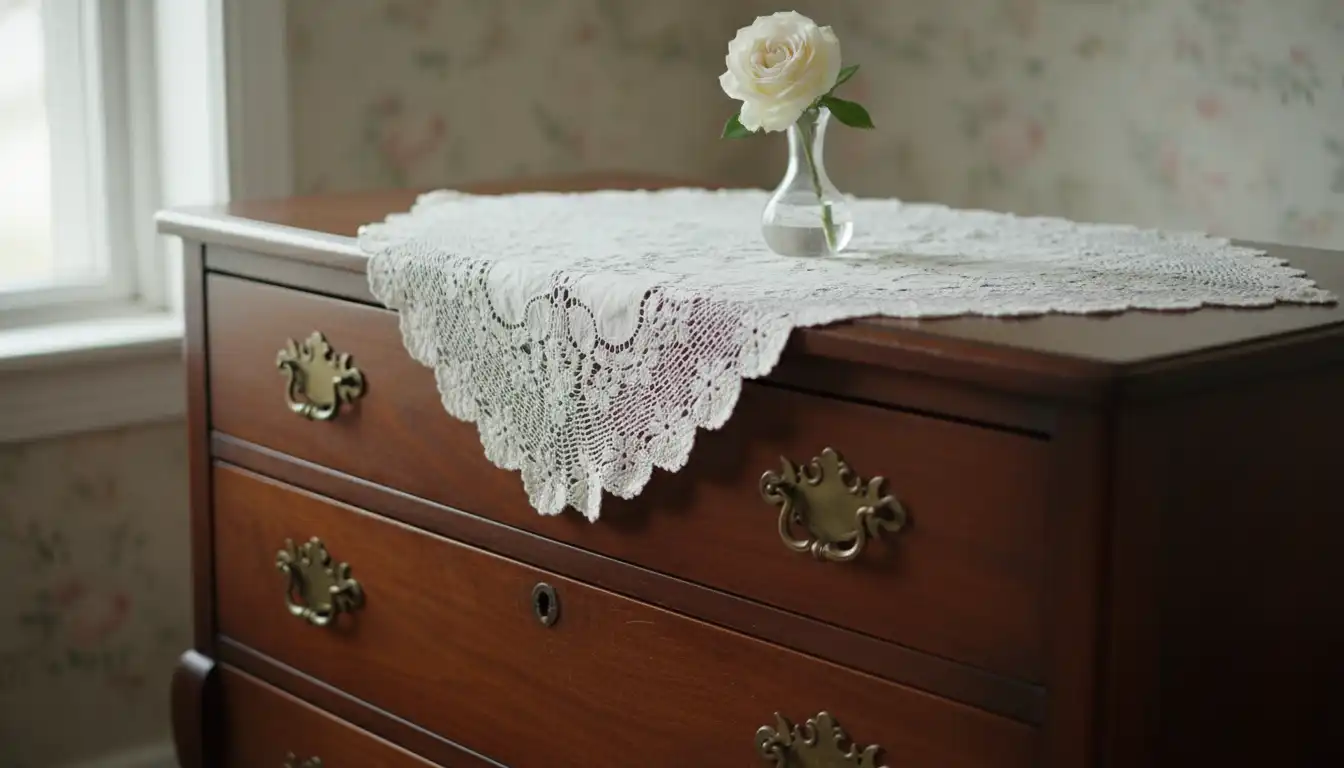
Think of the dresser scarf not as a final decorative layer, but as a foundation. Use it to ground a curated display. For example, placing a modern decorative tray on top of a simple linen runner creates a beautiful sense of layering. This technique bridges the gap between old and new, allowing you to corral items like jewelry and perfume in an organized way while still enjoying the softness and texture of the fabric beneath.
Stylish Alternatives to the Traditional Dresser Scarf
If you’re still not convinced that a traditional dresser scarf is right for your space, there are many modern alternatives that offer a similar combination of protection and style. These options can help you achieve a polished, intentional look while catering to a more contemporary aesthetic.
Decorative trays are a popular choice for organizing and styling a dresser top. Available in materials like metal, wood, marble, or mirrored glass, a tray provides a designated spot for everyday items. It keeps surfaces looking tidy and adds a touch of sophistication.
For a more permanent and seamless solution, consider a custom-cut glass or acrylic top. This provides maximum protection against scratches and spills without hiding the beauty of the wood grain beneath. It’s a sleek, practical option that integrates flawlessly into any decor style.
Sometimes, the most elegant solution is the simplest one. Leaving the dresser surface “naked” allows the quality and craftsmanship of the furniture to be the main attraction. To prevent damage, simply apply small felt pads to the bottom of lamps, vases, and other decorative objects.
Comparing Your Dresser Top Options
To help you decide, here is a comparison of the different approaches to styling and protecting your dresser surface. Each has its own unique set of benefits regarding aesthetics, protection, cost, and maintenance.
| Feature | Dresser Scarf / Runner | Decorative Tray | Custom Glass Top | Bare Surface |
|---|---|---|---|---|
| Protection Level | Moderate (from scratches and light spills) | Low (only protects area under the tray) | High (full protection from scratches and spills) | None (requires felt pads on items) |
| Primary Style | Varies (Vintage, Modern, Bohemian, Coastal) | Modern, Minimalist, Glam | Sleek and Unobtrusive | Showcases the furniture’s natural beauty |
| Typical Cost | Low to Moderate | Moderate to High | High | Free |
| Maintenance | Machine or hand washable | Wipe clean | Wipe clean with glass cleaner | Regular dusting and polishing |
The Unspoken Factor: Material and Texture as a Design Tool
Beyond the simple question of style, a dresser scarf plays a crucial role in the textural composition of a room. Interior design is not just about visual appeal; it’s also about how a space feels. The materials you choose contribute significantly to the overall sensory experience of your home.
A fabric runner can be a powerful tool for softening the hard lines of a wooden or metal dresser. The contrast between a soft textile and a rigid surface adds depth and balance. A raw linen runner might introduce an organic, earthy feel, while a smooth silk or velvet one could add a touch of luxury and refinement. This subtle interplay of textures elevates the design from merely decorated to thoughtfully curated. The concept of adding unique textures can be seen in various design applications, even in unexpected materials like those discussed in an article about tar paper on interior walls, where industrial materials are repurposed for aesthetic effect.
Integrating Your Dresser into Your Home’s Overall Flow
A well-styled home feels cohesive, with design choices in one room subtly echoing those in another. The decision of how to style your dresser top is a small but important part of this larger narrative. It’s an opportunity to connect the private space of your bedroom with the overall design language of your home.
For example, if your living area features elegant architectural details like French doors with one side fixed, a classic runner in a high-quality fabric can carry that sense of timeless grace into the bedroom. Similarly, if your home embraces a connection to the outdoors, perhaps with a view of a landscaped front yard blueberry bush, a runner made from natural fibers like jute or cotton can help bridge the gap between your interior decor and the natural world outside. This holistic approach ensures that even the smallest details contribute to a unified and harmonious living environment.
Key Takeaways: To Scarf or Not to Scarf?
So, what is the final verdict? A dresser scarf can be a stylish and relevant accessory if chosen and styled with intention. Here are the key principles to follow:
- DO use a dresser scarf to complement a specific, intentional design aesthetic like Grandmillennial, Coastal, or modern minimalist.
- DON’T use a dated, poor-quality synthetic scarf simply out of habit, especially on a modern piece of furniture.
- DO prioritize natural, high-quality materials such as linen, 100% cotton, wool, or handmade lace.
- DON’T let the scarf become a magnet for clutter. Use it as a deliberate foundation for a few well-chosen decorative items.
- DO consider modern alternatives like decorative trays, custom glass tops, or a beautifully bare surface if a scarf doesn’t suit your style.
Final Thoughts: Redefining “In Style” for Your Home
Ultimately, the concept of what is “in style” is becoming increasingly personal. The most successful and beautiful interiors are those that reflect the personality and taste of the people who live in them. The question is not whether dresser scarves are out of style, but whether they are in style for you.
If you own a beautiful, handmade dresser scarf that you love, don’t let fleeting trends deter you from using it. By applying modern styling principles—focusing on quality materials, embracing intentionality, and creating a clean, curated display—you can honor a piece of history while making it feel perfectly at home in a contemporary setting. The goal is to create a space that feels authentic, comfortable, and uniquely yours.
