
Bathroom Barn Doors: Are You Sacrificing Privacy for Style?
Sliding barn doors have become a hallmark of modern rustic and industrial design, celebrated for their aesthetic appeal and space-saving functionality. They can transform a simple doorway into a stunning focal point. But when it comes to the most private room in the house—the bathroom—a critical question emerges: are barn doors private enough?
The very design that makes a barn door unique is also the source of its biggest drawback. Unlike traditional doors that fit snugly into a frame, a barn door slides along a track, leaving inherent gaps between the door and the wall. This guide confronts the privacy problem head-on, offering actionable solutions to ensure your stylish bathroom door doesn’t become a comfort catastrophe.
You'll Learn About
The Unspoken Truth About Barn Door Gaps
The allure of a barn door is undeniable, but the reality of its function involves gaps. These aren’t design flaws; they are necessary for the door to operate without scraping against your wall and trim. However, these gaps are conduits for light, sound, and odors, which can be a significant issue for a room that demands complete privacy.
How much of a problem this poses depends on the bathroom’s location. For a master en-suite shared between partners, these gaps might be a minor issue. For a guest bathroom or a powder room off a main living area, they can create genuinely awkward situations for visitors.
Why the Gap Exists and What Gets Through
A standard barn door installation leaves a gap of about one to two inches from the wall to accommodate the door’s thickness and prevent damage to your trim. This opening, while seemingly small, is large enough to compromise visual privacy from certain angles. More importantly, it does very little to block sound or contain odors, two of the most critical functions of a bathroom door.
Light spilling from the edges can also be a nuisance, especially at night, signaling to everyone outside that the room is occupied or disturbing someone sleeping in an adjacent bedroom. Addressing these gaps is the first and most crucial step toward making a barn door a viable option for a bathroom.
Mastering Barn Door Privacy: Your Actionable Guide
Fortunately, you don’t have to choose between style and seclusion. With the right door, hardware, and a few clever modifications, you can significantly enhance the privacy of a bathroom barn door. The solution often lies in a combination of approaches that work together to seal the opening as effectively as possible.
From simple DIY additions to more involved structural changes, these strategies will help you close the gaps and create a more secure and comfortable bathroom environment. Each step addresses a specific weakness in the standard barn door setup.
Solution 1: Smart Door Selection and Installation
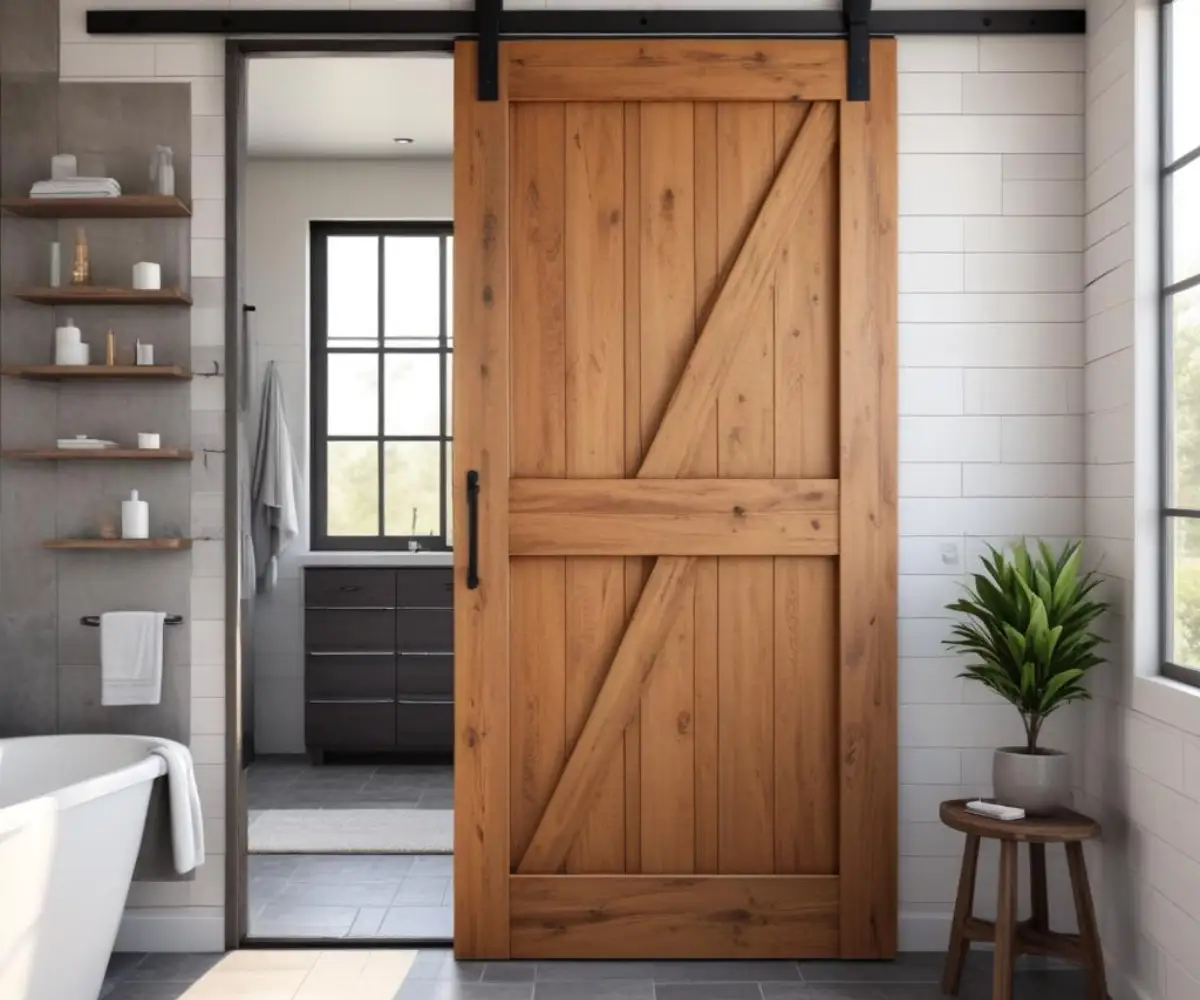
The foundation of a private barn door setup begins with the door itself. Opt for a door that is significantly wider and taller than the doorway. A door that overlaps the opening by at least two to three inches on each side and at the top will naturally minimize sightlines and reduce leakage.
Material choice is equally critical for soundproofing. A solid-core door made from dense wood or medium-density fiberboard (MDF) will block sound far more effectively than a lightweight, hollow-core door. The added mass is a powerful tool in your sound-dampening arsenal.
Solution 2: Sealing the Gaps with Genius Hacks
The most effective way to improve privacy is to physically block the gaps. One of the best, yet less-discussed, methods is to install a custom wood frame or trim around the door opening for the door to close against. This creates a recess, similar to a traditional door jamb, dramatically reducing gaps, light, and sound transmission.
For a simpler, non-structural fix, high-density foam weatherstripping or brush seals can be applied to the back edges of the door. When the door is closed, these materials compress against the wall, creating a seal. A door sweep or a bottom seal can also be attached to close the gap between the door and the floor.
Solution 3: The Locking Dilemma Solved
Standard barn doors don’t come with locks, a non-negotiable feature for any bathroom. Luckily, there are many stylish and effective locking solutions designed specifically for sliding doors. These range from simple hook-and-eye latches that offer a rustic look to more robust teardrop latches or surface-mounted privacy bolts.
For a modern and secure option, consider a mortise lock designed for sliding doors. This type of lock is recessed into the door and engages with a strike plate on the wall or a custom-built frame, offering a clean look and reliable security. These locks provide the clear “occupied” signal that guests and family members need.
A Deeper Dive Into Soundproofing
While sealing gaps is crucial, true acoustic privacy requires a multi-faceted approach. The materials of the door and the surrounding environment play a significant role in how much sound is transmitted. A beautiful door that fails to muffle sound can undermine the comfort of your entire home.
Combining a heavy, solid-core door with additional sound-dampening materials is the most effective strategy. Think of it as creating layers of defense against unwanted noise. This ensures that conversations and other bathroom sounds remain where they belong.
Beyond the Door: Advanced Acoustic Solutions
To take your soundproofing to the next level, consider adding a layer of Mass Loaded Vinyl (MLV) to the back of the door. This is a dense, flexible material used by professionals to block sound waves. While not the most aesthetic solution on its own, it can be concealed by a thin layer of wood veneer or paint.
The room itself can also be optimized. Soft materials in the adjoining room, such as rugs, curtains, or upholstered furniture, can absorb sound that would otherwise bounce off hard surfaces. In some cases, adding acoustic panels to the bathroom walls can further dampen noise.
| Privacy Solution | Estimated Cost | DIY Friendliness | Effectiveness (Sound) | Effectiveness (Sight/Light) |
|---|---|---|---|---|
| Oversized Solid-Core Door | $$$ | Medium | High | Medium |
| Weatherstripping/Brush Seals | $ | High | Low-Medium | High |
| Custom Door Frame/Stop | $$ | Low-Medium | High | Very High |
| Privacy Latch/Lock | $ | High | Low | Very High (Secures Door) |
| Adding MLV to Door | $$ | Medium | Very High | Low |
Is a Bathroom Barn Door Ever a Good Idea?
With all these considerations, it’s fair to ask when a barn door is truly appropriate for a bathroom. The answer depends heavily on context and your willingness to make the necessary modifications. In some scenarios, they are a fantastic choice, while in others, they should be avoided.
Evaluating your specific needs and the layout of your home is crucial. A design choice that works perfectly in one home could be a functional failure in another. It’s about balancing aesthetics, space, and personal comfort levels.
The Master En-Suite Exception
The most suitable location for a bathroom barn door is often the master en-suite. In a space shared by a couple, the privacy requirements are typically less stringent than for a public-facing bathroom. The style and space-saving benefits can outweigh the minor compromises in sound and light blockage.
Even here, implementing some of the sealing and locking solutions mentioned is highly recommended. It ensures the space remains comfortable and functional, preventing minor annoyances from becoming major frustrations over time.
When to Absolutely Avoid a Barn Door
Avoid using a standard, unmodified barn door for a powder room or guest bathroom. These are high-traffic areas used by visitors who expect and deserve complete privacy. The potential for embarrassing sound, sight, or odor leakage is simply too high.
If your heart is set on a barn door for a guest bathroom, you must be prepared to invest in comprehensive privacy solutions, such as a custom door frame, a solid-core door, and a secure lock. Anything less is a disservice to your guests. In these cases, it’s worth considering alternatives, as even some who hate bifold doors might find them a more private option. The open-concept feel that works for a pantry without doors simply doesn’t translate to bathrooms.
Installation Best Practices for Maximum Privacy
Proper installation is paramount. Even the best door and hardware can fail if installed carelessly. Pay close attention to measurements and alignment to minimize gaps from the outset.
A level track is non-negotiable. An unlevel track can cause the door to slide open or closed on its own, completely defeating the purpose of a privacy latch. Ensure the wall you’re mounting to is strong enough to support the weight of a heavy, solid-core door.
The Critical Role of Overlap and Hardware
As mentioned, ensure your door slab is several inches wider and taller than the finished opening. When installing the hardware, mount the track so that the door hangs as close to the wall as possible without rubbing against any trim. Some modern hardware kits offer adjustable spacers to help you achieve a tighter fit.
Be mindful of existing wall fixtures. A common headache is discovering a sliding door over a light switch, which requires careful planning and potentially relocating the switch. Finally, always check local building codes, as some jurisdictions may have specific requirements for bathroom doors regarding locking or ventilation that a barn door might not meet without modification.
Final Verdict: Are Bathroom Barn Doors a Mistake?
A barn door for a bathroom is not an automatic mistake, but it is a calculated risk. A standard installation is rarely private enough for this critical space. The iconic gaps that define its sliding mechanism are natural weak points for sight, sound, and smell.
However, by making informed choices and thoughtful modifications, you can successfully bridge the gap between high style and essential privacy. Combining a heavy, oversized, solid-core door with sealing solutions like weatherstripping or a custom frame, and finishing with a proper privacy lock, can transform a potential liability into a functional showpiece. Ultimately, the decision rests on your specific needs, the location of the bathroom, and your commitment to creating a door that is as secure as it is stunning.
