Arborcoat vs Cabot: The Ultimate Deck Stain Showdown
Choosing the right stain for your deck is a high-stakes decision. It’s not just about picking a color; it’s about providing a crucial layer of protection against the elements, preventing costly repairs, and defining the aesthetic of your entire outdoor living space. A wrong choice can lead to peeling, premature graying, and the daunting task of stripping it all down and starting over.
Two of the most respected names in the wood protection industry are Benjamin Moore’s Arborcoat and Cabot. Both brands are giants, trusted by homeowners and professionals alike. This makes the decision even more challenging. You’re not choosing between a good and a bad product, but between two excellent products with fundamentally different approaches to protecting and beautifying wood.
You'll Learn About
Understanding the Core Technology: Water-Based vs. Oil-Based
At the heart of the Arborcoat vs. Cabot debate is the difference in their primary formulations. Understanding this is the first step to making an informed choice. Each technology offers a distinct set of advantages and application characteristics that will directly impact your project’s outcome and long-term maintenance.
Benjamin Moore’s Arborcoat line is a testament to modern, water-based stain technology. It utilizes advanced water-reducible alkyds, creating a durable finish with low VOCs (Volatile Organic Compounds) and easy soap-and-water cleanup. This formulation is designed to create a protective film on the surface of the wood, offering excellent color retention and UV protection.
Cabot, on the other hand, built its legacy on traditional, high-quality oil-based stains. These products are revered for their ability to penetrate deep into the wood fibers. This deep penetration nourishes the wood from within, replenishing its natural oils and creating a rich, classic finish that beautifully highlights the natural grain. While Cabot also offers excellent water-based options, its reputation is firmly rooted in its oil-based heritage.
The Evolution of Stain Formulations
It’s important to recognize that the old arguments of “oil is always better” are becoming outdated. Environmental regulations and consumer demand for easier-to-use products have pushed incredible innovation in water-based technology. High-end water-based stains like Arborcoat now offer durability and protection that rivals, and in some cases exceeds, traditional oils, especially in terms of resisting fading and mildew growth.
Arborcoat vs. Cabot: A Head-to-Head Comparison
Let’s break down how these two top contenders stack up across the factors that matter most to homeowners. The best choice often depends on your specific priorities, the type of wood you’re treating, and your local climate.
Durability and Longevity
The primary job of a stain is to protect your deck from foot traffic, moisture, and damaging UV rays. Both Arborcoat and Cabot are formulated for toughness, but they achieve it differently. Arborcoat’s unique system often involves a stain color coat followed by a protective clear coat. This two-coat application creates a robust barrier on top of the wood, which is highly effective at blocking UV rays and preventing surface wear.
Cabot’s oil-based stains provide durability by becoming part of the wood itself. By penetrating deeply, they are less likely to show scratches and wear from foot traffic because the protection isn’t just a surface film. This formulation is exceptionally good at repelling water and preventing the cracking and warping that moisture can cause.
Application and Ease of Use
For the DIYer, the application process is a critical consideration. Water-based stains like Arborcoat have a steep advantage in cleanup, requiring only soap and water. They also have a much faster drying time, allowing you to apply a second coat or use your deck sooner. However, this fast drying can be a double-edged sword; you must work methodically in smaller sections to avoid lap marks where your application areas overlap.
Oil-based Cabot stains are often more forgiving for beginners. Their slower drying time gives you more “wet-edge” time, making it easier to achieve a smooth, uniform finish without visible lap marks. The trade-off is the cleanup, which requires mineral spirits, and a longer wait before the deck is ready for use.
Appearance and Finish
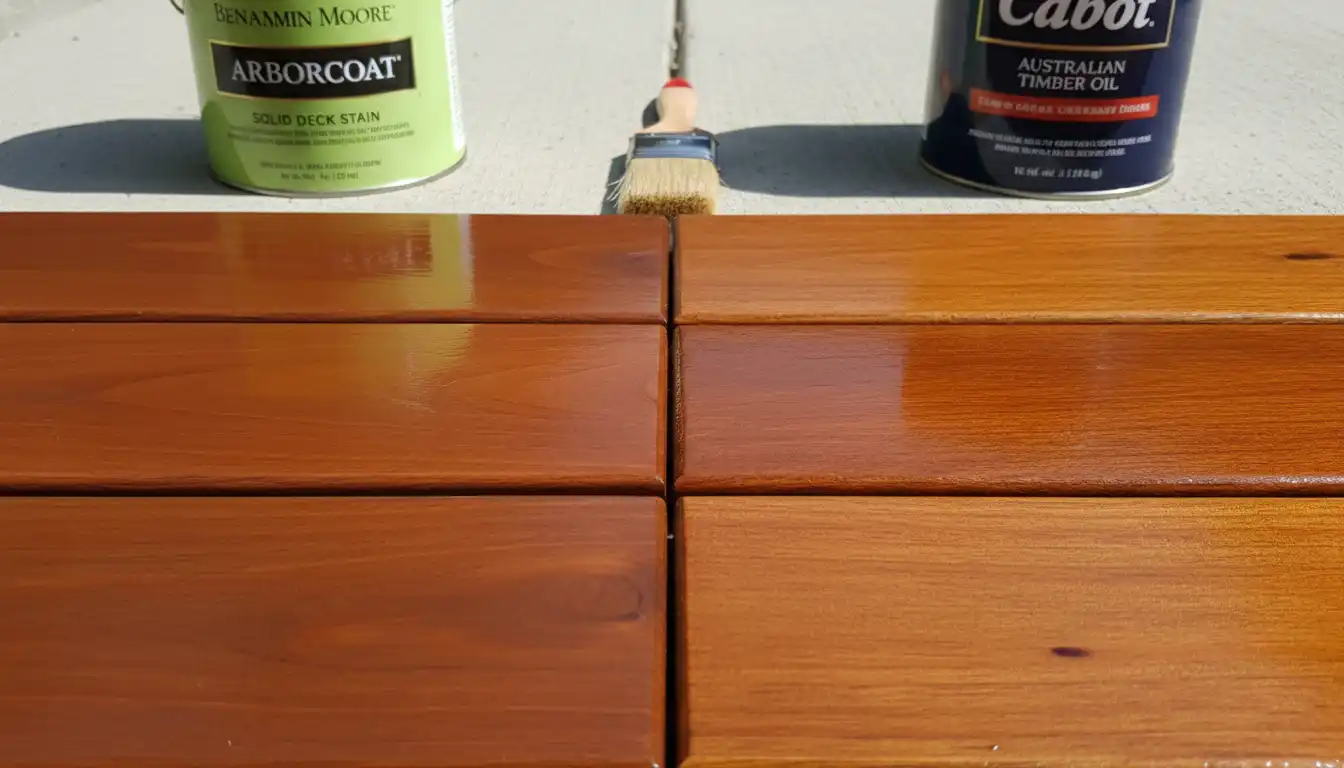
Your desired aesthetic plays a huge role in this decision. Because Arborcoat is a film-forming finish, it tends to deliver a more uniform and consistent color, which can look slightly more like paint in its solid and semi-solid opacities. It excels at delivering vibrant, lasting color.
Cabot’s penetrating oils are unmatched for enhancing the natural beauty of the wood grain. If you want to see the texture and character of your cedar or pine boards, a semi-transparent Cabot oil stain will provide a rich, classic, and deep finish that looks like it’s part of the wood, not just sitting on top of it. This is a key reason many wood purists prefer oil-based products.
Maintenance and Recoating
Think about the future. Every deck stain will eventually need a new coat. The recoating process is where the differences between the two products become stark. For a Cabot oil-based stain, maintenance is typically straightforward. You’ll need to clean the deck thoroughly and then apply a light maintenance coat. Because it doesn’t form a surface film, there is usually no scraping or sanding required.
Recoating Arborcoat can be more involved if the original finish has started to fail. Because it’s a film, it can peel if the initial prep wasn’t perfect or if moisture gets underneath it. In that case, you may need to strip or sand peeling areas before you can properly apply a new coat. However, if the finish is in good shape, a simple cleaning and reapplication of the clear protective coat is all that’s needed.
| Feature | Benjamin Moore Arborcoat | Cabot |
|---|---|---|
| Primary Stain Type | Water-Based (Water-Reducible Alkyd) | Oil-Based (with Water-Based options) |
| Core Advantage | Surface protection, color retention, low VOCs | Deep wood penetration, grain enhancement |
| Durability Profile | Forms a hard, protective film on the surface | Protects from within the wood fibers |
| Application | Fast-drying; can show lap marks if not careful | Slower-drying; more forgiving application |
| Cleanup | Easy; soap and water | Requires mineral spirits |
| Final Look | More uniform, consistent color | Rich finish, enhances natural wood grain |
| Maintenance | May require sanding if film peels | Simple clean and recoat |
The Deciding Factor No One Talks About: Your Climate
A high-quality stain can fail miserably if it’s not suited for the local climate. This is perhaps the most overlooked aspect of choosing between products. The weather your deck endures year-round should be a primary driver of your decision.
In regions with high humidity, frequent rain, and mildew issues, the superior mildew resistance of a premium water-based stain like Arborcoat can be a significant advantage. Its surface film helps keep moisture from penetrating the wood. However, this is only true if the wood is perfectly prepped and completely dry before application; trapping moisture beneath the film is a recipe for failure.
For climates with intense, year-round sun and high UV exposure, protection from fading and sun damage is paramount. Here, the solid and semi-solid versions of either Arborcoat or Cabot will provide the best defense, as the higher pigment level physically blocks more UV rays. Arborcoat’s dedicated UV-protective clear coat adds another layer of security in this battle.
In areas with extreme temperature swings, from freezing winters to hot summers, the wood will constantly expand and contract. A stain must be flexible enough to move with it. Penetrating oil stains, like many from Cabot, have a natural advantage here, as they allow the wood to breathe and move without a surface film that could crack under the stress.
Making Your Final Decision: A Step-by-Step Guide
Feeling overwhelmed? Follow this simple, logical process to choose the perfect stain for your specific needs.
Step 1: Assess Your Wood and Your Project
Are you working with new, pressure-treated pine? Old, weathered cedar? A dense hardwood like ipe? New wood with a “mill glaze” needs to be prepped differently than an old deck that needs stripping. The condition and type of your wood are non-negotiable starting points.
Step 2: Define Your Top Priority
What is the single most important factor for you? Is it the easiest possible application and cleanup (Arborcoat)? The richest, most traditional wood finish (Cabot Oil)? The longest-lasting color in a high-sun area (Arborcoat Solid)? Be honest about what matters most.
Step 3: Consider Your Long-Term Commitment
How much effort are you willing to put into maintenance? The simpler “clean and recoat” process of a penetrating oil stain can be very appealing. If you’re meticulous about prep and follow instructions to the letter, a film-forming stain can offer longer periods between maintenance, but the eventual recoating job may be more intensive.
Step 4: The Absolute Most Critical Step: The Test Patch
Never, ever skip this step. Buy a small sample of your top choices and apply them to an inconspicuous area of your deck, like a stair tread or a board that’s usually under a planter. Let it dry completely. A color chip in a store looks completely different than a stain on your specific, weathered wood. This test will prevent costly and heartbreaking mistakes.
Pro Tips for a Flawless Finish
Regardless of whether you choose Arborcoat or Cabot, your success hinges on execution. Even the world’s best stain will fail if applied incorrectly. Follow these professional tips for a deck you can be proud of.
First and foremost, preparation is 90% of the job. The wood must be spotlessly clean, free of all dirt, mildew, and previous failing coatings. A proper deck cleaner and a light power washing are often required. This ensures the stain can adhere to or penetrate the wood fibers properly.
Next, always pay attention to the weather forecast. Do not apply stain in the direct, hot sun, as it can cause it to dry too quickly, creating a blotchy finish. Ideal conditions are typically overcast, with temperatures between 50°F and 90°F (10°C and 32°C). Ensure there is no rain expected for at least 24-48 hours after application.
A Note on Outdoor Maintenance
Ensuring your deck is in top shape is part of a larger picture of home and garden care. This same attention to detail applies to all your outdoor assets. For instance, properly maintaining a shed, which might include projects like running a water line from your house to a shed, adds immense functionality to your property. Just as you research stains, taking time to read through Hestan appliance reviews before investing in an outdoor kitchen ensures you get quality that lasts. This proactive mindset prevents bigger issues down the line, whether it’s dealing with a peeling deck or troubleshooting problems like white smoke from a snowblower exhaust come winter.
Conclusion: The Verdict in the Arborcoat vs. Cabot Debate
There is no single “winner” in this showdown because the best product is entirely dependent on the project and the user. Both Arborcoat and Cabot are premium products that can deliver beautiful, long-lasting results when used correctly.
Choose Benjamin Moore Arborcoat if: You prioritize low VOCs, easy soap-and-water cleanup, and want a durable, film-forming finish with excellent color retention and UV protection. It is a modern, high-tech solution for a homeowner who is diligent about proper surface preparation.
Choose Cabot if: You love the classic, rich look of a traditional oil stain that enhances the natural wood grain. It is the ideal choice if you want a more forgiving application process and a straightforward maintenance plan that avoids the potential for peeling.
Ultimately, the power is in your hands. By understanding the core technologies, assessing your specific needs, and committing to proper preparation, you can confidently choose a stain that will protect your investment and keep your deck looking beautiful for years to come.