
Aquaguard Engineered Hardwood Reviews: The Unfiltered Truth
Finding the perfect floor is a balancing act. You crave the timeless, organic beauty of hardwood, but your busy life—filled with pets, kids, and the occasional spilled drink—demands something tougher. It’s a common dilemma for homeowners: choosing between the elegance you want and the durability you absolutely need.
The fear of scratches, water damage, and constant maintenance often pushes people away from traditional hardwood. This is where engineered solutions promise to bridge the gap. Aquaguard engineered hardwood, in particular, enters the conversation with bold claims of water resistance and superior durability, but do these claims hold up in the real world?
You'll Learn About
What is Aquaguard Engineered Hardwood, Really?
Before diving into performance, it’s crucial to understand what this material is. Unlike solid hardwood, which is a single plank of wood, engineered hardwood has a multi-layer construction. Aquaguard’s specific formula involves a top layer of real hardwood veneer, which provides the authentic look and feel of wood.
Beneath this veneer lies the secret to its durability: a high-density core, often made from a stone-polymer composite (SPC) or similar limestone-based material. This core provides dimensional stability and, most importantly, resistance to water. This hybrid construction aims to deliver the best of both worlds: genuine wood aesthetics and next-generation performance.
A Deep Dive: Key Performance Features Reviewed
A floor is a long-term investment, and its performance over time is what truly matters. We’ve broken down the most critical aspects of Aquaguard engineered hardwood based on technical specifications and real-world user feedback.
Water Resistance: The Core Selling Point
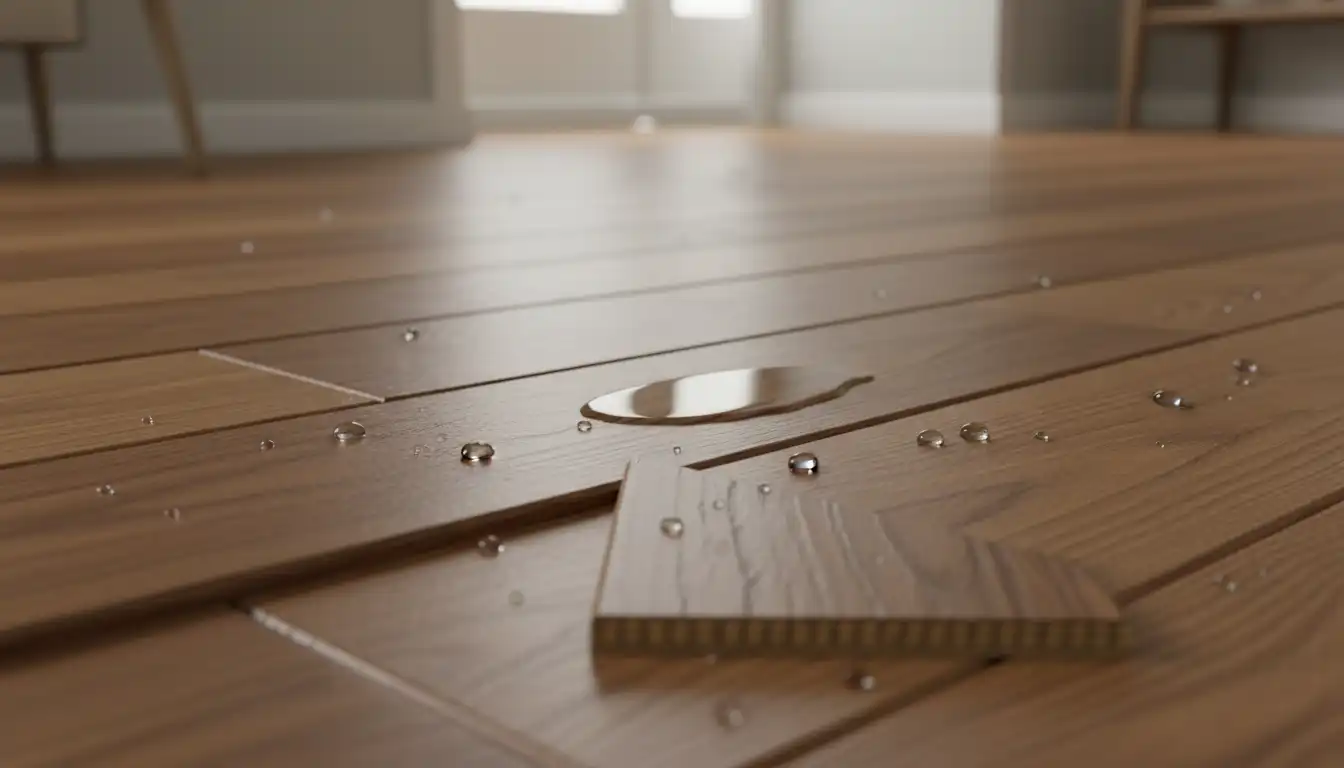
Aquaguard’s primary claim to fame is its water resistance. The manufacturer states it can withstand topical moisture and spills for up to 24 hours. This makes it a viable option for spaces where traditional hardwood is a risky choice, like kitchens, mudrooms, and even half-baths. The dense core prevents the planks from swelling or warping when exposed to moderate spills.
However, it’s essential to distinguish water-resistant from waterproof. While it handles everyday spills well, it is not designed to withstand flooding or major leaks from appliances. Proper installation with sealed edges is critical to ensuring its moisture-handling capabilities are maximized, a crucial detail when planning a bathroom remodel where decisions about whether the shower door should be higher than the shower head also impact water containment.
Durability and Scratch Resistance
For households with pets and active children, scratch resistance is a major concern. Aquaguard floors are finished with a UV-cured coating often reinforced with quartz or aluminum oxide. This top layer provides significant protection against everyday abrasions, scuffs, and minor scratches. Many users report that it holds up well to heavy foot traffic and the daily chaos of family life.
That said, no wood floor is indestructible. Deep scratches from dragging heavy furniture or the claws of a very large dog can still penetrate the wear layer. Some user reviews have noted that while the floor is tough, it can be scratched, and the warranty explicitly states that scratches are not considered “wear through.”
| Feature | Specification | Benefit for the Homeowner |
|---|---|---|
| Top Layer | Real Hardwood Veneer | Provides authentic wood grain, texture, and visual appeal. |
| Core Material | Limestone Composite Core | Offers superior dimensional stability and high water resistance. |
| Finish | UV-Cured Coating with Quartz | Delivers strong resistance to scratches, scuffs, and fading. |
| Installation | Click-Lock System | Allows for a fast, glueless floating installation, suitable for DIYers. |
| Acclimation Time | None Required | Can be installed the same day it is purchased, speeding up projects. |
| Water Resistance | Up to 24 Hours | Protects against everyday spills in kitchens, bathrooms, and basements. |
Aesthetics and Style
One of the strongest advantages of Aquaguard engineered hardwood is its appearance. Because it uses a real wood veneer, it avoids the artificial look that can sometimes plague laminate or vinyl plank flooring. The product line offers a wide range of species, from classic oak to rich walnut, in various textures and finishes.
This design versatility ensures it can complement nearly any home decor. The authentic wood visuals pair beautifully with various design elements, from rustic to modern, and can be the foundation that ties a room together, influencing choices on everything from wall color to the debate over seeded glass vs clear glass pendants in your kitchen.
The Installation Process: DIY vs. Professional
Aquaguard engineered hardwood is designed to be DIY-friendly. It utilizes a click-lock floating installation system, which means the planks connect to each other without needing nails or glue. A key benefit is that it requires no acclimation time, so you can buy it and install it on the same day.
However, a successful installation depends heavily on the subfloor. The subfloor must be perfectly clean, dry, and, most importantly, flat. Homeowners with older houses or uneven subfloors may need to perform significant prep work, like sanding down high spots or using a self-leveling compound, to avoid issues like squeaking or gapping between planks later on.
Cost vs. Value: A Smart Investment?
Aquaguard engineered hardwood sits at a mid-range price point. It is generally more expensive than high-quality laminate but more affordable than solid hardwood. When evaluating its cost, it’s important to consider the long-term value. Its durability and water resistance can save you money on potential repairs or replacements down the line, especially compared to less resilient flooring types.
When making a decision, it’s helpful to weigh it against other popular choices. Seeing how it stacks up in a direct Nucore vs Aquaguard comparison, for example, can highlight differences in construction, warranty, and price that may influence your final decision.
A Less-Discussed Factor: The Acoustic Performance
One aspect often overlooked in flooring reviews is the sound. How a floor sounds underfoot contributes significantly to a home’s atmosphere. Traditional solid hardwood has a solid, deep sound. Some lower-quality floating floors can produce a hollow or “clicking” noise when walked on.
Because of its dense, stone-composite core, Aquaguard engineered hardwood tends to have better acoustic properties than many standard laminates. It feels solid underfoot and produces a quieter, more subdued sound. For an even greater sound-dampening effect, installing it with a high-quality underlayment is recommended, though some products come with an attached pad.
Frequently Asked Questions
What is AquaGuard engineered hardwood?
AquaGuard engineered hardwood flooring is a water-resistant flooring option exclusive to Floor & Decor. It is constructed with layers of real hardwood over a limestone composite core and features a UV-cured coating reinforced with quartz for added durability. This construction makes it suitable for use in rooms prone to moisture, such as kitchens, bathrooms, and basements.
How water-resistant is AquaGuard engineered hardwood?
AquaGuard engineered hardwood offers significant water resistance, protecting against moisture from spills for up to 24 hours. This feature allows the flooring to be wet-mopped for cleaning. Its water-resistant capabilities make it a practical choice for areas where traditional hardwood might be damaged by moisture.
Is AquaGuard engineered hardwood durable?
AquaGuard engineered hardwood is designed for durability with a scratch-resistant UV-cured coating. Some users have found it to be extremely scratch-resistant, even in households with children and ongoing renovations. However, other customers have reported that the flooring can be easily scratched.
How do you clean AquaGuard engineered hardwood?
For routine cleaning, sweeping or vacuuming is recommended, and the floor can also be wet-mopped or steam-mopped. It’s important to wipe up spills promptly. Avoid using harsh chemical cleaners, wax-based products, or abrasive scrubbing tools to prevent damage to the finish.
Can AquaGuard engineered hardwood be installed by a DIYer?
Yes, this flooring is designed for straightforward installation with a click-lock system that can be floated over the subfloor. A key feature is that it does not require acclimation time, allowing for immediate installation. Additionally, it can be installed over large areas, up to 4,000 square feet, without the need for transition moldings.
Final Verdict: Who Should Choose Aquaguard Engineered Hardwood?
After a thorough review, Aquaguard engineered hardwood proves to be a compelling option for a specific type of homeowner. This flooring is ideal for active families, pet owners, and anyone who wants the authentic look of hardwood without the high maintenance and water-related anxiety.
It excels in high-traffic areas and moisture-prone rooms like kitchens and basements. Its robust construction and attractive design make it a versatile foundation for nearly any room. While it may not be as indestructible as tile or as prestigious as solid hardwood, it represents one of the best compromises between beauty and practicality on the market today.
