
Apron Sink vs Undermount: Don’t Choose Until You Read This
Choosing the right kitchen sink can make a surprising difference in both the style and functionality of your space. Two of the most popular options today—apron-front sinks and undermount sinks—each bring their own unique benefits, aesthetic appeal, and practical considerations.
Whether you’re planning a full kitchen remodel or simply upgrading your sink, understanding how these two styles compare will help you make a confident, well-informed decision. In this guide, we’ll break down the key differences to help you determine which sink best fits your lifestyle, design vision, and everyday needs.
You'll Learn About
The Great Kitchen Debate: Choosing Your Perfect Sink
The kitchen sink is more than just a place to wash dishes. It is the command center of your culinary workspace, a critical component that impacts your daily routine, kitchen aesthetics, and even your posture.
Making the wrong choice between an apron sink vs an undermount sink can lead to daily frustration, unexpected costs, and a design that doesn’t quite work. This decision goes far beyond looks; it affects countertop cleaning, cabinet requirements, and overall kitchen functionality.
Understanding the Apron Sink: A Timeless Statement Piece
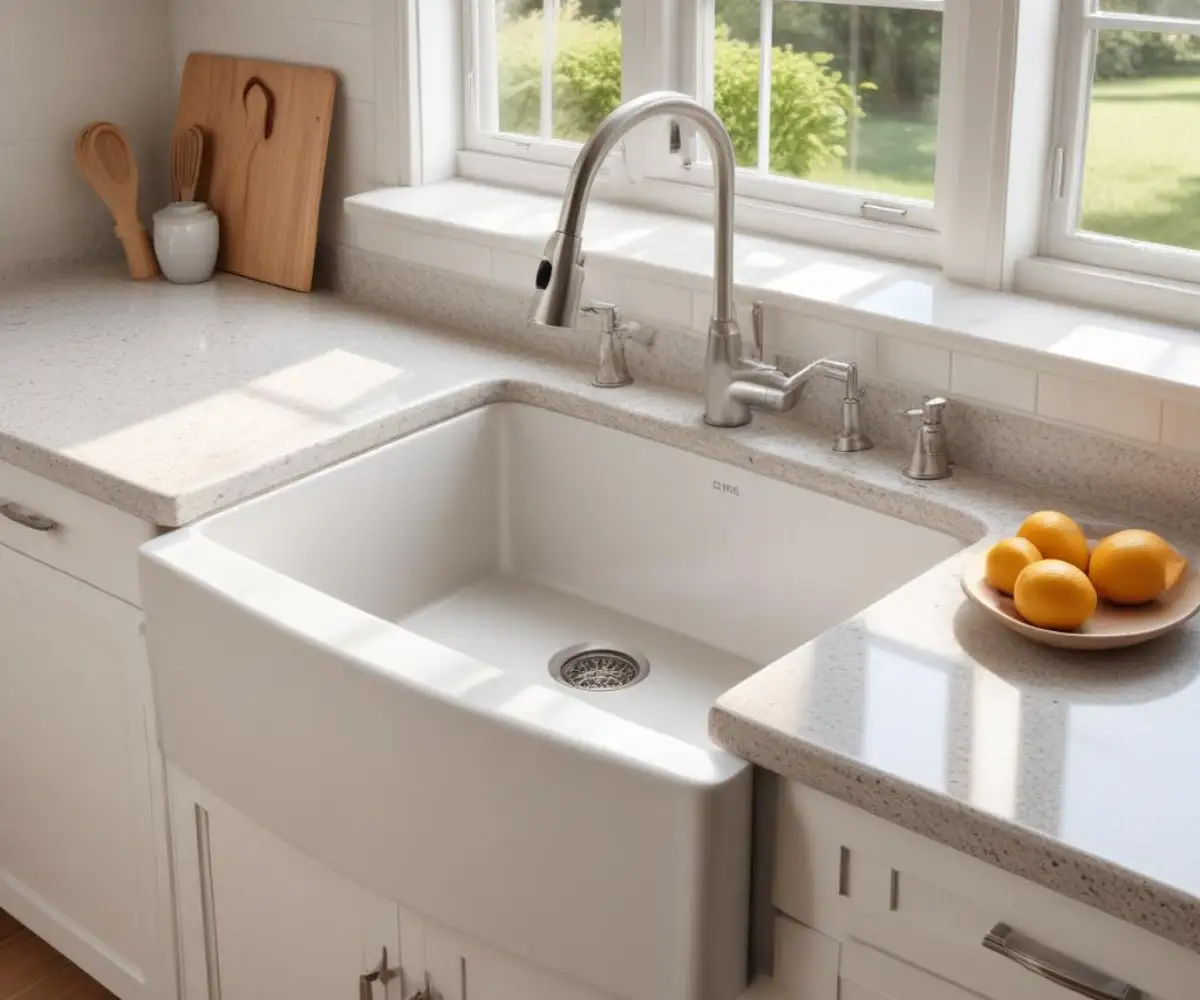
Often called a “farmhouse sink,” the apron-front sink is defined by its distinctive exposed front panel that replaces a section of the countertop and cabinetry. This classic design has evolved from a purely functional farmhouse utility into a sophisticated centerpiece for modern, transitional, and traditional kitchens alike.
The Signature Exposed Front
The forward-facing panel is the apron sink’s most recognizable feature. It creates a bold, architectural statement and an uninterrupted visual line from the cabinet face to the sink basin. This design element instantly draws the eye and can define the entire character of your kitchen.
A Spectrum of Materials
While classic white fireclay and cast iron remain popular, apron sinks are now available in a wide array of materials. You can find them in sleek stainless steel, elegant copper, durable granite composite, and even modern concrete, allowing for seamless integration into any design scheme.
Decoding the Undermount Sink: Sleek and Seamless Integration
An undermount sink is installed directly beneath the countertop, creating a clean, continuous flow from the counter surface directly into the basin. There is no visible lip or rim on the countertop, which is why this style is a favorite for minimalist, contemporary, and clean-lined kitchen designs.
The Hidden Workhorse
The beauty of the undermount sink lies in its subtlety. By sitting below the counter level, it allows the countertop material to be the star of the show. This installation method maximizes usable counter space and makes cleanup incredibly efficient.
Unmatched Versatility
Undermount sinks come in countless configurations, from single and double bowls to low-divide and workstation models. They are compatible with non-porous countertop materials like granite, quartz, and solid surface, offering immense design flexibility.
The Ultimate Showdown: Apron Sink vs. Undermount Sink at a Glance
Choosing between these two popular styles requires a careful comparison of their core attributes. This table breaks down the key differences to help you make an informed decision based on your priorities and kitchen layout.
| Feature | Apron Sink (Farmhouse) | Undermount Sink |
|---|---|---|
| Installation | Complex; requires a special base cabinet or significant modification to an existing one. Must be precisely supported. | Moderately complex; requires a precise cutout in the countertop and is secured from below with clips and adhesive. |
| Aesthetics | Bold, traditional, or modern statement piece. Becomes a focal point of the kitchen. | Sleek, minimalist, and discreet. Highlights the countertop material. |
| Cleaning & Hygiene | Exposed front can be prone to scratches or chips. Caulk joints at the back and sides require maintenance. | Extremely easy to clean. Debris can be wiped directly from the counter into the sink with no rim to trap grime. |
| Ergonomics | Excellent. The forward position eliminates the need to lean over a strip of countertop, reducing back strain. | Standard ergonomics. Users must reach slightly further over the countertop edge to access the basin. |
| Cost (Sink & Installation) | Generally higher due to the cost of the sink itself and the specialized cabinet and installation requirements. | Wide range of prices. Installation costs can be lower than apron sinks if no cabinet modification is needed. |
| Countertop Compatibility | Works with any countertop material as it is supported by the cabinetry. | Not recommended for laminate or tile countertops, as it requires a solid, waterproof material for mounting. |
Key Decision Factors You Absolutely Cannot Ignore
Beyond the surface-level differences, several critical factors will influence your long-term satisfaction. These are the details that can make or break your kitchen renovation project.
Installation and Cabinetry: The Hidden Complexity
The most significant hurdle for an apron sink is the cabinetry. These sinks require a dedicated “apron-front sink base cabinet” that is shorter than standard cabinets to accommodate the sink’s depth. If you’re retrofitting, this means your existing cabinet must be expertly cut and reinforced, a job best left to a professional. Poor support can lead to sink failure and countertop damage. Getting the fit right is a critical part of a successful farmhouse sink install, ensuring it aligns perfectly with adjacent appliances.
Undermount sinks, while simpler, demand a perfect cutout and robust mounting. The seal between the sink and the underside of the countertop must be flawless to prevent leaks, which can go undetected and cause catastrophic damage to your cabinets over time.
Cleaning and Hygiene: The Wipe-Down Test
For sheer ease of cleaning, the undermount sink is the undisputed champion. The ability to sweep crumbs, spills, and water directly into the basin without navigating a raised sink lip is a significant practical advantage. This seamless design minimizes the buildup of grime and bacteria along the sink’s edge.
Apron sinks present a different challenge. While the interior is easy to clean, the exposed front panel is susceptible to scratches from belt buckles or pans and requires wiping down to avoid water spots. Furthermore, the silicone or caulk seal where the sink meets the countertop at the back and sides can degrade over time, requiring periodic maintenance to prevent water infiltration.
Ergonomics and Comfort: A Surprising Benefit
One of the most underrated advantages of an apron sink is its superior ergonomics. Because the front wall of the sink is pulled forward, you stand directly against it, eliminating the one to four-inch strip of countertop that separates you from a typical undermount sink. This small change significantly reduces the need to lean forward while washing dishes.
This ergonomic benefit can lead to a noticeable reduction in back and neck strain, a crucial consideration for those who spend significant time at the sink. It makes tasks more comfortable and can be a genuine game-changer for individuals with chronic back pain.
Beyond the Basics: Advanced Considerations for a Future-Proof Kitchen
Thinking ahead can save you from major headaches down the road. Two often-overlooked factors are the impact of your water quality and the potential difficulty of future replacement.
Water Quality and Your Sink’s Finish
The type of water in your home can dramatically affect your sink’s appearance and longevity. Hard water, rich in minerals like calcium and magnesium, leaves unsightly white spots on stainless steel and can create a chalky film on dark composite sinks. Over time, this buildup can become very difficult to remove. If your home has hard water, considering a water softener is a wise move to protect your investment and reduce daily cleaning chores.
The Replacement Dilemma: Planning for the Future
No sink lasts forever. Eventually, you may want or need to replace it due to damage or a style update. This is where the installation method becomes critically important. Replacing an undermount sink is a highly complex task. It is often impossible to remove the old sink without risking damage to, or even requiring the complete removal of, your expensive countertops.
An apron sink can be simpler to replace, provided a standard size was used initially. Because it is supported by the cabinet structure, it can sometimes be slid out and replaced with less risk to the surrounding countertop. If you’re considering a material like Corian, understanding the specifics of a Corian sink replacement is essential before you commit, as it has its own unique set of challenges and benefits.
The Final Verdict: Which Sink Is Right for Your Home?
The ideal choice between an apron sink and an undermount sink depends entirely on your priorities, budget, and lifestyle. There is no single “best” answer, only the best choice for you.
Choose an apron sink if: you want the sink to be a major design statement, prioritize ergonomics and comfort, and have the budget for the sink and the required custom cabinetry. Choose an undermount sink if: you desire a seamless, easy-to-clean countertop, want to showcase your counter material, and prefer a more subtle, integrated look.
Your Final Pre-Purchase Checklist
- Have I measured my cabinet base accurately for the sink I want?
- Does my budget account for the sink, faucet, installation, and potential cabinet modifications?
- Does the sink material I’ve chosen work well with my local water quality?
- How does this sink style fit into the overall design and workflow of my kitchen?
- Have I considered the long-term ease of cleaning and potential replacement?
Answering these questions honestly will guide you to a decision you will be happy with for years to come, ensuring your new sink is a source of joy and functionality, not regret.
