
Adessi Tile Reviews: Quality, Durability, and Buying Guide
Renovating a home involves making hundreds of decisions, but few impact the final look and feel of a space as much as flooring. Homeowners frequently encounter Adessi tile while browsing large retailers like Floor & Decor, drawn in by the attractive price points and trendy designs. However, the lower cost often raises significant questions regarding longevity and manufacturing standards. Adessi tiles generally offer an impressive balance of modern aesthetics and affordability, but their quality relies heavily on selecting the correct material grade and verifying batch consistency prior to installation.
Understanding the nuances of this private label brand is essential for avoiding costly renovation mistakes. Many buyers are unaware that Adessi is not a single manufacturer but a brand umbrella covering various factories globally. This means quality can fluctuate between different product lines, such as their Zellige-style ceramic versus their large-format porcelain. Without the right knowledge, you might purchase a tile suitable for a wall but disastrous for a high-traffic floor.
This guide dives deep into the technical specifications, real-world performance, and installation quirks of Adessi tiles. We will analyze common consumer complaints found on forums and provide expert solutions to mitigate potential issues. By the end of this article, you will have the confidence to determine if these tiles are the right foundation for your home improvement project.
You'll Learn About
Understanding the Brand: Who Makes Adessi Tile?
Adessi is a private label brand primarily sold through Floor & Decor, a leading hard surface flooring retailer. Unlike heritage manufacturers that own their kilns and quarries, private label brands source products from various factories around the world, including facilities in Spain, Italy, Turkey, and China. This sourcing strategy allows them to pivot quickly to new trends, offering the latest styles like wood-look planks or metallic finishes at competitive prices.
The primary advantage of this business model is cost savings for the consumer. By bypassing traditional distribution networks and branding markups, Adessi can offer porcelain and ceramic options significantly cheaper than boutique alternatives. It is a similar concept to why generic medications are cheaper than brand names; the core function is often the same, but the marketing overhead is lower.
However, this multi-source model introduces variables in quality control that do not exist with single-source manufacturers. One batch of Adessi tile might be produced in a state-of-the-art Italian facility, while a different style is made in a budget-focused factory elsewhere. This inconsistency is why generic “brand reviews” are difficult; you must evaluate the specific SKU or box you are buying rather than the brand name as a whole.
When you compare these products to luxury fixtures, the price difference is stark. Homeowners often ask why is Kohler so expensive compared to budget brands, and the answer lies in consistent manufacturing tolerances and rigorous quality assurance. With Adessi, you are trading that guaranteed consistency for a better price, which means the responsibility for quality control shifts partly to you, the buyer.
Analyzing Build Quality: Porcelain vs. Ceramic
The most critical factor in your satisfaction with Adessi tile is understanding the difference between their material offerings. Adessi markets both ceramic and porcelain tiles, and confusing the two is a recipe for disaster. Porcelain is denser, fired at higher temperatures, and nearly waterproof, making it ideal for bathrooms and floors. Ceramic is softer, easier to cut, but more porous, making it better suited for backsplashes and walls.
Adessi porcelain tiles typically perform well in durability tests. Many of their floor tiles feature a PEI (Porcelain Enamel Institute) rating of 3 or 4. A PEI rating of 3 is suitable for residential floors with normal foot traffic, while a rating of 4 can handle heavy traffic and some commercial use. If you select an Adessi product with a PEI rating of less than 3 for a hallway or kitchen, you will likely see wear patterns within a few years.
Their ceramic lines, often used for decorative wall accents, are praised for their aesthetic variety. The “Zellige” look—a handmade, imperfect Moroccan style—is a bestseller for Adessi. While these look beautiful, users must understand that the “imperfections” are intentional design features, not manufacturing defects. However, true manufacturing defects do occur, and distinguishing between “rustic charm” and “bad quality control” requires a keen eye.
Water absorption is another technical metric to watch. Adessi porcelain generally boasts a water absorption rate of less than 0.5%, categorizing it as impervious. This is crucial for shower installations. If you accidentally install a porous ceramic tile on a shower floor, it will absorb water, lead to mold issues beneath the surface, and eventually crack.
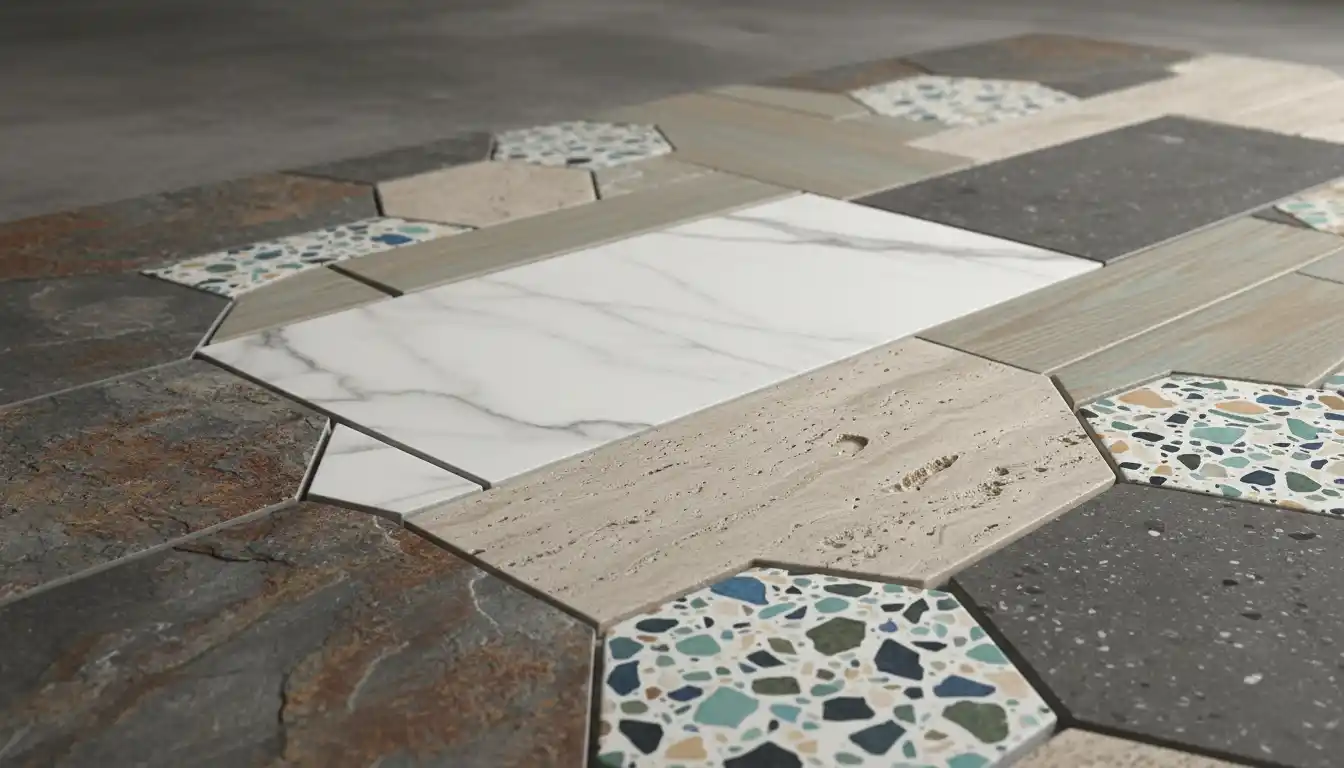
Visualizing the Options
Seeing the texture and finish variance is vital before purchasing. The image below illustrates the diversity in surface textures found across the Adessi range, from matte stone looks to high-gloss finishes.
Common Problems and Real User Complaints
Researching homeowner experiences on platforms like Reddit and specialized flooring forums reveals consistent themes regarding Adessi products. The most frequent complaint involves “bowing” or warping in large-format rectangular tiles (e.g., 12×24 or wood-look planks). All large tiles have some degree of warpage due to the kiln firing process, but budget brands can sometimes push the limits of acceptable tolerance.
When a tile is bowed, the center is higher than the corners. If you install these tiles in a 50% offset pattern (brick pattern), the highest point of one tile aligns with the lowest point of the adjacent tile. This creates “lippage,” a tripping hazard and an eyesore where the edge of the tile sticks up. The solution is not necessarily to avoid the brand, but to change the installation method. Using a 1/3 offset pattern or a stacked pattern can hide this warping effectively.
Another common issue reported is size variation between boxes. This is known as “caliber.” In higher-end brands, tiles are rectified, meaning the edges are mechanically sawed after firing to ensure exact dimensions. Adessi offers rectified tiles, but they also sell pressed edge tiles. If you mix boxes with different caliber numbers, your grout lines will become uneven, and the installation will look amateurish.
Shipping damage is also a frequent pain point. Because these tiles are often shipped from distribution centers to stores or directly to homes, the handling can be rough. Expert installers recommend purchasing at least 15% to 20% overage, rather than the standard 10%, when buying budget-friendly tiles. This buffer accounts for cuts, breakage during transit, and culling tiles that have aesthetic blemishes.
The “Box Test”: How to Ensure Consistency
To guarantee a professional finish with Adessi tiles, you must perform a “Box Test” before the installer mixes a single bag of mortar. This is a step many homeowners skip, leading to regret. Locate the “Dye Lot” and “Caliber” codes printed on the side of every box. These codes must match perfectly across your entire order.
The dye lot refers to the specific batch of glaze used. Even a slight variation in the chemical mixture or kiln temperature can shift a grey tile to a slightly blue or green hue. If you install two different dye lots side-by-side, the color blocking will be immediately obvious and impossible to fix without ripping out the floor. Retailers like Floor & Decor will usually exchange boxes to ensure you have a matching lot, provided they have stock available.
Beyond the codes, physically open four or five boxes from different pallets. Shuffle the tiles and lay them out dry on the floor. This “dry lay” reveals the true color variation and allows you to spot any repeating patterns that look artificial. Adessi wood-look tiles, for instance, have a finite number of “faces” or print patterns. You want to avoid placing two identical distinct patterns right next to each other.
This process of verification is similar to comparing machinery specs before a purchase. Just as you would compare the Ariens Deluxe 28 vs SHO to ensure the engine output matches your snow clearing needs, you must compare the technical specs on tile boxes to ensure they match your renovation requirements. Ignoring these codes is a fundamental error that compromises the project.
Installation: The Make or Break Factor
Even the highest quality tile will fail if installed poorly, but Adessi tiles require specific attention to detail during installation. Because of the potential for slight sizing variations discussed earlier, the width of the grout joint becomes critical. Manufacturers often specify a minimum grout joint width on the box. For Adessi, trying to achieve a razor-thin 1/16-inch grout line is often risky unless the tile is fully rectified and perfectly flat.
Use a leveling system. Modern tile leveling clips and wedges are indispensable when working with large-format Adessi tiles. These clips mechanically force the tiles to align on the same plane, virtually eliminating lippage caused by minor warping. While this adds a small cost to the materials, it saves the aesthetic of the floor.
For the adhesive, use a high-quality, large-format modified thin-set mortar. Cheaper unmodified mortars may not cure correctly or support the weight of heavy porcelain planks, leading to hollow spots. Hollow spots are areas where the tile is not fully bonded to the subfloor; if a heavy object falls on a hollow spot, the tile will crack instantly.
Maintenance of the installation equipment is also a parallel lesson. Just as neglecting an engine can lead to a situation where an Ariens EFI snowblower won’t start, neglecting to clean your trowels, buckets, and sponges during the tiling process can ruin the finish. Dried mortar on a tile face is incredibly difficult to remove from textured Adessi products without damaging the glaze.
Comparative Specifications Table
To help you decide which Adessi line fits your specific project, the following table breaks down the common specifications and best-use cases for their popular categories.
| Tile Type | Primary Material | PEI Rating | Water Absorption | Best Application |
|---|---|---|---|---|
| Adessi Porcelain Planks | Porcelain | 4 (High Traffic) | < 0.5% (Impervious) | Kitchen floors, Living rooms, Hallways |
| Adessi Zellige Series | Ceramic | 1 or 2 (Wall Only) | > 3% (Semi-Vitreous) | Kitchen backsplash, Shower walls |
| Adessi Natural Stone | Marble / Travertine | N/A (Natural Material) | High (Requires Sealing) | Bathroom vanity, Low traffic accents |
| Adessi Metallic Finish | Porcelain | 3 (Moderate Traffic) | < 0.5% (Impervious) | Modern bathrooms, Accent walls |
Design Trends and Aesthetic Value
Where Adessi truly shines is in design versatility. They are quick to adopt trending aesthetics that are popular on social media and design blogs. Currently, their concrete-look porcelain tiles are highly sought after for industrial and modern farmhouse designs. These tiles offer the raw, edgy look of poured concrete but with the ease of maintenance associated with porcelain.
Another strong suit is their patterned encaustic-look tiles. Traditional encaustic cement tiles are thick, porous, and require constant sealing to prevent staining. Adessi produces porcelain versions of these patterns. They capture the visual charm of the old-world patterns but are completely stain-resistant and require no sealing. This makes them practical for busy mudrooms or laundry rooms where mud and detergent spills are common.
However, be cautious with their highly textured products if you are designing for aging in place or accessibility. While texture provides slip resistance (a high Coefficient of Friction), it can also make cleaning difficult. Mops can snag on rough textures, and dirt can settle into the crevices of stone-look tiles. Always consider the “cleanability” of the surface alongside the visual appeal.
Technical Tip: The “Wax” Coating Confusion
A unique issue that baffles many new Adessi customers involves polished porcelain tiles. Upon opening the box, users often find the tiles look dull, hazy, or dirty. This is rarely a defect. Manufacturers often apply a protective wax or starch coating to polished tiles to prevent scratching during transit.
This coating must be removed after installation but before grouting. If you grout over the wax, the grout haze will bind to the wax, making final cleanup a nightmare. A simple solution of warm water and a mild abrasive pad, or a specialized heavy-duty tile cleaner, will strip this protective layer and reveal the high-gloss shine underneath. Many negative reviews stem from users who were unaware of this coating and assumed the tile finish was defective.
Final Verdict: Is Adessi Tile Worth It?
Adessi tile represents a smart compromise between cost and style. They are not the Rolls Royce of the tile world; they are the reliable, stylish sedan. They get the job done effectively and look good doing it, provided you follow the rules of the road. The “horror stories” found online are frequently the result of improper material selection—such as putting wall tile on a floor—or installation errors like ignoring dye lots.
If you are a DIY enthusiast or working with a budget-conscious contractor, Adessi is an excellent choice. The savings allow you to allocate budget elsewhere in your renovation, perhaps to better fixtures or lighting. However, this savings comes with the homework of checking boxes, verifying lots, and understanding the PEI ratings.
Summary Checklist for Buyers
Before leaving the store with your Adessi tile, ensure you have ticked these boxes:
1. Verify the PEI Rating: Ensure it is at least PEI 3 for floors.
2. Check the Batch Codes: All boxes must have matching Dye Lot and Caliber numbers.
3. Buy Overage: Purchase 20% extra to account for cuts and potential shipping damage.
4. Plan the Layout: Determine if you need a 1/3 offset pattern to hide potential bowing.
5. Inspect for Wax: Check if polished tiles have a protective film that needs removal.
By treating the purchase with technical scrutiny rather than just aesthetic appreciation, you can achieve a high-end look that lasts for decades, making Adessi a valuable asset in your home improvement toolkit.
