
Acrylic vs Quartz Shower Walls: The #1 Mistake to Avoid
Choosing the perfect material for a shower surround is a critical step in any bathroom renovation, balancing concerns of cost, appearance, and long-term maintenance.
Homeowners often find themselves weighing the benefits of prefabricated, lightweight options like acrylic against the high-end, engineered durability of quartz panels.
Understanding the fundamental differences in composition, installation, and upkeep between these two popular choices is essential for making an informed decision that suits both your budget and aesthetic goals.
You'll Learn About
The End of Grout Grime: Why Solid Walls Are Taking Over
For decades, the biggest complaint in bathroom maintenance has been the relentless scrubbing of tile grout. Homeowners are tired of battling mold, mildew, and discolored lines that make even the cleanest shower look dingy. This frustration has fueled a revolution in bathroom design, pushing solid-surface shower walls into the spotlight.
Two materials have emerged as the leading contenders in the quest for a grout-free sanctuary: sleek, practical acrylic and luxurious, durable quartz. Both promise a seamless, low-maintenance experience, but they cater to vastly different needs, budgets, and aesthetic goals. Choosing between them is one of the most critical decisions in a modern bathroom remodel.
This guide will provide a definitive, head-to-head comparison of acrylic and quartz shower walls. By exploring the crucial differences in appearance, durability, cost, and installation, you will gain the clarity needed to select the perfect material for your home, avoiding costly mistakes and ensuring a beautiful, functional shower for years to come.
What Are Acrylic Shower Walls? The Affordable, Low-Fuss Option
Acrylic shower walls are manufactured from large sheets of composite plastic that are heated and vacuum-formed into seamless panels. These panels are non-porous, completely waterproof, and designed to be installed over a waterproof backer board, creating a formidable barrier against moisture.
The core benefits of acrylic are its lightweight nature and relative ease of installation, making it a popular choice for DIY-savvy homeowners and those seeking a quick, cost-effective renovation. Modern acrylics are available in a wide variety of colors and patterns, offering significant design flexibility without the high price tag of stone or tile.
What Are Quartz Shower Walls? The Ultimate in Luxury
Quartz shower walls are crafted from engineered stone slabs, typically composed of over 90% crushed natural quartz crystals bound together with polymer resins and pigments. This process creates an incredibly dense, non-porous surface that is exceptionally durable and resistant to scratches, stains, and bacteria.
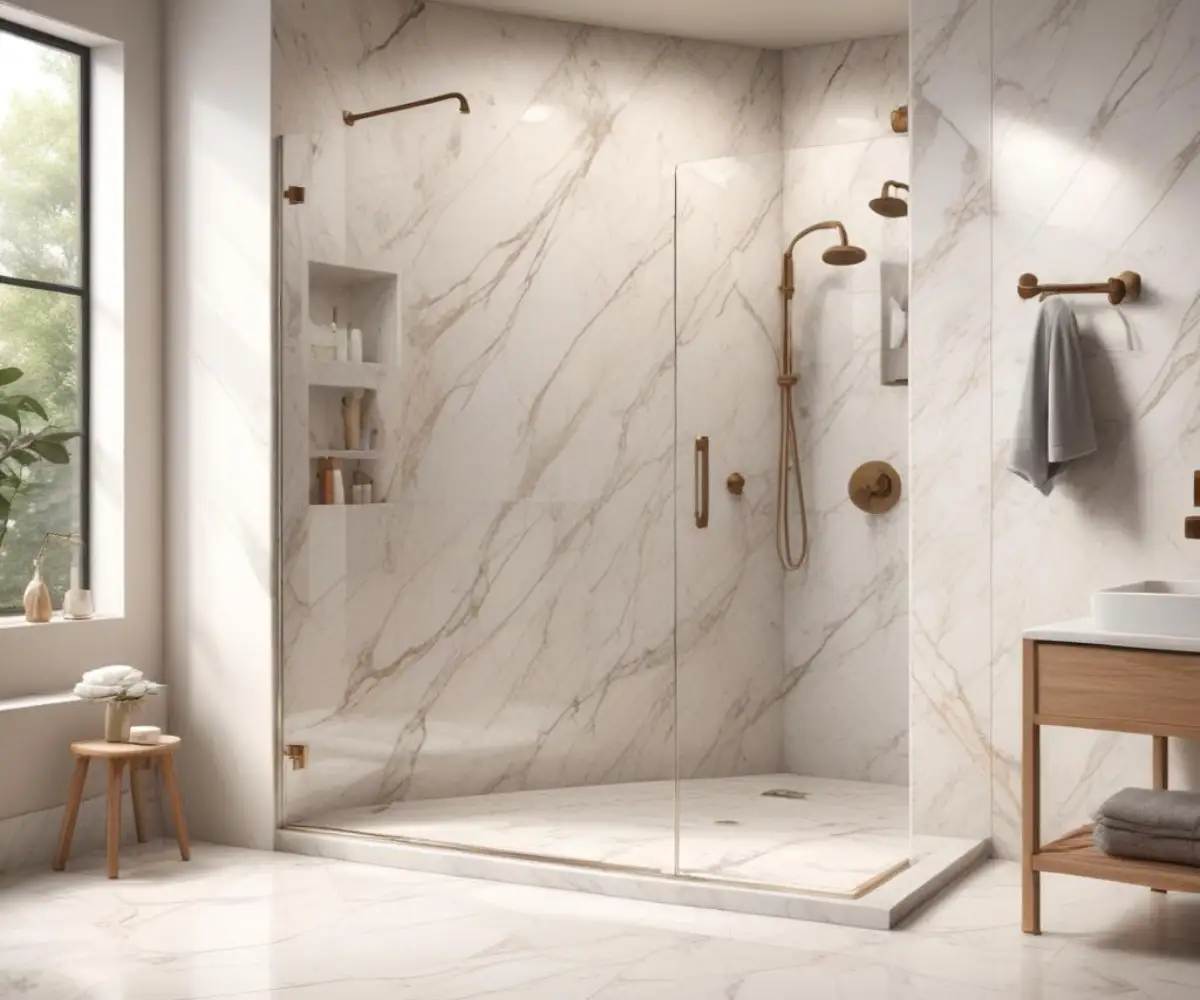
The primary appeal of quartz is its unparalleled aesthetic, mimicking the luxurious look of natural stone like marble or granite but without the maintenance headaches. The ability to use large, seamless slabs eliminates grout lines entirely, providing a clean, monolithic appearance that defines high-end bathroom design.
Head-to-Head Battle: Acrylic vs. Quartz at a Glance
Making a direct comparison is the best way to see where each material shines. This table breaks down the essential factors to consider when weighing your options for a new shower.
| Feature | Acrylic | Quartz |
|---|---|---|
| Aesthetics & Finish | Glossy, uniform finish. Available in many colors and patterns, but can sometimes look like plastic. | Luxurious stone-like appearance with depth and veining. Offers a high-end, seamless look. |
| Durability & Longevity | Resistant to chipping and cracking, but can be scratched. Lifespan of 15-25 years. | Extremely hard and highly resistant to scratches and chips. Can last for decades. |
| Installation | Lightweight and can be a DIY project for skilled individuals. Glued directly to wallboard. | Extremely heavy, requiring professional installation and potentially reinforced wall studs. |
| Upfront Cost (Materials & Labor) | $10 – $60 per square foot. Lower overall cost due to simpler installation. | $50 – $150+ per square foot. Higher overall cost due to material and specialized labor. |
| Maintenance | Very low. Easy to clean with non-abrasive soap and water. No sealing required. | Very low. Non-porous surface resists mold and bacteria. No sealing required. |
| Repairability | Minor scratches can often be buffed out with a polishing compound. | Very difficult to repair. Chips or deep scratches require a professional stone specialist. |
| Thermal Feel | Feels warmer and less stark to the touch compared to stone. | Feels cool and solid, similar to natural stone. Can feel cold without radiant heating. |
Deep Dive: The Critical Differences You Can’t Ignore
While the table provides a quick overview, several key differences demand a closer look. These factors often become the tipping point for homeowners, influencing not just the final look but also the long-term satisfaction with their new shower.
Aesthetic Appeal & Design Flexibility
Acrylic has come a long way from the basic white surrounds of the past. Manufacturers now offer an impressive range of colors and patterns, including convincing simulations of tile and stone. However, its uniform, glossy finish can, to a discerning eye, still read as plastic, and seams between panels, though minimal, are typically visible.
Quartz, on the other hand, delivers an unmatched level of sophistication. The depth and natural-looking veining create a truly luxurious feel that elevates the entire bathroom. Because it can be fabricated in massive slabs, it’s possible to create a stunning, truly seamless shower enclosure that serves as a powerful design statement.
Durability, Scratches, and Long-Term Wear
Both materials are built to handle the wet, demanding environment of a shower. Acrylic is tough and resists impacts well, meaning it’s unlikely to chip or crack. Its main vulnerability is to surface scratches, which can be caused by abrasive cleaners or sharp objects.
Quartz is one of the hardest materials available for home use, making it exceptionally resistant to scratches and chips. Its non-porous surface is also highly resistant to stains from soap, shampoo, or hair dye, ensuring it maintains its pristine look for years with minimal effort.
The Installation Showdown: DIY Friend vs. Pro-Only
Here lies one of the most significant distinctions. Acrylic panels are lightweight and manageable, making installation a feasible project for a confident DIYer with the right tools and attention to detail. The panels are typically cut to size on-site and secured to a waterproof backer with a specialized adhesive.
Quartz is a different beast entirely. A single large slab can weigh hundreds of pounds, making professional installation non-negotiable. More importantly, the weight may require reinforcing the wall framing behind the shower to provide adequate structural support—a critical step that is often overlooked in initial planning.
Cost: The Deciding Factor for Most Budgets
There is a substantial price gap between these two materials. Acrylic is the clear winner for budget-conscious projects, with material costs often being a fraction of quartz. When you factor in the lower labor costs (or the potential for zero labor cost with a DIY install), acrylic presents a highly accessible path to a grout-free shower.
Quartz is a premium investment. The material itself is more expensive, and the required professional installation, specialized tools, and potential need for structural reinforcement add significantly to the total cost. However, this investment can translate into higher home resale value, as a quartz shower is a significant luxury feature.
Beyond the Basics: The Hidden Factors No One Talks About
The spec sheets tell one story, but daily life with these materials reveals nuances that are just as important. These are the subtle, real-world factors that can shape your overall satisfaction.
How They Feel: The In-Shower Experience
One of the most overlooked aspects of a shower wall is its thermal property—how it feels to the touch. Acrylic, being a type of plastic, does not conduct cold as readily as stone. It feels relatively neutral or even warm to the touch, which can make for a more comfortable experience, especially in colder climates.
Quartz, like natural stone, feels cool and solid. While this reinforces its luxurious quality, leaning against a cold quartz wall on a winter morning can be a bracing experience. This is a small but genuine quality-of-life factor to consider in your daily routine.
The Truth About Seams and Waterproofing
While both are “seamless” compared to tile, the nature of their joints differs. Acrylic systems use multiple panels with color-matched silicone in the corners and along the seams. While highly effective, this silicone is still a maintenance point that can degrade over time.
Quartz installations strive for true seamlessness, often using a single slab for the back wall. Where panels do meet in a corner, they are joined with a minimal, high-grade epoxy or silicone bead by a professional fabricator. This creates an incredibly tight, almost invisible joint that is less prone to failure. When planning your shower, this level of detail extends to the foundation; for instance, many homeowners explore Randolph Morris shower base reviews to find a durable and compatible pan that complements the seamless wall system.
Repairing the Damage: Scratches and Chips
Accidents happen. The key is how easily the damage can be fixed. Acrylic is surprisingly forgiving. Minor surface scratches can often be buffed out using a special acrylic polishing compound and a bit of elbow grease, restoring the glossy finish.
Repairing quartz is a much more serious affair. A deep scratch or a chip is very difficult to fix invisibly and almost always requires a professional stone repair specialist. While its durability makes damage unlikely, the consequences of a mishap are far greater than with acrylic.
Making the Final Choice: Which Shower Wall is Right for You?
The decision between acrylic and quartz ultimately comes down to a balance of priorities: budget, aesthetics, and installation complexity.
Choose acrylic if: You are working with a modest budget, are a skilled DIYer looking to save on labor, or need a fast and practical renovation. It’s an excellent, low-maintenance choice for busy family bathrooms where practicality reigns supreme.
Choose quartz if: Your priority is creating a high-end, luxurious look with unmatched durability. You have a larger budget that accommodates professional installation and want a show-stopping feature that will increase your home’s value.
Remember, the walls are just one part of a complex system. Achieving the perfect shower experience also depends on selecting the right fixtures, which is why many compare Moen vs Kohler shower heads to find the best performance and style. Furthermore, any major bathroom overhaul should consider the home’s plumbing infrastructure, such as understanding the requirements for bonding a tankless water heater, to ensure safety and efficiency.
The Verdict: A Clear Winner for Your Home
There is no single “best” material, only the best material for your specific project. Acrylic offers an unbeatable combination of affordability and low maintenance, making a grout-free shower accessible to more homeowners than ever.
Quartz provides an unparalleled sense of luxury and permanence for those willing to invest in it. By carefully weighing the factors of cost, installation, durability, and aesthetics, you can confidently choose the material that will transform your bathroom into the clean, beautiful, and hassle-free space you’ve always wanted.
