
Accent Wall With Doorway: Don’t Make This Awkward Mistake
An accent wall is a powerful tool in interior design, capable of transforming a room from bland to brilliant. But when that perfect wall has a doorway, many homeowners hesitate. It introduces a challenging variable that can make the entire project feel awkward and disjointed if handled incorrectly.
The fear is valid: a poorly executed accent wall with a doorway can interrupt the visual flow and chop up the space. Instead of a stunning focal point, you’re left with a design element that looks like a mistake. This guide provides the definitive solution to turn that doorway from a problem into a sophisticated feature.
You'll Learn About
Why a Doorway Can Complicate Your Accent Wall
The primary challenge is interruption. A doorway, with its frame, trim, and door, is a significant architectural element that breaks the continuous surface of a wall. When you apply a bold color or intricate pattern, this break becomes far more pronounced.
This creates visual clutter and raises critical questions. What do you do with the trim? Does the door match the wall, the trim, or neither? Each choice drastically affects the final outcome, and the wrong one can undermine the entire design.
The Great Debate: Painting the Door and Trim
The most crucial decision you will make is how to treat the door and its surrounding trim. There are two primary schools of thought, each with a distinct aesthetic outcome. The key is to choose the approach that aligns with your home’s style and the look you want to achieve.
Option 1: The Monochromatic Method
For a modern, seamless, and daring look, paint the wall, the trim, and the door all the same color. This technique, often called color drenching, creates an uninterrupted visual plane. It allows the bold color or texture of the wall to be the star without the distraction of contrasting elements.
This approach makes the doorway recede into the wall, minimizing its visual impact and making the space feel more cohesive. It works exceptionally well with deep, moody colors like charcoal gray, navy blue, or forest green, turning the entire wall into a singular, dramatic statement.
Option 2: The Classic Contrast
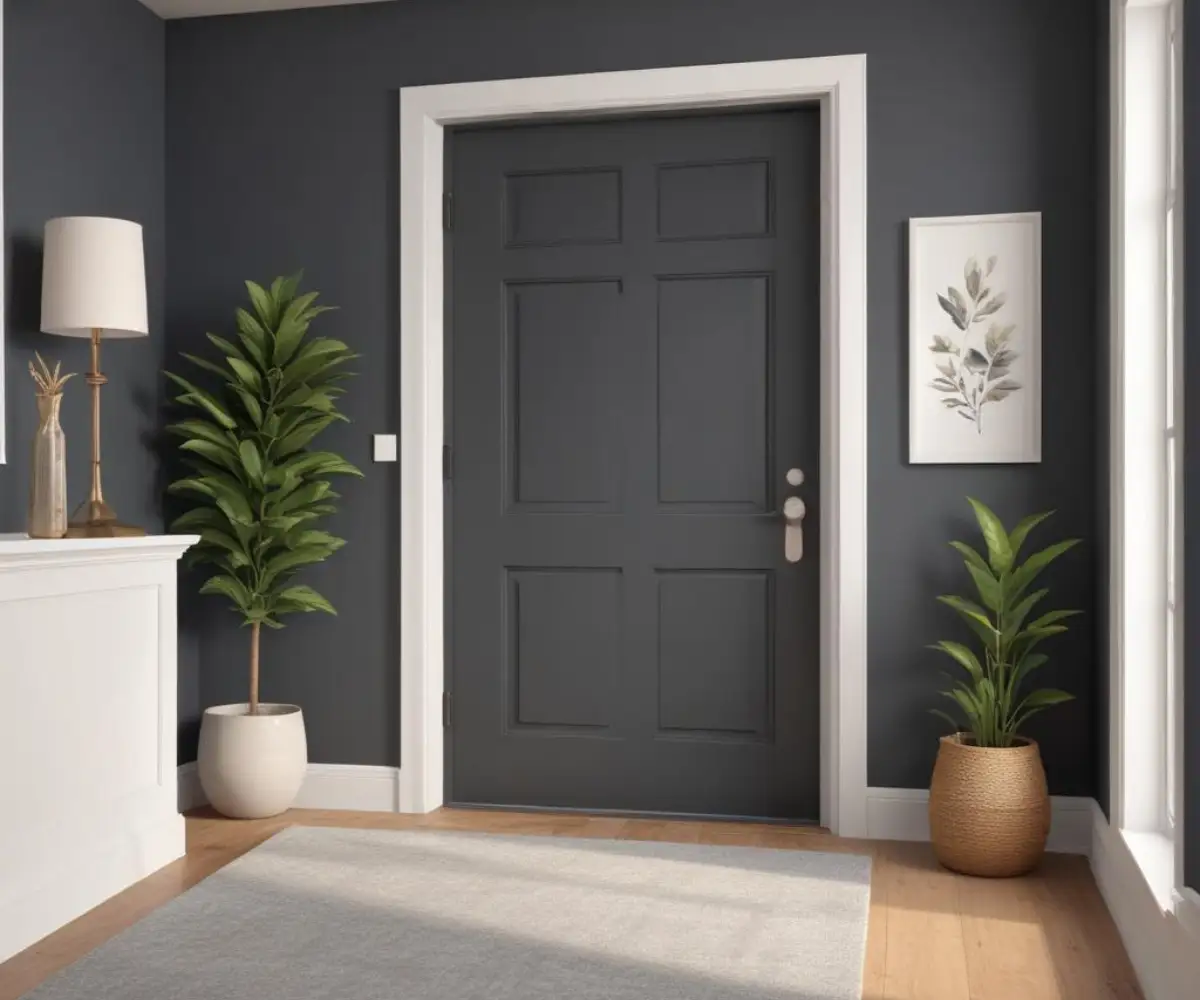
Keeping the door and trim a contrasting color, typically a crisp white or off-white, is the more traditional choice. This method frames the doorway, highlighting the architectural detail of the trim. It creates a clean, polished look that feels timeless and bright.
This is the ideal option if you have beautiful, historic, or detailed millwork that you want to showcase. The contrast between the bold accent wall and the classic white trim creates a sharp, pleasing visual separation that defines the space. If your home already has consistent white trim, this maintains harmony throughout the rooms.
Beyond Paint: Materials That Elevate Your Doorway Wall
While paint is a fantastic choice, other materials can add texture, pattern, and depth. A doorway doesn’t prevent you from using them; it just requires careful planning.
Wallpaper and Murals
A patterned wallpaper or a large-scale mural can turn your wall into a work of art. When dealing with a doorway, you simply cut the wallpaper around the trim, treating it like any other obstacle. For a truly high-end, custom look, consider wrapping the door itself in the same wallpaper for a “hidden door” effect that is both playful and sophisticated.
Paneling and Millwork
Wood paneling, such as board and batten, shiplap, or wainscoting, adds immense character and texture. The key is to integrate the doorway into the design from the beginning. Plan the spacing of your battens or planks so they align logically with the door frame, making it feel like an intentional part of the architectural feature.
Creating a feature wall is often a perfect solution when you find your front door opens to a wall, as it immediately establishes a beautiful and welcoming focal point.
Choosing Your Color Palette Wisely
The color you choose sets the mood for the entire room. An accent wall with a doorway presents a unique opportunity to play with color in a structured way.
High-Contrast and Dramatic
Don’t be afraid of dark colors. A deep charcoal or rich navy on an entryway wall can create a sophisticated and intimate “jewel box” effect. When paired with a contrasting white door and trim, the look is powerful and confident. Dark colors can also cleverly hide imperfections on the wall surface.
Subtle and Serene
If drama isn’t your goal, a more subtle accent color can still provide significant impact. A soft sage green, a dusty terracotta, or a warm greige can add depth and interest without overwhelming a smaller space. These colors work well with both contrasting and monochromatic trim treatments.
| Material | Best For | Pro-Tip for Doorways | Difficulty Level |
|---|---|---|---|
| Eggshell/Satin Paint | Creating a bold, colorful focal point with a smooth finish. | Decide on the trim/door treatment first. Use painter’s tape for crisp lines. | Beginner |
| Wallpaper | Adding intricate patterns, texture, or a mural effect. | Use a sharp utility knife to carefully cut around the door trim. | Intermediate |
| Board and Batten | Adding architectural character; ideal for farmhouse or traditional styles. | Plan your batten layout to frame the doorway symmetrically. | Intermediate |
| Limewash/Plaster | Achieving a soft, organic texture with subtle color variation. | Apply carefully around trim to avoid a messy edge; taping is crucial. | Advanced |
Design Secrets the Experts Use
To truly elevate your accent wall from good to great, consider the details that professional designers focus on. These elements are often overlooked but make a significant difference in the final result.
Leverage Lighting
A doorway can create unusual shadows on an accent wall, especially at night. Counter this by adding dedicated lighting. A pair of stylish sconces flanking the doorway or a slim picture light installed above it can wash the wall in light, highlighting its color and texture while eliminating awkward dark spots.
Connect to the Ceiling
Think beyond the four walls. For a truly immersive and professionally designed feel, consider the ceiling, often called the “fifth wall.” Painting the ceiling a much lighter tint of your accent color (e.g., 20% of the wall color’s formula) can create a cohesive, encompassing effect without making the room feel smaller.
Upgrade Your Hardware
On a dramatic accent wall, the doorknob, hinges, and any locksets become prominent design details. Treat them like jewelry for the door. Swapping a standard knob for one in a finish that complements your wall—like matte black hardware on a dark green wall or brushed brass on a navy wall—is a small change that adds a massive touch of polish.
Step-by-Step Execution Plan
Follow these steps for a flawless finish.
1. Select Your Wall and Material: Choose a wall that naturally draws the eye and a material that suits your home’s style and your DIY skill level.
2. Prepare the Surface: Clean the wall thoroughly. Fill any holes, sand them smooth, and apply a primer if you’re making a drastic color change.
3. Mask Everything: Use high-quality painter’s tape to create sharp lines along the ceiling, baseboards, and adjacent walls. Be meticulous when taping around the door trim if you are painting it a different color.
4. Apply the Finish: Whether painting, wallpapering, or installing paneling, work from the top down. Apply multiple thin coats of paint for the best result, allowing for proper drying time between each.
5. Reveal and Refine: Remove the painter’s tape while the final coat is still slightly damp for the cleanest lines. Reinstall your new, upgraded door hardware and any light fixtures.
Common Problems and Quick Fixes
Even with careful planning, issues can arise. Here’s how to troubleshoot them.
The Color Feels “Off”
The most common issue is the color not looking as expected. This is usually due to lighting. Before committing, always paint large sample swatches on the wall and observe them throughout the day and night to see how the light changes the hue.
The Room Feels Smaller
If your bold choice ends up cramping the space, lighting and reflection are your best solutions. Add a large mirror to an adjacent wall to bounce light around the room. Improving your overhead lighting or adding lamps can also make a significant difference.
The way your accent wall relates to other elements is key. Just as you might wonder should tile run the same direction as hardwood to create flow, your accent color must flow with the rest of the room.
What If There Are Multiple Doors?
If your chosen wall has more than one door or a combination of a door and a window, consistency is crucial. In this scenario, the monochromatic approach—painting all doors, windows, and trim the same color as the wall—is often the most successful strategy. It unifies the busy wall and prevents it from looking chaotic.
Your Doorway Is an Opportunity, Not an Obstacle
An accent wall with a doorway should not be a source of design anxiety. By making a clear, intentional decision about how to treat the door and trim, you can transform a potential problem into a sophisticated and integrated feature.
Whether you opt for a seamless monochromatic look or a classic high-contrast design, the key is to view the doorway as part of the composition. Embrace it, light it, and give it the attention it deserves. The result will be a stunning focal point that feels both bold and beautifully complete.
