
Acadia White vs. White Dove: Don’t Paint Until You Read This
Choosing the perfect off-white paint can feel like an impossible task. You stand in front of a wall of seemingly identical swatches, each promising a subtle warmth or a soft glow, only to bring samples home and find they look completely different. This decision paralysis is a common problem for homeowners and designers alike, turning an exciting update into a frustrating ordeal.
Two of Benjamin Moore’s most popular and often-debated off-whites, Acadia White (OC-38) and White Dove (OC-17), frequently find themselves at the center of this confusion. While both offer a gentle alternative to stark, sterile whites, their nuanced differences are critical. Making the wrong choice can leave a room feeling too yellow, slightly dingy, or simply not the welcoming sanctuary you envisioned.
You'll Learn About
The Subtle Power of Off-White: Why This Choice Matters
Before diving into a direct comparison, it’s crucial to understand the two elements that define any off-white paint: its Light Reflectance Value (LRV) and its undertones. LRV measures how much light a color reflects, with 100 being pure white and 0 being absolute black. A higher LRV means a brighter color that will bounce more light around a room.
Undertones are the subtle hints of color that hide within a neutral shade. They are the secret ingredients that determine whether a white feels warm and cozy or crisp and modern. These undertones are powerfully influenced by the lighting in your home, which is why a color can look perfect in the store but completely different on your walls.
Benjamin Moore Acadia White (OC-38): The Creamy Chameleon
Acadia White is a warm, sophisticated ivory paint color. It carries noticeable creamy undertones with a hint of yellow, giving it a classic and sometimes even historic feel. This makes it an excellent choice for creating spaces that feel inviting, aged, or antiqued.
With an LRV of around 83-85, Acadia White has enough substance to not wash out, reflecting a good amount of light while maintaining its distinct warmth. Its creamy nature means it can sometimes appear more yellow in rooms with very warm southern light or under certain artificial bulbs. However, in cooler, north-facing light, this warmth can beautifully balance the gray-blue tones, preventing the room from feeling cold.
Benjamin Moore White Dove (OC-17): The Soft, Versatile Classic
White Dove is one of the most beloved soft, warm whites available. It is consistently praised for its incredible versatility. While it is a warm white, its warmth comes from a more complex blend of greige (gray-beige) and a touch of soft yellow undertones, which are often described as being “grayed-out.”
This complexity prevents it from ever looking too stark or too creamy. White Dove’s LRV is approximately 85, placing it in a similar brightness category as Acadia White. Its true strength lies in its ability to adapt; it can feel soft and warm in some lighting and appear as a cleaner, more neutral white in others, making it a go-to for walls, trim, and cabinets in a wide range of home styles.
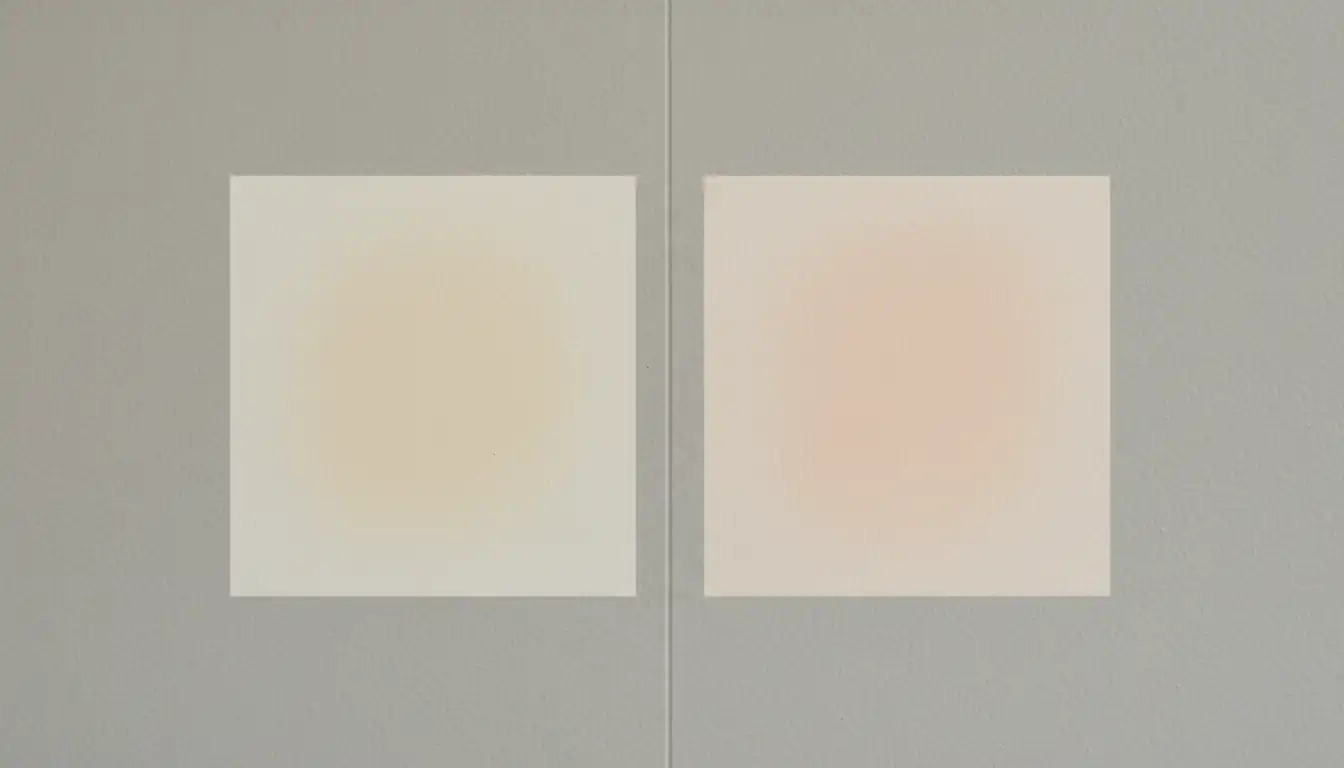
Head-to-Head Comparison: Acadia White vs. White Dove
The core difference lies in their undertones. Acadia White is distinctly creamier with more pronounced yellow notes, while White Dove’s warmth is softer and more muted by a touch of gray. When placed side-by-side, Acadia White will appear more saturated and ivory, whereas White Dove will read as a gentler, more neutral off-white.
This distinction is critical. If you are seeking a color to create a cozy, traditional, or even slightly vintage atmosphere, Acadia White is an excellent contender. If you need a flexible white that works with both warm and cool decor and can adapt to various lighting conditions without leaning too far in one direction, White Dove is often the safer, more versatile choice.
| Feature | Benjamin Moore Acadia White (OC-38) | Benjamin Moore White Dove (OC-17) |
|---|---|---|
| LRV (Light Reflectance Value) | ~83.3 – 85.3 | ~83.1 – 85.4 |
| Primary Undertones | Cream, Yellow | Greige (Gray-Beige), Hint of Yellow |
| Overall Feel | Warm, Creamy, Classic, Sophisticated | Soft, Versatile, Welcoming, Muted |
| Best For | Creating cozy, traditional spaces; balancing cool light. | Whole-home color, trim, cabinets, modern to classic styles. |
| Can Read as… | Too yellow in very warm lighting. | Slightly gray or dingy in very low, cool light. |
The Deciding Factor: How Light Changes Everything
You cannot make a final decision on an off-white without considering your home’s unique lighting. The direction your windows face and the type of light bulbs you use will dramatically alter how these colors appear on your walls.
Natural Light: North vs. South-Facing Rooms
Rooms with north-facing windows receive cooler, indirect light that has a blue or gray cast. In this environment, Acadia White’s yellow undertones can be a major asset, cutting through the coolness to make the space feel warmer and more balanced. White Dove can also work well, but its gray undertone might be slightly amplified, making it appear more like a soft gray than a warm white.
Conversely, south-facing rooms are flooded with bright, warm light throughout the day. Here, the prominent yellow in Acadia White can become intensified, potentially looking too creamy or even buttery for some tastes. White Dove often shines in southern light, as the bright exposure washes out some of its subtle gray, allowing it to appear as a beautiful, soft, inviting white without being overwhelmingly yellow.
Artificial Light: The Overlooked Variable
The impact of your light bulbs is just as important as natural light. LED bulbs come in a range of temperatures from “warm white” (more yellow/orange) to “cool white” or “daylight” (more blue). A warm bulb will enhance the creaminess of Acadia White and the warmth of White Dove.
A cool or daylight bulb will neutralize these colors. It can make Acadia White appear less yellow and more like a true ivory, while it might bring out the gray undertones in White Dove more noticeably. Before committing, observe your paint samples in the evening with your lights on to get a complete picture.
Beyond the Walls: Pairing with Trim, Decor, and Finishes
Your wall color doesn’t exist in a vacuum. It must coordinate with your trim, flooring, furniture, and hardware to create a cohesive look. This is where the subtleties between Acadia White and White Dove become even more significant.
Choosing the Perfect Trim Color
A popular strategy is to use one of these colors on the walls and a crisper, cleaner white on the trim for contrast, such as Benjamin Moore’s Chantilly Lace. When using Acadia White on the walls, a clean white trim helps its creamy nature pop. White Dove is famously versatile and works beautifully as both a wall color (paired with a brighter trim) and as a trim color itself, especially against warmer greige or darker accent walls.
Another sophisticated approach is to use the same color for both walls and trim but in different sheens. For example, using White Dove in an eggshell finish on the walls and semi-gloss on the trim creates a seamless, elegant look with just a subtle shift in texture. During a renovation, you’ll need to decide what are blank wall plates for and whether to paint them to match the wall or the trim for a truly custom finish.
Coordinating with Wood Tones and Metals
Acadia White’s prominent creamy warmth harmonizes beautifully with honey-toned woods like oak and pine, as well as warm metals like brass and bronze. It fosters a very classic, welcoming aesthetic.
White Dove’s more muted warmth gives it greater flexibility. It pairs just as well with warm woods as it does with cooler, contemporary finishes like brushed nickel and chrome. Its subtle gray undertone allows it to bridge the gap between warm and cool elements within a room, making it a reliable choice for spaces with mixed finishes.
Making the Final Decision: Your Actionable Guide
The battle between Acadia White and White Dove is won not by picking the “best” color, but by picking the right color for *your* home. After absorbing all this information, the final step is the most critical one.
You must sample these colors in your space. Do not rely on paint chips. Purchase sample pots and paint large swatches (at least 2×2 feet) on different walls within the same room. Observe them throughout the day—in the bright morning light, the warm afternoon glow, and under your artificial lighting at night. This is the only way to see how their undertones will truly behave with your home’s unique conditions.
Consider the mood you want to create. Are you aiming for a cozy, classic, and distinctly warm feel? Acadia White may be your answer. Are you looking for a soft, adaptable, and timeless white that provides a gentle warmth without strong commitment to any one undertone? White Dove is likely the stronger candidate. For larger projects that might involve structural changes, understanding topics like how to straighten a bowed 4×4 post or the complexities of your electrical system is key, but the final paint color is what will bring it all to life.
Common Questions and Expert Answers
Even with careful consideration, some questions linger. Here are expert answers to the most common concerns about Acadia White and White Dove.
Is Acadia White too yellow?
It can be. In a room with intense southern or western sun, or paired with very warm-toned artificial lighting, the yellow undertones in Acadia White will become more pronounced. This is why sampling is non-negotiable.
Is White Dove too gray or dingy?
Rarely, but it’s possible. In a dark, north-facing room with very little natural light, White Dove’s soft gray undertone can become more noticeable, which might make it feel less like a warm white and more like a very light greige. Proper artificial lighting can almost always prevent this.
Can you use Acadia White and White Dove in the same house?
Yes, but with caution. Because Acadia White is noticeably creamier, placing it right next to White Dove (for example, walls in one and trim in the other) will make White Dove look grayer and Acadia White look more yellow. It’s often better to use them in separate rooms with a clear transition or to pair them with a much cleaner, crisper white for contrast.
Final Words
Ultimately, a successful home project involves both foundational knowledge and aesthetic choices. While you might be focused on the visual appeal of a new paint color, it’s also wise to be aware of the underlying systems of your home. Knowing when to ask questions like how hard is it to move a breaker box can be just as important as choosing the perfect shade of white.
The choice between Acadia White and White Dove comes down to nuance and context. Acadia White offers a clear, creamy warmth that is perfect for crafting cozy, traditional spaces. White Dove provides a softer, more versatile warmth that adapts beautifully to a multitude of styles and lighting situations. By understanding their undertones, leveraging your home’s light, and, most importantly, testing large samples, you can move past the confusion and confidently select the perfect off-white to create a space you’ll love for years to come.

![What Causes Joint Compound to Mold [And Prevention]](https://fixitinthehome.com/wp-content/uploads/2023/01/black-mold-in-joint-compoun-768x432.jpg)