
Your 8′ Wide Window: The #1 Mistake Costing You Thousands
An eight-foot wide window is more than just an architectural feature; it’s a statement piece. It promises panoramic views, floods rooms with natural light, and can become the stunning focal point of any space.
However, this grand scale also introduces a unique set of challenges that can lead to costly mistakes. From crippling energy bills to structural risks and design dilemmas, managing a window of this size requires careful planning and knowledge.
You'll Learn About
Why Your Grand Window Is Secretly a Grand Problem
Many homeowners are captivated by the idea of an expansive window without fully understanding the practical implications. The problems often don’t surface until after installation, leaving you with buyer’s remorse and a host of issues to solve.
The core of the problem lies in its non-standard size. Standard building materials, window treatments, and installation techniques are often inadequate, pushing you into the realm of custom—and costly—solutions.
The Overwhelming Quest for Window Treatments
The most immediate frustration is finding coverings for an eight-foot span. Off-the-shelf curtains, blinds, and shades simply don’t come in these dimensions, forcing you to find custom solutions that can be both expensive and complex to install.
Functionality is another hurdle. Manually operating a massive blind or a heavy set of draperies can be cumbersome, leading many to seek out motorized options, which adds another layer of cost and complexity.
The Energy Efficiency Black Hole
A large pane of glass is a thermal weak point in your home’s envelope. During winter, it can radiate cold into the room, and in the summer, it can allow immense solar heat gain, causing your air conditioning to work overtime.
Without the right type of glass and proper sealing, your beautiful view could be the primary reason for shockingly high energy bills. It’s a classic case of aesthetics compromising performance if not addressed correctly.
The Hidden Structural Dangers
Supporting an eight-foot opening in a wall is a significant engineering task. The horizontal beam above the window, known as a header or lintel, must be substantial enough to carry the load of the roof and any upper floors without sagging.
An undersized header is a catastrophic failure waiting to happen. Telltale signs include cracks appearing in the drywall above the window corners or difficulty opening and closing nearby doors, indicating the frame is under stress.
Transforming Your 8-Foot Window from Liability to Luxury
With the right approach, you can mitigate every one of these challenges. The key is to address each aspect—treatments, efficiency, structure, and style—with informed decisions. This turns your oversized window from a source of stress into the home’s most celebrated feature.
Mastering Window Treatments for an Expansive View
Your choice of window covering will define both the style and functionality of the space. For a window this large, you have to think beyond the ordinary and invest in a solution built for scale.
Motorized Roller or Cellular Shades are often the top recommendation. They offer a clean, minimalist look and can be operated with the touch of a button, making them perfect for large, hard-to-reach windows. Cellular shades also provide excellent insulation.
Custom Drapery adds a touch of softness and luxury. Use a single, robust drapery rod that extends well beyond the window frame on each side. This allows the curtain panels to stack back completely, ensuring your view is never obstructed when they are open.
Creating the Perfect Balance: A Comparative Guide
Choosing the right treatment involves balancing cost, aesthetics, and functionality. Each option offers a different set of benefits and drawbacks for a window of this impressive scale.
| Treatment Type | Pros | Cons | Best For |
|---|---|---|---|
| Motorized Roller Shades | – Effortless operation – Clean, modern aesthetic – Wide range of materials (light-filtering to blackout) |
– Higher initial cost – Requires a power source – Can feel sterile in some decors |
Modern homes, rooms with minimalist decor, and maximizing the view. |
| Custom Drapery | – Adds softness, texture, and elegance – Excellent sound absorption – Can improve insulation with thermal lining |
– Can feel heavy or bulky – Requires a very sturdy, long rod – Can be difficult to clean |
Living rooms, dining rooms, and bedrooms aiming for a luxurious or traditional feel. |
| Panel Track Blinds | – Contemporary alternative to vertical blinds – Panels slide smoothly on a track – Creates a clean, structured look |
– Can obstruct part of the view when open – Limited material options compared to drapes – May not suit traditional homes |
Sliding glass doors, patio enclosures, and contemporary living spaces. |
| Vertical Blinds | – Cost-effective for wide spans – Excellent light control – Easy to clean individual vanes |
– Can look dated – Vanes can rattle or break – Not as insulating as other options |
Budget-conscious projects, rental properties, and functional office spaces. |
Fortifying Your Home: Energy Efficiency and Structure
Before you even think about style, you must ensure your window is a high-performing part of your home. This starts with the glass itself and extends to the very structure of the wall it sits in.
If you are installing a new window, insist on a high-performance glass package. This should include double or triple glazing, Low-E (low-emissivity) coatings to reflect infrared and UV light, and argon gas fill between the panes for superior insulation.
For an existing window, applying a professional-grade window film can be a cost-effective retrofit. These modern films are virtually invisible but can block up to 99% of UV rays and significantly reduce solar heat gain, protecting your furniture from fading and lowering your cooling costs.
When it comes to structure, never compromise on the header. If you have any doubts about the existing support, consult a structural engineer. Reinforcing an inadequate header is far less expensive than repairing wall cracks, foundation issues, or a catastrophic structural failure down the line.
The Unspoken Challenge: Acoustics and Ambiance
One critical aspect that is almost universally overlooked is acoustics. A massive, hard surface like an 8-foot window can turn a cozy room into an echo chamber. Sound waves bounce off the glass, creating harsh reverberations that can make a space feel cold and unwelcoming.
The solution is to introduce soft, sound-absorbing materials into the room. Heavy draperies are fantastic for this, as their fabric folds trap sound waves. Additionally, consider plush area rugs, upholstered furniture, and even acoustic art panels to balance the room’s sound profile.
Design Strategies to Make Your Window the Star
A window of this size shouldn’t just exist; it should be celebrated. The goal is to integrate it seamlessly into your home’s design, making it a deliberate and stunning focal point.
Frame the View. Use bold, high-contrast trim around the window to create a picture-frame effect. A dark trim against a light wall, or vice versa, draws the eye and makes the view outside feel like a living piece of art.
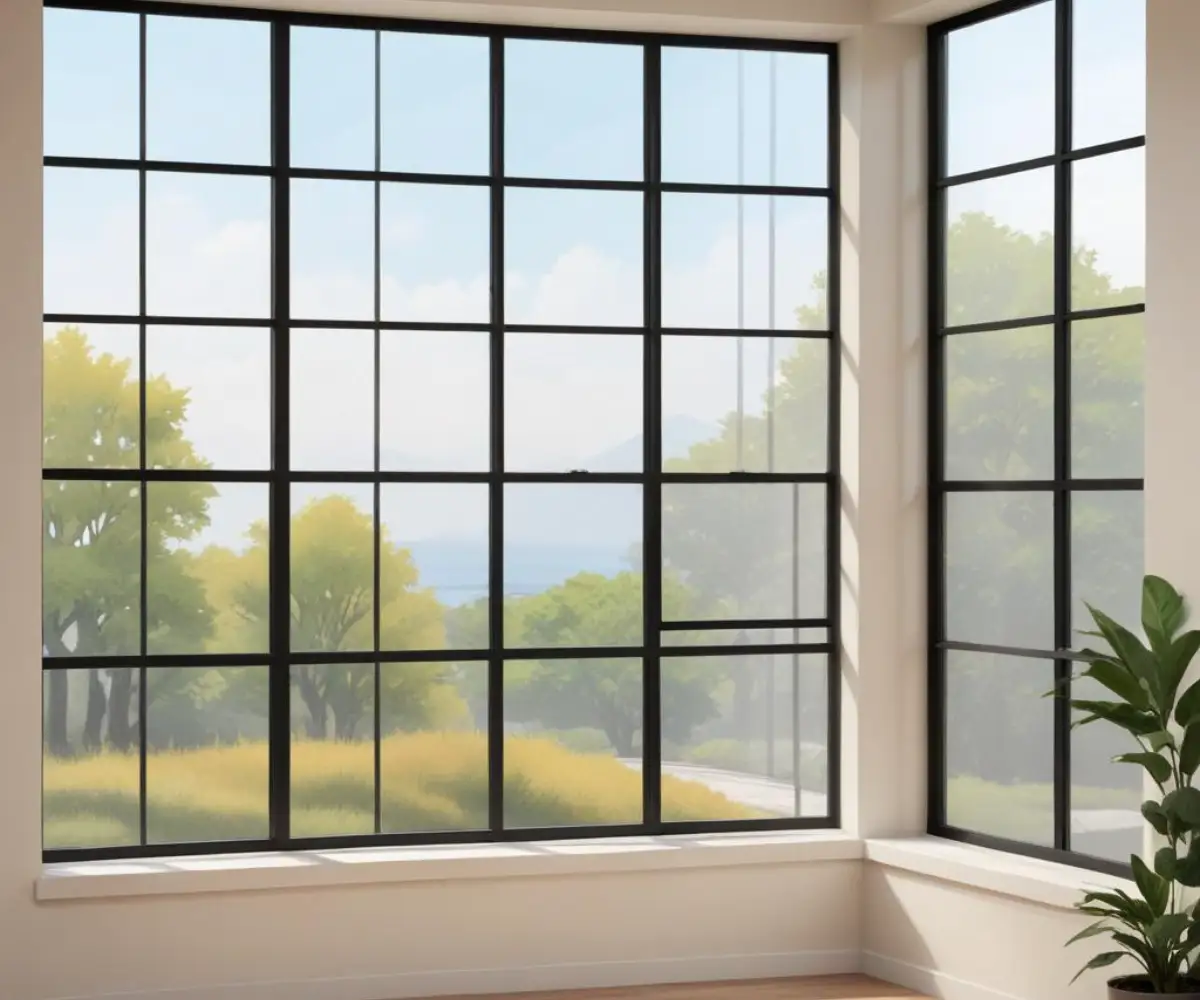
Break It Up Visually. An uninterrupted 8-foot pane of glass can sometimes feel like a void. Consider a window design that incorporates vertical mullions, dividing the span into three or four sections. This adds architectural interest without significantly obstructing the view.
Arrange Furniture Strategically. Don’t block the window with a large sofa. Instead, arrange seating to face the window or create a cozy reading nook to one side. This respects the window as the room’s main feature and orients the space toward the natural light and view.
Ventilation: The Overlooked Necessity
Most 8-foot windows are fixed “picture” windows, meaning they don’t open. While this maximizes the view, it eliminates a potential source of natural ventilation. In a large room, this can lead to stuffy, stagnant air, especially during milder seasons when you don’t need heating or AC.
One effective solution is to pair the large fixed window with smaller, operable windows on adjacent walls. Another powerful strategy is to use a high-capacity fan. For truly large spaces, you might consider an extra wide window fan designed for oversized openings. Finding the widest window fan can provide the airflow you need to keep the space fresh and comfortable.
This approach gives you the best of both worlds: an uninterrupted panoramic view and the ability to invite a fresh breeze into your home. The right ventilation strategy completes the transformation of your window from a simple pane of glass into a functional, comfortable, and breathtaking part of your living space.
Thinking about how windows contribute to your home’s overall character is crucial, just as it is when you consider what to do with design elements like fake dormer windows to enhance curb appeal. Every window, large or small, plays a role in the story your home tells.
The Hidden Costs Beyond the Glass
When budgeting for an 8-foot window, the price of the unit itself is only the beginning. Homeowners are often surprised by the associated costs that can dramatically inflate the total project price.
First, anticipate the need for a structural consultation. An engineer’s fee to assess and specify the correct header is a wise investment. Second, installation is more complex. It may require more laborers or even specialized lifting equipment, increasing labor costs. Finally, the mandatory custom window treatments will be significantly more expensive than standard sizes. Factoring these elements in from the start ensures your budget is realistic and you can truly enjoy your magnificent window without financial regret.
