
8 ft Doors with 9 ft Ceilings: The Proportional Trick to an Upscale Home
One of the most debated questions in modern home design revolves around vertical space. You have nine-foot ceilings, a desirable feature that adds openness and value to your home. But then comes the critical decision: which interior doors will complement this height without overwhelming the space? The standard 6’8″ door can leave an awkward amount of blank wall above, while the idea of an 8-foot door can seem daring. This is the core problem many homeowners face—a costly decision plagued by conflicting opinions and a fear of getting the proportions wrong.
The hesitation is understandable. Will 8 ft doors with 9 ft ceilings make a room feel grand and custom, or will they shrink the space and create a visual imbalance? This article directly addresses this common design dilemma. We will explore the principles of scale and proportion, debunk common myths, and provide a clear, actionable guide to making this combination work beautifully and functionally in your home.
You'll Learn About
Why This Combination is a Design Game-Changer
Opting for eight-foot doors in a home with nine-foot ceilings is more than just a trend; it’s a strategic design choice that leverages verticality to create a profound sense of luxury and space. This architectural decision taps into the psychological appeal of high ceilings, making rooms feel larger, more open, and significantly more upscale. The taller door draws the eye upward, accentuating the ceiling height rather than leaving it as an afterthought.
This combination immediately signals a custom-built feel, distinguishing your home from those with standard-height doors. The elongated lines create an elegant, continuous flow from room to room, enhancing natural light and contributing to a more airy, uncluttered atmosphere. When executed correctly, it’s a powerful tool for elevating your home’s entire aesthetic from ordinary to exceptional.
The “One-Foot Rule”: More Guideline Than Golden Rule
A frequently cited design “rule” suggests leaving one foot of space between the top of the door frame and the ceiling. With an 8-foot (96-inch) door and a 9-foot (108-inch) ceiling, this leaves exactly 12 inches of wall space, fitting the rule perfectly. This gap is crucial because it provides a visual “breathing room,” allowing for substantial trim and preventing the door from feeling crammed against the ceiling.
However, this proportion is not an unbreakable law. The success of this one-foot header space is entirely dependent on the other architectural elements in the room. Without the right trim, casing, and baseboards to ground it, even a perfectly proportioned door can look out of place. Think of the one-foot space as the ideal canvas, but the trim and molding are the frame that completes the masterpiece.
The Unsung Hero: Substantial Trim and Casing
Herein lies the most critical factor for success: the scale of your door trim is non-negotiable. A tall, grand door paired with standard, narrow trim (typically 2.25 inches) will look unbalanced and awkward. The tall door will appear skinny and out of proportion, drawing negative attention to the very feature you meant to be a highlight.
To create a harmonious look, you must invest in wider, more substantial door casing. A width of at least 3.5 inches is a good starting point, but 4.5 to 5.5 inches is often ideal for creating a bold, intentional frame. This wider trim adds visual weight to the door, balancing its height and integrating it seamlessly with the wall. The style of the trim—whether a clean, modern profile or a detailed traditional one—should align with your home’s overall aesthetic.
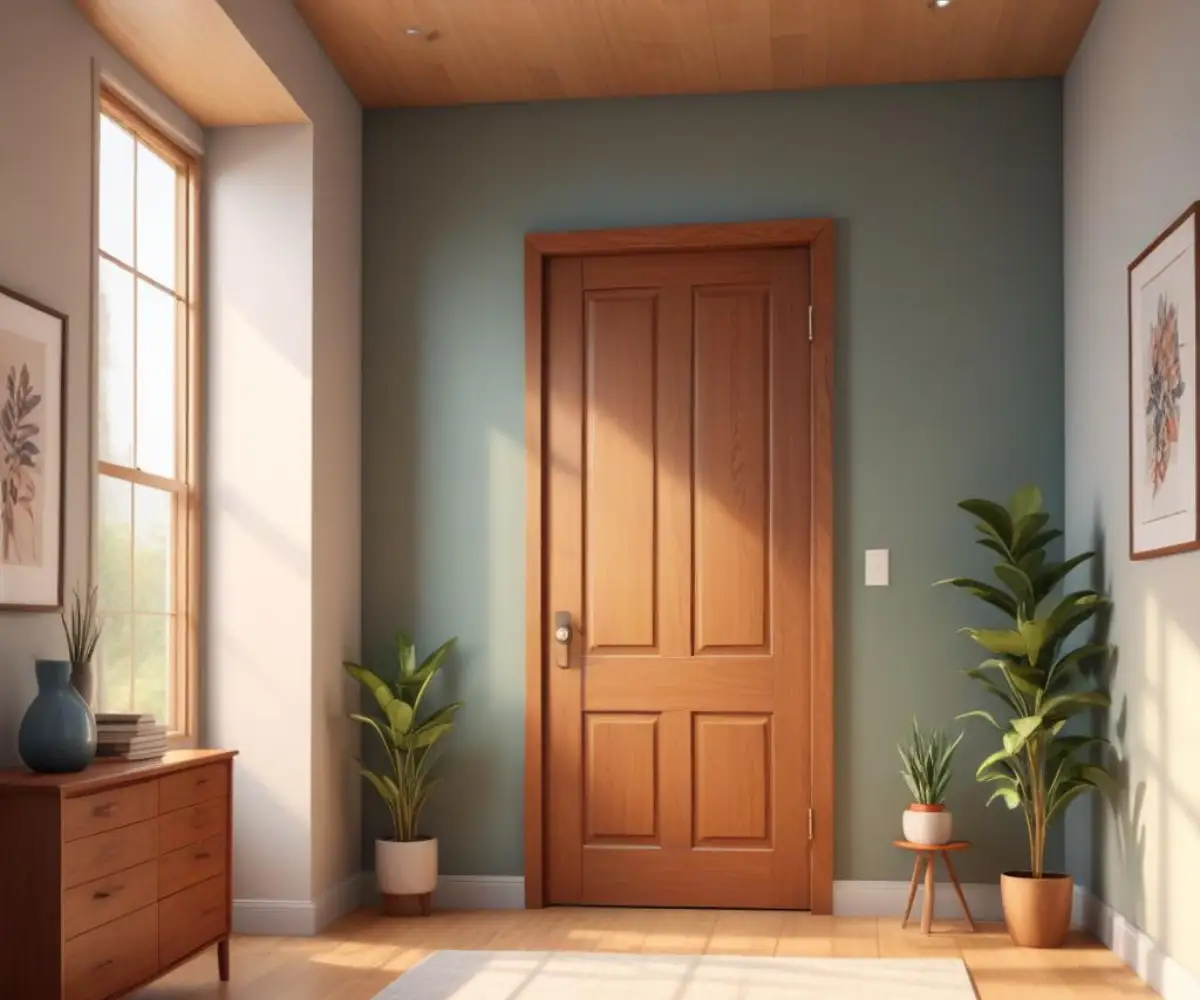
Completing the Vision: Baseboards and Crown Molding
Your design choices cannot exist in a vacuum. To make 8-foot doors feel truly integrated, you must consider the elements at the floor and ceiling. Taller baseboards are essential for creating a proportional foundation. If your doors are scaled up, so too should be the baseboards. A minimum height of 5.25 inches is recommended, with 7.25 inches providing an even more luxurious and grounded appearance.
Similarly, crown molding plays a vital role in defining the upper boundary of the room. While not strictly necessary in all design styles (like minimalism), if you do have crown molding, its scale must complement the tall doors and wide trim. A well-proportioned crown molding completes the vertical journey of the eye, tying the entire architectural envelope together into a cohesive and elegant statement.
Beyond Aesthetics: Functional Benefits You Haven’t Considered
While the visual impact is the primary motivator for choosing 8-foot doors, several practical advantages are often overlooked. These functional benefits add long-term value and livability to your home, making the investment even more compelling.
From improved airflow to future-proofing your home, these taller doors offer more than just good looks. They contribute to a more comfortable, convenient, and psychologically pleasant living environment. Understanding these benefits can solidify your decision and reveal the hidden intelligence behind this popular design choice.
Enhanced Airflow and Light Transmission
A taller door creates a larger opening, which can subtly improve air circulation between rooms. This is particularly noticeable in homes with central HVAC systems, as it can help reduce temperature variations and stale air pockets. The increased vertical space allows for more effective convection, promoting a more balanced and comfortable indoor climate.
Furthermore, this larger opening allows more ambient light to travel between spaces. Hallways feel brighter, and rooms with fewer windows benefit from the “borrowed” light from adjacent areas. If you opt for doors with glass panels, this effect is magnified, creating an even more open and illuminated feel throughout your home.
The Psychological Impact of Vertical Space
Research in the field of neuro-architecture shows that ceiling height has a measurable effect on our cognitive state. High ceilings are linked to a psychological sense of freedom, creativity, and abstract thinking. Tall doors amplify this effect by drawing attention to the vertical expanse, making spaces feel less confining and more liberating.
This can have a tangible impact on your daily life, making your home feel like a more open and inspiring sanctuary. The feeling of grandeur is not just an aesthetic judgment; it’s a psychological response to a well-proportioned, expansive environment. This subtle influence contributes to overall well-being and a more positive emotional experience within the home.
Common Mistakes to Avoid with 8ft Doors
Successfully implementing 8-foot doors with 9-foot ceilings requires careful attention to detail. While the potential rewards are great, a few common missteps can undermine the entire effort, resulting in a look that feels awkward rather than elegant. Avoiding these pitfalls is key to ensuring your investment pays off.
From selecting undersized hardware to creating inconsistencies throughout the home, these errors can disrupt the visual harmony you’re trying to achieve. Being aware of these potential issues ahead of time will help you plan a cohesive and professionally executed design.
Using Undersized Door Hardware
Just as narrow trim looks out of place on a tall door, so does standard-sized hardware. An 8-foot door has a larger surface area and greater visual weight, requiring more substantial door handles or levers to look balanced. Choosing hardware that is appropriately scaled is a critical finishing touch.
Look for longer backplates or larger rosettes and levers that have a more significant presence. This not only looks better but often feels more ergonomic and solid in hand. This detail, though small, makes a huge difference in the overall perception of quality and thoughtfulness in your design.
Ignoring Wall and Switch Placement
The new height of your door frames will change the available wall space around them. It’s crucial to plan the placement of light switches, thermostats, and outlets accordingly. A standard switch height might look awkwardly close to the new, wider door trim.
Consider the entire wall composition to ensure these functional elements are placed harmoniously. In some cases, adjusting switch locations by a few inches can prevent visual clutter and maintain clean lines. This foresight prevents the new doors from creating new design problems on adjacent walls.
Creating Inconsistency Throughout the Home
Consistency is crucial for a high-end look. While it might be tempting to upgrade doors only in the main living areas to save money, this can create a jarring transition. Walking from a grand hallway with 8-foot doors into a bedroom with standard 6’8″ doors can make the second space feel smaller and less considered.
For the most cohesive and valuable result, it is highly recommended to use 8-foot doors throughout an entire floor. This uniformity reinforces the home’s upscale, custom feel and ensures a seamless architectural flow. If budget is a major constraint, prioritize the main floor but be aware of the potential for visual disconnect.
| Feature | Standard 6’8″ Door (in 9′ Ceiling) | 8’0″ Door (in 9′ Ceiling) |
|---|---|---|
| Visual Impact | Creates a large, often awkward, blank space above the door. Can make ceilings feel disconnected. | Draws the eye upward, accentuating ceiling height and creating a grand, custom feel. |
| Trim Requirement | Standard 2.25″ – 3.25″ trim is sufficient. | Requires wider, more substantial trim (3.5″ minimum, 4.5″+ recommended) to look proportional. |
| Hardware Scale | Standard-sized door hardware works well. | Requires larger, more substantial handles or levers to balance the door’s scale. |
| Perceived Value | Standard, expected feature in most homes. | Perceived as a luxury upgrade, increasing the home’s resale value and custom appeal. |
| Cost | Lower initial cost for the door slab, frame, and installation. | Higher cost for the door, frame, hardware, wider trim, and potentially higher labor costs. |
| Accessibility | Standard clearance for moving furniture. | Provides superior clearance, making it much easier to move large items like sofas and mattresses. |
The Cost Factor: A Worthwhile Investment?
There is no denying that upgrading to 8-foot doors represents a significant investment. The doors themselves are more expensive than their standard counterparts, often because they are considered special order items. The additional costs extend to pre-hung jambs, the necessary four hinges (instead of three), and the essential wider trim and taller baseboards.
However, this cost should be viewed as an investment in your home’s long-term value and your daily enjoyment. Real estate professionals often cite features like taller doors and ceilings as key differentiators in a competitive market. They contribute to a perception of quality and luxury that can yield a significant return when it comes time to sell.
Practical Installation and Structural Considerations
Beyond the design details, there are important technical aspects to consider before committing to 8-foot doors. These elements are crucial for a safe, durable, and professional installation. Overlooking them can lead to costly rework or long-term structural issues.
Proper planning during the framing stage is paramount. Understanding the structural requirements and sourcing materials in advance will ensure a smooth process, whether you are building a new home or undertaking a major renovation.
Header and Framing Requirements
A taller door requires a taller rough opening, which in turn affects the structural header above the door. The header is a beam that carries the load from above and distributes it to the surrounding wall studs. For an 8-foot (96-inch) door, the rough opening height needs to be approximately 98.5 inches.
This means the header must be placed higher within the wall frame. This is straightforward in new construction but can be a complex and costly modification in an existing load-bearing wall, potentially requiring engineering input. Always ensure your builder or contractor follows proper framing codes to maintain the structural integrity of your home.
Sourcing Doors and Lead Times
While 6’8″ doors are typically in-stock items at most suppliers, 8’0″ doors are often made to order. This means you should anticipate longer lead times for both the door slabs and the pre-hung units. Plan accordingly and place your orders well in advance to avoid delays in your construction or renovation schedule.
This is also the time to decide on solid-core versus hollow-core doors. Given their larger size and weight, solid-core doors are highly recommended for 8-foot applications. They are more durable, provide significantly better sound insulation, and have a substantial feel that is consistent with a luxury upgrade. Applying the right filler to trim gaps, a process you might be familiar with from outdoor projects like finding a deck gap filler, is crucial for a seamless indoor finish.
Integrating Your Design Choices
A beautiful home is a collection of thoughtful, cohesive decisions. The choice of tall doors should influence and be influenced by other elements in your home, from the kitchen to the daily cleaning routines that keep it looking its best. After all, a grand design loses its impact if the surrounding details don’t measure up.
Consider how these architectural features will interact with functional design in high-traffic areas. Ensuring every element works in harmony is the key to creating a truly elevated living space. For example, maintaining pristine floors is essential when drawing attention to vertical space, where a product like the best robot vacuum for oriental rugs can help preserve the overall aesthetic. Similarly, modern conveniences, like those discussed in the pros and cons of built in soap dispensers, reflect a commitment to detail that complements a high-end build.
The Final Verdict: A Powerful Statement of Style
The combination of 8 ft doors with 9 ft ceilings is a sophisticated design choice that can dramatically elevate the feel of a home. It is not a decision to be made lightly, as it requires a holistic approach that considers proportion, scale, and architectural details like trim, baseboards, and hardware. When these elements are brought together in harmony, the result is a space that feels custom, luxurious, and expansive.
By moving beyond standard dimensions, you are making a powerful statement about quality and thoughtful design. It’s an investment that pays dividends not only in potential resale value but also in the daily experience of living in a space that is both grand and welcoming. With careful planning and attention to the principles outlined here, you can confidently unlock a new level of elegance in your home.

![Storm Door Handle Hits Door Knob [3 Easy Solutions]](https://fixitinthehome.com/wp-content/uploads/2023/02/Storm-Door-Handle-Hits-Door-Knob-768x432.webp)