
7×7 Walk In Closet Design: Don’t Try It Until You Read This
That perfect square seems like a blessing, but the 7×7 walk-in closet is a notorious design trap. Homeowners often find themselves with a space that feels surprisingly cramped, inefficient, and full of awkward, unusable corners. The geometry that appears simple on paper quickly becomes a puzzle of dead space and conflicting storage needs.
The core problem lies in the square shape itself. Unlike a long, narrow closet where storage can line up efficiently, a 7×7 layout creates competing walls. Standard closet systems are 24 inches deep, and placing them on opposite walls instantly shrinks your walkway to a mere three feet, creating a corridor effect that negates the “walk-in” feel.
This guide breaks down how to conquer the challenges of a 7×7 walk-in closet design. We will transform this tricky footprint from a box of wasted potential into a hyper-functional and surprisingly spacious storage hub. Forget the common mistakes; it’s time for a layout that truly works.
You'll Learn About
Why Your 7×7 Closet Feels So Small: The Square Room Dilemma
The primary issue with a 7×7 closet is the illusion of space versus the reality of functional depth. With 84 inches on each wall, it seems generous until you account for the depth needed for hanging clothes. Proper hanging space requires a minimum of 24 inches from the wall to prevent clothes from being crushed.
If you install 24-inch deep systems on two opposing walls, your 84-inch width immediately shrinks. You are left with a 36-inch (3-foot) walkway. While functional, this can feel tight and doesn’t allow for features like a central ottoman or a comfortable dressing area.
Another critical flaw is corner management. In a square layout, corners become black holes where storage systems collide. Clothes hanging in one corner can obstruct access to clothes in the adjacent corner, leading to frustration and poorly utilized space. Many standard designs fail to address this, resulting in a closet that is only 75% effective.
The Common Mistakes in Square Closet Layouts
Many homeowners fall into the same design traps when trying to organize a square closet. One of the most frequent errors is attempting a U-shaped layout with uniform depth. This approach guarantees inaccessible corners and a cramped central area.
Another mistake is poor lighting, which can make any space feel smaller and more confining. A single overhead fixture is rarely sufficient, casting shadows on shelves and making it difficult to distinguish colors. Lastly, failing to use vertical space is a massive missed opportunity. Storage often stops at a reachable height, leaving valuable real estate near the ceiling completely empty.
The Strategic Layout: Unlocking Your 7×7 Closet’s Potential
To truly maximize a 7×7 walk-in closet, you must abandon the idea of using every wall equally. The key is to create zones for different types of storage, using varied depths to maintain an open, accessible feel. A strategic combination of hanging space, shelving, and drawers is essential.
The most effective approach is an L-shaped or a modified U-shaped layout with smart depth variations. This involves dedicating two adjacent walls for deep storage (24 inches) and using the third wall for shallower storage (12-14 inches). This preserves a more spacious walkway and resolves the corner conflict.
Layout Option 1: The “Power L” Configuration
This is often the most successful layout for a 7×7 space. Designate two adjacent walls for your primary storage. One wall can feature double-hanging rods (one rod above the other) for shirts, skirts, and pants, which instantly doubles your hanging capacity. The second wall can house long-hanging space for dresses and coats, alongside a bank of drawers.
This L-shape leaves two full walls open, making the closet feel expansive. The “free” wall opposite the door becomes your feature wall. This is the perfect spot for a full-length mirror, valet hooks for planning outfits, or even a piece of art to add a touch of personality.
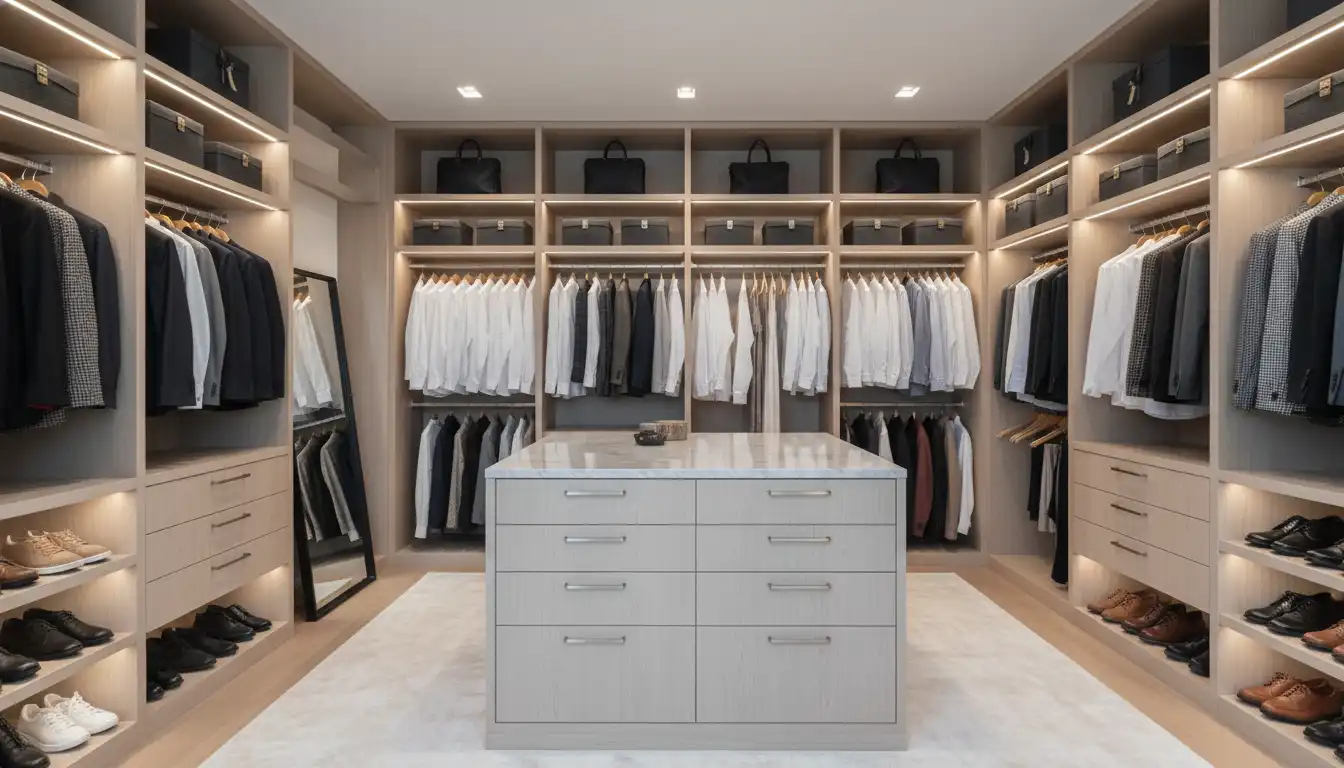
Layout Option 2: The “Smart U” Configuration
If you require more storage, a U-shaped layout can work if you vary the depths. Use the back wall (opposite the door) and one side wall for 24-inch deep systems. This is where you will place all your hanging clothes and drawers.
For the third wall, typically the one you see first upon entering, install a shallow 12- or 14-inch deep shelving unit. This shallower depth is perfect for shoes, folded sweaters, and bins. It prevents the entryway from feeling bottlenecked while still providing a significant amount of storage. This approach provides ample floor space and makes the closet feel more like a boutique room.
Essential Components for a High-Functioning 7×7 Closet
Beyond the layout, the components you choose will define your closet’s success. A mix of open and concealed storage, task-specific organizers, and thoughtful lighting are non-negotiable elements. Remember, a well-designed closet should feel intuitive and make your daily routine smoother.
It’s crucial to take a detailed inventory of your wardrobe before you begin. Understand the ratio of your short-hanging clothes to long-hanging clothes, how many pairs of shoes you own, and what accessories need a home. This data will drive your design decisions.
Hanging Space: The Foundation of Your Closet
Your top priority should be maximizing hanging space. Double-hanging rods are the most efficient use of vertical space for the majority of clothing items. Place the top rod at around 84 inches from the floor and the bottom rod at 42 inches. This setup is ideal for shirts, blouses, folded trousers, and skirts.
Dedicate a smaller section for long-hanging items like dresses, long coats, and suits. A typical height for a single rod is around 72 inches from the floor, leaving room for a shelf above. When choosing between different systems, exploring options like those in an Easy Track vs Closet Evolution comparison can help you find the right fit for adjustability and durability.
Shelving and Drawers: The Organizing Powerhouses
Drawers provide clean, concealed storage for items like socks, undergarments, and t-shirts. Placing a stack of drawers in your system creates a built-in dresser, freeing up space in your bedroom. Opt for drawers with smooth-gliding hardware for a more luxurious and functional feel.
Open shelving is perfect for folded sweaters, jeans, and shoes. Adjustable shelves offer the most flexibility, allowing you to reconfigure the space as your needs change. A shelf depth of 14 inches is ideal—deep enough for bulky sweaters and most shoe sizes without being so deep that items get lost at the back. This is a crucial detail often overlooked in much smaller spaces, like a 5 foot wide walk in closet, where every inch matters.
Tackling the Corners: The Secret Weapon
Corners are the most challenging part of a square closet. Instead of letting two hanging sections crash into each other, make the corner a dedicated shelving unit. Shelves that wrap around the corner create a seamless transition and provide excellent storage for purses, hats, or storage bins.
Alternatively, leave one side of the corner open to allow hanging clothes full access. This means one wall of hanging rods will stop about 12 inches short of the corner, preventing hangers from getting tangled and making it easier to see and access your clothes.
Lighting and Ambiance: Elevating the Experience
Great lighting is transformative in a small space. It eliminates dark corners, makes the closet feel larger, and ensures you can easily see the true colors of your clothing. A multi-layered lighting approach is far superior to a single, central fixture.
Start with a bright, flush-mount ceiling light for general ambient illumination. Then, add task lighting. LED strip lights installed under shelves and along hanging rods are a game-changer. They illuminate your clothes and shoes directly, eliminating shadows and adding a high-end, custom look.
Consider motion-activated lights for convenience. They turn on the moment you walk in and turn off automatically, saving energy. If your budget allows, a small, stylish pendant light or a mini-chandelier can add a touch of glamour and make the space feel like a true dressing room. For those undertaking a major renovation, it might even be possible to convert bathroom to walk-in closet space, which can sometimes provide access to a window for natural light.
Choosing the Right Finishes
The color and finish of your closet system can significantly impact the perception of space. Lighter colors like white, off-white, or light gray reflect more light and make the closet feel bigger and more open. Darker wood finishes can create a rich, luxurious feel but may make the space seem smaller if not balanced with excellent lighting.
Mirrors are another powerful tool. A full-length mirror mounted on a wall or the back of the door will not only be functional for dressing but will also create an illusion of depth, making the 7×7 footprint feel much larger.
Budgeting for Your 7×7 Closet Transformation
The cost of outfitting a 7×7 walk-in closet can vary dramatically based on the materials, level of customization, and whether you opt for a DIY or professional installation. Understanding the cost breakdown will help you make informed decisions that align with your budget.
A basic DIY system using wire shelving from a home improvement store might cost a few hundred dollars. A more robust laminate system can range from $1,000 to $3,000. A fully custom-built closet with high-end materials and professional installation can cost $5,000 or more.
Cost-Saving Strategies vs. Worthwhile Splurges
To save money, consider a DIY installation of a modular system from a reputable brand. You can also mix and match components. For example, use more affordable open shelving for most of the closet and splurge on a high-quality drawer unit for the most visible area.
Worthwhile splurges include good lighting, quality hardware for drawers and doors, and a well-designed shoe storage solution. These are the elements you will interact with daily, and investing in their quality will enhance your experience and the longevity of your closet.
| Component | Budget-Friendly Option (DIY) | Mid-Range Option | High-End Option (Custom) |
|---|---|---|---|
| Shelving Material | Wire Shelving | Laminate/Melamine | Solid Wood or High-Gloss Veneer |
| Layout Complexity | Simple Wall-Mounted | Modular System with Some Customization | Fully Custom Built-Ins |
| Hardware | Standard Chrome Rods | Upgraded Metal Finishes, Basic Glides | Soft-Close Drawers, Custom Pulls |
| Lighting | Battery-Powered Puck Lights | Wired LED Strip Lighting | Integrated Lighting System, Pendant Fixture |
| Estimated Cost | $300 – $800 | $1,200 – $3,500 | $4,000 – $10,000+ |
Ultimately, a well-designed 7×7 walk-in closet proves that it’s not about the size of the space, but the intelligence of the design. By avoiding the common pitfalls of a square layout and implementing a strategic, multi-depth plan, you can create a closet that is not only highly functional but also a joy to use every day.
