6/2 or 6/3 Wire for Stove: The Electrical Safety Guide You Need
Installing a new electric range or stove is a significant upgrade for any kitchen, but it brings serious electrical considerations. One of the most common and critical questions homeowners and DIY enthusiasts ask is whether to use 6/2 or 6/3 wire for the installation. This is not just a matter of preference; it is a matter of safety, code compliance, and the proper functionality of your appliance. Using the wrong wire can lead to fire hazards, appliance damage, or a failed electrical inspection.
The confusion often stems from seeing older homes with different wiring setups compared to what modern manuals specify. You might see three prongs on an old outlet but four prongs on a new cord. Understanding the specific electrical needs of your stove, such as the requirement for 120 volts for digital clocks and timers versus 240 volts for the heating elements, is key to making the right choice.
For almost all modern 240-volt electric stoves and ranges, you must use 6/3 wire (grounded) to comply with current National Electrical Code (NEC) standards, as it provides separate neutral and ground paths for safety. While 6/2 wire was common in the past for 3-wire ungrounded systems, it is no longer permitted for new installations. This article will guide you through the technical reasons, safety implications, and installation steps to ensure your kitchen is powered correctly.
You'll Learn About
The Core Difference Between 6/2 and 6/3 Wire
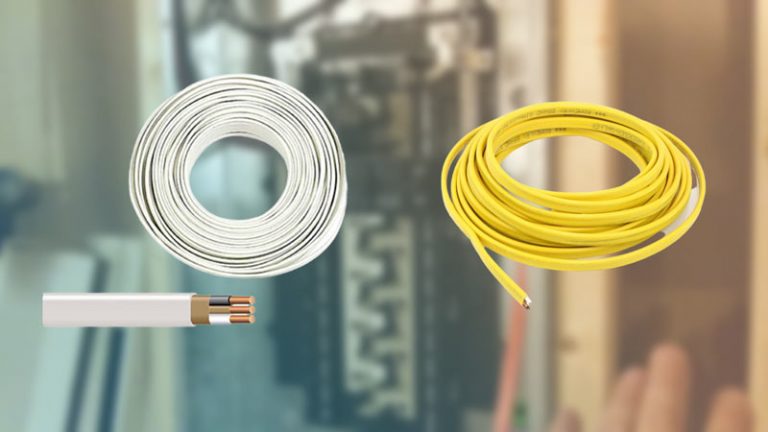
To make an informed decision, you must first understand what the numbers mean. The first number, “6,” refers to the gauge or thickness of the wire (AWG – American Wire Gauge). The second number refers to the number of insulated conductors within the cable sheathing.
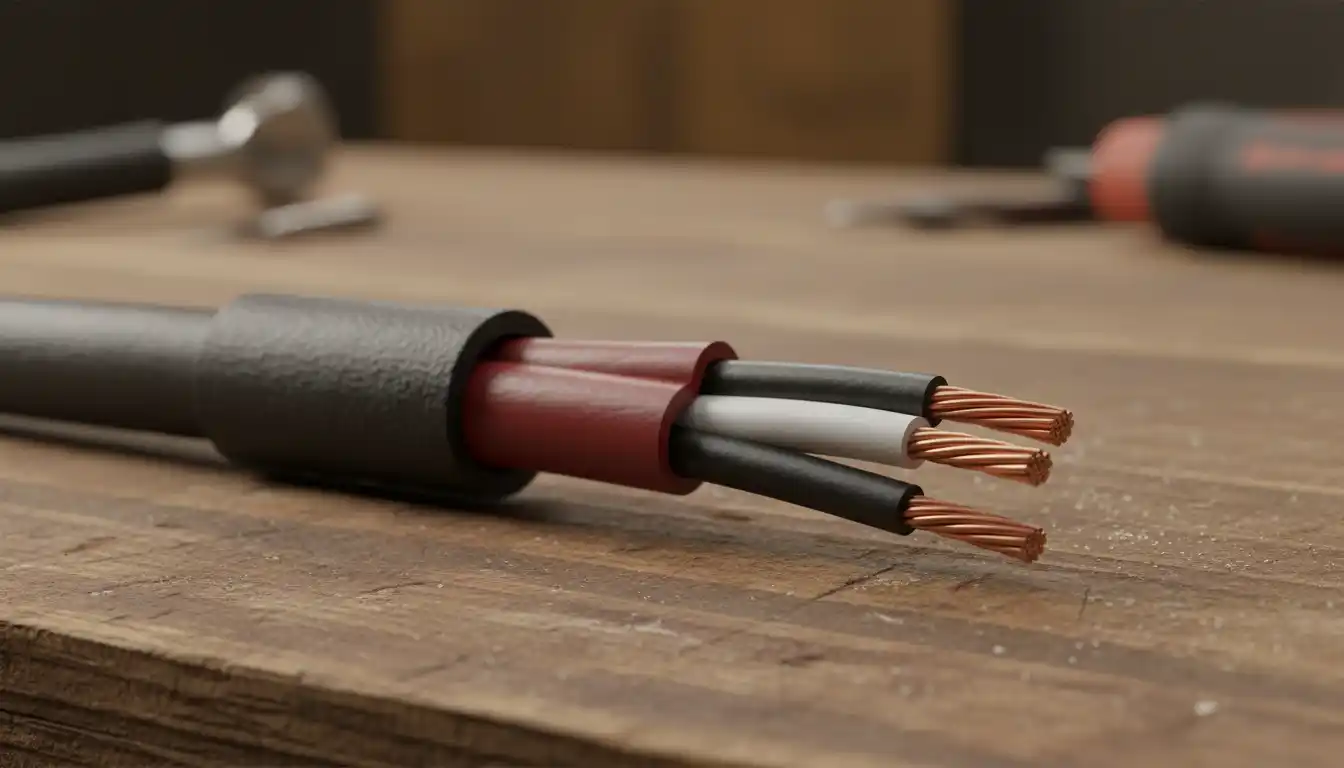
A 6/2 cable contains two insulated conductors (usually black and white) and one bare grounding wire. In a 240-volt application using 6/2, the white wire is re-identified as “hot” (usually with red tape), meaning you have two hot wires and a ground, but no neutral. This setup provides pure 240 volts only. It lacks the capability to provide a separate 120-volt circuit because there is no dedicated neutral return path.
A 6/3 cable contains three insulated conductors (black, red, and white) and one bare grounding wire. This provides two hot wires (black and red) to create 240 volts, and a white neutral wire. The neutral wire allows the appliance to split the voltage, utilizing 120 volts for components like lights, clocks, and digital controls. This configuration is the modern standard for electric ranges.
Why Modern Stoves Require a Neutral Wire
Most people assume an electric stove runs entirely on 240 volts, but this is a misconception. While the heavy-duty heating elements and oven coils require the high power of 240 volts, the secondary electronics usually operate on standard 120 volts. The clock, the timer, the internal oven light, and the modern digital touchscreens are all 120-volt devices.
In an electrical circuit, to get 120 volts from a 240-volt supply, you need a neutral wire. The potential difference between one hot leg and the neutral is 120 volts. Without the neutral wire (as in a 6/2 configuration), the appliance cannot safely power these low-voltage components without potentially dangerous rigging or internal transformers that most consumer ranges do not have.
Understanding electrical circuits is vital to home safety. If you have ever troubleshooted an always-on-light-switch_gem1, you know that wiring anomalies can be confusing. Similarly, depriving a stove of a neutral wire when it needs one can cause current to flow through the grounding path if wired incorrectly, which energizes the metal frame of the stove. This is a severe shock hazard.
The “Old” 3-Prong vs. “New” 4-Prong Outlets
The debate between 6/2 and 6/3 wire is directly tied to the difference between 3-prong (NEMA 10-50) and 4-prong (NEMA 14-50) outlets. Before 1996, the National Electrical Code allowed ranges to be grounded through the neutral wire. This meant a 3-wire cord was used, and the installation only required two hots and a neutral (often using SE cable or 6/2 with a re-purposed wire).
However, this “bootlegging” of the ground created a risk. If the neutral wire ever became loose or disconnected, the metal chassis of the stove could become live with electricity. If you touched the stove and a sink or faucet simultaneously, you could receive a fatal shock. This specific failure mode is why the code was updated.
Since the 1996 NEC update, all new construction and major renovations require a 4-wire connection. This separates the neutral current (normal return current) from the grounding path (emergency fault current). Therefore, 6/3 wire is mandatory to supply the four necessary conductors: Hot 1, Hot 2, Neutral, and Ground.
When Is 6/2 Wire Actually Used?
Is 6/2 wire ever the correct choice for a cooking appliance? Yes, but typically not for a standard freestanding range. 6/2 wire is appropriate for appliances that are strictly 240-volt and have no 120-volt components. This is most common with certain high-end induction cooktops or wall ovens that are hardwired directly into the wall.
Some European models or specific commercial-style cooktops do not utilize a neutral wire. In these specific instances, running a 6/3 cable would leave you with an unused neutral wire capped off in the junction box. However, electrical best practices often suggest running 6/3 anyway and capping the neutral. This future-proofs the installation. If you ever replace that pure-240V cooktop with a standard range, you will already have the necessary neutral wire in place.
When running cable through basements or crawlspaces, moisture is an enemy. While a squidgee-dry-system_gem1 handles water removal, electrical cable must be protected from damp environments using proper conduit or UF ratings. If you are running 6/2 UF-B (Underground Feeder) to a detached kitchen, ensure the appliance truly does not need a neutral, as digging up cable to replace it is costly.
Detailed Comparison: 6/2 vs. 6/3 Electrical Cable
To visualize the differences and help you purchase the correct materials, refer to the table below. This breaks down the technical specifications and typical applications for both wire types regarding kitchen appliances.
Ampacity and Breaker Sizing: The 55-Amp Rule
A critical detail often overlooked on general internet forums is the temperature rating of the wire. Most residential wiring uses NM-B cable (commonly referred to by the brand name Romex). While 6 AWG copper wire is theoretically capable of handling varying amperages depending on insulation, NM-B cable is limited to the 60°C column of the NEC ampacity table.
Under the 60°C column, 6 AWG copper is rated for 55 amps. This is a unique spot in the code. Since standard circuit breakers are not made in 55-amp sizes, the code allows you to move up to the next standard size, which is 60 amps, only if the calculated load does not exceed 55 amps. However, for continuous loads or safety margins, most electricians install a 50-amp breaker for a stove circuit using 6 AWG wire.
Using a 50-amp breaker with 6/3 wire is the “gold standard” for electric ranges. It protects the wire perfectly and supplies sufficient power for almost all residential stoves, which typically draw between 30 and 45 amps when all burners and the oven are on. Do not attempt to use a 60-amp breaker if your stove’s specifications demand strictly less than 50 amps of protection.
Copper vs. Aluminum: A Warning
When shopping for wire, you will notice a significant price difference between copper and aluminum. You might see “6/3 Aluminum” for a fraction of the price of “6/3 Copper.” Be extremely careful here. Aluminum wire has a lower conductivity than copper. To carry the same amount of current safely, aluminum wire must be thicker.
If you choose to use aluminum wire for a 50-amp stove circuit, you typically cannot use 6 AWG aluminum. You would need to step up to 4 AWG aluminum (4/3 cable) to handle the same load as 6 AWG copper. Using 6 AWG aluminum on a 50-amp breaker is a fire hazard because the wire is undersized for that amperage. Always verify the terminal ratings on your stove’s outlet; they must be rated “AL/CU” to accept aluminum wire.
Renovation Scenarios: Replacing an Old Stove
If you are simply replacing an old stove with a new one in an older home, you might find a 3-prong outlet on the wall. The NEC does not require you to rip open your walls and rewire the house just because you bought a new stove. This is known as “grandfathering.” In this specific case, you can replace the power cord on your new stove with a 3-prong cord to match the existing outlet.
However, if you are remodeling the kitchen and moving the location of the stove, or if you are installing a new circuit from the panel, the grandfather clause no longer applies. You must upgrade to 6/3 wire and a 4-prong NEMA 14-50R outlet. Renovating a kitchen often leads to outdoor projects. Whether you are planting a tree-with-green-fuzzy-fruit_gem1 or installing a new patio range, the electrical principles of load calculation remain critical for safety.
Installation Tips for 6/3 Wire
Working with 6-gauge wire is physically difficult. The wire is thick, stiff, and hard to bend into the back of an electrical box. When installing the receptacle, ensure you leave enough slack to manipulate the wires, but not so much that you cannot fold them back into the box. Use a deep electrical box specifically designed for range outlets to accommodate the bulk of the wire and the large receptacle.
When stripping the sheath off 6/3 NM-B cable, be careful not to nick the insulation of the inner conductors. A nick in the insulation can create a hotspot or a short circuit later. Use a cable ripper designed for large gauge wire or carefully use a utility knife down the center of the cable where the ground wire sits.
Torque is another overlooked aspect. The screw terminals on the breaker and the receptacle have specific torque specifications (measured in inch-pounds). Loose connections are the number one cause of electrical fires in high-amperage circuits. The heating and cooling cycles of the stove cause the wire to expand and contract, which can loosen an under-tightened screw over time.
Common Misconceptions and FAQs
Can I use 8/3 wire instead?
In some cases, yes. 8 AWG copper NM-B is rated for 40 amps. If your specific electric range has a maximum draw that allows for a 40-amp circuit (check the manufacturer’s plate), you can use 8/3 wire with a 40-amp breaker. However, this limits future upgrades. If you later buy a powerful dual-fuel or induction range requiring 50 amps, you will have to rewire. 6/3 is the universal standard that covers almost all residential cooking scenarios.
What about conduit?
If you are running individual THHN wires through a conduit (pipe) rather than using NM-B cable, the ampacity rules change slightly because THHN is rated for higher temperatures (75°C or 90°C). However, for most DIYers running cable through wood studs, the NM-B rules apply. Do not run stripped NM-B cable inside conduit for long distances; use the proper individual wires if conduit is your chosen method.
Is the ground wire counted?
When people say “6/3,” they are referring to the three insulated conductors. The ground wire is assumed to be there. So, a 6/3 cable actually has four wires inside. Do not buy “6/3” thinking you only need three total wires; you need the ground for safety.
Conclusion
The decision between 6/2 and 6/3 wire for a stove is clear-cut for any new installation: 6/3 is the required standard. It provides the necessary neutral wire to safely power 120-volt electronics and ensures a dedicated grounding path to protect you from electrical shock. While 6/2 wire has its place in purely 240-volt applications, it is rarely suitable for modern residential ranges.
Electrical work carries inherent risks. If you are uncomfortable handling high-amperage wiring, sizing breakers, or interpreting the NEC, it is always best to hire a licensed electrician. The cost of professional installation is a small price to pay for the peace of mind that your home and family are safe from electrical fires. By choosing the correct 6/3 wire and installing a 4-prong outlet, you ensure your kitchen is up to code and ready for years of culinary adventures.