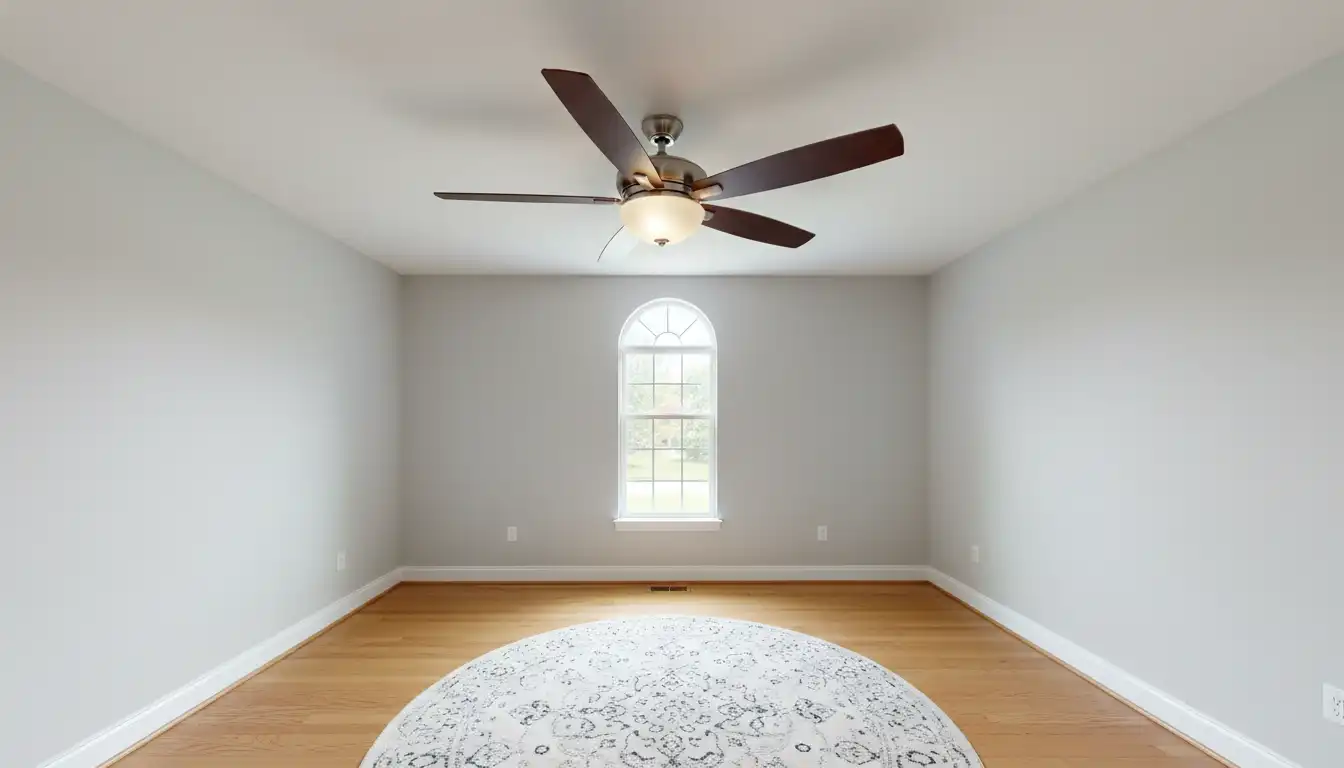
52-Inch Fan in a 10×10 Room: Huge Mistake or Genius Hack?
You have a 10×10 room, a space that feels cozy and personal. But when it comes to cooling, the advice is dizzying. Standard sizing charts often suggest a modest fan, yet the allure of a large, powerful 52-inch fan is undeniable. The core problem is the fear of overpowering the space, creating a wind tunnel instead of a comfortable breeze and turning a design choice into a daily annoyance.
This decision goes beyond simple measurements. It’s about achieving optimal air circulation without sacrificing comfort, aesthetics, or quiet enjoyment of your space. Installing a fan that’s too large can lead to regret, while one that’s too small is simply ineffective. Let’s explore how to make the right choice by looking beyond the diameter and into the technology that makes a big fan in a small room not just possible, but potentially perfect.
You'll Learn About
The Overwhelming Power Problem: Why Standard Advice Fails
Conventional wisdom for a 100-square-foot room points towards fans in the 36 to 48-inch range. This advice is rooted in a simple idea: match the fan’s power to the room’s size to avoid problems. Homeowners who ignore this and install an oversized fan often complain about a few key issues that turn their cooling solution into a source of frustration.
The most common complaint is the “wind tunnel” effect. A large fan running at high speed in a confined space can create an uncomfortable, drafty environment. Another significant issue is noise. Larger fans, especially older models with AC motors, can produce a noticeable hum and wobble, which is amplified in a smaller room. Finally, a massive fan can visually dominate a 10×10 space, making the ceiling feel lower and the room more cramped.
Beyond Diameter: Unmasking the Real Performance Metrics
Focusing solely on the 52-inch diameter is a critical oversight. The true measure of a fan’s performance and its suitability for a small room lies in more nuanced factors. These are the specifications that determine whether a large fan will be a gentle giant or an overwhelming force.
Modern fan engineering has evolved, allowing larger fans to operate with surprising subtlety. Understanding these technical details is the key to successfully using a larger fan to your advantage, achieving superior air movement that is both silent and efficient. It’s time to move past the measuring tape and into the specifics of airflow dynamics.
The Secret to Success: Motor Tech and Blade Design
The belief that a 52-inch fan is automatically too powerful for a 10×10 room is outdated. The revolution in ceiling fan technology, particularly in motor design and blade aerodynamics, has completely changed the game. It is no longer about the sheer size, but about the intelligence and efficiency of the components.
Two of the most impactful innovations are the widespread adoption of DC motors and the engineering focus on blade pitch. These elements give you precise control over airflow, allowing a large fan to perform with more grace and efficiency than a smaller, less advanced model. By leveraging these technologies, you can enjoy the benefits of a large fan—namely, greater air circulation at lower speeds—without any of the traditional drawbacks.
The DC Motor Advantage: More Speeds, Less Noise
The single most important factor in making a 52-inch fan work in a small room is choosing one with a DC (Direct Current) motor. Unlike traditional AC (Alternating Current) motors that typically offer only three speeds, DC motors provide up to six or more distinct speed settings. This granular control is crucial.
This extended range allows you to run the fan at very low speeds, moving a large volume of air gently and silently. DC motors are also significantly more energy-efficient, using up to 70% less power, and are virtually silent in operation. This quiet performance is perfect for bedrooms or offices where any ambient noise can be a distraction.
Blade Pitch: The Unsung Hero of Airflow
Blade pitch, the angle of the blades, is just as important as motor type. A steeper pitch, typically between 12 and 15 degrees, allows the blades to move more air with every rotation. This means a 52-inch fan with a high blade pitch can create significant airflow even on its lowest setting.
This is the “genius hack” part of the equation. A large fan at low speed can circulate more air more comfortably than a small fan at high speed. The result is a consistent, gentle breeze that cools the entire room without creating disruptive drafts. It transforms the fan from a brute-force wind machine into a sophisticated air circulator.
Making It Work: The Strategic Guide to an Oversized Fan
Successfully installing a 52-inch fan in a 10×10 room requires a strategic approach. It’s not just about picking a fan and hanging it. You must consider the fan’s specific features, the room’s vertical space, and the installation’s precision to ensure a stable, quiet, and effective cooling solution.
From selecting a model with the right technology to ensuring it is perfectly balanced, each step is critical. This approach will prevent the common pitfalls of overpowering wind, distracting wobble, and aesthetic imbalance. Follow this guide to turn a potentially risky choice into a rewarding home improvement.
Step 1: Choose the Right 52-Inch Fan
Your primary goal is to find a fan that offers maximum control. Look for a model with a DC motor and a remote control that offers at least six speed settings. Pay close attention to the blade pitch and ensure the design complements your room’s decor rather than overwhelms it. Consider a model with an integrated, dimmable LED light to consolidate fixtures and save visual space.
The table below highlights the key features to compare when making your selection. Prioritizing these specifications will ensure you get a fan that is adaptable to your small space.
| Feature | Ideal Specification for a 10×10 Room | Why It Matters |
|---|---|---|
| Motor Type | DC (Direct Current) | Provides 6+ speeds, is energy-efficient, and operates almost silently. |
| Control Type | Remote Control | Offers easy access to multiple speed settings for precise airflow adjustments. |
| Blade Pitch | 12-15 Degrees | Moves more air at lower, quieter speeds for gentle circulation. |
| Lighting | Integrated, Dimmable LED | Saves space, offers adjustable ambiance, and is energy-efficient. |
| Mounting Style | Flush Mount or Standard (with short downrod) | Maximizes headroom in rooms with standard or low ceilings. |
Step 2: Installation Precision for a Wobble-Free Experience
A fan of this size demands a secure installation. Ensure the electrical box in your ceiling is fan-rated and securely attached to a brace. Even a slight imbalance will be noticeable on a large fan, leading to wobbling and noise. After installation, use a balancing kit—often included with the fan—to make micro-adjustments.
This involves attaching a small clip to each blade to identify the source of the wobble, and then affixing a small weight to the top of the problematic blade to correct it. This process is simple but essential for smooth, silent operation. Taking the time to perfectly balance the blades will pay dividends in long-term quiet comfort.
Step 3: Master the Airflow with Smart Operation
With a multi-speed DC fan, you now have the control to perfect your room’s climate. For most of the year, the lowest one or two settings will be sufficient to create a comfortable breeze. This gentle air movement can make the room feel several degrees cooler, allowing you to adjust your thermostat and save on energy costs, a principle that applies to both cooling and heating systems, such as when comparing the efficiency of an Amana vs Trane furnace.
Don’t forget the reverse function in the winter. Running the fan clockwise on a low setting will pull cool air up and push the warm air that has risen to the ceiling down along the walls. This helps to distribute heat more evenly throughout the room, making your space feel warmer and more comfortable without turning up the heat.
Aesthetic Harmony: Integrating a Large Fan into a Small Space
Beyond functionality, the visual impact of a 52-inch fan in a 10×10 room is a primary concern. The goal is to make the fan a complementary part of the decor, not a distracting, oversized focal point. With the right design choices, a large fan can feel intentional and stylish, enhancing the room’s overall aesthetic.
Choosing a fan that blends with its surroundings is key. This can be achieved through color matching, minimalist design, and an appropriate mounting style. Good lighting design is also crucial, and selecting a fan with a well-integrated light can be complemented by other stylish fixtures. For instance, brands known for their craftsmanship, like those you might learn about when researching where Franklin Iron Works lamps are made, often provide a cohesive look.
Design Tricks for a Seamless Look
To minimize the fan’s visual weight, choose a color that matches your ceiling. A white fan on a white ceiling will blend in, drawing less attention to its size. Alternatively, a fan with a sleek, minimalist design in a metallic finish can act as a modern statement piece without adding visual clutter.
For rooms with standard 8-foot ceilings, a “hugger” or flush-mount fan is essential. These models are installed directly against the ceiling, maximizing vertical clearance and making the fan feel less intrusive. This choice ensures both safety and a less imposing presence. Even the decorative elements in the room, like a beautiful arrangement of iris and tulips, can help balance the mechanical nature of the fan with organic beauty.
The Final Verdict: Is a 52-Inch Fan Right for Your 10×10 Room?
A 52-inch fan can be an excellent and surprisingly effective choice for a 10×10 room, provided you make informed decisions. The old rules based on diameter alone are no longer relevant in an era of advanced motor technology and aerodynamic blade design. The key is to shift focus from “how big” to “how smart.”
By choosing a fan with a DC motor, multiple speed settings, and an appropriate blade pitch, you gain precise control over the environment. This allows you to enjoy the superior air-moving capabilities of a larger fan—quietly and efficiently—without the overwhelming wind and noise of outdated models. When combined with a thoughtful approach to aesthetics and installation, a 52-inch fan can be a genius hack that provides unparalleled comfort and style.