
5 Foot Wide Walk In Closet? Here’s the Genius Layout No One Tells You
You have a 5 foot wide walk in closet. On paper, it sounds like a dream—a dedicated space for your wardrobe. In reality, it can feel more like a narrow hallway than a luxurious dressing area, making it difficult to access your belongings and feel truly organized.
This common frustration stems from a simple issue of geometry and conventional design. Many homeowners struggle to find a layout that doesn’t feel cramped, often resorting to a single wall of storage, which sacrifices a significant amount of potential space. The result is a closet that fails to live up to its “walk-in” promise.
You'll Learn About
The 5-Foot-Wide Dilemma: Why Your Walk-In Closet Feels Impossible
A width of five feet, or 60 inches, is right on the edge of what is considered a functional walk-in space. The challenge intensifies when you account for the depth needed for hanging clothes, which can quickly consume the available floor area and create a cramped, inefficient corridor.
Understanding the Space Constraints
Standard closet components have specific dimensions that must be considered. Hanging clothes, for example, require a depth of approximately 24 inches to prevent them from brushing against the back wall or projecting too far into the walkway.
This means that if you install storage on both sides, your central walkway can shrink to an uncomfortable size. A comfortable walkway is generally considered to be at least 24 to 30 inches, leaving little room for error in a 5-foot-wide space.
The Common Mistakes That Waste Space
One of the most frequent errors in designing a narrow walk-in is attempting to use identical, deep storage units on both walls. This approach inevitably leads to a tight squeeze, making it difficult to move around, open drawers fully, or even see all of your items clearly.
Another pitfall is neglecting vertical space. Many standard closet setups leave a significant gap between the top shelf and the ceiling, which is essentially wasted potential. Without a clear plan, this valuable real estate often becomes a cluttered mess of out-of-season items.
Unlocking the Perfect Layout: 3 Designs for a 5 Foot Wide Closet
With strategic planning, a 5-foot-wide closet can be transformed into a highly functional and organized space. The key is to move beyond conventional thinking and adopt a layout that is specifically tailored to the narrow dimensions.
The Single-Sided Powerhouse: Maximum Accessibility
The most straightforward approach is to dedicate one long wall to storage. By installing a 24-inch deep system along one side, you are left with a generous 36-inch walkway. This layout offers unparalleled ease of movement and accessibility.
This design is ideal for very long and narrow closets, as it creates a clear, unobstructed path from one end to the other. To maximize storage, use double hanging rods for shirts and pants, and install shelves all the way to the ceiling.
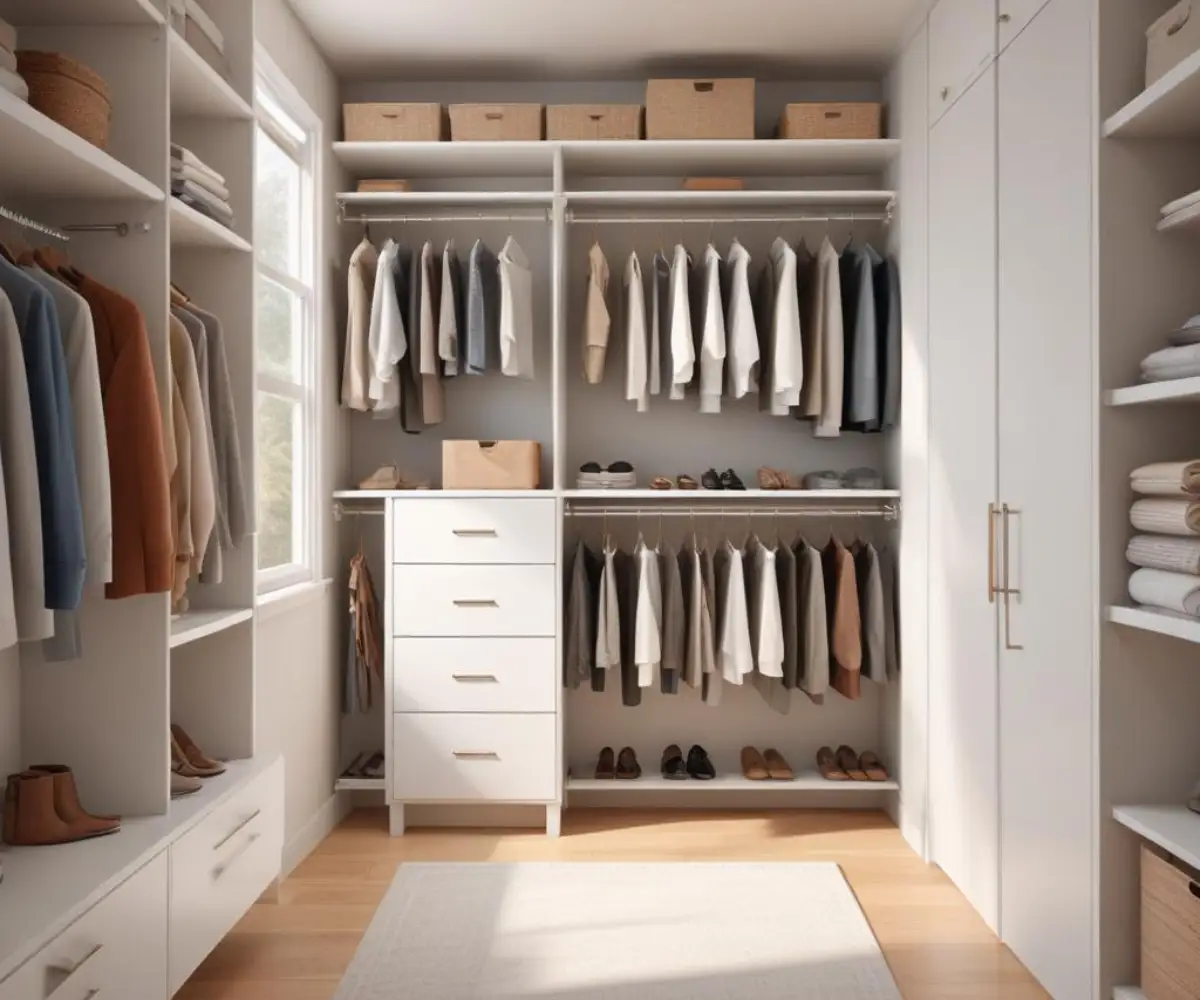
The Double-Sided Gallery: Smart Storage on Both Walls
This is the layout that many believe is impossible in a 5-foot closet, but it can be achieved with a clever combination of depths. The secret is to use a hybrid approach: install a 24-inch deep system on one wall for hanging clothes and a much shallower 12-inch deep system on the opposite wall.
The 12-inch deep unit is perfect for folded sweaters, shoes, and accessories. This configuration provides a functional 24-inch walkway, allowing for comfortable access while nearly doubling your storage capacity compared to a single-sided layout. This is the ultimate solution for maximizing every inch.
The Back-Wall Focal Point: A Hybrid Approach
If your closet is not excessively long, consider using the back wall as the primary storage area. This design draws the eye to the end of the closet, making the space feel more intentional and less like a tunnel. You can anchor this wall with drawers, shelves, or even a small vanity area.
Complement the back wall with shallower storage solutions along the sides. For instance, you could use 12- to 15-inch deep shelving on both side walls for shoes and folded items, preserving a wide central path.
Beyond the Layout: Pro-Level Organization and Storage Hacks
A smart layout is the foundation, but exceptional organization comes from the details. Implementing professional-level storage hacks will elevate your closet from merely functional to truly efficient and enjoyable to use.
Think Vertically: Using Every Inch of Wall Height
Your closet’s height is one of its greatest assets. Extend shelving and hanging rods as close to the ceiling as possible. This upper space is perfect for storing items that are not in daily use, such as seasonal clothing, luggage, or extra bedding.
Use attractive, labeled bins to keep these upper shelves tidy and accessible. A small, foldable step stool stored inside the closet can make reaching these items effortless.
The Right Closet System is Everything
Modular closet systems offer the flexibility to create a truly custom fit for your space. When exploring your options, you might compare different brands to find the best fit for your needs. For instance, understanding the differences between systems like Easy Track vs Closet Evolution can help you make an informed decision based on material, cost, and ease of installation.
A well-chosen system will provide a mix of hanging space, shelving, and drawers, allowing you to create a designated spot for every item in your wardrobe.
Essential Accessories for a Narrow Closet
In a compact space, the right accessories are not just helpful—they are essential. Use slim, matching hangers to save a surprising amount of rod space and create a clean, uniform look. Pull-out accessories like belt racks, tie racks, and valet rods can provide dedicated storage without consuming valuable shelf space.
Shelf dividers are another invaluable tool, preventing stacks of sweaters and t-shirts from toppling over and maintaining neat, orderly lines.
Comparing Closet Layouts for a 5-Foot Width
Choosing the right layout depends on your specific needs, the closet’s exact dimensions, and how you prefer to access your belongings. The table below offers a clear comparison to help guide your decision.
| Layout Style | Walkway Space | Storage Capacity | Best For |
|---|---|---|---|
| Single-Sided Powerhouse | Excellent (36 inches) | Good | Long, narrow spaces and maximum ease of movement. |
| Double-Sided Gallery | Adequate (24 inches) | Excellent | Maximizing every square inch of storage potential. |
| Back-Wall Focal Point | Excellent (30-36 inches) | Very Good | Creating a boutique feel and a clear visual anchor. |
The Secret Weapon: How Lighting and Mirrors Create Space
Never underestimate the power of optical illusions in a small space. Thoughtful lighting and the strategic use of mirrors can dramatically alter the perception of your closet, making it feel brighter, larger, and more inviting.
Illuminating Your Wardrobe: Lighting Choices
A single, dim overhead fixture is insufficient for a walk-in closet. Good lighting is crucial for both functionality and ambiance. Install LED strip lighting along the underside of shelves to illuminate your clothes and eliminate dark corners. Recessed ceiling lights or a stylish flush-mount fixture can provide excellent ambient light.
Consider motion-activated lights for convenience and energy savings. A well-lit closet not only makes it easier to find what you’re looking for but also makes the space feel more open and airy.
The Illusion of Depth: Strategic Mirror Placement
A large, full-length mirror is a must-have in any closet, but its placement is key in a narrow space. Placing a mirror on the back wall is a classic designer trick that creates an illusion of depth, making the closet appear much longer than it actually is.
If you have closet doors, mirrored doors can also help to make the adjoining room feel larger. The reflective surface bounces light around, contributing to a brighter and more expansive feel.
Planning Your Closet During a Build or Renovation
If you are in the process of building a new home or undertaking a major renovation, you have the unique opportunity to design your closet space from the ground up. This is the ideal time to make crucial decisions that will impact the functionality of the space for years to come.
Don’t Overlook the Details
During the planning phase, consider every detail, from the placement of electrical outlets for charging devices or using a steamer, to the type of door you will install. If you’re building from scratch, a thorough new construction walk through allows you to confirm these details before the walls are closed up. Sometimes, creative solutions like a convert bathroom to walk-in closet project can unlock unexpected space in your home’s floor plan.
Specifying a pocket door or an outward-swinging door can also save precious interior floor space, making your 5-foot-wide closet feel even more manageable.
Your 5-Foot Closet Questions Answered
Is a 5-foot width enough for a walk-in closet?
Yes, five feet is generally considered the minimum functional width for a walk-in closet. With a smart layout, such as a single-sided design or a hybrid double-sided approach with varied depths, it can be a highly efficient and usable space.
How can I make my narrow closet feel wider?
To create the illusion of more space, paint the walls a light, bright color. Install excellent lighting and place a large mirror on the back wall to create depth. Keeping the floor clear and maintaining an organized, clutter-free environment will also make it feel more spacious.
What is the best storage system for a narrow walk-in?
A modular, adjustable system is often the best choice. This allows you to customize the configuration of shelves, drawers, and hanging rods to perfectly suit your wardrobe and the specific dimensions of your closet. Look for systems that offer components in various depths to execute a hybrid layout effectively.
