
5-1-1 Mix Is Killing Your Plants? Here’s the #1 Mistake You’re Making
Are you watching your container plants slowly wither away? You give them water, sunlight, and care, but their leaves turn yellow, growth stalls, and they just look… sad. It’s a frustrating cycle that leaves many gardeners feeling defeated.
The problem often isn’t your watering schedule or the amount of light. The real culprit is hiding below the surface, suffocating the very foundation of your plant: its roots. Standard bagged potting soils are the silent killer in many container gardens.
These mixes are often too dense, breaking down into a compacted sludge that holds excessive water and eliminates vital air pockets. This leads to the dreaded root rot, a condition where roots are starved of oxygen and begin to decay, unable to absorb water or nutrients. The solution is to build a better foundation, and that foundation is the 5-1-1 mix.
You'll Learn About
Why Your All-Purpose Potting Soil Is Failing Your Plants
Most commercial potting soils are primarily composed of finely milled peat moss or coco coir. While these materials are excellent at holding moisture initially, they have a critical flaw: they decompose and compact over a single growing season. This compaction squeezes out the macroscopic pores that hold air.
Healthy roots don’t just need water; they desperately need oxygen to function. When a soil becomes waterlogged and dense, it creates an anaerobic (oxygen-free) environment. This is the perfect breeding ground for fungal pathogens that cause root rot, effectively drowning your plant from the soil up.
You may notice the soil pulling away from the sides of the pot or that water sits on top for a long time before soaking in. These are clear signs of compaction and poor aeration. To break this cycle, you need a mix that prioritizes structure and airflow above all else.
The 5-1-1 Mix: The Ultimate Solution for Thriving Container Plants
The 5-1-1 mix isn’t just a recipe; it’s a gardening philosophy centered on creating the perfect root environment. It provides exceptional drainage and aeration while retaining just enough moisture to sustain the plant. This balance is what allows roots to breathe, grow strong, and support vigorous plant health.
Developed in the gardening community as a durable, reliable, and cost-effective alternative to bagged soils, its name describes the ratio of its three core components. By creating this mix yourself, you take complete control over your plant’s environment, ensuring it has the structure it needs to thrive for an entire season and beyond.
The Foundation: Pine Bark Fines (5 Parts)
The absolute star and workhorse of the 5-1-1 mix is pine bark fines. This material makes up the bulk of the mix and is responsible for creating the large air pockets that are critical for root health. Unlike peat moss, bark is rigid and decomposes very slowly, maintaining the soil’s structure and aeration for a long time.
Getting the size right is the most critical factor for success. You are looking for bark that is mostly between 1/8 and 1/2 inch in size. If the bark is too large, the mix will dry out excessively fast. If it’s too small (like dust), it will defeat the purpose by compacting and reducing air space.
Look for bags labeled “soil conditioner,” “pine bark mulch,” or “pine fines.” You may need to screen it through a 1/2-inch hardware cloth to remove oversized pieces. Sourcing quality bark can be the biggest challenge, but it is the key to the entire recipe’s success.
The Moisture Retainer: Sphagnum Peat Moss (1 Part)
While bark provides structure, sphagnum peat moss acts as the sponge. It holds onto water and nutrients, releasing them to the plant’s roots as needed between waterings. This component ensures the mix doesn’t dry out instantly, providing a small reservoir of moisture.
It’s crucial to use sphagnum peat moss, not other types of peat. It has a fluffy, consistent texture and an acidic pH, which will be balanced later. When it’s dry, peat moss is hydrophobic (repels water), so it’s essential to pre-moisten it before mixing it with the other ingredients.
The Aerator: Coarse Perlite (1 Part)
The final ingredient is coarse perlite. These little white volcanic glass pebbles serve a vital function: they prevent compaction. While the bark creates the main structure, the perlite wedges itself between the bark and peat, creating additional, durable air channels.
This ensures the mix remains light and airy, even when wet. It does not absorb significant water, so its primary role is purely structural. Always choose coarse-grade perlite over fine or medium grades for the best results in this mix.
How to Make the Perfect 5-1-1 Mix: A Step-by-Step Guide
Making your own 5-1-1 mix is simple once you have the components. It’s best to mix larger batches on a tarp or in a wheelbarrow. Remember, the ratio is by volume, not by weight, so use the same container (a bucket, a pot, a scoop) to measure each part.
Step 1: Gather and Measure Your Ingredients
Using a bucket or large container, measure out your three main components: 5 parts pine bark fines, 1 part sphagnum peat moss, and 1 part coarse perlite. It’s often easiest to find the cheapest place to buy soil components at landscape supply stores or independent garden centers.
Step 2: Pre-Moisten the Peat Moss
Place your measured peat moss in a separate bucket and slowly add warm water, mixing it with your hands. Continue until the peat is uniformly damp, like a wrung-out sponge. This step is critical to ensure it incorporates evenly and doesn’t repel water later.
Step 3: Combine All Components
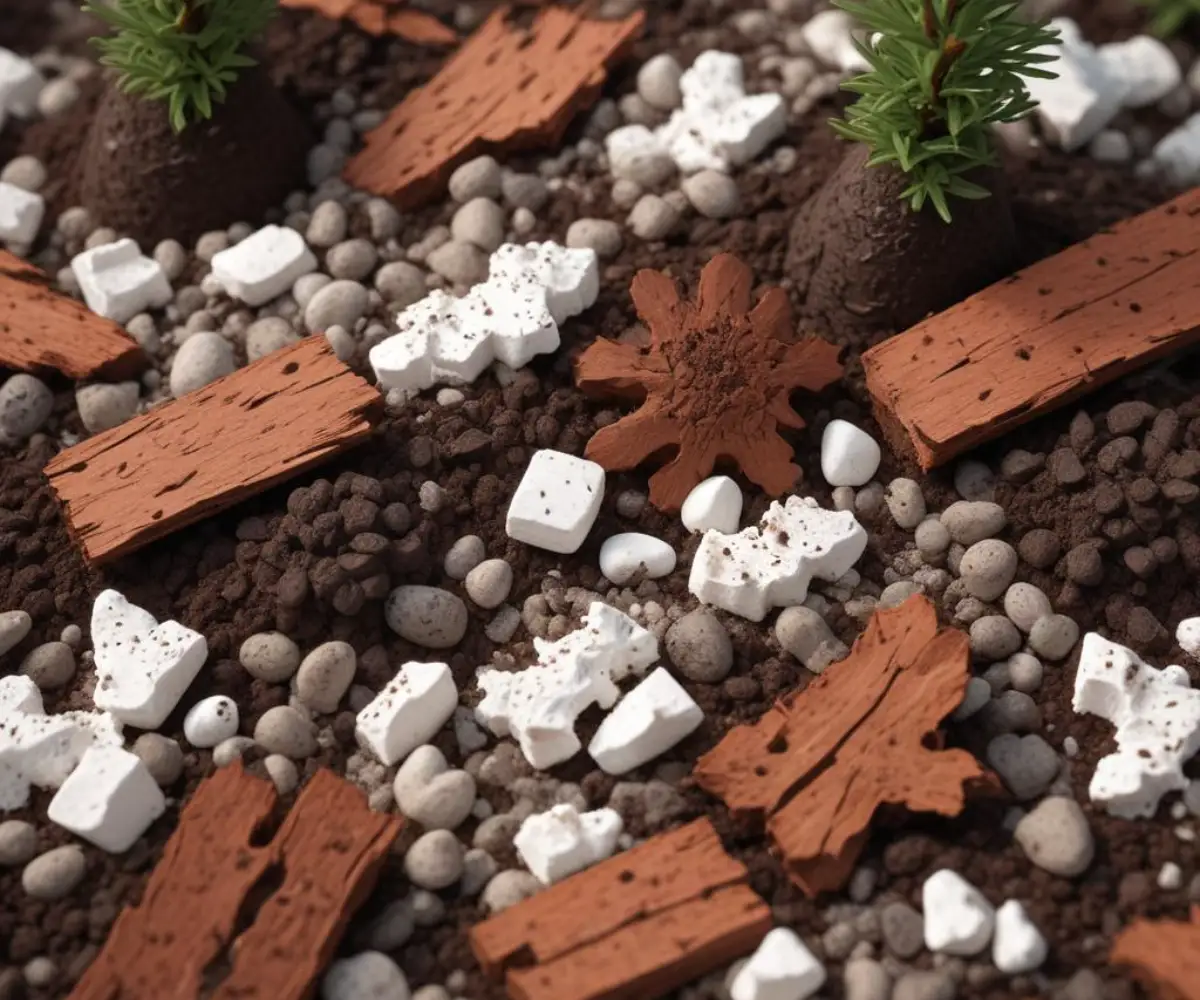
On your tarp or in your wheelbarrow, combine the 5 parts of pine bark fines with your 1 part of pre-moistened peat moss and 1 part of coarse perlite. Mix everything thoroughly until the components are evenly distributed. Your mix should look coarse, feel light, and be slightly damp.
Step 4: Add Essential Amendments
This is the secret step that many beginners miss. The pine bark and peat moss make the mix acidic, so you must add dolomitic lime to balance the pH. A good rule of thumb is to add 1 tablespoon of lime per gallon of mix.
Additionally, the 5-1-1 mix is low in nutrients. It’s highly recommended to incorporate a controlled-release fertilizer (CRF) at this stage. Follow the package directions for the amount to add based on the volume of your mix. This will provide a baseline of nutrition for your plants for the first few months.
5-1-1 Mix vs. Other Popular Potting Mediums
Understanding how the 5-1-1 mix stacks up against other options can help you decide when and where to use it. Its primary advantages are its superior aeration and longevity compared to standard potting soils.
It’s important to recognize that a mix that drains this well also requires adjustments to your care routine. The quick drainage that protects against root rot also means you’ll need to water and fertilize more frequently. Care must be taken to ensure that fine particles don’t escape and cause issues; a clogged drain from potting soil is a frustrating and avoidable problem.
| Attribute | 5-1-1 Mix | Gritty Mix (1-1-1) | Standard Potting Soil |
|---|---|---|---|
| Drainage | Excellent | Extreme | Poor to Moderate |
| Aeration | Excellent | Maximum | Poor (Compacts over time) |
| Water Retention | Moderate | Very Low | High |
| Longevity | 1-2 Years | Many Years | 3-6 Months |
| Best For | Annuals, vegetables, houseplants, perennials | Succulents, cacti, bonsai, long-term trees | Short-term annuals, seed starting (when fresh) |
Mastering Your Watering and Fertilizing Routine
Switching to the 5-1-1 mix requires a mindset shift in your plant care routine. Because it holds significantly less water than a peat-based mix, you can no longer water on a fixed schedule. You must learn to check the pot and water based on the plant’s actual needs.
A simple way to check for moisture is by lifting the pot to gauge its weight or by using a thin wooden dowel inserted into the root zone. If the dowel comes out clean and dry, it’s time to water. When you do water, do so thoroughly until it flows freely from the drainage holes. This flushes out any accumulated mineral salts and ensures the entire root zone is hydrated.
Fertilizing is equally important. The bark and perlite hold very few nutrients, so you are responsible for providing nearly all of your plant’s food. A good strategy is to use a water-soluble fertilizer at 1/4 to 1/2 strength with every watering during the growing season. This “weakly, weekly” approach provides a steady stream of nutrients that the plants can readily use.
Common 5-1-1 Mix Mistakes and How to Fix Them
While the 5-1-1 mix is a fantastic tool, new users can run into a few common issues. Understanding these pitfalls ahead of time can save you a lot of trouble and ensure your plants transition smoothly.
Problem: The Mix Dries Out Too Quickly
If you find yourself watering every single day, even for established plants, your mix might be too coarse. This is usually caused by using pine bark nuggets that are larger than the ideal 1/2-inch size. To fix this, you can adjust the ratio to 4-2-1 (4 parts bark, 2 parts peat, 1 part perlite) to increase water retention.
Problem: Plants Look Yellow or Stunted
This is almost always a sign of a nutrient deficiency or incorrect pH. Did you forget to add dolomitic lime and a controlled-release fertilizer when you mixed it? If so, you can top-dress with both. More likely, however, you are not fertilizing frequently enough with a water-soluble feed to keep up with the rapid drainage.
Problem: Water Runs Straight Through the Pot
This often happens if you did not pre-moisten the peat moss. The dry peat and bark can become hydrophobic, creating channels where water runs right through without soaking in. The solution is to bottom-water the pot by setting it in a tray of water for an hour to allow it to slowly and fully rehydrate.
Take Control of Your Container Garden’s Success
Moving away from generic, disposable potting soils and embracing a durable, structured medium like the 5-1-1 mix is a transformative step for any container gardener. It puts you in the driver’s seat, giving you precise control over the three most critical elements for root health: water, oxygen, and nutrients.
Building your own soil is not just about saving money; it’s about understanding the science behind what makes a plant thrive. By providing a superior root environment, you are setting the stage for healthier, more resilient, and more productive plants. Stop letting bad soil dictate the fate of your garden and start building a better foundation from the ground up.
