
42 Hood Over 36 Range: The Secret to a Cleaner Kitchen?
You’ve meticulously planned your dream kitchen. You selected the perfect 36-inch professional-style range, envisioning culinary masterpieces. Now, you face a critical decision that many homeowners overlook: the range hood. The standard advice is to match the hood width to the range width, but what if going bigger is actually better?
The lingering smell of last night’s dinner, a persistent film of grease on your cabinets, and a smoke alarm that shrieks at the first sign of searing are common frustrations. These aren’t just annoyances; they’re signs of a ventilation system struggling to keep up. The core problem is often inadequate “capture efficiency”—the hood’s ability to grab smoke, steam, and grease before they escape into your kitchen.
This article explores why choosing a 42 hood over a 36 range is not just an aesthetic choice, but a powerful functional upgrade. We will delve into the science of kitchen ventilation, the tangible benefits of an oversized hood, and the key considerations for installation to ensure you create a truly clean and comfortable cooking environment.
You'll Learn About
The Problem: Why Your Standard Range Hood Isn’t Working Hard Enough
Most kitchens follow a simple rule: a 36-inch range gets a 36-inch hood. While this seems logical, it fails to account for the physics of cooking fumes. Smoke, steam, and grease-laden vapor don’t rise in a perfectly straight column. They expand and drift outward as they travel from your cooktop to the hood above.
A hood that is the exact same width as the range has zero margin for error. Any plume of smoke from the front burners or a slight draft from a window can cause fumes to spill past the edges of the hood. This escaped effluent then settles as a greasy film on your walls, cabinets, and ceiling, creating a cleaning nightmare and contributing to poor indoor air quality.
When Undersized Ventilation Becomes a Bigger Issue
The problem is magnified with high-heat cooking methods like searing, frying, or wok cooking, which produce a greater volume of smoke and grease. Home chefs who enjoy styles like those found in a range hood for Indian cooking guide will find an undersized hood simply cannot cope. The result is a kitchen that feels stuffy, smells of stale cooking odors, and requires constant deep cleaning.
Furthermore, an undersized hood often has a smaller, overworked motor. To compensate for its limited capture area, you’re forced to run the fan on its highest setting, creating excessive noise without a significant improvement in performance. The ventilation becomes a source of irritation rather than a helpful tool.
The Solution: Superior Capture Efficiency with a 42-Inch Hood
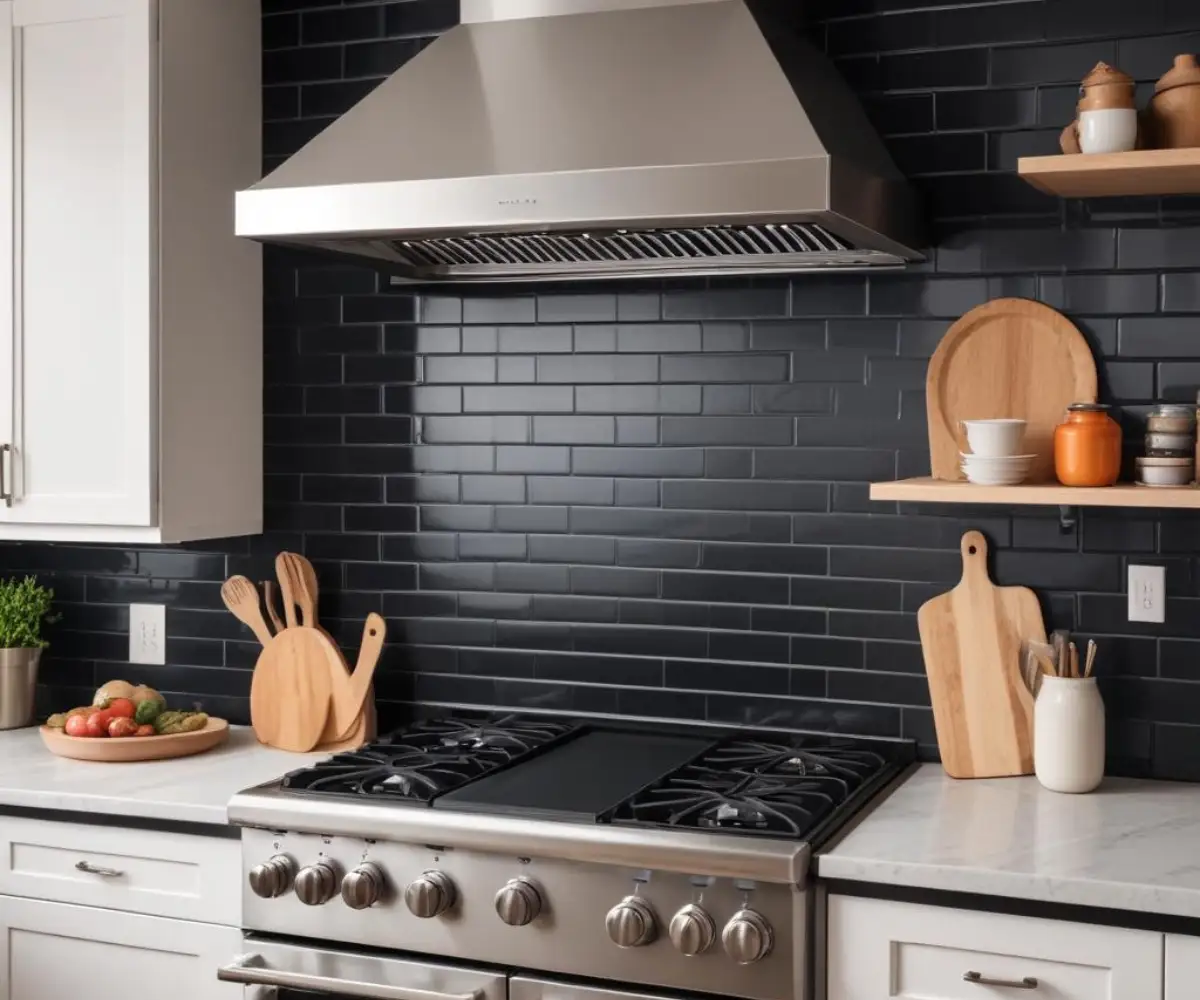
Opting for a 42-inch range hood over your 36-inch range provides an immediate and effective solution to poor capture efficiency. By extending three inches beyond the cooktop on each side, the larger hood creates a wider capture canopy. This extra coverage acts as a crucial buffer, corralling expanding plumes of smoke and ensuring they are drawn into the ventilation system instead of escaping into your kitchen.
Think of it as the difference between using a small umbrella in a downpour versus a large one. The larger canopy provides significantly better protection. This principle is why professional kitchens almost always use hoods that are substantially larger than the cooking equipment below.
Beyond a Breath of Fresh Air: The Hidden Benefits
The advantages of a larger hood go far beyond just clearing smoke. It fundamentally changes the air quality, cleanliness, and even the acoustics of your kitchen. Here are the key benefits you can expect.
Dramatically Improved Air Quality: The most significant benefit is cleaner air. A 42-inch hood effectively removes more grease particles, volatile organic compounds (VOCs), and other airborne pollutants generated during cooking. This not only eliminates lingering odors but also creates a healthier indoor environment for your family.
A Cleaner Kitchen with Less Effort: By capturing grease before it has a chance to settle, an oversized hood keeps your surrounding cabinetry, backsplash, and ceiling significantly cleaner. You’ll spend less time scrubbing stubborn, sticky residue and more time enjoying your kitchen. This preventative cleaning is a game-changer for long-term maintenance.
Quieter Operation: A larger, more powerful hood doesn’t have to work as hard. You can often run a 42-inch hood on a lower, quieter setting to achieve the same or better results than a 36-inch hood blasting at full power. This reduction in noise makes for a more pleasant and peaceful cooking experience.
Enhanced Cooking Flexibility: With a wider capture area, you have the freedom to use all your burners—even the powerful front ones—without worrying about overwhelming your ventilation system. This allows you to sear, saute, and simmer simultaneously with confidence.
Key Installation Factors for Your 42-Inch Hood
Proper installation is just as critical as selecting the right size. To maximize the performance of your 42-inch hood, you must pay close attention to mounting height, ductwork design, and the power of the blower motor, measured in Cubic Feet per Minute (CFM).
Calculating the Right CFM
CFM measures the volume of air a range hood can move in one minute. For a high-performance 36-inch gas range, you need a hood with sufficient power. A common rule of thumb is to have 1 CFM for every 100 BTUs of your range’s total output. For example, a 36-inch range with a total output of 60,000 BTUs would require a hood with at least 600 CFM.
However, this is just a starting point. Factors like the length of your ductwork and the number of bends (elbows) can create resistance and reduce airflow. A longer duct run with multiple turns will require a higher CFM motor to maintain effective ventilation.
Mounting Height and Depth
The distance between the bottom of the range hood and the cooking surface is critical. For gas cooktops, the recommended mounting height is typically between 24 and 30 inches. Mounting it too low can be a fire hazard and obstruct your view, while mounting it too high severely diminishes its capture efficiency.
Depth is equally important. The hood should be deep enough to cover the front burners, which are often the most used. Look for a hood with a depth of at least 22-24 inches to ensure adequate coverage of your 36-inch range.
Ductwork: The Unseen Hero
The most effective ventilation systems are ducted to the outside of your home. A ductless or recirculating hood, which uses filters to clean the air before returning it to the kitchen, can never match the performance of a ducted system. For a 42-inch hood, using the correct duct size—typically 8 to 10 inches in diameter—is essential. Using an undersized duct will choke the airflow, increase noise, and negate the benefits of a powerful hood.
The duct path should be as short and straight as possible, with minimal bends. This ensures the blower motor can work efficiently to expel smoke and contaminants from your home. This is especially important when considering a range hood between cabinets, where space for ducting can be tight.
Comparing Hood Sizes: A Side-by-Side Look
To visualize the practical differences, consider this direct comparison between a standard and an oversized hood for a 36-inch range.
| Feature | 36-Inch Hood Over 36-Inch Range | 42-Inch Hood Over 36-Inch Range |
|---|---|---|
| Capture Area | Matches cooktop width exactly. No margin for error. | Extends 3 inches on each side, creating a wider capture canopy. |
| Smoke & Grease Capture | Fair to Good. Prone to spillage from front burners or with drafts. | Excellent. Effectively contains expanding fumes. |
| Effectiveness on High Heat | Often struggles, requiring highest fan speed. | Manages high-volume smoke and steam efficiently, even at lower speeds. |
| Operating Noise Level | Can be loud, as it often runs at maximum power. | Generally quieter due to more efficient operation at lower settings. |
| Cabinet Cleanliness | Requires frequent cleaning of surrounding surfaces due to grease escape. | Keeps adjacent cabinets and walls significantly cleaner. |
Is a 42-Inch Hood Always the Right Choice?
While the benefits are compelling, there are a few considerations. A 42-inch hood is physically larger and will occupy more visual space. In a very small kitchen or one with limited upper cabinet space, it could feel overpowering. However, in most kitchens designed to accommodate a 36-inch range, the slightly larger hood often creates a more balanced, professional look, serving as a strong focal point.
Cost is another factor, as a larger hood and potentially more powerful blower will have a higher price tag. However, many homeowners find the long-term benefits of a cleaner kitchen and better air quality to be a worthwhile investment. For those seeking a minimalist aesthetic without compromising function, a sleek flush ceiling mount range hood could be an alternative, though these often require more complex installation.
The Final Verdict: An Investment in a Better Cooking Experience
Choosing a kitchen range hood is more than just picking an appliance; it’s about designing a functional system that enhances your cooking and protects your home. While matching the hood size to your range is acceptable, upgrading to a 42 hood over a 36 range is a strategic move that delivers superior performance.
By prioritizing a wider capture area, you are directly addressing the core problem of escaping cooking fumes. The result is a kitchen that is measurably cleaner, smells fresher, and operates more quietly. It’s a professional-grade solution that allows you to cook with passion and creativity, knowing your ventilation system is more than capable of handling the heat.
