42 Cabinets with an 8′ Ceiling: Your Guide to a Flawless Look
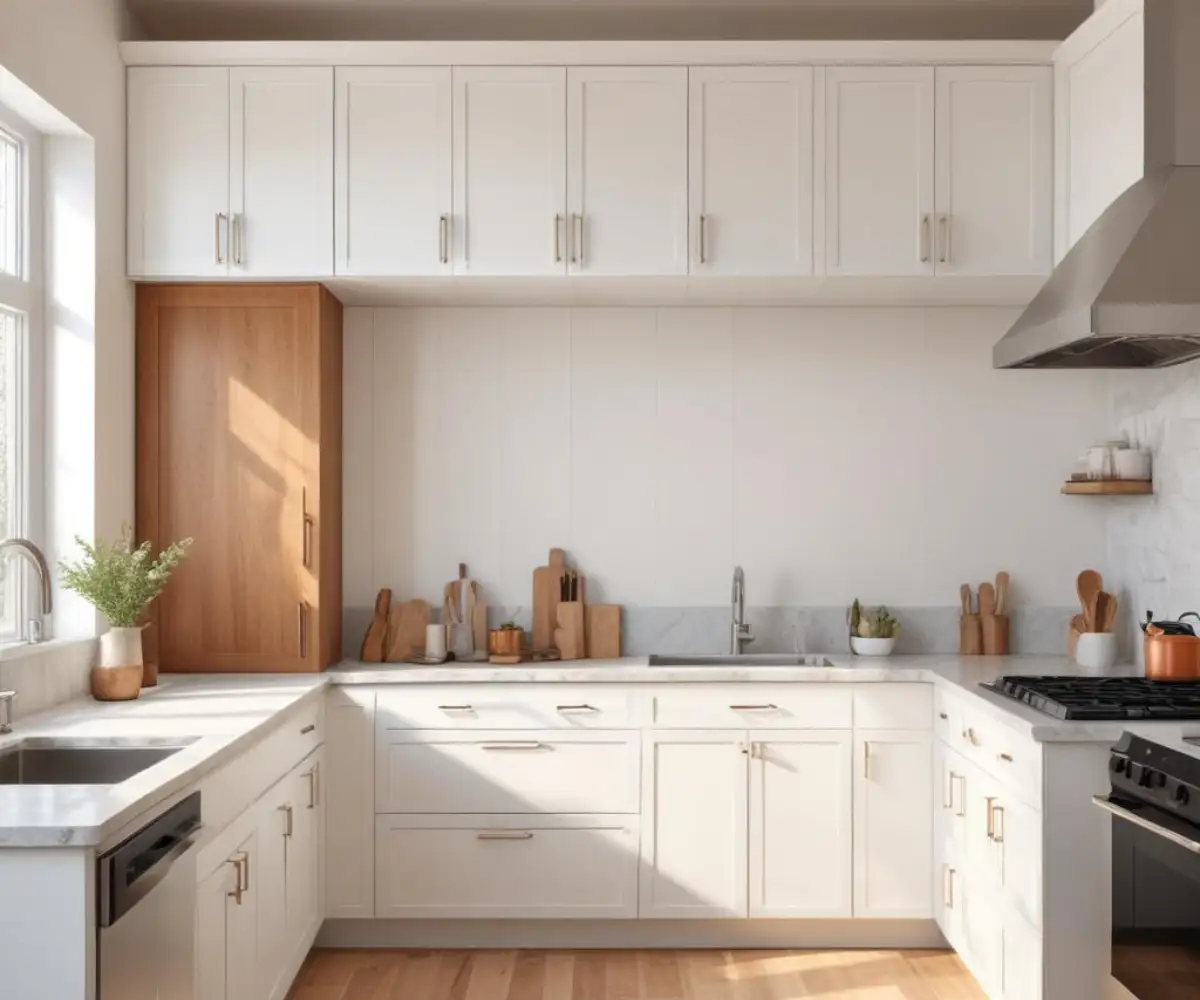
You have a vision for your kitchen: tall, elegant cabinets that stretch to the ceiling. This creates a high-end, custom look while maximizing every inch of storage space.
The 42-inch upper cabinet is the key to this vision. But you have a standard 8-foot ceiling. Now the big question arises: will it actually fit, and will it look right?
You'll Learn About
The Dream vs. The Mathematical Reality
The desire for a seamless, built-in kitchen is a primary goal for many homeowners. That gap above shorter cabinets can feel like wasted space, collecting dust and disrupting the clean lines of the room.
Using 42-inch upper cabinets seems like the perfect solution for an 8-foot (96-inch) wall. However, a quick calculation reveals the core of the problem. Let’s break down the standard kitchen dimensions.
Standard Kitchen Stack-Up
A typical kitchen layout follows a precise formula. Finished floors to the top of your base cabinets is usually 34.5 inches, and a standard countertop adds another 1.5 inches, bringing the total to 36 inches.
The National Kitchen & Bath Association (NKBA) recommends an 18-inch space between the countertop and the bottom of the upper cabinets. This provides ample workspace and accommodates small appliances.
So, the math is: 96″ (total ceiling height) – 36″ (base/countertop height) – 18″ (backsplash height) = 42 inches. This leaves exactly 42 inches for your upper cabinets, with absolutely no room to spare. This calculation assumes your floors and ceilings are perfectly level, which is almost never the case in the real world.
The Crown Molding Conundrum
The biggest casualty of this tight fit is crown molding. Traditional, ornate crown molding requires several inches of vertical space, which simply doesn’t exist in this scenario.
Attempting to force a large crown molding into a tiny gap results in a compressed, awkward appearance. This can unfortunately cheapen the very high-end look you were trying to achieve. But this does not mean you are without options.
Solution 1: The Flush-Mount or Zero-Reveal Technique
One popular approach is to install the cabinets completely flush against the ceiling. This creates a truly seamless, modern aesthetic that completely eliminates the “gap” problem.
However, this method demands a perfectly level ceiling. If your ceiling has waves or dips, installing cabinets flush against it will create unsightly and uneven gaps that highlight the imperfections. Carefully check your ceiling with a long level before committing to this path.
Solution 2: Master the Art of Minimalist Molding
Instead of a large, dramatic crown, you can use smaller, more clever molding options. A simple scribe molding is a thin, flexible piece of trim designed to cover the seam where the cabinet meets the ceiling.
This approach hides any minor inconsistencies in the ceiling height while providing a clean, finished edge. A small cove or square-stock molding can also work, offering a hint of detail without requiring significant vertical space. These are the go-to solutions for most professional installers facing this exact situation.
Installation Secrets for a Perfect Fit
The success of installing 42-inch cabinets on an 8-foot wall lies entirely in the preparation and precision of the installation. This is not a project where you can simply “eyeball it.”
The single most critical step is to measure your ceiling height meticulously. Do not take one measurement in the middle of the room and assume it’s correct. Measure near the wall where the cabinets will hang, and do it in multiple spots along the run.
Dealing with Uneven Ceilings
You will almost certainly find variations, sometimes as much as half an inch or more. Identify the lowest point of the ceiling along the cabinet installation wall. This lowest point is your non-negotiable reference line.
All your cabinets must be installed level with each other, aligned with this lowest point. This might create a slightly larger gap at the highest point of the ceiling, but this is exactly what your scribe molding is designed to hide. Trying to follow the contour of an uneven ceiling will result in crooked cabinets, a far worse visual problem. A flawless finish starts at the bottom; ensure you have a plan for baseboard under kitchen cabinets to complete the integrated look.
| Molding Solution | Best For | Installation Difficulty | Visual Effect |
|---|---|---|---|
| No Molding (Flush Mount) | Perfectly flat, modern ceilings | High (requires precision) | Seamless, minimalist, modern |
| Scribe Molding | Slightly uneven ceilings | Moderate | Clean, simple, professional finish |
| Small Flat Stock Trim | Creating a deliberate shadow line | Moderate | Modern, architectural, defined |
| Two-Piece Crown Molding | Ceilings with more than 2-3″ of space | High | Traditional, decorative, classic |
Beyond Molding: Design Principles for Tall Cabinets
Successfully integrating tall cabinets is about more than just making them fit. You must also consider the overall aesthetic impact on your kitchen to avoid making the space feel top-heavy or claustrophobic.
The goal is to create a sense of height and openness, not a wall of imposing cabinetry. Thoughtful design choices are critical to achieving the right balance.
Color and Style Make a Difference
Lighter colors are your best friend in this scenario. White, light gray, or pale wood tones will make the tall cabinets feel less massive and help reflect light, making the entire kitchen feel brighter and more spacious.
Choose a simple door style, such as a Shaker or a flat-panel door. Ornate, detailed doors can make the wall of cabinets look overly busy and visually heavy. The clean lines of a simpler style enhance the verticality without overwhelming the room. If you ever need to touch up paint, a guide on how to handle chipped kitchen cabinets can be invaluable.
The Importance of Lighting
Good lighting is non-negotiable. Well-placed under-cabinet lighting is essential to illuminate your countertops and prevent the tall uppers from casting a dark shadow over your workspace.
This not only improves functionality but also adds a layer of depth and ambiance. It creates a visual lift that counteracts the weight of the cabinets above, making the entire space feel more balanced and open.
Is This Look Right For Your Kitchen?
Before you commit, it’s wise to weigh the distinct advantages and potential drawbacks. This design choice is a significant investment in both materials and labor, so it’s important to be sure it aligns with your goals.
Consider both the functional benefits and the aesthetic implications for your specific space. A choice that works beautifully in one kitchen might not be the best fit for another.
The Powerful Advantages
The most obvious benefit is the dramatic increase in storage space. Those extra six inches in a 42-inch cabinet compared to a standard 36-inch cabinet add up significantly across an entire kitchen, giving you a perfect spot for rarely used items.
Aesthetically, the look is undeniably high-end. It mimics the feel of expensive custom cabinetry and can make your entire kitchen feel more substantial and thoughtfully designed. If you are considering a specific style, researching options like refinishing mid century kitchen cabinets can provide inspiration for unique finishes.
The Critical Drawbacks
The installation is significantly more complex and less forgiving than with shorter cabinets. It requires a higher level of skill and precision, which can translate to higher labor costs if you are hiring a professional.
There is also the risk of creating a “canyon” effect, especially in smaller galley kitchens. If not balanced with light colors and good lighting, the tall cabinets can feel imposing and make the room seem narrower than it actually is.
Your Blueprint for Success
Fitting 42-inch cabinets to an 8-foot ceiling is a challenging but very achievable goal. It’s a project where careful planning and precise execution are rewarded with a beautiful, functional, and high-end result.
The key is to understand the math, respect the limitations, and use clever solutions like minimalist molding to bridge the gap. By measuring meticulously and choosing the right finishing touches, you can create the seamless, ceiling-height kitchen you’ve envisioned.
Frequently Asked Questions
Can you fit 42-inch cabinets with an 8-foot ceiling?
Yes, 42-inch upper cabinets can fit in a kitchen with an 8-foot (96-inch) ceiling. This combination maximizes vertical storage, taking the cabinets all the way to the ceiling for a seamless, built-in look. This approach eliminates the dust-collecting space above shorter cabinets.
How much space is between the countertop and 42-inch upper cabinets in a room with an 8-foot ceiling?
Typically, the distance between a countertop and the bottom of the upper cabinets is 18 inches. With a standard 36-inch high base cabinet and a 1.5-inch thick countertop, installing 42-inch cabinets to the ceiling in an 8-foot room leaves about 16.5 inches, which is still a functional height for most kitchen appliances.
Can you use crown molding with 42-inch cabinets and an 8-foot ceiling?
Using crown molding is challenging with this setup as the cabinets will reach the ceiling, leaving no room for it. However, a small, flat “scribe” molding can be used to cover any minor gaps or unevenness between the top of the cabinets and the ceiling. Some cabinet lines offer specific moldings designed for this tight fit.
What are the benefits of using 42-inch cabinets in a kitchen with 8-foot ceilings?
The primary benefits are maximized storage space and a modern, high-end appearance. Taller cabinets that extend to the ceiling can make the kitchen feel larger and eliminate the need to clean the tops of the cabinets. This full-height look provides a sleek and seamless design.