
4 Foot Wide Hallway? Stop Thinking It’s a Flaw, It’s Your Home’s Secret Weapon
That transitional space connecting your rooms—the hallway—often gets overlooked. When it’s a 4 foot wide hallway, many see it as a design challenge, a cramped tunnel that’s difficult to furnish and style. It can easily become a dark, featureless corridor that merely serves to get you from point A to point B.
This perception is a missed opportunity. A four-foot hallway isn’t just a passageway; it’s a canvas ripe with potential. The real problem isn’t the width, but the approach. With the right strategies, this space can be transformed from a functional walkway into an expansive, bright, and integral part of your home’s design.
You'll Learn About
Why Your 4-Foot Hallway Feels So Claustrophobic
The feeling of a hallway being “too narrow” is often a result of a few common design missteps. These mistakes disrupt the visual flow and create a sense of confinement, making the 48-inch width feel more like 36 inches. Understanding these pitfalls is the first step toward unlocking your hallway’s true potential.
Dark paint colors absorb light, visually shrinking the walls inward. A single, dim overhead light fixture creates harsh shadows and leaves corners dark, enhancing the tunnel effect. And the biggest culprit? Bulky furniture that juts out, obstructing the path and creating a physical and visual bottleneck.
The Hidden Strength of 48 Inches
Before diving into design solutions, it’s crucial to recognize a significant, often overlooked, advantage of a four-foot-wide hallway. A minimum clear width of 36 inches is required for wheelchair accessibility under the Americans with Disabilities Act (ADA). At 48 inches, your hallway comfortably exceeds this standard, making your home more accessible and adaptable for all stages of life. This feature is not just about compliance; it’s a powerful asset that adds to your home’s long-term value and livability.
The Foundation: Unlocking Space with Color and Light
The most effective way to combat the “narrow” feeling is to manipulate perception using two fundamental design tools: color and light. These elements work together to create an illusion of spaciousness, making your four-foot hallway feel open and inviting.
The #1 Paint Trick for a Wider Feel
Color has a profound psychological impact on how we perceive a space. To make your hallway feel wider, opt for light, cool colors like soft grays, pale blues, and off-whites. These shades are highly reflective, bouncing light around the space to make the walls appear as if they are receding.
For a seamless and expansive effect, paint the walls, trim, and doors in the same light color. This technique, known as color drenching, eliminates visual breaks and tricks the eye into seeing one continuous, open space. If you have a particularly long hallway, consider painting the far end wall a shade or two darker to create a focal point and make the hall feel shorter and wider.
Lighting Isn’t an Afterthought—It’s Everything
A single, central ceiling light is one of the biggest mistakes in hallway design. It casts shadows and fails to illuminate the space evenly. The key is to layer your lighting to create a bright, welcoming atmosphere that eliminates dark corners and visually pushes the walls apart.
Instead of one fixture, use multiple light sources. A series of flush-mount ceiling lights or recessed spotlights provides excellent ambient light without compromising headroom. Wall sconces are another powerful tool; they wash the walls with light, making the hallway feel significantly wider. When selecting lighting, it’s critical to consider scale. A large, low-hanging fixture like a chandelier might be too imposing, but certain pendant lights designed for standard ceilings can work if the hallway has sufficient height.
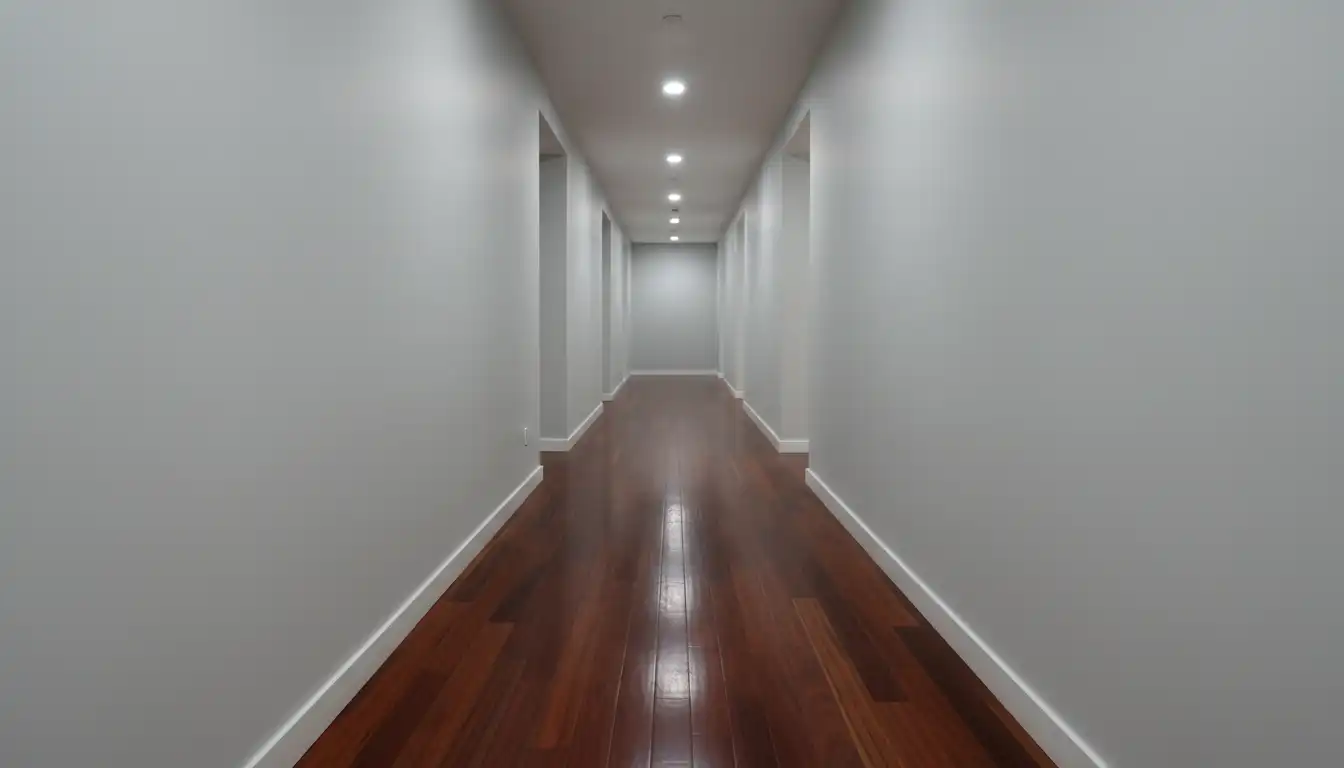
Below is a comparison of lighting options that are ideal for transforming a four-foot-wide hallway.
| Lighting Type | Pros | Cons | Best For |
|---|---|---|---|
| Flush Mounts | Space-saving; Provides good ambient light; Wide variety of styles. | Can sometimes lack decorative impact. | Low ceilings and creating a clean, unobtrusive look. |
| Recessed Lighting | Minimalist look; Excellent for even light distribution; Makes ceilings appear higher. | Requires professional installation; Can feel sterile if not paired with other lighting. | Modern homes and evenly illuminating long hallways. |
| Wall Sconces | Visually widens the space; Adds a layer of decorative light; Creates a warm ambiance. | Takes up slight wall space; Must be placed carefully to avoid obstruction. | Adding depth and a sense of luxury; works well in any hallway. |
| Track Lighting | Flexible and adjustable; Can highlight artwork or architectural features. | Can look cluttered if not chosen carefully; may lower perceived ceiling height. | Showcasing a gallery wall or directing light precisely where needed. |
Strategic Decor: The Art of Illusion in a Narrow Space
With the foundation of light and color in place, the next step is to use decor to enhance the illusion of space. Every piece you choose should serve a purpose, either by adding function, creating a focal point, or visually expanding the hallway’s dimensions.
Mirrors: Your Secret Weapon for Doubling Space
It’s a classic design trick for a reason: it works. A large mirror, or a series of smaller mirrors, can dramatically alter the perception of your hallway. Placing a long mirror on one of the side walls instantly creates the illusion of double the width. It reflects both natural and artificial light, making the entire space feel brighter and more open.
For maximum impact, position the mirror to reflect a light source or a view from an adjoining room. This not only brightens the hallway but also creates a sense of depth and continuity with the rest of your home.
Flooring That Leads the Eye and Expands the Room
The direction and style of your flooring can have a significant impact. If you have wood planks, running them across the width of the hallway (horizontally) can make the space feel wider. If you prefer to run them lengthwise to connect with an adjacent room, choose wider planks to create fewer distracting lines.
A runner is an excellent addition to a hallway. To create the illusion of width, choose a runner with horizontal stripes. For elongating the space, vertical stripes are your best bet. A bold, continuous pattern can also serve as a strong focal point, drawing attention away from the narrow dimensions of the hall.
Choosing Furniture That Barely Exists
Furniture in a four-foot hallway is possible, but it must be chosen with extreme care. The golden rule is to select slim-profile pieces that do not obstruct the walkway. Aim to maintain at least 36 inches of clear passage space at all times.
Think vertically. A narrow console table (12 inches deep or less), floating shelves, or a wall-mounted cabinet can provide storage and display space without cluttering the floor. This approach to maximizing a narrow area is similar to finding a smart layout for a compact walk-in closet, where every inch counts. Choose furniture with legs to create a sense of openness by allowing you to see more of the floor.
Beyond Decor: Structural and Functional Enhancements
Sometimes, the most impactful changes go beyond paint and pillows. Subtle architectural details and functional upgrades can transform the feel of your hallway and add a layer of sophistication and substance.
The Power of the Vertical: Drawing the Eye Upward
If you can’t push the walls out, draw the eye up. Creating vertical interest makes the ceiling feel higher and the entire space feel grander. This can be achieved with subtle vertical-striped wallpaper, a gallery wall of art hung in a vertical column, or tall, narrow architectural moldings.
These elements guide the gaze upward, distracting from the hallway’s narrow width and adding an elegant, intentional design feature. It’s a simple yet highly effective way to alter the perceived proportions of the space.
Sound and Substance: More Than Just a Passageway
A hallway’s acoustics contribute to the overall feel of a home. A hallway that echoes can feel empty and transient. Improving sound absorption can make the space feel more substantial and serene. A runner is a great start, but the walls themselves also play a role.
For a truly premium feel and to reduce noise transmission between rooms, consider the structure of the walls. Using a denser material like thicker, sound-dampening drywall can make a surprising difference, creating a quiet, solid-feeling corridor that elevates the entire home’s sense of quality.
Final Thoughts: Your Hallway is an Opportunity
A 4 foot wide hallway is not a design flaw to be hidden; it’s an opportunity to be creative. By embracing its dimensions and using smart design strategies, you can transform it from a simple corridor into a beautiful and functional part of your home.
Focus on light colors to create an airy feel, layer your lighting to eliminate shadows, and use mirrors to create an illusion of depth. Choose slim-profile furniture, direct the eye with flooring and runners, and don’t be afraid to draw attention upward. By viewing your hallway as a destination rather than a passageway, you unlock its full potential, adding style, function, and value to your home.
