
30 ft Ceiling Homes: The #1 Mistake That Makes Them Unlivable
A home with a 30-foot ceiling is the definition of grandeur. It promises breathtaking views, abundant natural light, and a sense of boundless space. But for many homeowners, this architectural dream quickly turns into a daily challenge, creating a space that feels more like a cold, empty cathedral than a comfortable home.
The number one mistake is treating this monumental space like a standard room, only taller. A 30-foot ceiling doesn’t just add height; it fundamentally changes the physics of the room, affecting everything from acoustics and temperature to the very feeling of intimacy and comfort. Overlooking this crucial fact leads to a host of problems that can make a magnificent house feel surprisingly unlivable.
You'll Learn About
Why Your Grand 30-Foot Ceiling Feels More Like a Warehouse
The sheer volume of a room with a 30-foot ceiling introduces unique environmental challenges. Without a strategic approach, the very feature meant to be a luxurious asset becomes a significant liability, impacting your comfort and your wallet.
The Human Scale Dilemma: Feeling Lost in Space
Standard furniture and decor can look comically small in a room with such immense verticality. This creates a psychological disconnect, where the living area is confined to the lower few feet of the room, leaving a vast, empty void above. This lack of connection makes the space feel impersonal and fails to provide the sense of sanctuary and comfort expected from a home.
The Echo Chamber Effect: When Sound Bounces Wildly
Sound waves travel freely in large, open spaces with hard surfaces. High ceilings amplify this effect, turning conversations, footsteps, and even the sound from a television into a cacophony of echoes. This poor acoustic environment can make it difficult to hold a conversation at a normal volume, creating a stressful and unpleasant atmosphere.
The Energy Bill Nightmare: Heating and Cooling the Void
One of the most significant drawbacks of a 30-foot ceiling is the impact on your HVAC system. Since hot air rises, all the warmth your furnace produces rushes to the ceiling in winter, leaving the living area chilly. In summer, your air conditioner must work overtime to cool the massive volume of air, leading to soaring energy bills and inconsistent temperatures.
The Ultimate Fix: Grounding Your Space with Strategic Design
Transforming a cavernous room into a cozy, functional living space requires a multi-faceted approach. The key is to introduce elements that bring the scale of the room down to a human level, manage the acoustics, and create visual interest throughout the vertical space.
Mastering the Vertical Space: Layered Lighting is Key
Lighting is one of the most powerful tools for taming a tall room. A single overhead fixture is insufficient and will only accentuate the emptiness. Instead, create layers of light at different heights to add warmth and intimacy.
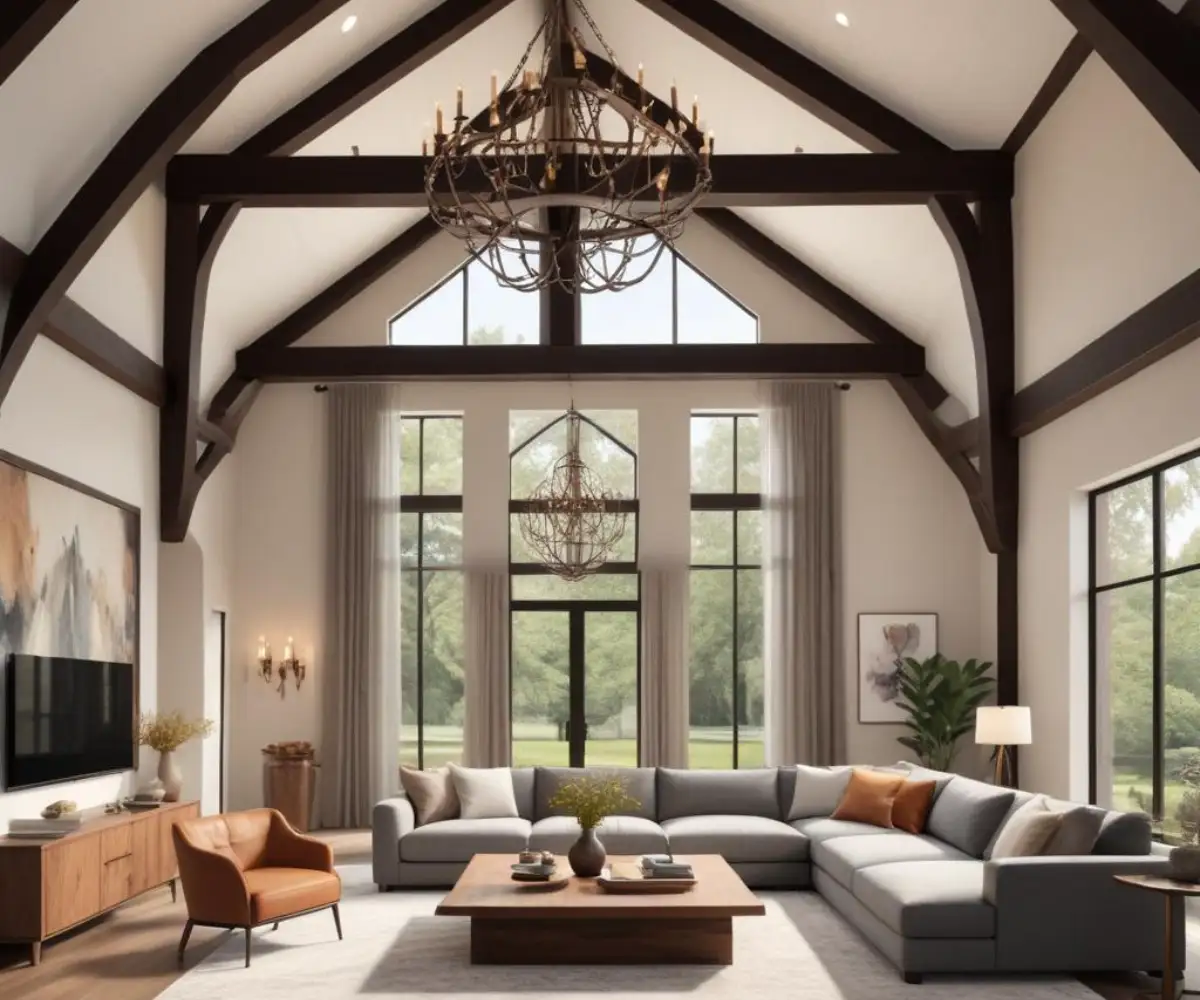
Start with a dramatic, large-scale chandelier or pendant light that hangs down into the middle third of the room. This creates a visual ceiling, making the space feel more contained. If you’re concerned about maintenance, exploring how to change a high ceiling chandelier can demystify the process and open up more design possibilities. Supplement this with wall sconces, track lighting to highlight artwork, and floor and table lamps to create warm pools of light at seating level.
Creating Coziness with Color and Texture
Color and texture can dramatically alter the perception of a room’s size. Painting the ceiling a shade darker than the walls can visually lower it, creating a cozier, more intimate feeling. Consider a feature wall that extends the full height of the room, using materials like reclaimed wood, stone, or a bold wallpaper to add warmth and draw the eye upward in a controlled, intentional way.
Exposed wooden beams are another excellent way to break up the vertical space and add architectural character. These elements not only add visual interest but also help to absorb sound, contributing to a more comfortable acoustic environment.
Solving the Echo: Your Guide to Acoustic Treatment
To combat the echo chamber effect, you must introduce soft, sound-absorbing surfaces. Large area rugs are essential for anchoring furniture groupings and absorbing sound bouncing off hard floors. Heavy drapes that run from the ceiling to the floor not only add a touch of drama but are also highly effective at dampening noise.
Beyond textiles, consider dedicated acoustic solutions. Acoustic panels, often disguised as artwork, can be hung on walls to absorb sound waves. In spaces with severe echo issues, installing “ceiling clouds”—suspended acoustic panels that hang horizontally—can be an incredibly effective solution for capturing sound before it reverberates.
Practical Solutions for Heating, Cooling, and Maintenance
A beautiful design is only successful if the space is comfortable to live in. Addressing the practical challenges of a 30-foot ceiling is just as important as the aesthetics.
Taming Your Thermostat: Smart HVAC Strategies
Effectively managing the climate in a room with a 30-foot ceiling is crucial for both comfort and energy efficiency. The first line of defense is a large, high-volume, low-speed (HVLS) ceiling fan. In winter, run the fan in reverse (clockwise) at a low speed to gently push the warm air that has collected at the ceiling back down into the living space. In summer, the fan’s downdraft creates a cooling breeze, allowing you to raise the thermostat setting without sacrificing comfort.
Radiant floor heating is another excellent option for homes with high ceilings, as it heats objects and people directly rather than the air, providing a more consistent and comfortable warmth. Ensure your HVAC system is properly sized for the room’s total volume, not just its square footage, and consider a zoned system that allows for independent temperature control of different areas.
| Problem | Solution | Pros | Cons |
|---|---|---|---|
| Echo & Reverberation | Acoustic Panels/Clouds | Highly effective, can be stylish. | Can be expensive, requires professional installation. |
| High Energy Bills | HVLS Ceiling Fan | Improves air circulation year-round, energy-efficient. | Requires a large-scale fixture to be effective. |
| Feeling “Lost” | Large Statement Chandelier | Creates a visual focal point, lowers the perceived ceiling. | Cleaning and bulb changes can be difficult. |
| Empty Wall Space | Floor-to-Ceiling Curtains | Adds softness, improves acoustics, adds drama. | Requires a large amount of fabric, can be costly. |
The Unspoken Challenge: Cleaning and Upkeep
Maintenance is a practical consideration that is often overlooked. Dusting cobwebs from a 30-foot-high corner or cleaning a massive chandelier requires specialized equipment. Investing in a high-quality extension pole with various attachments is a must. For more significant tasks, budgeting for professional cleaning services can save you time and ensure safety.
Beyond the Living Room: High Ceilings in Other Spaces
While often found in great rooms, dramatic ceilings can appear in other areas of the home, each presenting its own unique set of design challenges and opportunities.
The Grand Kitchen: A Balancing Act
In a kitchen with a 30-foot ceiling, the key is to maintain a functional, human scale while embracing the openness. Bring cabinetry up higher than standard, perhaps with a library ladder for accessing upper storage. Large, dramatic pendant lights over an island can anchor the space and provide essential task lighting. Proper ventilation is also critical; a powerful range hood is necessary, and you may want to research options like those in downdraft gas cooktop reviews to see how different technologies handle airflow in large spaces.
The Luxurious Bathroom: From Floor to Soaring Ceiling
A bathroom with a high ceiling can feel incredibly spa-like and luxurious. This is a space where you can run tile all the way up a wall for a dramatic effect. For a truly seamless and grand look, a custom shower door to ceiling can make the room feel even larger and more open while containing steam and moisture effectively.
Embracing the Grandeur: Make Your 30 ft Ceiling a Feature, Not a Flaw
A 30-foot ceiling is a bold architectural statement with the potential to be truly spectacular. The key to success is to stop fighting its scale and start working with it. By layering lighting, using appropriately scaled furniture, managing acoustics with soft textures, and implementing smart climate control solutions, you can transform an imposing, empty space into a warm, inviting, and utterly breathtaking home.
Don’t let the vertical void dominate your living space. Instead, embrace the height, draw the eye upward with intention, and create a home that is as comfortable and functional as it is grand.
