
3 Leaf Plant with White Flowers: Is It a Weed or a Treasure?
Stumbling upon a small, three-leafed plant dotted with delicate white flowers can spark equal parts curiosity and confusion. Is it a welcome wildflower, a helpful groundcover, or an uninvited guest quietly spreading across your garden beds? Before deciding its fate, it helps to understand exactly what you’re looking at. By paying attention to the plant’s subtle details—leaf shape, flower form, and overall growth pattern—you can turn uncertainty into clarity and make informed choices about how it fits into your garden’s larger story
You'll Learn About
The Mysterious Green Guest: Unmasking the Plant in Your Yard
It’s a familiar sight for any homeowner. A small, three-leaf plant with delicate white flowers suddenly appears in your lawn, garden bed, or a pot. Its presence raises an immediate question: is this a harmless wildflower, a beneficial addition, or an invasive weed that needs to be removed immediately?
This uncertainty is a common problem for gardeners everywhere. Many different plants fit this simple description, and telling them apart is the first step to managing your green space effectively. This guide will help you solve the mystery by providing the tools to identify your plant and decide its fate.
Decoding the Clues: How to Properly Identify Your Plant
To move beyond a simple guess, you need to look closer. The subtle differences in leaves, flowers, and growth patterns are the keys to a positive identification. Examining these specific characteristics will transform you from a confused homeowner into a plant detective.
Before you can decide whether to keep or remove the plant, you must first become familiar with its core features. Paying attention to these details is crucial for accurate identification and will prevent you from accidentally removing a beneficial native species.
Leaf Shape and Texture
The leaves are often the most telling feature. Are the three leaflets perfectly rounded and smooth, or are they distinctly heart-shaped? Does each leaflet connect to the main stem at a single point, or does the middle leaflet have its own tiny stem?
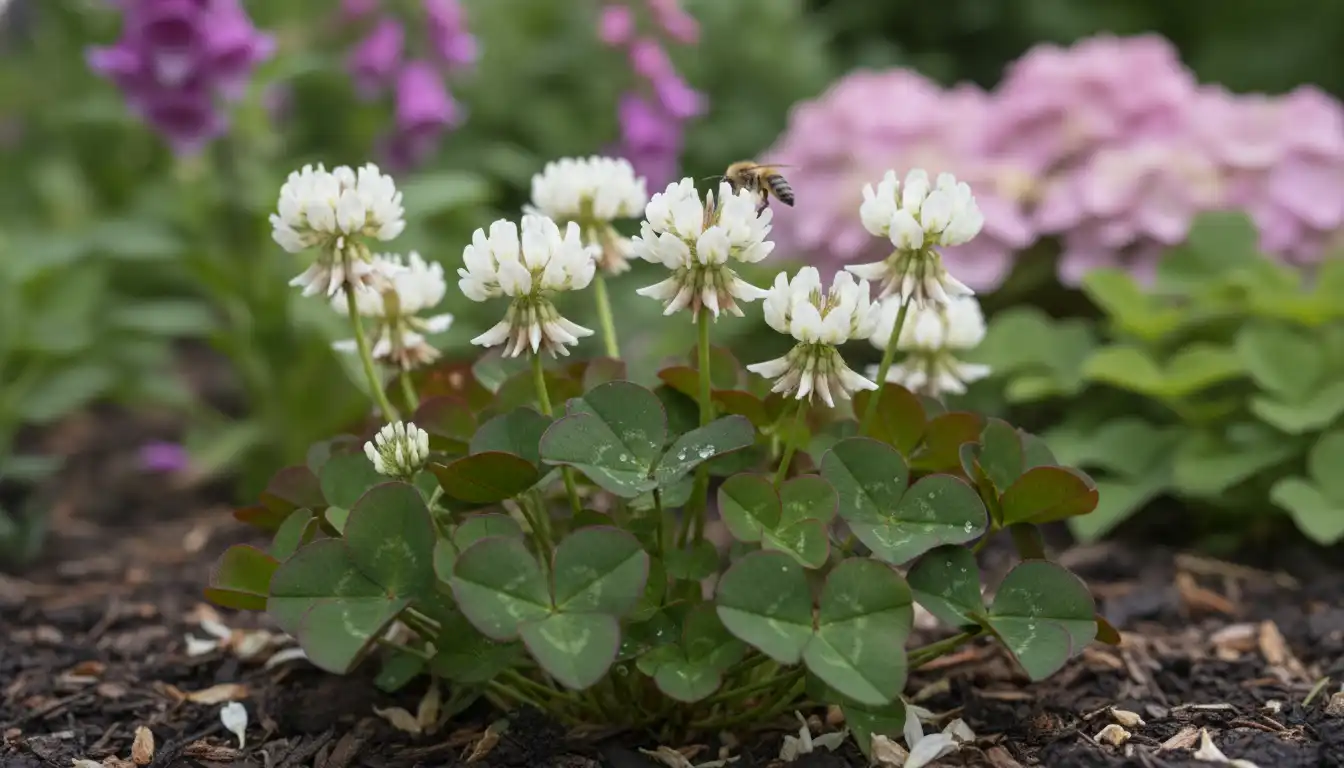
Look for details like serrated edges, fine hairs, or a central crease. For example, White Clover has smooth, oval leaflets, often with a faint white “V” marking. In contrast, Wood Sorrel has sharply creased, heart-shaped leaflets that fold up at night.
Flower Structure and Arrangement
Next, examine the white flowers. Are they single blossoms on a stalk, or are they grouped together in a cluster? The structure of the flower itself provides critical information. How many petals does it have?
A Trillium, a prized woodland native, features a single, large flower with three distinct white petals sitting above a whorl of three leaves. White Clover, on the other hand, presents its flowers in a spherical, pom-pom-like head composed of many tiny individual blossoms.
Growth Habit and Location
Observe how the plant grows. Does it spread low to the ground, forming a dense mat, or does it stand upright as a single, distinct plant? Its chosen location also offers valuable clues about its identity.
Plants that thrive in the middle of a sunny, compacted lawn are very different from those found in the damp, shaded soil of a forest floor. A sprawling groundcover in your lawn is likely clover, while an elegant, upright plant in the shade is probably a Trillium.
The Most Common Suspects: A Gardener’s Field Guide
While many species fit the description, four main contenders are responsible for most sightings of a “3 leaf plant with white flowers.” Understanding each one’s characteristics and ecological role is essential for making an informed decision for your garden.
From the lawn-dwelling clover to the forest-floor Trillium, each plant has a unique story and purpose. Let’s dive into the details of these common plants to finally end the confusion.
White Clover (Trifolium repens): The Lawn “Weed” That’s Actually a Hero
Perhaps the most common three-leaf plant with white flowers is White Clover. For decades, it was considered a lawn weed to be eradicated, but perspectives are changing dramatically. This low-growing plant is actually a powerhouse of benefits for your yard.
Its most significant superpower is nitrogen fixation. White Clover hosts bacteria in its roots that pull nitrogen from the air and convert it into a natural fertilizer in the soil. This process feeds your grass, making it greener and healthier without synthetic chemicals.
Furthermore, its globe-shaped white flower heads are a critical food source for pollinators, especially honeybees. Many gardeners are now intentionally creating “bee lawns” by encouraging clover to support local ecosystems. Its drought tolerance also means it stays green even when your grass starts to brown in the summer heat.
Wood Sorrel (Oxalis species): The Delicate Lookalike
At first glance, Wood Sorrel is often mistaken for clover. However, a closer look at its leaves reveals they are distinctly heart-shaped, not oval. This delicate-looking plant has small, five-petaled white flowers and a unique habit of folding its leaves down at night or on cloudy days.
While charming, some species of Oxalis can be aggressive spreaders in garden beds and containers, popping up where they are not wanted. It spreads through tiny, explosive seed pods and small underground bulbs, making it difficult to control once established. Understanding plant differences is key, much like learning the subtle distinctions in popular houseplants can prevent confusion, as detailed in the guide on Hoya Macrophylla Albomarginata vs Variegata.
If you find it spreading too quickly, consistent hand-weeding before it sets seed is the most effective organic control method. A thick layer of mulch can also help suppress its growth in garden beds.
Trillium (Trillium grandiflorum): The Woodland Jewel
If you discover this plant in a shaded, wooded part of your property, you have found a true treasure. Trillium is a beloved native North American wildflower, easily identified by its unique structure: a single stalk with a whorl of three large leaves at the top, from which a single, striking three-petaled white flower emerges.
Trilliums are a sign of a healthy, mature forest ecosystem. They are incredibly slow-growing, taking up to seven years from seed to first flower. Their seeds are spread by ants in a fascinating symbiotic process called myrmecochory, where ants carry the seeds to their nests to eat the fleshy elaiosome, effectively planting the seed in a new, fertile location.
Never transplant a Trillium from the wild. Its slow life cycle and dependence on specific soil fungi mean it rarely survives the move. If you wish to grow them, purchase nursery-propagated plants from a reputable native plant nursery to ensure their conservation.
Wild Strawberry (Fragaria vesca): The Fruiting Groundcover
Another common three-leaf plant is the Wild Strawberry. Its leaves are distinguished from clover by their noticeably serrated edges and slightly more rugged texture. The flowers are white with five petals and a distinct yellow center.
Of course, the biggest giveaway comes later in the season when the plant produces small, intensely flavorful red berries. These are a delicious treat and a favorite of local wildlife. It’s a joy to spot the first signs of growth each spring, an excitement shared by many gardeners, similar to the thrill of seeing the first peony sprouts emerge from the soil.
Wild Strawberry makes an excellent, productive groundcover, especially along the edges of garden beds. It spreads via runners and can fill in an area quite effectively, suppressing weeds while offering a tasty reward.
| Plant Name | Leaf Shape | Flower Type | Growth Habit | Typical Habitat |
|---|---|---|---|---|
| White Clover (Trifolium repens) | Oval, often with a white ‘V’ | Globe-like cluster of small flowers | Low-growing, mat-forming | Lawns, fields, disturbed soil |
| Wood Sorrel (Oxalis species) | Heart-shaped, creased | Single, 5-petaled flower | Low-growing, clumping | Gardens, pots, lawns, woods |
| Trillium (Trillium grandiflorum) | Large, pointed oval in a whorl of 3 | Single, large 3-petaled flower | Upright, single stalk | Mature woodlands, shaded areas |
| Wild Strawberry (Fragaria vesca) | Oval with serrated edges | Single, 5-petaled with a yellow center | Low-growing, spreads by runners | Sun to part-shade, fields, garden edges |
The “Is It a Weed?” Dilemma: A Modern Perspective
The traditional definition of a weed is simply a plant growing where it is not wanted. However, a more modern, ecological viewpoint encourages us to reconsider this. Plants like clover offer significant benefits that can reduce our reliance on fertilizers and support crucial pollinators.
Instead of aiming for a sterile monoculture lawn, embracing a bit of diversity can lead to a healthier, more resilient, and more interesting garden. The choice to remove a plant should be based on its behavior—is it harming other plants?—rather than an outdated label.
When Removal Is Necessary: Strategies for Control
Sometimes, a plant is simply too aggressive for its location. If Wood Sorrel is overrunning a delicate alpine trough or clover is creeping into a vegetable patch, control may be necessary. The most sustainable approach is always manual removal.
Hand-pulling after a rain when the soil is soft is highly effective. For larger areas, a thick layer of cardboard and wood chip mulch (sheet mulching) can smother unwanted plants and build healthy soil at the same time. Chemical herbicides should always be a last resort, as they can harm beneficial insects and soil life.
Embracing the “Weed”: Cultivating a Naturalistic Garden
Alternatively, you can choose to work with these plants. Allowing a patch of your lawn to naturalize with clover can create a beautiful, low-maintenance area that buzzes with life. Using Wild Strawberry as an edible groundcover is another way to turn a “volunteer” plant into a valued part of your garden’s design.
Making small, intentional changes can yield significant results in your garden’s ecosystem. It’s a principle that applies elsewhere in home maintenance too; sometimes a simple tweak, like adjusting the angle of a garage door opener j-arm, can fix a major issue. Embracing these plants is a simple adjustment that can greatly improve your garden’s health.
A Note of Caution: Always Rule Out Poison Ivy
The phrase “leaves of three, let it be” causes many gardeners to panic. However, it’s important to know that Poison Ivy (Toxicodendron radicans) has key features that distinguish it from the plants discussed here. Its flowers are typically inconspicuous clusters of greenish-white, not the prominent white blossoms of our subjects.
Most importantly, the middle leaflet of Poison Ivy has a distinctly longer stem than the two side leaflets. The leaves can also have a notched or irregular edge and often appear waxy or glossy. If you see these characteristics, it is best to avoid the plant entirely.
Final Thoughts: Your Garden, Your Choice
That mysterious three-leaf plant with white flowers is no longer an unknown. By observing its leaves, flowers, and growth habit, you can now confidently identify it as White Clover, Wood Sorrel, Trillium, or Wild Strawberry. Each has a role to play, and none are inherently “bad.”
Ultimately, the decision to keep or remove it rests with you. Armed with knowledge, you can now manage your garden with intention, choosing to cultivate a space that aligns with your aesthetic goals and supports local ecology. You are the curator of your own little ecosystem.
