
3/4 Granite Countertops: The #1 Truth You Must Know Before Buying
You’re standing in a stone yard, surrounded by towering slabs of beautiful granite. The choice feels overwhelming, but one key decision looms large: thickness. You see the industry-standard 1 1/4 inch (3cm) slabs, but then you spot the thinner, often more affordable, 3/4 inch (2cm) option. Is it a savvy way to save money, or is it a compromise you’ll later regret? This single choice has cascading effects on your project’s cost, durability, and final look.
The decision between 3/4 inch and 1 1/4 inch granite isn’t just about the stone itself; it’s about the entire installation system. Many homeowners are unaware of the critical structural differences and installation requirements that set these two options apart. Making the wrong choice can lead to unforeseen costs, installation headaches, and even potential damage down the road. This guide will illuminate the crucial truths about 3/4 granite countertops, ensuring you make a confident and informed decision for your home.
You'll Learn About
What Exactly Are 3/4 Inch Granite Countertops?
A 3/4 inch granite countertop, often referred to by its metric measurement of 2 centimeters (cm), is a thinner slab of natural stone compared to the more common 1 1/4 inch (3cm) thickness. This isn’t a “lesser” quality of granite; it’s simply a different dimensional standard. Historically, the prevalence of 2cm or 3cm granite has been regional, with 2cm being more common in certain areas due to local fabrication practices and shipping logistics.
The primary physical difference is weight. A 3/4 inch slab weighs approximately 12-13 pounds per square foot, whereas a 1 1/4 inch slab weighs around 18-20 pounds per square foot. This significant weight difference is the root cause for the biggest misunderstanding surrounding 2cm granite: its support requirements.
The Plywood Question: The Biggest Myth About 3/4″ Granite
Here is the most critical fact you must understand: 3/4 inch (2cm) granite countertops require a solid underlayment for support. They cannot be installed directly onto your cabinet frames like their thicker counterparts. This is not a suggestion; it is a mandatory installation requirement to ensure the stone’s structural integrity and prevent cracking under stress.
The standard practice is to install a 3/4 inch thick plywood sub-top across the top of the cabinets first. This creates a solid, level, and continuous surface. The 2cm granite slab is then bonded directly to this plywood base. This system ensures that the weight of the countertop, as well as anything you place on it, is evenly distributed across the cabinets, preventing stress fractures, especially around cutouts for sinks and cooktops.
The Unspoken Advantage of Plywood Support
While many view the need for plywood as a drawback, it has a hidden benefit that few talk about. Cabinet frames, even in new installations, can have minor imperfections and may not be perfectly level across their entire span. A solid plywood sub-top creates a flawlessly flat and continuous plane for the granite.
This uniform support system can actually reduce stress on the granite more effectively than direct-to-cabinet installation. It eliminates pressure points that might occur if a 3cm slab rests on a slightly uneven cabinet rail. This continuous support also provides a superior, solid base for securing undermount sinks and fixtures, ensuring they remain firmly in place for years.
The Edge Illusion: Creating a Thicker Look with Lamination
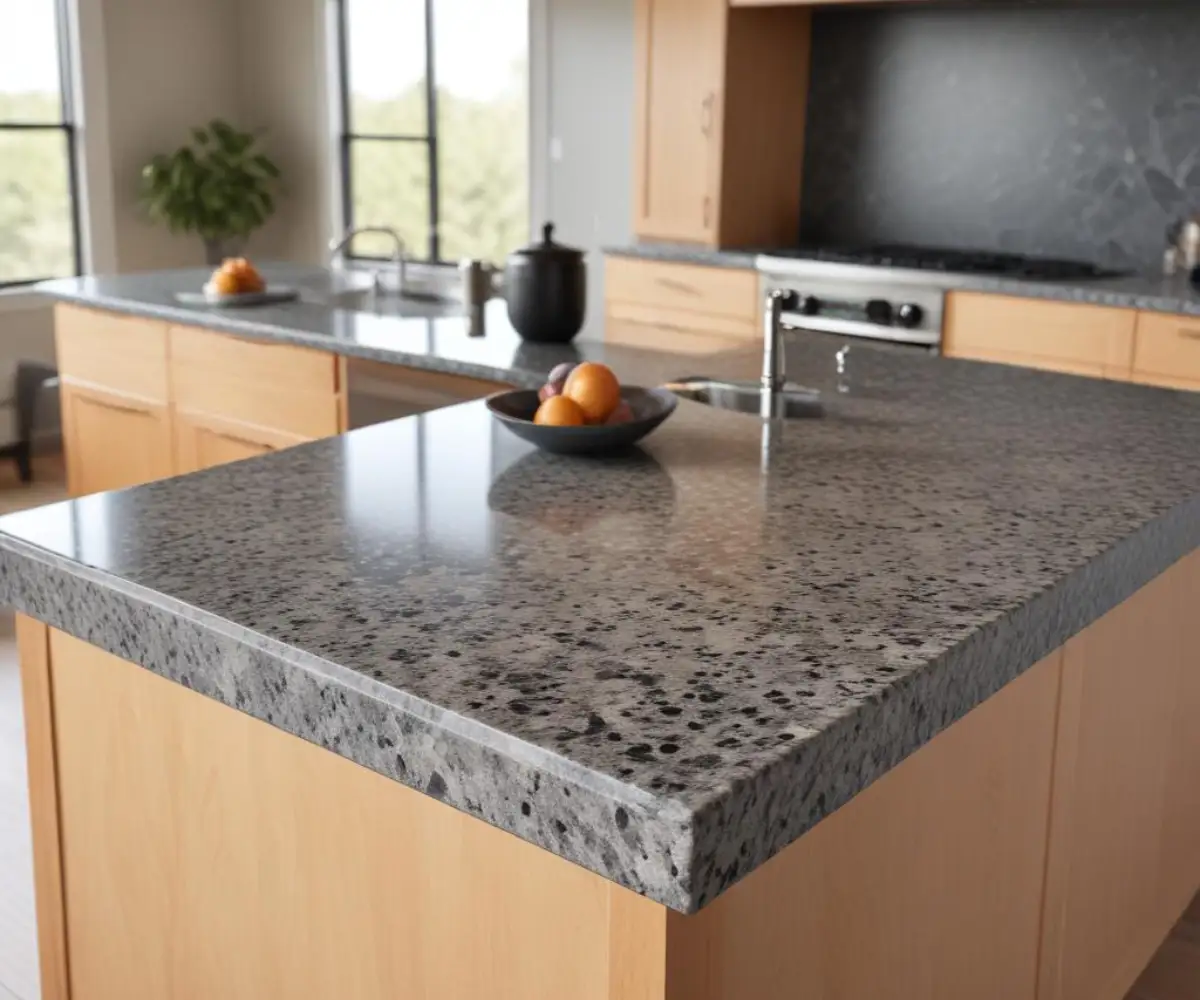
A common concern with 3/4 inch granite is that the edge profile will look too thin. Fabricators solve this with a technique called lamination. A laminated edge is created by cutting a second strip of the same granite and gluing it to the underside of the countertop’s edge. This built-up edge is then profiled, creating the appearance of a much thicker slab.
This method allows you to have a countertop that looks like it’s 1 1/2 inches (4cm) thick, or even more, while only using a 2cm slab for the main surface. This is a cost-effective way to achieve a bold, substantial look. However, it’s essential to inspect the fabricator’s work, as a poorly made laminated edge can have a visible seam. A high-quality fabricator can make this seam nearly disappear.
3/4″ (2cm) vs. 1 1/4″ (3cm) Granite: An Honest Comparison
Choosing the right thickness depends entirely on your project’s specific needs, budget, and aesthetic goals. Neither option is universally “better,” but one will likely be a better fit for you. Understanding the key differences is crucial for making the right choice.
Below is a direct comparison of the most important factors to consider when weighing 2cm against 3cm granite. This table breaks down the practical implications of each thickness, from structural needs to final cost, helping you align your priorities with the right product.
| Feature | 3/4 Inch (2cm) Granite | 1 1/4 Inch (3cm) Granite |
|---|---|---|
| Weight | Approx. 12-13 lbs / sq. ft. | Approx. 18-20 lbs / sq. ft. |
| Support Needed | Mandatory 3/4″ plywood sub-top | Installs directly on level cabinets |
| Material Cost | Generally lower per square foot | Generally higher per square foot |
| Installation Cost | Can be slightly higher due to sub-top labor | Generally more straightforward |
| Durability | Very durable with proper plywood support | Inherently strong due to greater mass |
| Edge Profiles | Can achieve any look with a laminated edge | Can be profiled directly into the slab |
| Best Uses | Kitchens, bathrooms, backsplashes, vertical surfaces | Kitchens, large islands, outdoor applications |
When is 3/4″ Granite the SMART Choice?
While 3cm granite is often marketed as the premium standard, there are several scenarios where choosing 2cm granite is the more intelligent and practical decision. Its lighter weight and adaptability make it a superior option in specific applications.
It’s an excellent choice for bathroom vanities and laundry rooms, where countertop spans are typically smaller and the robust nature of 3cm stone is unnecessary. For budget-conscious renovators, the lower material cost of 2cm granite can be a significant advantage, and for those looking to add a touch of luxury without breaking the bank, exploring options like buying used granite countertops can offer even greater savings. It’s also ideal for vertical applications like fireplace surrounds or full-height backsplashes where reduced weight is a major benefit.
Potential Problems and How to Avoid Them
The vast majority of issues with 3/4 inch granite stem from improper installation. The biggest risk is a fabricator who fails to install the required plywood sub-top, leading to a high probability of the stone cracking over time, especially around sink or cooktop cutouts.
Another potential issue is a poorly executed laminated edge, where the seam is highly visible or not perfectly flush. Always ask to see examples of a fabricator’s laminated edge work before committing. Finally, because it’s a natural stone, finding a perfect match years later for a repair can be difficult. Understanding the complexities of granite matching is important for long-term peace of mind. Should you ever need to replace a section, knowing how to remove granite countertops without damaging cabinets will be crucial, and the plywood sub-top can sometimes make this process more involved.
Final Verdict: Should You Choose 3/4 Granite Countertops?
A 3/4 inch granite countertop is not an inferior product; it is a different system. When installed correctly with the mandatory plywood support, it is an exceptionally durable and beautiful surface that can perform just as well as its thicker 3cm counterpart. Its lower material cost and versatility make it an excellent choice for many projects.
The key to success with 3/4 inch granite lies in hiring a qualified and knowledgeable fabricator who understands and follows the correct installation procedures. By understanding the critical role of the plywood sub-top and the option of a laminated edge, you are now equipped to make an informed decision that perfectly suits your home and budget.
Frequently Asked Questions
Is 3/4 inch granite durable enough for a kitchen?
Yes, 3/4 inch (or 2cm) granite is a durable option for kitchen countertops. However, it typically requires a plywood sub-top for added support, especially around cutouts for sinks and cooktops. While thicker 1 1/4 inch (3cm) granite has become an industry standard for its enhanced structural integrity, properly installed 3/4 inch granite offers excellent longevity.
Are 3/4 inch granite countertops less expensive?
Generally, the material cost for a 3/4 inch granite slab is less than a thicker 1 1/4 inch slab. However, the overall project cost can be comparable because the thinner stone often requires additional labor and materials for a plywood underlayment to ensure proper support. The final price depends on the specific granite chosen, its rarity, and installation complexity.
Does 3/4 inch granite need plywood support?
Yes, it is highly recommended and often mandatory for 3/4 inch (2cm) granite installations to have a plywood substrate. This underlayment provides essential support, prevents flexing, and reduces the risk of cracking, particularly over unsupported spans like dishwashers or near sink cutouts. Thicker 1 1/4 inch (3cm) granite is typically strong enough to be installed directly on cabinets without this extra support.
How does 3/4 inch granite compare to 1 1/4 inch in terms of durability?
While both thicknesses are very durable, 1 1/4 inch (3cm) granite offers superior structural strength and is less likely to crack under pressure or from impact. The durability of 3/4 inch granite regarding heat resistance, staining, and scratching is comparable to the thicker option. The primary difference lies in the thinner slab’s need for a reinforced plywood base to match the structural stability of the thicker slab.
Can I place hot pans on a 3/4 inch granite countertop?
Yes, granite is highly heat-resistant regardless of its thickness. It can typically withstand temperatures up to 1,200 degrees Fahrenheit, so placing a hot pot or pan directly on the surface will not burn or mark the stone. However, repeated exposure to high heat can potentially damage the sealant, making the stone more vulnerable to stains.
