
18-Inch Granite Overhang: The #1 Mistake You Can’t Afford
An 18-inch granite overhang on a kitchen island sounds like a dream. It promises a spacious breakfast bar, ample room for guests to gather, and a dramatic, high-end focal point for your kitchen. But this dream can quickly turn into a costly and dangerous nightmare if not executed with precision and an understanding of physics.
The single most critical failure is underestimating the immense weight and structural demands of such a large, cantilevered piece of stone. Without proper, robust support, an 18-inch granite overhang is not a question of if it will fail, but when.
You'll Learn About
The Problem: Why Your Dream Overhang is a Hidden Danger
Natural stone like granite is incredibly strong when compressed, but it’s surprisingly weak under tension. An overhang creates tension on the top surface of the stone as gravity pulls it downward. An 18-inch overhang extends far beyond the standard guidelines for unsupported stone, creating a tremendous amount of leverage and stress.
Many homeowners and even some contractors mistakenly believe that standard industry rules, like the “10-inch rule” for 3cm granite, can be stretched. This is a catastrophic error. The forces at play increase exponentially with length. An 18-inch overhang is not just “a little more” than a 10-inch one; it represents a completely different engineering challenge.
Understanding the Forces at Play: Static vs. Dynamic Load
The danger isn’t just from the stone’s own weight, known as the static load. The real risk comes from the dynamic load. This is the unexpected, additional force applied to the countertop.
Imagine a child leaning heavily on the edge, a guest using it to push themselves up from their stool, or someone momentarily setting a heavy box of groceries on the corner. This sudden, concentrated force can be the breaking point, leading to a sudden, catastrophic fracture. The result could be severe injury and the complete destruction of your expensive countertop.
The Solution: Engineering Rock-Solid Support Systems
For an 18-inch granite overhang, support is not optional—it is mandatory. Standard decorative corbels are often insufficient. You need a professionally engineered support system that transfers the load from the stone safely to the island’s base structure. Here are the most effective and trusted methods.
Hidden Steel Support Brackets
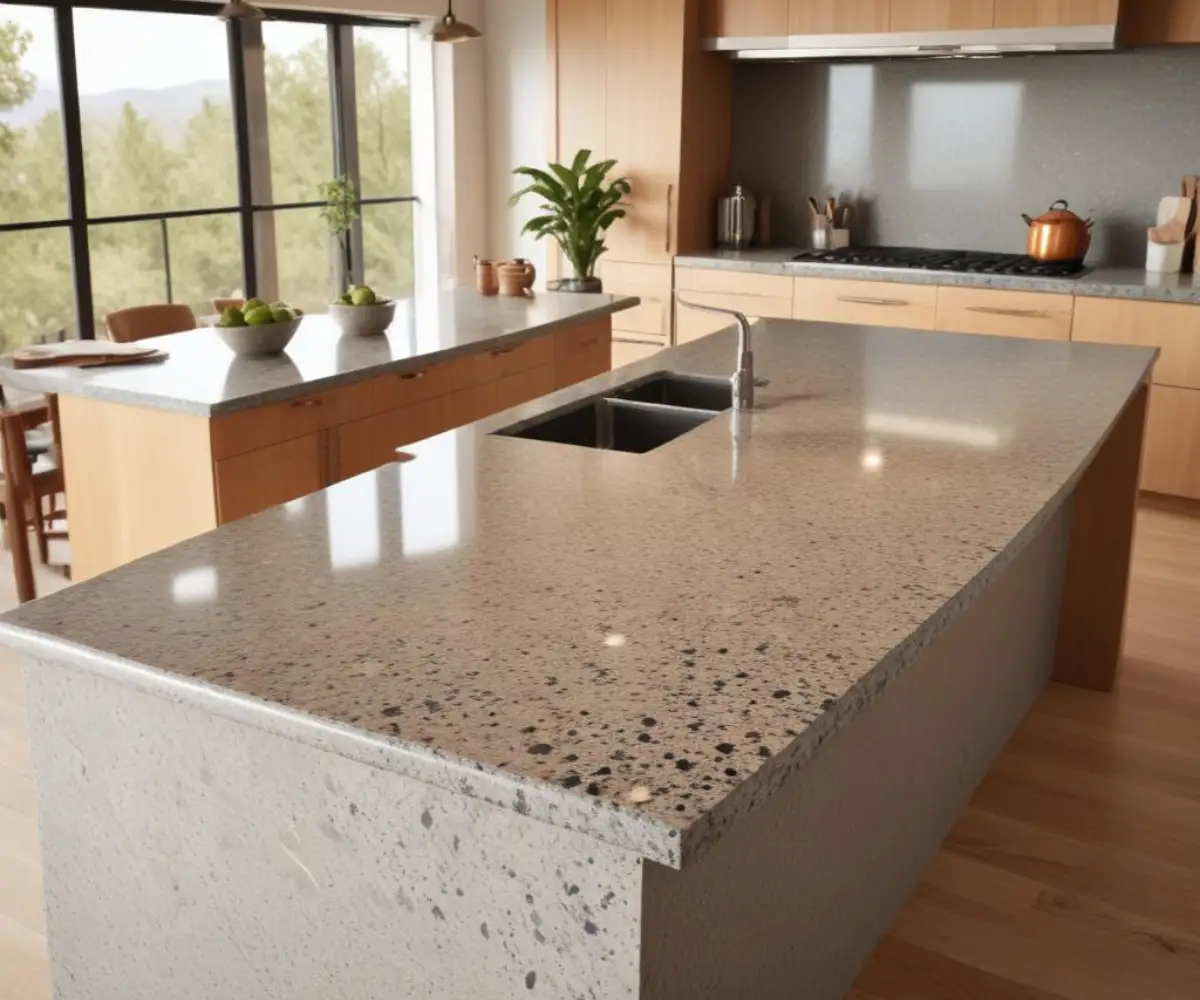
This is the most popular and aesthetically pleasing solution for a modern kitchen. Hidden steel brackets or plates provide immense strength without compromising the clean, floating look of the overhang or interfering with knee space.
These are not your average hardware store L-brackets. They are heavy-duty supports, typically made from 1/4″ or 1/2″ thick steel. They are installed on top of the cabinet or pony wall before the countertop is placed. For maximum effectiveness, the installer may need to rout out a section of the cabinet top so the brackets sit flush, ensuring a perfectly level surface for the granite.
Proper installation is key. A bad countertop installation could lead to the brackets not being properly secured to the cabinet’s structural members, rendering them useless. Always ensure they are fastened securely into solid wood framing.
Structural Corbels
While some corbels are purely decorative, structural corbels are designed to bear significant weight. They are thicker, deeper, and must be installed correctly to be effective. Wood corbels should be made of solid hardwood, and metal corbels should be of high-grade steel.
The main drawback of corbels is that they can obstruct legroom, making seating less comfortable. Aesthetically, they lend a more traditional or farmhouse look, which may or may not fit your kitchen’s design. It’s crucial to ensure they are spaced correctly—typically no more than 24 inches apart—and fastened securely to the island’s frame.
Support Legs and Posts
For the utmost stability, especially at the corners of a very long or wide overhang, incorporating support legs or posts is an excellent choice. These can be simple, modern posts made of steel or elegant, turned wooden legs that become a decorative feature of the island.
A leg transfers the load directly to the floor, virtually eliminating any stress on the cantilevered portion of the stone. This is often the preferred method for overhangs that extend beyond 18 inches or when using a particularly heavy or fragile type of granite.
Comparing Your Support Options
Choosing the right support system depends on your budget, aesthetic preferences, and the specific layout of your kitchen island. The following table provides a clear comparison to help you make an informed decision.
| Support Method | Aesthetic Impact | Knee Space | Typical Cost | Support Level |
|---|---|---|---|---|
| Hidden Steel Brackets | Minimal / Invisible | Unobstructed | Moderate | Excellent |
| Structural Corbels | Visible / Decorative | Obstructed | Low to Moderate | Good to Excellent |
| Support Legs / Posts | Major Design Element | Partially Obstructed | Moderate to High | Superior |
| Steel Plate Sub-Top | Completely Invisible | Unobstructed | High | Superior |
Installation: The Final, Critical Step
The success of your 18-inch granite overhang hinges on the quality of the installation. This is not a DIY project. You must hire a qualified, insured, and reputable stone fabricator and installer.
Before hiring, ask specific questions about their experience with large overhangs. Request to see photos of previous work and ask what type of support systems they recommend and why. A true professional will insist on a robust support plan and will walk you through the options. Be wary of any installer who downplays the need for significant support.
Red Flag Checklist for Your Installer
If your installer says any of the following, it’s a major red flag. Consider finding a different professional.
- “This type of granite is strong; it doesn’t need support.” All stone requires support for an overhang of this size.
- “We can just use some extra adhesive.” Glue is not a structural support system and will fail.
- “A couple of small wood corbels will be fine.” Decorative corbels are not the same as structural supports.
- “We’ll just add a plywood sub-top.” While plywood adds some rigidity, it does not provide the necessary cantilever support and is not a substitute for steel brackets.
An 18-inch granite overhang can be a stunning and functional addition to your home. But it is a feature that demands respect for the materials and a commitment to safety and engineering. By understanding the risks and insisting on a proper support system, you can ensure your beautiful new countertop remains a source of pride and enjoyment for decades to come, rather than a disaster waiting to happen.
Frequently Asked-Questions
Muss ein 18-Zoll-Granitüberhang gestützt werden?
Ja, ein 18-Zoll-Granitüberhang erfordert auf jeden Fall eine Abstützung. Im Allgemeinen benötigt 3 cm dicker Granit eine Abstützung für Überhänge von mehr als 10 Zoll. Ohne angemessene Abstützung kann der Granit mit der Zeit durchhängen, reißen oder sogar zusammenbrechen.
Welche Arten von Stützen werden für einen 18-Zoll-Granitüberhang verwendet?
Für einen 18-Zoll-Granitüberhang werden üblicherweise verschiedene Arten von Stützen verwendet. Dazu gehören Metallklammern oder dekorative Konsolen, die unter dem Überhang montiert werden. Eine weitere Option sind Stahlplatten, die unter dem Granit für eine verdeckte Stütze installiert werden.
Wie weit sollten die Stützen für einen 18-Zoll-Granitüberhang voneinander entfernt sein?
Der Abstand für die Stützen hängt von der Art der verwendeten Stütze ab. Arbeitsplattenhalterungen sind in der Regel 18 bis 24 Zoll voneinander entfernt, wobei eine Halterung an jedem Ende etwa 4 bis 6 Zoll vom Rand entfernt platziert wird. Bei anderen Stützsystemen wie Konsolen wird ein Abstand von 3 bis 4 Fuß empfohlen.
Wofür wird ein 18-Zoll-Granitüberhang normalerweise verwendet?
Ein 18-Zoll-Granitüberhang wird häufig verwendet, um einen Sitzbereich an einer Kücheninsel oder einer Frühstücksbar zu schaffen. Diese zusätzliche Tiefe bietet ausreichend Bein- und Kniefreiheit für bequemes Sitzen an der Theke. Sie vergrößert auch die nutzbare Oberfläche der Arbeitsplatte.
