
13 Foot Countertop: Don’t Make This $2,000 Seam Mistake
The dream of a grand, expansive kitchen often centers on a magnificent island or a long, uninterrupted stretch of counter space. A 13-foot countertop embodies this luxury, promising a seamless surface for cooking, entertaining, and daily life. But a hidden and costly obstacle often turns this dream into a logistical nightmare: the dreaded countertop seam.
Many homeowners invest thousands into their dream stone or quartz, only to discover too late that their desired 13-foot length is impossible without a visible join. This oversight can lead to unexpected costs, aesthetic compromises, and immense frustration. Understanding the limitations of materials and the secrets of fabrication is the key to avoiding this expensive mistake.
You'll Learn About
Why Your 13-Foot Countertop is a Logistical Nightmare
Achieving a flawless 13-foot countertop is more than just picking a color. The journey from the stone yard to your kitchen is filled with physical and logistical hurdles. Overlooking these challenges is where the real costs begin to accumulate, starting with the raw material itself.
The Hard Limits of Natural Stone and Quartz Slabs
The core of the problem lies in the physical size of stone and quartz slabs. A 13-foot countertop measures 156 inches in length. This dimension pushes the boundaries of standard manufacturing and quarrying capabilities.
Most standard granite and quartz slabs top out around 120-125 inches. Larger “jumbo” slabs can reach approximately 130-138 inches, but these are not available in all colors and materials. Finding a “super jumbo” slab that exceeds 156 inches is exceptionally rare, significantly more expensive, and dramatically limits your design choices. This scarcity is the primary reason seams become a necessity, not a choice.
The Transportation and Installation Challenge
Even if you locate a slab large enough, its journey into your home is perilous. A 13-foot slab of 3cm granite can weigh over 1,000 pounds. This immense weight requires a specialized crew and equipment for transport and installation.
Maneuvering such a piece through doorways, up stairs, or around tight corners is often impossible without risking damage to the slab or your home. Fabricators will often refuse a seamless installation if access is not perfectly straight and clear, forcing a seam to make the project feasible.
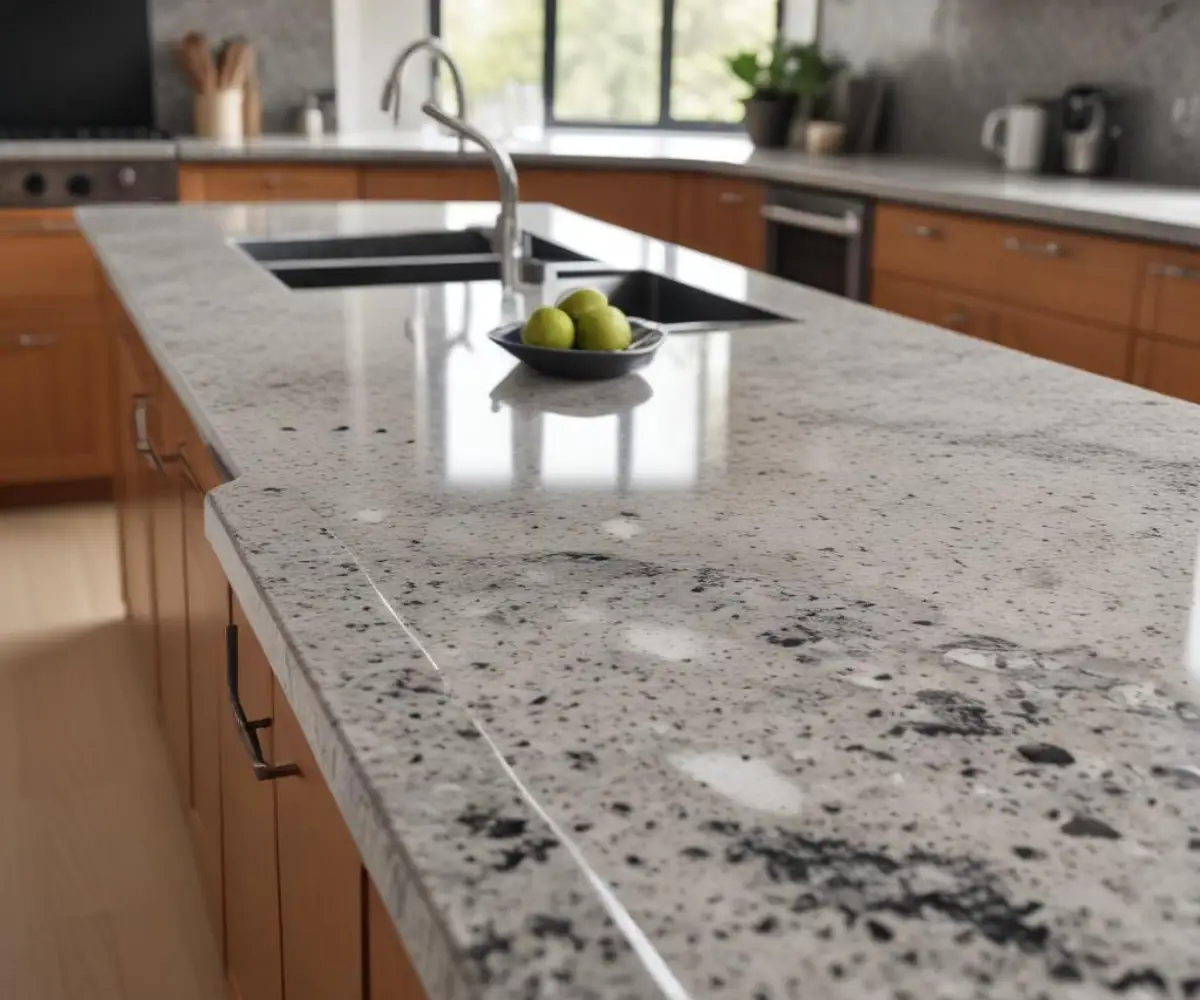
The Hidden Structural Demands
A countertop that spans 13 feet is under immense physical stress, especially if it includes cutouts for a sink or cooktop. Without proper support, the stone can sag or, worse, crack over time. This is a critical detail often missed in the initial design phase.
Standard cabinetry may not be sufficient. A long span often requires hidden steel supports or reinforced cabinet construction to ensure the countertop remains level and stable for its entire lifespan. Factoring in this structural necessity is vital for both safety and longevity, and is a topic further explored when considering extra wide countertops which face similar support challenges.
The Seam Showdown: Your Options for a 13-Foot Span
When faced with the near-certainty of a seam in your 13-foot countertop, the goal shifts from avoidance to intelligent placement and material selection. A well-executed seam can be nearly invisible, preserving the luxurious feel you desire. A poorly planned one can become an unsightly focal point.
Option 1: The Strategically Placed Seam
The most common and practical solution is to incorporate a seam in the least conspicuous location. A skilled fabricator will use advanced techniques to book-match veins and color-match epoxy, making the join difficult to detect. The best place for a seam is often at the sink or cooktop, as these cutouts minimize the visible length of the seam.
Discussing seam placement with your fabricator during the templating stage is non-negotiable. Their expertise is crucial in achieving a result that feels as close to seamless as possible. This approach is fundamental to creating a flawless, seamless look, even when a join is technically present.
Option 2: Hunting for the “Super Jumbo” Slab
If your heart is set on a truly seamless surface, your quest will be for a super jumbo slab. This path requires flexibility in material and color, as the selection is extremely limited. Certain quartz manufacturers are known to produce some of the largest slabs on the market.
Be prepared for a significant price increase, often 25% or more compared to standard slabs. You must also confirm that your fabricator has the experience and equipment to handle such a large and expensive piece. The logistics of transportation and installation become even more critical with this option.
Option 3: Exploring Alternative Materials
Some materials are naturally better suited for long, seamless installations. Solid surface materials (like Corian) can be chemically welded together on-site to create a truly invisible seam. Concrete countertops can be poured in place to any length, offering a completely custom and seamless solution.
Butcher block can also be constructed to long lengths, offering a warm, natural alternative. While these materials may not have the same appearance as natural stone, they solve the seam problem entirely and can be a perfect fit for specific design aesthetics.
| Material | Typical Max Length (Inches) | Seam Visibility | Average Cost (Per Sq. Ft. Installed) | Maintenance Level |
|---|---|---|---|---|
| Standard Granite | 105-125 | Low to Moderate | $40 – $100 | High (Sealing Required) |
| Jumbo Quartz | 126-138 | Very Low | $50 – $120 | Low (No Sealing) |
| Solid Surface | Effectively Unlimited | Invisible | $40 – $80 | Low to Moderate |
| Concrete | Effectively Unlimited | None (Poured in Place) | $50 – $125 | High (Sealing Required) |
| Butcher Block | Up to 144+ | Very Low | $50 – $150 | High (Oiling/Sealing) |
Beyond the Seam: Budgeting for Your 13-Foot Countertop
The cost of a 13-foot countertop extends far beyond the price per square foot of the material. Fabrication, specialized labor, and necessary structural supports are significant expenses that must be factored into your budget to avoid unpleasant surprises.
Fabrication: The Artistry You Pay For
Creating a nearly invisible seam is an art that commands a higher price. The labor involved in precisely cutting, book-matching, and joining two heavy pieces of stone is intensive. A high-quality seam can add several hundred to over a thousand dollars to the fabrication cost, but it is an investment in the final aesthetic of your kitchen.
This is especially true for stones with complex patterns or veining. The fabricator must sacrifice more of the slab to ensure the pattern flows logically across the seam, increasing material waste and cost.
Support and Bracing: The Invisible Cost
Properly supporting a 13-foot countertop is a hidden but essential cost. Depending on your kitchen island’s design and any overhangs for seating, you may need steel support brackets or a custom-built sub-top. These supports are not optional; they prevent the stone from cracking under its own weight.
Budgeting for these reinforcements is critical. Forgetting this step can lead to catastrophic failure down the line. The thickness of your chosen material also plays a role; a robust 3/4 granite countertop (or 2cm) will have different support needs than a thicker 3cm slab over such a long distance.
The Ultimate 13-Foot Countertop Installation Checklist
To ensure a successful installation and avoid costly errors, arm yourself with the right questions. A reputable fabricator and contractor will be able to answer these questions clearly and confidently, demonstrating their expertise and giving you peace of mind.
Questions for Your Fabricator:
- What is the largest slab size you can source in my desired material and color?
- Based on my kitchen layout, where do you recommend placing the seam for the least visibility?
- Can you provide photos of previous seam work your team has completed?
- How do you handle book-matching for veined stones at the seam?
- What is the additional cost for the seam fabrication and color-matched epoxy?
Questions for Your Contractor:
- Are my current cabinets sufficient to support a 1,000-pound countertop?
- What type of additional support (e.g., steel brackets, sub-top) do you recommend for this span?
- What is the cost of installing the necessary structural supports?
- Is the access route into my home (doors, hallways, stairs) adequate for the slab pieces?
Achieving Your Flawless 13-Foot Countertop
A stunning 13-foot countertop can be the undisputed centerpiece of your kitchen, but achieving that flawless, monolithic look requires careful planning and a realistic budget. The primary challenge is almost always the seam, driven by the physical limitations of stone and quartz slabs.
By understanding material constraints, planning for strategic seam placement, and investing in a highly skilled fabricator, you can avoid the common pitfalls. Remember to account for the hidden costs of transportation, installation, and essential structural support. With the right knowledge and professional team, your vision of a grand, seamless countertop can become a beautiful and enduring reality.
