
10 ft Ceiling Kitchen: Avoid This #1 Design Mistake
A kitchen with a 10-foot ceiling is a statement. It promises a grand, airy space filled with light and possibility. Yet, many homeowners find their finished high-ceiling kitchen feels strangely off—like a cavernous hall rather than the heart of the home. This happens because they make one critical mistake: they design for the floor plan but forget to design for the vertical volume.
Treating a 10-foot ceiling as just “extra headroom” leads to stretched proportions, wasted space, and a room that feels cold and impersonal. The key isn’t just to fill the space, but to master its scale, turning that vertical expanse from a challenge into your kitchen’s most stunning feature.
You'll Learn About
Why Your High Ceiling Kitchen Feels ‘Off’
The core problem with a poorly designed 10-foot ceiling kitchen is a disconnect between human scale and architectural scale. When cabinets, lighting, and other features are sized for a standard 8-foot room, they become dwarfed by the sheer height. This creates a psychological sense of being in a commercial lobby, not a cozy, functional kitchen.
Common pitfalls include standard-height cabinets that leave a vast, dusty void above them, pendant lights that look like tiny ornaments, and a backsplash that appears as a thin, insignificant stripe. These choices fail to guide the eye upward in a deliberate way, leaving the upper portion of the room feeling disconnected and empty.
The Unspoken Challenge: Acoustics and Atmosphere
Beyond visual proportions, high ceilings create acoustic challenges. Hard surfaces like stone countertops, tile floors, and drywall reflect sound, turning a spacious kitchen into an echo chamber. The clatter of pots and pans can become overwhelming, making the space feel loud and uncomfortable.
Solving this requires thinking beyond the visual. By incorporating sound-dampening materials and breaking up large, flat surfaces, you can create an atmosphere that is as comfortable and inviting as it is visually impressive. This dual focus on both sight and sound is what separates a merely large kitchen from a truly grand one.
The Cabinet Conundrum: Solving the Vertical Challenge
Cabinets are the most dominant feature in any kitchen, and in a room with 10-foot ceilings, they are your primary tool for managing vertical space. Simply installing standard 36- or 42-inch upper cabinets is a recipe for an unfinished, top-heavy look. You must make a conscious choice to either embrace the height or create architectural elements that bring the scale down to a more intimate level.
Option 1: Stacked Cabinets to the Ceiling
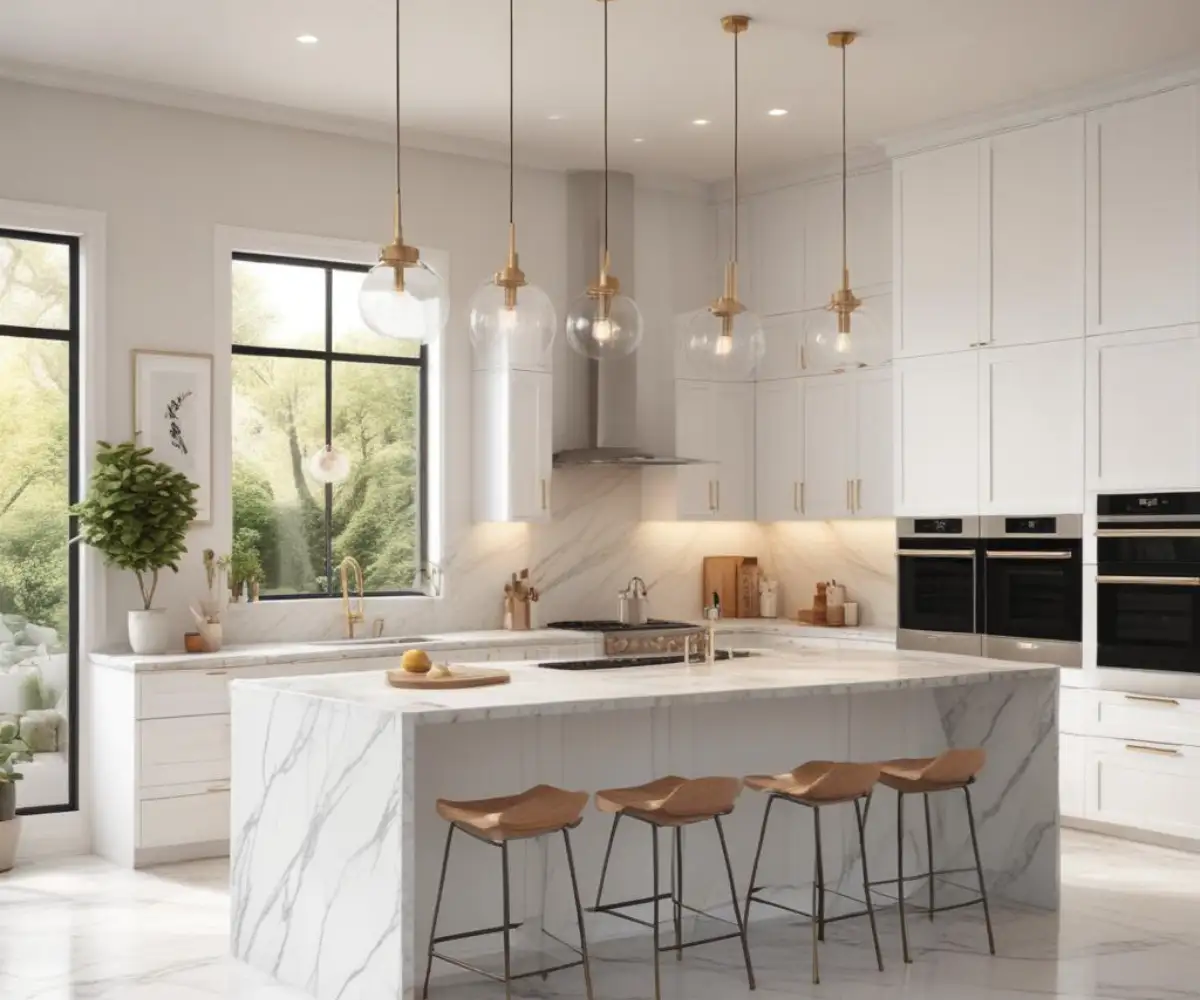
The most popular and effective solution is using stacked cabinets. This involves placing a row of standard upper cabinets and then adding a smaller row of “transom” cabinets above them, often finished with a substantial crown molding at the ceiling. This approach offers several distinct advantages.
It maximizes storage, providing a perfect spot for seasonal or rarely used items. Aesthetically, it creates a custom, built-in look that draws the eye upward gracefully, making the ceiling feel like an intentional part of the design. For added elegance, use glass fronts and in-cabinet lighting on the top row to display decorative pieces.
Option 2: Extra-Tall Single Cabinets
For a sleeker, more modern aesthetic, you can opt for single, extra-tall cabinet doors. Custom cabinets reaching 54 inches or more can create a clean, uninterrupted vertical line. This choice minimizes visual clutter and can make the kitchen feel even more spacious and streamlined.
However, be mindful of proportions. An extremely tall, narrow cabinet can look awkward. This is where choosing between wider 30 vs 36 inch cabinets becomes even more critical to maintain a balanced and pleasing look. The sheer size can also put more stress on hinges over time, so investing in high-quality hardware is essential.
Option 3: Modern Soffits and Bulkheads
While soffits were once used to hide plumbing and electrical, they can be reimagined as a deliberate design feature in a high-ceilinged kitchen. A modern soffit or bulkhead can be built above the cabinets to architecturally lower the ceiling height over the main work area. This creates a cozier, more human-scaled zone for cooking.
This “dropped” section can also be an ideal place to house recessed lighting for focused task illumination or hide HVAC vents. It bridges the gap between the cabinet tops and the ceiling, eliminating the “dust trap” space while adding architectural interest and improving the room’s overall sense of proportion.
Mastering Proportions: It’s Not Just About the Cabinets
Successfully designing a 10-foot ceiling kitchen requires every element to be properly scaled. Cabinets are the start, but if the other features remain standard-sized, the design will fall flat. You must think vertically about every component.
The Backsplash Deception
A standard 18-inch high backsplash looks woefully inadequate in a kitchen with soaring ceilings. It creates a horizontal line that visually chops the wall in half. To combat this, extend your backsplash tile much higher.
For a dramatic and cohesive look, run the tile all the way from the countertop to the bottom of the upper cabinets. In areas without upper cabinets, such as behind the range hood, consider taking the tile all the way to the ceiling. This creates a stunning focal point and visually connects the lower and upper halves of the room.
Range Hoods: The Forgotten Focal Point
A standard-sized range hood will be completely lost on a tall wall. A kitchen with 10-foot ceilings demands a statement range hood. This means selecting a wider, more substantial model and ensuring the chimney extension is tall enough to maintain proper distance from the cooktop while reaching elegantly towards the ceiling.
The chimney is just as important as the hood itself. A properly scaled chimney draws the eye upward and acts as an anchor for the entire wall. Skimping on this element will instantly make the entire kitchen feel disproportionate.
Lighting the Void: From Task to Ambiance
One of the biggest mistakes in a high-ceiling kitchen is relying on a single, central light fixture. This creates a “cave effect,” where the ceiling is brightly lit, but the countertops and work areas are left in shadow. A layered lighting plan is non-negotiable.
Your lighting strategy should include three distinct layers:
- Ambient Lighting: This is the overall illumination for the room. Use strategically placed recessed cans across the ceiling to ensure even, shadow-free light throughout the space.
- Task Lighting: This is focused light for work areas. Under-cabinet LED strips are essential for illuminating countertops. Large, statement pendant lights hung over the island provide both crucial task lighting and a powerful design element.
- Accent Lighting: This layer adds depth and character. Use in-cabinet lighting in glass-front upper cabinets or install wall sconces on a feature wall to create a warm, inviting glow.
When selecting pendant lights, think big. Small or delicate fixtures will disappear in the vast space. Choose oversized pendants that are proportional to the room’s volume and hang them low enough to relate to the island, not the ceiling.
| Cabinet Strategy | Aesthetics | Storage Efficiency | Typical Cost | Best For |
|---|---|---|---|---|
| Stacked Cabinets | Custom, elegant, architectural | Maximum; ideal for long-term storage | High | Traditional, transitional, and luxury designs |
| Single Tall Cabinets | Modern, sleek, minimalist | High; provides a clean look | High | Contemporary and minimalist kitchens |
| Cabinets with Soffit | Integrated, intentional, cozy | Standard; soffit fills the void | Moderate | Creating defined zones and housing utilities |
| Open Space Above | Airy, casual, decorative | Lowest; space is for display only | Low | Budget-conscious projects or farmhouse styles |
Bringing the Ceiling Down to Earth: Creating Coziness
A grand space doesn’t have to feel cold. Several design techniques can help a 10-foot ceiling kitchen feel more intimate and inviting without sacrificing its impressive scale. These details are often what elevate a good design to a great one.
Architectural Details That Matter
Architectural elements are key to breaking up the vastness of a high ceiling. Substantial, multi-piece crown molding provides a beautiful transition between the cabinets and the ceiling, adding a touch of elegance and visual weight.
For a more rustic or traditional feel, consider adding exposed wooden beams or a coffered ceiling. These treatments add texture, warmth, and character, making the ceiling a decorative feature in its own right and visually lowering it to create a more comfortable atmosphere.
The Role of Color and Texture
Color can be a powerful tool for manipulating the perception of space. While light colors make a room feel airy, painting the ceiling a color that is a few shades darker than the walls can create a cozier, more intimate feeling by visually “lowering” it. Similarly, using two-toned cabinets—with a darker color on the bottom and a lighter one on top—can help ground the space.
Texture also plays a vital role in adding warmth. Consider a wood-planked ceiling, a full-height brick accent wall, or soft textiles like a runner on the floor and comfortable window treatments. These elements absorb both sound and light, reducing echo and softening the room’s overall feel.
Is a 10-Foot Ceiling Always the Right Choice?
While luxurious, a 10-foot ceiling isn’t a universal solution. In a very small kitchen, it can create an uncomfortable “silo” effect, where the height feels out of proportion to the floor space. The increased volume also means higher costs for materials, construction, and ongoing heating and cooling.
For those who desire more height but don’t have it, exploring options for raising a ceiling can be a transformative renovation project. Conversely, it’s useful to understand how design principles must adapt for lower ceilings. For example, ventilation strategies differ greatly from those in a space where a ceiling fan for an 8ft ceiling might be considered, as air circulation patterns are completely different.
Conclusion: Embrace the Volume with Intention
A 10-foot ceiling kitchen offers a canvas for breathtaking design, but it demands a thoughtful approach. The greatest mistake is to ignore the vertical space and allow it to become a vacant, echoing void. Instead, you must design with intention from floor to ceiling.
By choosing appropriately scaled cabinets, layering your lighting effectively, extending features like the backsplash, and adding architectural character, you transform the height from a challenge into an asset. A well-designed high-ceiling kitchen is a masterful blend of grandeur and intimacy—a space that is not just impressive to look at, but truly wonderful to live in.
