
1/2 Round Countertop Edge: The #1 Myth Costing You Spills & Style
You stand in a showroom, surrounded by dozens of countertop samples. You’ve finally picked the perfect stone, but now comes a question you didn’t expect to be so difficult: which edge profile?
The salesperson points to a 1/2 round edge, calling it a “classic” and “safe” choice. It seems simple enough—a smooth, rounded top edge. But this seemingly basic choice is surrounded by myths and misunderstandings that can lead to costly regrets in both function and style.
Many homeowners either dismiss it as dated or choose it without understanding its hidden strengths. The real problem isn’t the edge itself, but the lack of clear information on how it performs in a real-world kitchen. We’re here to solve that.
You'll Learn About
What Exactly Is a 1/2 Round Countertop Edge?
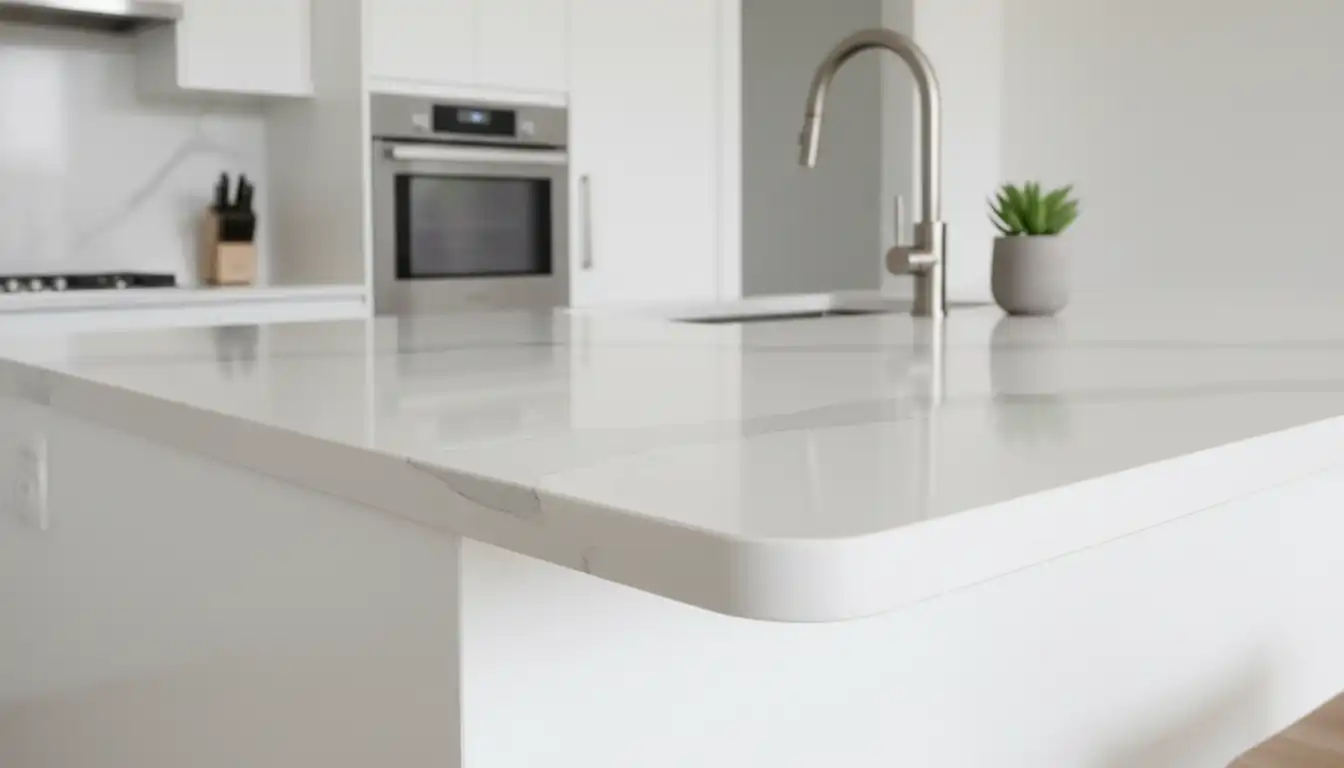
A 1/2 round edge, also known as a half bullnose, features a perfectly rounded top edge that curves down to a flat, squared bottom edge. Think of it as the letter ‘D’ turned on its side. This design is distinct from a full bullnose, which is fully rounded on both the top and bottom.
Its primary appeal lies in its softness. There are no sharp corners, making it a comfortable and safe option for high-traffic areas and for families with young children. The gentle curve feels pleasant to lean against and reduces the risk of painful bumps.
The Spill-Catcher Myth: Debunking the Biggest Misconception
One of the most persistent myths is that all rounded edges are bad for spills, allowing liquids to follow the curve and drip directly onto your cabinet doors and drawers. This is a major concern for a full bullnose edge. However, the 1/2 round edge was engineered as a direct solution to this very problem.
Because the bottom of a 1/2 round edge is flat, it creates a natural drip point. Spills that run over the top curve are forced to drip straight down to the floor, protecting your cabinetry from potential water damage and stains. This is a crucial functional advantage that is often overlooked.
This design detail is especially important when planning for specialized installations. For instance, achieving the perfect farm sink countertop overhang requires precision to ensure water is properly contained, and a 1/2 round edge aids in this by directing drips away from the cabinet base.
Is the 1/2 Round Edge Dated or Timeless?
Another common hesitation is whether the 1/2 round edge looks old-fashioned. While it was incredibly popular in the 90s and early 2000s, its classic, simple lines have allowed it to adapt beautifully to modern design trends. The key is context.
In a traditional kitchen with ornate cabinetry, a 1/2 round edge in a classic granite will feel right at home. However, pair that same edge profile with a crisp white quartz and sleek, flat-panel cabinets, and it suddenly appears clean, soft, and minimalist. Its versatility is its greatest stylistic strength.
Material Matters: Not All Stones Are Created Equal
The material you choose has a massive impact on the long-term durability and appearance of your 1/2 round edge. The smooth profile is inherently resistant to chipping compared to a sharp, squared edge, but the stone’s hardness remains the most important factor.
Quartz: This is an ideal partner for the 1/2 round edge. Quartz is non-porous, incredibly durable, and its patterns are consistent throughout the slab, ensuring the curve of the edge looks uniform and flawless.
Granite: As a tough natural stone, granite is another excellent choice. The rounding process can sometimes reveal interesting new details and depths within the stone’s pattern along the edge.
Marble and Softer Stones: Use caution here. While beautiful, marble is softer and more prone to denting and scratching. A 1/2 round edge will be more durable than a square edge on marble, but it can still show wear and tear from impacts in a busy kitchen.
Edge Profile Showdown: 1/2 Round vs. The Competition
Choosing an edge is about balancing aesthetics, safety, and functionality. Here’s how the 1/2 round stacks up against other popular choices.
| Edge Profile | Key Advantage | Potential Drawback | Best For |
|---|---|---|---|
| 1/2 Round (Half Bullnose) | Directs spills away from cabinets; safe and soft. | Can look dated in the wrong design context. | High-traffic family kitchens and minimalist designs. |
| Full Bullnose | Completely rounded and very safe; classic look. | Liquids can wrap around and drip on cabinets. | Traditional kitchens where safety is the top priority. |
| Eased Edge | Sleek, modern, and minimalist. | Slightly sharp corners can still cause bumps. | Contemporary and modern kitchen styles. |
| Beveled Edge | Adds a decorative, light-catching detail. | The sharp angle can be more prone to chipping. | Transitional and classic designs needing a bit of flair. |
Fabrication Finesse: The Secret to a Perfect Rounded Edge
The quality of your countertop edge comes down to your fabricator’s skill. A poorly finished 1/2 round edge can feel wavy or uneven to the touch, instantly cheapening the look of your expensive stone. When selecting a fabricator, specifically ask to see and feel samples of their polished rounded edges.
The smoothness of seams is also paramount with this edge style. A well-made seam on a 1/2 round edge should be nearly imperceptible to the touch. This precision is vital for all countertop projects, from standard installations to more complex designs like an 4-inch mitered edge countertop, where flawless execution is everything.
Beyond the Kitchen: Other Applications for the 1/2 Round Edge
The benefits of a soft, durable, and easy-to-clean edge extend far beyond the kitchen. Consider a 1/2 round profile for other surfaces throughout your home.
It is an excellent choice for bathroom vanities, where safety and ease of cleaning are priorities. It’s also perfect for laundry room folding stations and home office desktops, providing a comfortable edge to work against. This edge is particularly effective for unique materials, such as an induction cooktop with a wood countertop, where a gentle, splinter-free edge enhances both safety and longevity.
Frequently Asked Questions
What is a 1/2 round countertop edge?
A 1/2 round edge, also known as a half bullnose, features a rounded top edge that curves down to a flat, square bottom. This popular profile combines the softness of a curved edge with the clean, solid look of a straight edge. It is a versatile choice for many kitchen and bathroom designs.
What are the benefits of choosing a 1/2 round edge?
The rounded top of a 1/2 round edge provides a smoother, safer surface, which is ideal for high-traffic areas and homes with children. This design also makes cleaning easier and helps prevent spills from running back onto and down the cabinets by directing drips straight to the floor.
Is a 1/2 round edge a durable option?
Yes, the 1/2 round edge is considered a very durable choice for countertops. Its rounded profile lacks sharp corners, making it less susceptible to chipping from impacts compared to squared edges.
What kitchen styles does a 1/2 round edge complement?
The 1/2 round edge is highly versatile and works well with a wide range of kitchen styles, from traditional to contemporary. It can be paired with shaker-style cabinets for a transitional look or with modern flat-panel doors for a sleeker aesthetic. Its balanced design makes it a compatible choice for almost any cabinetry style.
The Verdict: A Smart Choice, Not Just a Safe One
The 1/2 round countertop edge is far more than a basic, default option. It is an intelligently designed profile that offers a superior solution to spills, provides a high degree of safety, and possesses a stylistic flexibility that many other edges lack.
By understanding its true functional benefits and pairing it with the right material and design context, you can move past the outdated myths. You can choose the 1/2 round edge with confidence, knowing it’s a smart, durable, and timeless investment for your home.
