
1/2 Inch Countertop Overhang: The #1 Design Flaw Ruining Your Cabinets
It’s one of the smallest measurements in a kitchen remodel, yet it carries the weight of your project’s long-term success. A mere half-inch detail can be the difference between pristine, long-lasting cabinetry and a future of frustrating stains, drips, and water damage. The 1/2 inch overhang countertop is often presented as a “standard” or minimalist option, but it is frequently a critical design flaw that homeowners regret.
This seemingly insignificant choice can undermine the very function a countertop is meant to serve: protecting what lies beneath. Understanding the hidden risks of this minimal overhang is essential before you let a fabricator make the final cut on your expensive new slab.
You'll Learn About
The Hidden Problem with a “Standard” Half-Inch Overhang
In the world of kitchen design, standards exist for a reason—they are typically based on years of best practices for functionality and aesthetics. However, the term “standard” can be misleading. While the most common and professionally recommended countertop overhang is between 1 and 1.5 inches, a 1/2 inch overhang is sometimes installed, often to the detriment of the homeowner.
The core issue is a misunderstanding of the overhang’s primary purpose. It isn’t just a decorative lip; it is a functional barrier. Its job is to direct spills, crumbs, and liquids away from the faces of your cabinet doors and drawers, guiding them to the floor where they can be easily cleaned.
Why Your Cabinets Are at Risk: The Science of a Spill
Every time you wipe down your counter, prepare food, or accidentally knock over a glass, your countertop’s edge is put to the test. This edge, known as the drip edge, is your first and last line of defense for your cabinetry. An overhang that is too short fails this test spectacularly, leading to chronic moisture exposure and damage.
This failure isn’t just bad luck; it’s physics. The principles of surface tension and gravity dictate where liquids will travel, and a half-inch overhang creates the perfect storm for directing water exactly where you don’t want it to go.
The Physics of Failure: Surface Tension on a Short Overhang
When liquid, like water from a wet glass or a splash from the sink, reaches the edge of a countertop, it doesn’t simply fall straight down. Due to surface tension, the water molecules cling to each other and to the surface of the counter. On a 1/2 inch overhang, there isn’t enough distance for gravity to overcome this cohesion and adhesion.
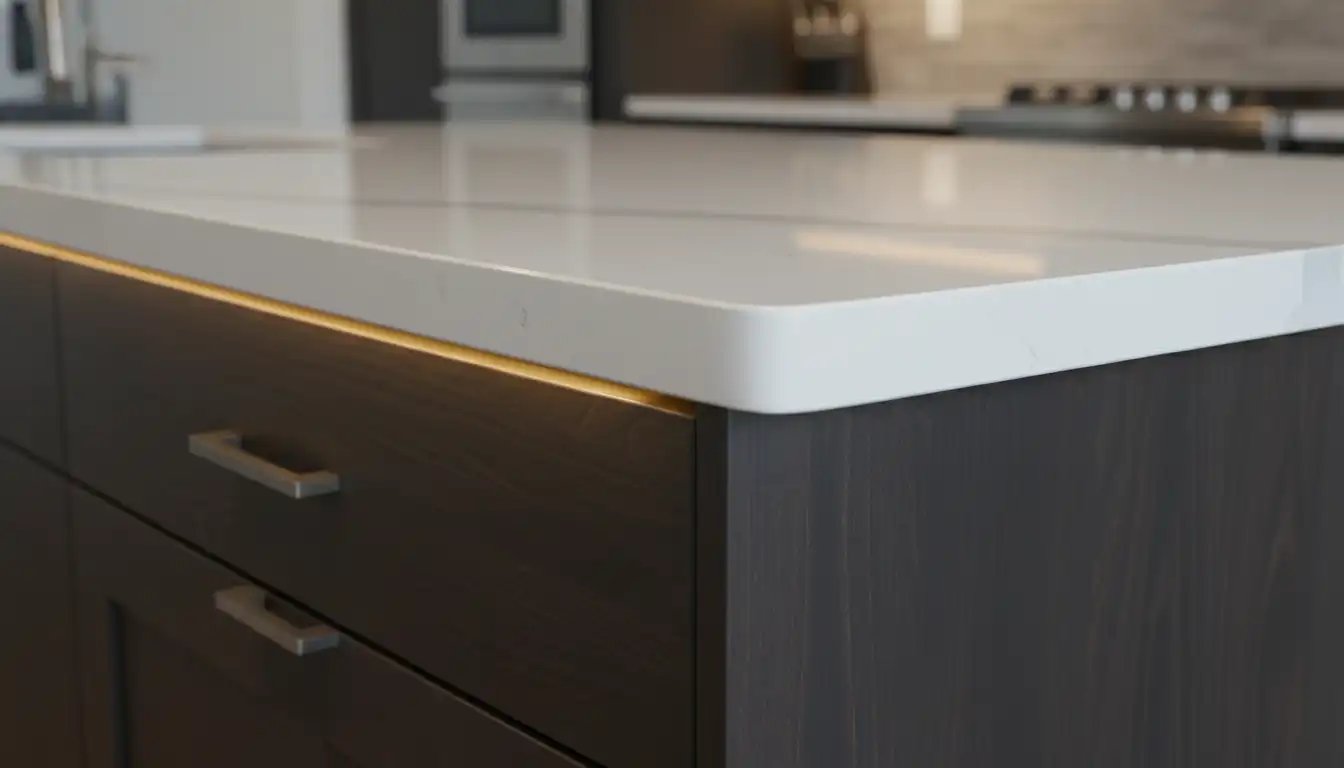
Instead of dripping cleanly to the floor, the water clings to the underside of the short overhang, curls back, and runs directly down the face of your cabinet doors and drawers. Over time, this constant, subtle exposure causes warping, discoloration of the finish, and can even lead to the delamination of cabinet materials, especially on painted or MDF doors.
Beyond Spills: The Triad of Overhang Failures
An effective countertop overhang must succeed in three distinct areas: Protection, Aesthetics, and Accessibility. The 1/2 inch overhang compromises all three, creating a cascade of functional and visual problems that extend beyond just spill management. Evaluating your choice through this framework reveals its significant shortcomings.
Failure #1: Poor Cabinet Protection
The inability to create an effective drip edge is the most significant failure. Constant moisture exposure ruins cabinet finishes and can lead to costly repairs or replacements. It also means that crumbs and other dry debris are more likely to fall directly into the gaps of your top drawers, creating a cleaning nuisance.
Failure #2: Lacking Aesthetic Balance
From a design perspective, a 1/2 inch overhang often looks unintentional and stunted. It fails to create a strong, horizontal shadow line that gives a countertop a sense of substance and presence. Instead, it can make a beautiful, thick slab appear thin and poorly fitted, almost like an afterthought.
This is especially true when contrasted with the goal of creating a visually substantial kitchen. While a thick island countertop is chosen to add visual weight and luxury, a minimal overhang can detract from that very effect, undermining the investment in a premium material.
Failure #3: Compromised Accessibility
Modern kitchen design often favors handle-less cabinets for a sleek, clean look. These designs rely on a channel or a “J-pull” integrated into the top of the door or drawer for opening. A 1/2 inch overhang provides insufficient space for fingers to comfortably grip these channels, making everyday use awkward and frustrating.
Even with traditional hardware, the minimal clearance makes wiping down the countertop edge and the top of the cabinet doors difficult. You may find your knuckles hitting the hardware or the cabinet face with every pass of the sponge.
The Goldilocks Solution: Finding the Perfect Countertop Overhang
The ideal overhang is not a one-size-fits-all dimension, but industry consensus points to a “just right” range that optimizes the functional triad. For non-seating perimeter countertops, the gold standard is an overhang of 1 inch to 1.5 inches. This range provides a perfect balance of protection, visual appeal, and user-friendly access.
This slight increase in depth makes a monumental difference. It is enough to break the surface tension of liquids, ensuring spills drip to the floor. It also provides a satisfying, deliberate aesthetic and gives ample room for fingers, regardless of your cabinet hardware choice.
Why 1.5 Inches is Often the Professional’s Choice
Many designers and fabricators default to a 1.5-inch overhang as the optimal dimension. It offers the maximum protection for cabinetry, casting a distinct shadow line that enhances the look of the slab. This dimension ensures that even with full-overlay doors and decorative hardware, there is plenty of clearance for both hands and cleaning cloths.
Choosing this slightly larger overhang is a simple specification that pays dividends in the longevity and daily enjoyment of your kitchen. It is a detail that signals a well-planned, high-quality installation.
| Dimension | Cabinet Protection | Aesthetics | Accessibility |
|---|---|---|---|
| 1/2 Inch | Poor (Allows spills to run onto cabinets) | Looks stunted and unintentional | Poor (Insufficient finger room for handle-less cabinets) |
| 1 Inch | Good (Effective drip edge for most liquids) | Balanced and clean | Good (Adequate clearance for most hardware) |
| 1.5 Inches | Excellent (Maximum protection from drips) | Substantial and professional look | Excellent (Ample room for all cabinet styles) |
Special Considerations: When is a 1/2 Inch Overhang Acceptable?
While a 1 to 1.5-inch overhang is superior in most cases, there are rare situations where a smaller dimension may be necessary. These are exceptions, not the rule, and should be approached with a clear understanding of the trade-offs involved.
Appliance Clearance
Certain slide-in ranges or panel-ready dishwashers may require minimal clearance to sit perfectly flush with the surrounding cabinetry. In these specific locations, the overhang might need to be reduced. However, this adjustment should ideally be limited to the area directly adjacent to the appliance, with the rest of the countertop maintaining a proper 1 to 1.5-inch overhang.
High-Traffic Walkways
In extremely narrow galley kitchens or tight walkways, a homeowner might consider reducing the overhang to gain an extra fraction of an inch of clearance. While this is a valid concern, reducing the overhang from 1.5 inches to 0.5 inches only gains one inch of walkway space—a difference that is rarely noticeable and often not worth the sacrifice in cabinet protection and function.
How Overhang Interacts with Edge Profile and Seating
The overhang dimension is just one part of the equation; it works in concert with other design choices. The edge profile you select can influence how well the overhang performs its job as a drip edge.
For example, a more intricate profile like an ogee might require a slightly larger overhang to look properly proportioned. Conversely, a simple eased edge or a 1/2 round countertop edge can be effective with a 1-inch overhang, as its shape naturally encourages drips to fall downwards. It’s also critical to distinguish this discussion from seating overhangs. The rules governing a standard 1.5-inch perimeter overhang are entirely different from those for a breakfast bar. A large seating area, such as an 18-inch granite overhang, requires significant structural support and is designed for knee space, not just cabinet protection.
Your Pre-Installation Checklist: How to Avoid the 1/2 Inch Mistake
The best way to ensure your kitchen is beautiful and functional for years to come is to be proactive. Do not leave this critical measurement to chance or assume your fabricator will automatically use the optimal dimension. Take control of the process with a few simple steps.
1. Specify in Writing
When you sign a contract with your countertop fabricator or kitchen remodeler, ensure the desired overhang dimension (e.g., “1.5-inch standard overhang on all perimeter cabinets”) is explicitly stated. Never assume a “standard” size, as this term can vary between installers. A written specification leaves no room for error.
2. Review the Template
Be present when the countertop company comes to create the template for your new counters. This is your final opportunity to confirm the details before the stone is cut. Ask the technician to show you where the finished edge of the countertop will be in relation to your cabinet faces and confirm the overhang measurement with a tape measure.
3. Discuss with Your Cabinet Installer
Open communication between all tradespeople is key to a successful remodel. Confirm with your cabinet installer that the layout allows for your desired overhang without creating any pinch points or clearance issues with appliances or in walkways. This proactive dialogue prevents costly last-minute changes.
What If It’s Already Installed?
If you are reading this with an already-installed 1/2 inch overhang, options are limited but not entirely absent. One potential workaround is to have a skilled carpenter install a very thin piece of “drip cap” moulding directly under the countertop edge. This can help break the surface tension of liquids, but it is a remedial fix and may not suit all design styles.
The Bottom Line: Demand More Than the Minimum
The 1/2 inch countertop overhang is a classic example of a detail that, while seemingly minor, has a major impact on the daily function and long-term durability of your kitchen. It is a specification that often results from a lack of communication or a misplaced attempt at minimalism, but it ultimately fails to serve the primary purpose of protecting your cabinet investment.
By understanding the physics of a drip edge and the functional triad of protection, aesthetics, and accessibility, you can make an informed decision. For a superior result, insist on a 1 to 1.5-inch overhang. It is a small detail that makes all the difference.
